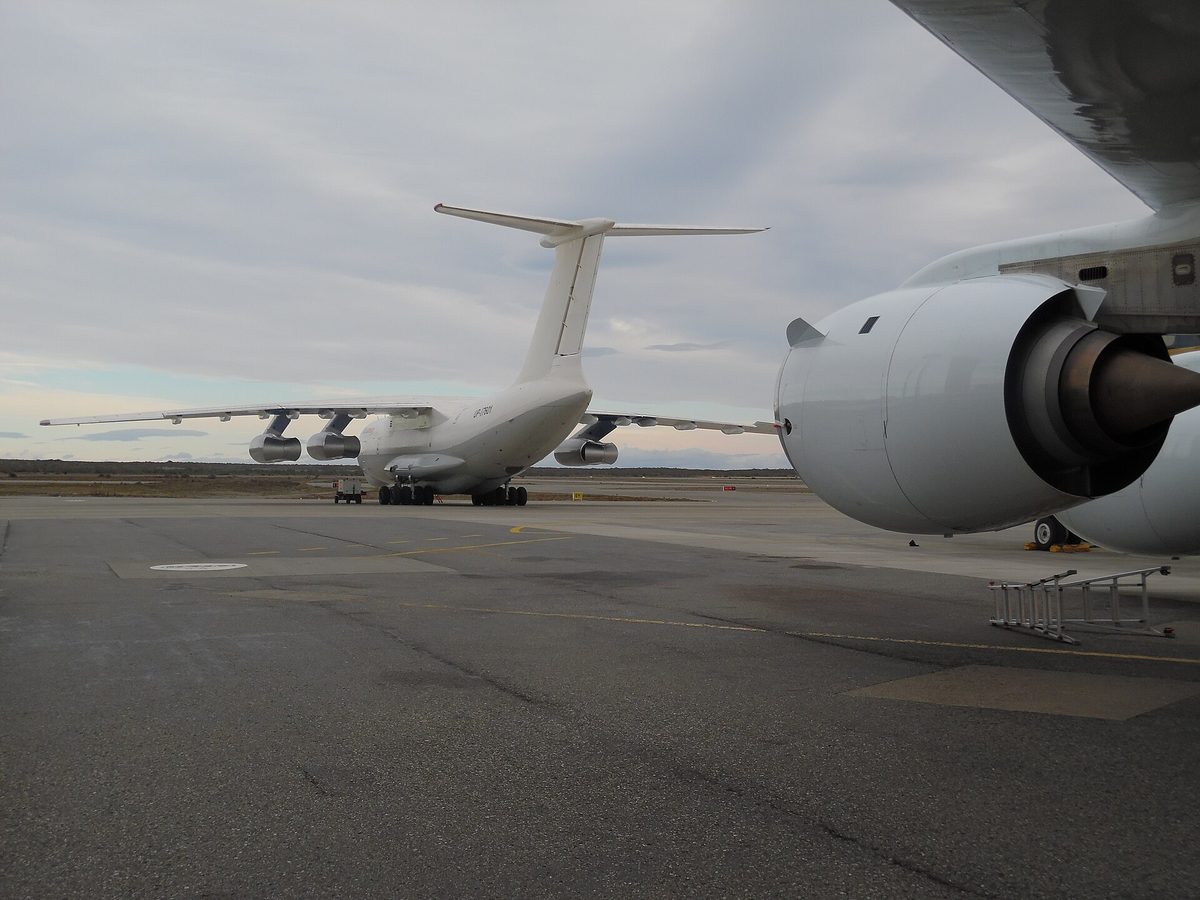
Not everyone who dreams of Antarctica wants to spend two weeks and a small fortune getting there. Some people just want to see it — the endless ice, the carved mountains, the impossible scale of it — and be home for dinner. That is exactly what antarctica sightseeing flights deliver: a single, extraordinary day in which you take off from a major city, spend hours gazing down on the most remote continent on Earth, and land back where you started without ever setting foot on the ice. I have spent the day with my forehead pressed to a cabin window over the Transantarctic Mountains, and I can tell you it is one of the strangest, most moving travel experiences going.
This guide explains how these scenic overflights work, what they cost in 2026, what you actually see, why the planes deliberately never land, and whether a day in the air is the right way for you to experience Antarctica. It is the practical companion to the rest of our flights to Antarctica coverage, and it is written for the curious traveller weighing a day trip against a full expedition.
What antarctica sightseeing flights actually are
Antarctica sightseeing flights are full-day scenic charters that fly from a departure city, cruise down over the Southern Ocean, spend several hours making sweeping turns above the Antarctic coastline and interior, and then fly home — all in roughly 12 to 14 hours, without landing. You never clear customs in Antarctica because you never touch it. You experience the continent entirely from the air, narrated by polar experts, from the comfort of a modern airliner.
The best-known operation by far runs out of Australia under the Antarctica Flights brand, using Qantas Boeing 787-9 Dreamliners that depart from cities including Sydney, Melbourne, Brisbane, and Perth. A typical season sees around seven of these charters scheduled across the austral summer, from November to February, each one selling out well in advance. There is no other regular commercial way to see Antarctica from the air without committing to a full landing trip, which is part of what makes these flights so sought-after.
The Antarctica Flights day trip, explained
Picture the shape of the day. You arrive at the airport in the morning like any other flight, except the mood at the gate is giddy — everyone knows where they are going. The 787 lifts off and turns south, and for the first few hours you are simply crossing the Southern Ocean, eating, chatting, listening to the expedition team set the scene. Then, somewhere over the sea ice, the captain announces the first sighting, and the cabin erupts. From that point on, for up to four hours, the aircraft traces long, banking loops over the continent so that both sides of the plane get their turn at the view.
What unfolds below is hard to describe without sounding hyperbolic. Tabular icebergs the size of towns. Glaciers pouring off the polar plateau. Mountain ranges with only their summits clear of a two-kilometre-thick ice sheet. On a clear day you can see for hundreds of kilometres, and the sheer emptiness rewires something in your head. Eventually the aircraft turns for home, the ice slips behind you, and you land back in your departure city late that night, slightly stunned, having technically never left your own country’s airspace requirements behind.
The route and what you actually see
From Australia, the great-circle route covers something on the order of 9,500 to 10,500 kilometres round trip. The exact flight path is chosen on the day by the captain based on weather, because the entire point is to find clear skies over interesting terrain. That means no two flights are identical: one departure might spend its time over the Ross Sea region and the dry valleys, another over the coastal glaciers and ice tongues. The crew has roughly a dozen pre-planned routes to choose from and picks whichever offers the best visibility.
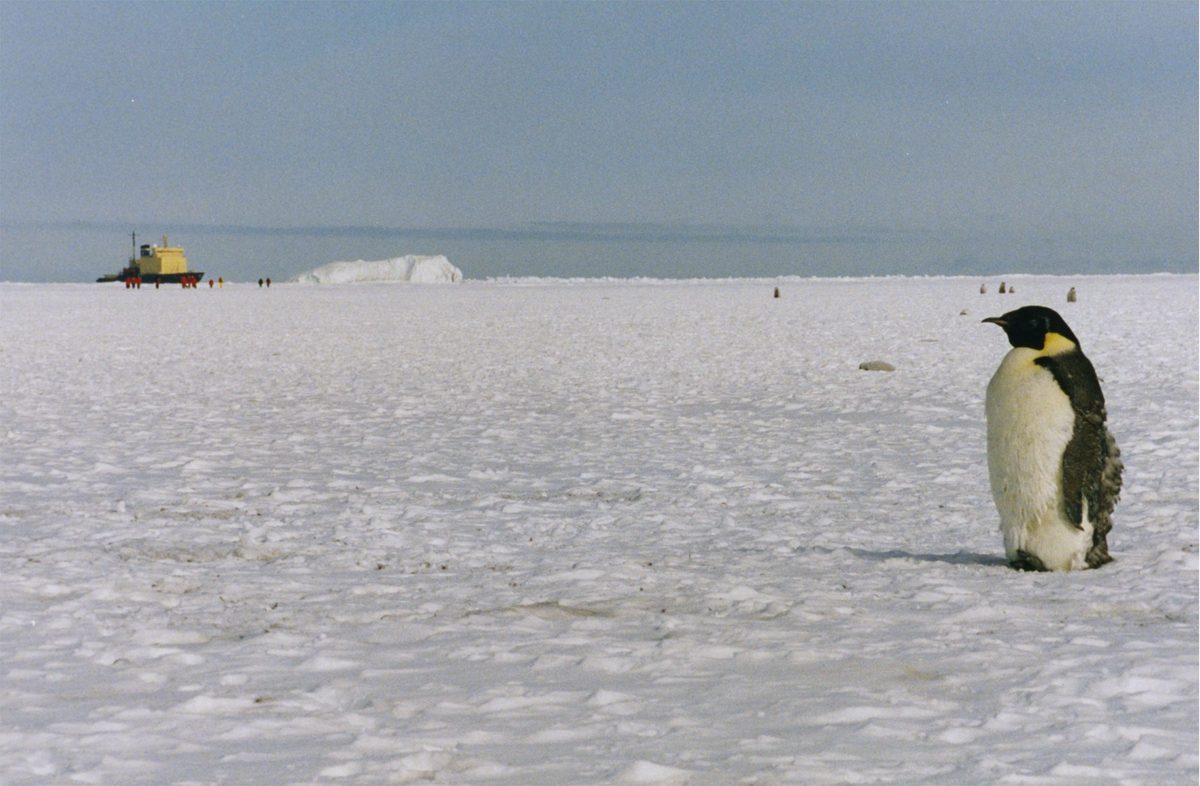
Because the aircraft flies at airliner altitude, you are seeing Antarctica as a vast landscape rather than as individual penguins and seals — this is geography on a continental scale, not wildlife watching. If close encounters with Antarctica wildlife are what you are after, a sightseeing flight is the wrong tool and you want a cruise instead. But if it is the raw scale and otherworldliness of the ice that calls to you, nothing short of being an astronaut gives you a better vantage point.
How much time you spend over the ice
This surprises people, so it is worth being clear. Of the 12 to 14 hours in the air, only around four hours are actually spent over or near Antarctica. The rest is the long haul down and back across the Southern Ocean. That might sound like a lot of flying for four hours of views, and it is — but those four hours are continuous, jaw-dropping, and utterly unlike anything you will see from a normal flight. Frequent flyers who have crossed oceans a hundred times still describe it as the most remarkable thing they have ever seen from a plane window.
Seating and pricing
Pricing spans an enormous range, because what you are really buying is your relationship to a window. Here is the typical 2026 structure for the Australian flights, in Australian dollars.
| Class | Approx. 2026 price (AUD) | What you get |
|---|---|---|
| Explorer Economy | from $1,199 | Centre seats, rotated with a window-seat neighbour |
| Economy Class | $1,999 – $2,999 | Standard seats with rotation to the window |
| Business Class | $6,999 – $7,499 | Window or aisle, more space, premium service |
| Business Class Deluxe | $7,999 – $8,999 | The best seats and uninterrupted views |
Compared with the cost of an expedition voyage, even the top fare is a fraction of the price — though for a single day, it is still a serious splurge. If you are weighing the spend against a longer trip, our full Antarctica trip cost breakdown puts the numbers side by side.
The window-seat rotation system
Because everyone wants the window, the flights use a fairness system: in the economy categories, passengers in window and centre seats swap places partway through the Antarctic portion, so that nobody is stuck without a view and nobody hogs the glass for the whole four hours. Business Class Deluxe passengers keep their premium window for the duration. It is a sensible arrangement, but it does mean that in the cheaper cabins your guaranteed window time is shared. If an uninterrupted view is the whole reason you are going, it is worth paying up a class or two.
Who narrates, and what the onboard experience is like
A big part of what elevates these flights above a long-haul slog is the people on board. Each charter carries a team of Antarctic experts — expedition leaders, scientists, historians, and people who have wintered on the ice — who narrate the journey over the cabin address system and move through the aisles answering questions. They point out features as they appear, explain the history of exploration below, and bring the white blankness to life with stories. There is usually a celebratory atmosphere, full meal service, and a certificate to mark the day. It feels less like a flight and more like a flying lecture theatre with the best visual aids on the planet.
Why these flights never land
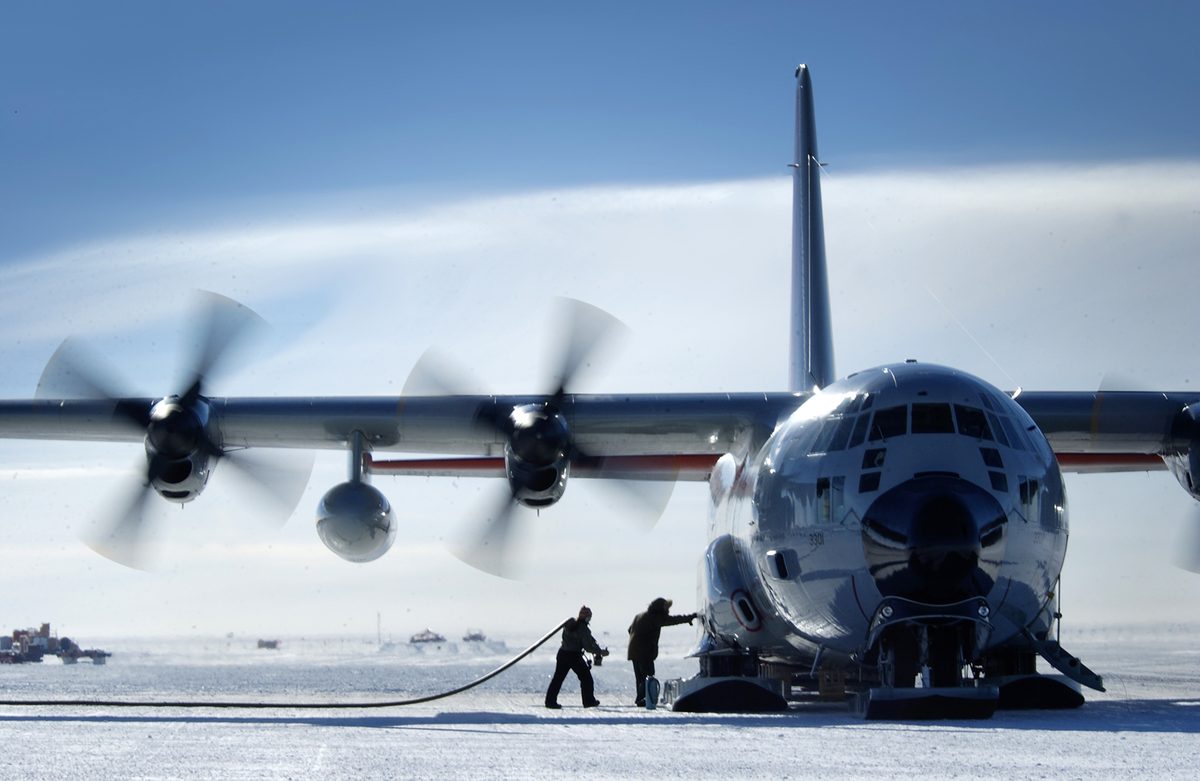
People often ask why the planes do not simply touch down. The answer is partly practical and partly historical. Practically, there is no airport on the continent built to receive a fully loaded commercial airliner with hundreds of passengers; the runways that do exist are gravel, ice, or compacted snow, served by specialised aircraft. Landing tourists en masse would also collide head-on with the environmental protections that govern Antarctica.
The historical reason runs deeper. In 1979, an Air New Zealand sightseeing flight, Flight 901, crashed into Mount Erebus in a whiteout, killing all 257 people aboard. The tragedy halted Antarctic sightseeing flights for years and permanently shaped how they are run today. Modern overflights operate at safe cruising altitudes, far above the terrain, with conservative weather rules and experienced crews — the whole model is built around never putting the aircraft anywhere near the ice. Understanding that history is part of understanding why the “no landing” rule is non-negotiable, and why these flights have an impeccable safety record in the decades since.
Other sightseeing flight options
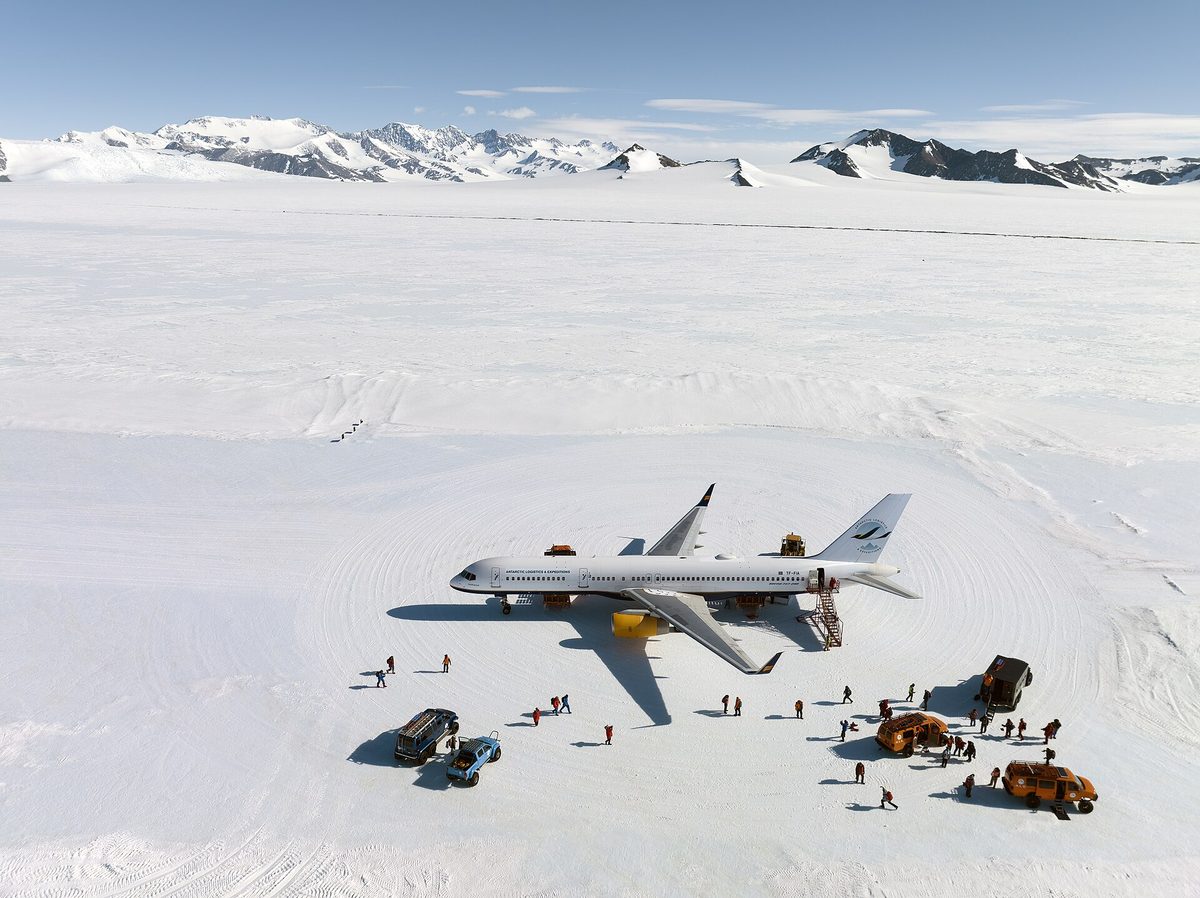
While the Australian flights are the headline act, they are not the only way to see Antarctica from above. From South America, some operators in Chile and Argentina occasionally run scenic flights or combine flight segments with cruises. Within Antarctica itself, the land-based and fly-cruise operators offer flightseeing add-ons — short hops in small aircraft over the interior — but those require you to already be on the continent. For most travellers outside Australasia, the realistic choice is either to plan around an Australian departure or to fold an aerial experience into a larger trip. Our guide to whether you can fly over Antarctica covers the commercial-route question in detail, and the land-based Antarctica guide explains the fly-in flightseeing options.
Sightseeing flight versus actually landing
It is worth being honest about what a day flight is and is not. You will see Antarctica at a scale no cruise passenger ever does, but you will not feel its silence, smell its air, or stand among its penguins. A flight is a magnificent overview; a voyage is an immersion. They are different experiences serving different desires, and neither is “better.” Many people do a sightseeing flight first, fall in love, and come back years later for the real expedition. Others, for reasons of time, money, health, or seasickness, find that a flight is the perfect and complete way to tick off a lifelong dream. If you think you might want to set foot on the ice instead, compare the day trip with a proper fly cruise Antarctica trip or a classic Antarctica cruise.
When the flights run, and how to book
The flights operate only during the austral summer, roughly November through February, when there is enough daylight over the continent to see anything at all. The marquee departure is often a New Year flight that crosses over Antarctica around midnight on New Year’s Eve into New Year’s Day, taking advantage of the polar summer’s endless light. Seats are released months ahead and the best cabins sell first, so if a specific date or city matters to you, book early. Because these are charter operations, schedules shift from year to year, and it pays to get on the operator’s mailing list to catch the on-sale date.
What to bring on the day
You need almost nothing, which is part of the charm — no expedition parka, no rubber boots, no two-week packing list. Bring a camera with a polarising filter if you have one (it cuts glare off the ice and snow), a lens cloth, sunglasses for the dazzle, and layers you can shed in the warm cabin. Leave the heavy telephoto at home; you are shooting landscapes, not wildlife. A window seat, a charged battery, and an empty memory card are the only real essentials. For everything you would need on an actual expedition, by contrast, see our what to pack for Antarctica guide — and enjoy how little of it applies to a day flight.
A short history of flying over Antarctica
Sightseeing flights to Antarctica are not new. They began in earnest in the 1970s, when both Qantas and Air New Zealand started running day charters from Australia and New Zealand, and they were an instant sensation — the chance to see the last great wilderness without the months at sea the early explorers endured. The 1979 Erebus tragedy ended the New Zealand flights and paused the Australian ones, and it took until 1994 for the modern Australian operation to relaunch under the model we know today: high cruising altitudes, conservative weather minimums, multiple alternate routes, and a hard rule against descending near terrain. The result is an operation with a spotless safety record across hundreds of flights and tens of thousands of passengers. Knowing that lineage adds something to the day; you are part of a tradition of people who chose to meet Antarctica from the air, and the lessons of the past are quite literally built into the flight plan. For more on the continent’s exploration story, our Antarctica facts and history guide is a rich companion read.
How to photograph Antarctica from a plane window
You will want pictures, and shooting through a curved cabin window over brilliant ice presents real challenges, so a little preparation pays off. Clean the inside of the window with your lens cloth before you start — airline glass is often smeared. Turn off your flash so it does not bounce back off the pane. Press your lens hood or a soft cloth gently against the glass to cut reflections, and avoid wearing bright clothing that mirrors in the window. A polarising filter helps tame the glare coming off snow and sea ice, but rotate it carefully because polarisers can do odd things to aircraft windows. Shoot at a fast shutter speed to counter the vibration, keep your ISO low in the bright conditions, and resist the urge to zoom all the way in — the wide, sweeping shots that capture the continent’s scale are the ones you will treasure. Above all, remember to put the camera down for a while and simply look. No photograph does the view justice, and the memory of seeing it with your own eyes outlasts any file on a card.
What the cabin really feels like
The social atmosphere is part of what makes the day. Unlike an ordinary flight, where everyone retreats into headphones, an Antarctica sightseeing flight has a buzz from the moment you board. Strangers talk to each other. People crowd the galley windows when a feature appears. There is applause when the first ice is sighted and a hush when the continent fills the view. The expedition staff keep the energy up with commentary and wander the aisles for questions, and the cabin crew lean into the occasion. By the time you land you will have swapped stories with the people around you and shared one of those rare communal travel moments that nobody in the cabin will ever forget. It is, in the best way, a party with the greatest view on Earth — and it is a wonderful, low-effort introduction to a continent that tends to pull you back for more. If it does, our guide to the best time to visit Antarctica and the full list of things to do in Antarctica will help you plan the return trip.
Is an Antarctica sightseeing flight worth it?
For the right traveller, absolutely. If you are time-poor, on a budget that cannot stretch to a voyage, physically unable to manage an expedition, or simply curious to see the ice once with minimal fuss, a day flight is a genuine bucket-list experience that delivers far more than its modest commitment suggests. The view alone justifies it. My only caution is to manage expectations: you are buying four hours of the greatest landscape on Earth bookended by long ocean flying, not a wildlife safari and not a landing. Go in wanting exactly what it offers, pay for as good a window as you can afford, and you will come home changed.
Comfort tips for the long day in the air
Because the round trip is essentially a long-haul flight with a spectacular middle, a few comfort habits make the day far more pleasant. Wear loose, layered clothing so you can adjust as the cabin warms and cools, and slip on compression socks if your legs tend to swell on long flights. Stay hydrated and go easy on the celebratory champagne until the Antarctic portion is over, both so you stay sharp for the views and so you sleep better on the way home. Get up and stretch during the ocean legs, claim your window time during the rotation, and download a film or two for the stretches of open sea where there is nothing but blue below. Treat the outbound and return hours as part of the experience — time to read the briefing notes, chat with the experts, and build anticipation — rather than dead time to endure, and the whole day flows beautifully. Plenty of passengers say the shared sense of expectation on the way down is half the fun, and the contented quiet on the way home, everyone scrolling through their photos, is the other half.
Frequently asked questions
Do antarctica sightseeing flights land on the continent?
No. They circle and overfly Antarctica at cruising altitude but never land, so you do not need a passport stamp or any special documentation for the continent.
How long is the flight?
The full day trip lasts roughly 12 to 14 hours, of which up to four hours are spent over or near Antarctica. The rest is the journey across the Southern Ocean.
How much do they cost?
For 2026, Australian departures range from around AUD $1,199 in Explorer Economy to roughly AUD $8,999 in Business Class Deluxe, depending mainly on your seat and view.
Where do the flights depart from?
The main operation flies from Australian cities including Sydney, Melbourne, Brisbane, and Perth, returning to the same city the same day.
Will I see penguins and whales?
Not really. From airliner altitude you see ice, mountains, and glaciers on a vast scale, not individual animals. For wildlife you need a cruise.
Why don’t the planes land in Antarctica?
There is no airport built for large commercial airliners, environmental rules restrict mass landings, and history — the 1979 Mount Erebus disaster — cemented the safety-first, no-landing model.
Which seat should I choose?
If the view is your priority, pay for a window in a higher class. In economy categories, window and centre passengers rotate so everyone gets time at the glass.
When in the year do they operate?
Only during the austral summer, roughly November to February, when there is enough daylight over the continent to see the landscape.
Is it better than a cruise?
It is different, not better. A flight gives you scale and convenience; a cruise gives you immersion, wildlife, and landings. Many travellers eventually do both.
Final thoughts
An Antarctica sightseeing flight is the most accessible way there is to lay eyes on the white continent: one big day, no expedition gear, no Drake Passage, just hours of the most astonishing scenery on the planet sliding past your window. It will not give you the silence and the penguins, but it will give you the scale, and for a great many travellers that is enough to last a lifetime. When you are ready to compare it against the alternatives, head back to our flights to Antarctica hub, weigh it against a fly-cruise or a sailing, and see where on the spectrum of Antarctic travel you really belong. And if the bug bites — as it often does — the whole continent is waiting whenever you are ready for more.