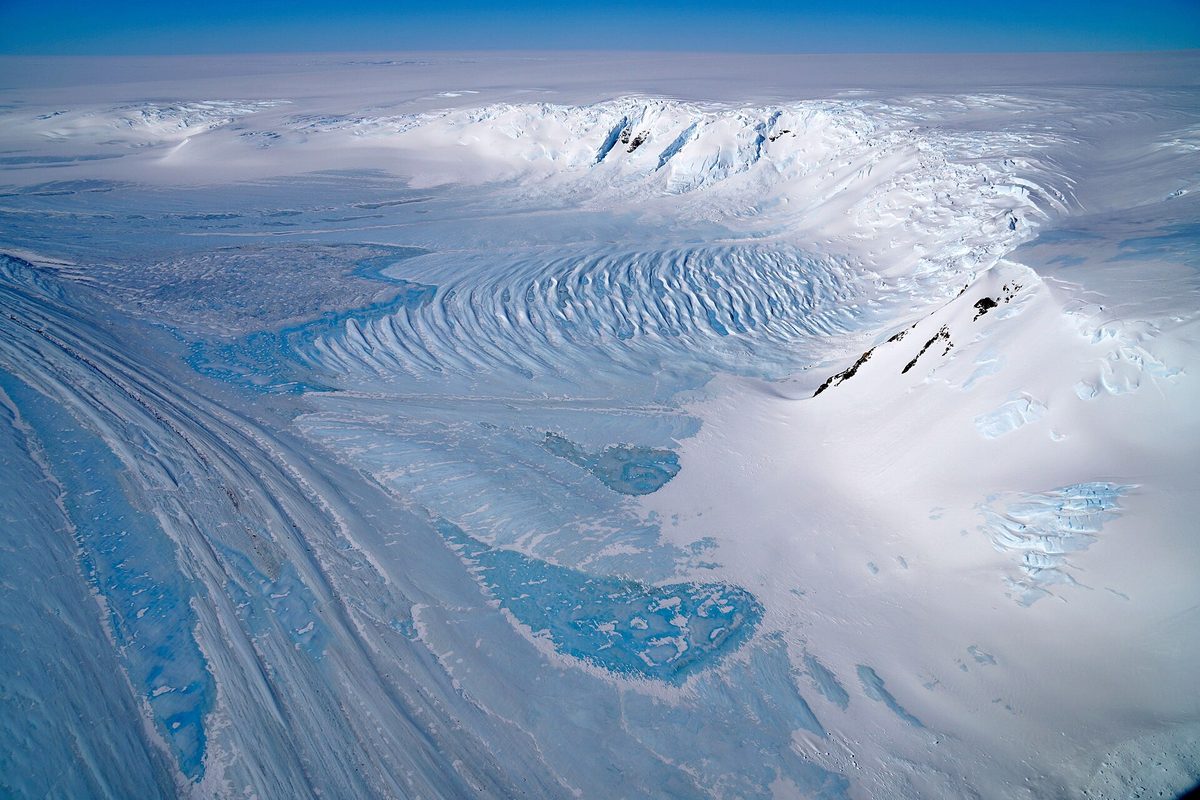
If you’re hunting for Antarctica facts that go beyond the recycled trivia — the kind of facts that actually make sense of the strangest place on Earth — you’ve come to the right page. Antarctica is a continent of superlatives so extreme they sound made up: the coldest, the driest, the windiest, and the highest continent, a frozen desert nearly twice the size of Australia that holds most of the planet’s fresh water and yet has no permanent human population, no government, and no native land mammals. I’ve spent years reading, traveling, and talking to the scientists and expedition guides who know it best, and the continent still astonishes me.
This guide is the master hub for understanding Antarctica — its geography, its punishing climate, the curious question of who owns it, the heroic and often tragic history of its exploration, and the changes now reshaping its future. Think of it as the answer to every “wait, is that true?” question you’ve ever had about the white continent, organized so you can read it start to finish or jump straight to what intrigues you. Each section links through to a deeper dive, so you can follow your curiosity as far as it takes you.
And because this is, at heart, a travel site, I’ll keep tying these facts back to the real thing — because the wonderful truth is that ordinary travelers can now see much of this for themselves. Let’s start with the numbers that define the place.
Essential Antarctica facts at a glance
Before we go deep, here are the headline numbers — the facts worth memorizing if you want to understand why Antarctica behaves the way it does. Everything else in this guide flows from these.
| Fact | Figure |
|---|---|
| Area | ~14.2 million km² (5.5 million sq mi) — 5th-largest continent |
| Share of Earth’s ice | About 90% of all ice; roughly 70% of all fresh water |
| Maximum ice thickness | Up to about 4.8 km (3 miles) |
| Average elevation | ~2,200 m (7,200 ft) — the highest continent |
| Coldest recorded temperature | −89.2°C (−128.6°F), Vostok Station, 1983 |
| Strongest winds | Katabatic gusts up to ~327 km/h (204 mph) |
| Permanent population | Zero — only rotating researchers (~1,200 winter / ~4,800 summer) |
| Governance | The Antarctic Treaty (1959) — no single owner |
The geography of extremes
Antarctica covers roughly 14.2 million square kilometres, making it the fifth-largest continent — bigger than Europe, and nearly twice the size of Australia. But the number that matters most is the ice. Antarctica is fundamentally a rocky continent buried under an ice sheet that reaches almost 4.8 kilometres thick in places. That single ice sheet holds about 90% of all the ice on Earth and somewhere around 70% of the planet’s fresh water. If it all melted — which would take a very long time — global sea levels would rise by around sixty metres, redrawing every coastline on the map.
All that ice piled up has another consequence: Antarctica is the highest continent on Earth, with an average elevation of about 2,200 metres. Poking through the ice are genuine mountain ranges, most dramatically the Transantarctic Mountains, which slice the continent into two unequal halves — the larger, higher East Antarctica and the smaller, more dynamic West Antarctica. There are even active volcanoes down there. Mount Erebus, standing 3,800 metres on Ross Island just 40 kilometres from the largest research base, is the southernmost active volcano on the planet and cradles a rare permanent lava lake. Beneath the ice lie more than a hundred other volcanoes, most of them dormant but not extinct.
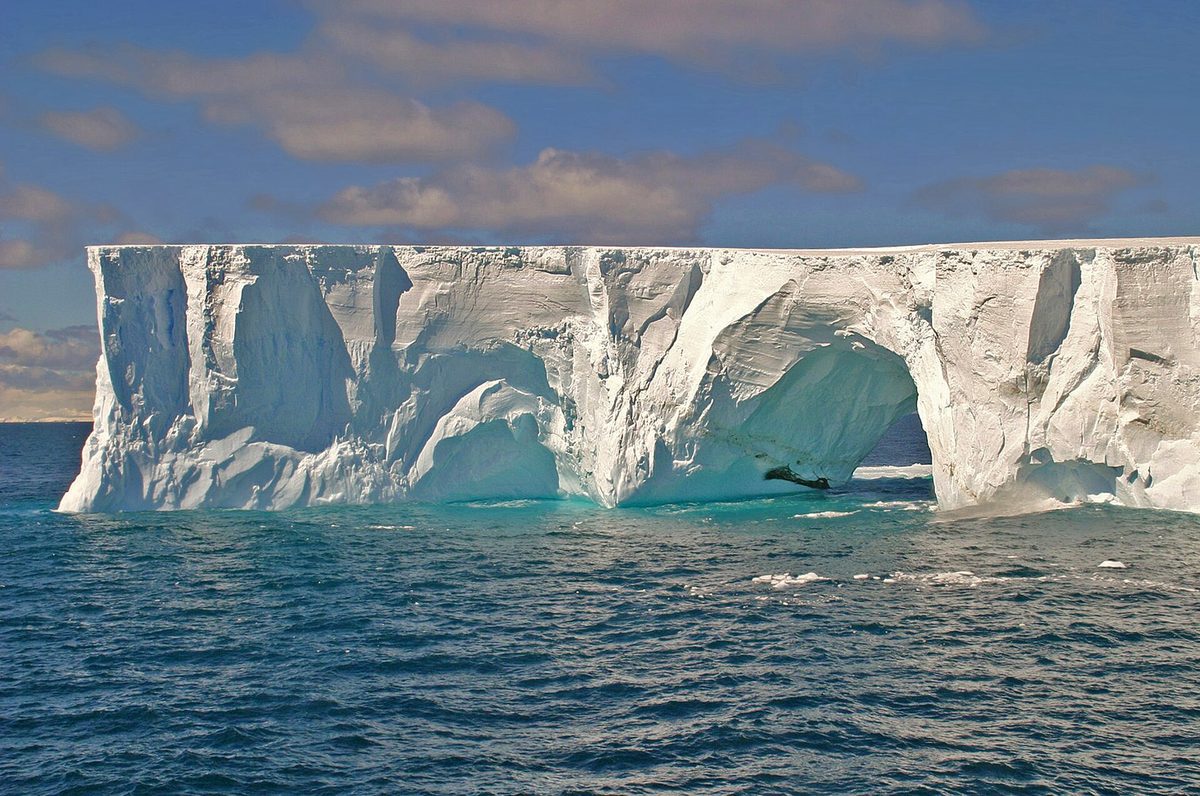
The ice does strange and beautiful things at the edges. Where the ice sheet meets the sea it forms floating ice shelves, and when chunks break off they become the flat-topped tabular icebergs that are unique to the Southern Ocean — some of them larger than small countries. Hidden under the ice are hundreds of subglacial lakes, sealed off from sunlight for millions of years; the largest, Lake Vostok, is roughly the size of Lake Ontario and a frontier for scientists studying life in extreme environments. To understand how these features shape an actual visit, our guide to the regions and landing sites of Antarctica maps where travelers actually go.
How cold is Antarctica? The climate facts
Antarctica is, by a wide margin, the coldest place on Earth. The lowest natural air temperature ever reliably recorded anywhere on the planet was −89.2°C (−128.6°F), measured at the Russian Vostok Station in the high interior on 21 July 1983. That’s cold enough to make exposed skin freeze in moments and to turn boiling water flung into the air into instant snow. The interior is so cold because it’s high, far from the warming influence of the ocean, and plunged into total darkness for months during the polar winter.
But here’s a fact that surprises people: not all of Antarctica is that brutal. The Antarctic Peninsula — the banana-shaped arm reaching up toward South America, and where virtually all tourism happens — is comparatively mild. In the summer months when travelers visit, coastal temperatures often hover around freezing and can climb above 10°C on a sunny day, while the deep interior may still sit below −30°C. That gulf between the temperate edge and the lethal heart of the continent is one of the most important things to understand. For the full breakdown by season and region, see our dedicated guide to how cold Antarctica really is.
Cold isn’t even the continent’s strangest climatic feature. Antarctica is also the driest continent — technically the world’s largest desert, receiving less than 200 millimetres of precipitation a year along the coast and far less inland, where some valleys haven’t seen rain in millions of years. And it’s the windiest, scoured by katabatic winds — dense, cold air sliding downhill off the ice sheet under gravity — that have been clocked at over 327 kilometres per hour. Cold, dry, windy, high: every one of Antarctica’s superlatives reinforces the others.
Who owns Antarctica? The Antarctic Treaty explained
Here’s one of the most remarkable facts of all: nobody owns Antarctica. It is the only continent on Earth with no government and no indigenous population, governed instead by an international agreement that is, frankly, one of humanity’s better ideas. The story is worth knowing. Before 1959, seven countries — Argentina, Australia, Chile, France, New Zealand, Norway, and the United Kingdom — had staked overlapping, sometimes conflicting territorial claims, several of them pie-slice wedges converging on the South Pole.
Then came the Antarctic Treaty. Signed in Washington on 1 December 1959 by twelve nations active during the International Geophysical Year, and entering into force on 23 June 1961, it did something extraordinary: it set the whole continent aside as a scientific preserve, guaranteed freedom of scientific research, and banned all military activity. Crucially, it didn’t force anyone to give up their claims — it simply froze them, declaring that no activity would strengthen or weaken any claim while the treaty held, and that no new claims could be made. The seven claimants kept their paper claims; everyone else agreed not to recognize them.
The treaty has only grown since. From those original 12 signatories it now counts more than 50 parties representing most of the world’s population, and it has been strengthened by later agreements — most importantly the 1991 Madrid Protocol, which designates Antarctica a “natural reserve, devoted to peace and science” and bans mining indefinitely. It’s not perfect and it’s not permanent, but it has kept an entire continent demilitarized and cooperative for over sixty years. Dig into the details in our guides to who owns Antarctica and the Antarctic Treaty.
Does anyone live in Antarctica?
No one lives in Antarctica permanently — there is no native population, no city, no permanent civilian settlement. What Antarctica has instead is a rotating community of scientists and support staff who come for a season or two and then leave. The numbers swing with the seasons: roughly 4,800 people are scattered across the continent’s research stations during the bright austral summer, dropping to around 1,200 hardy souls who overwinter through the months of darkness.
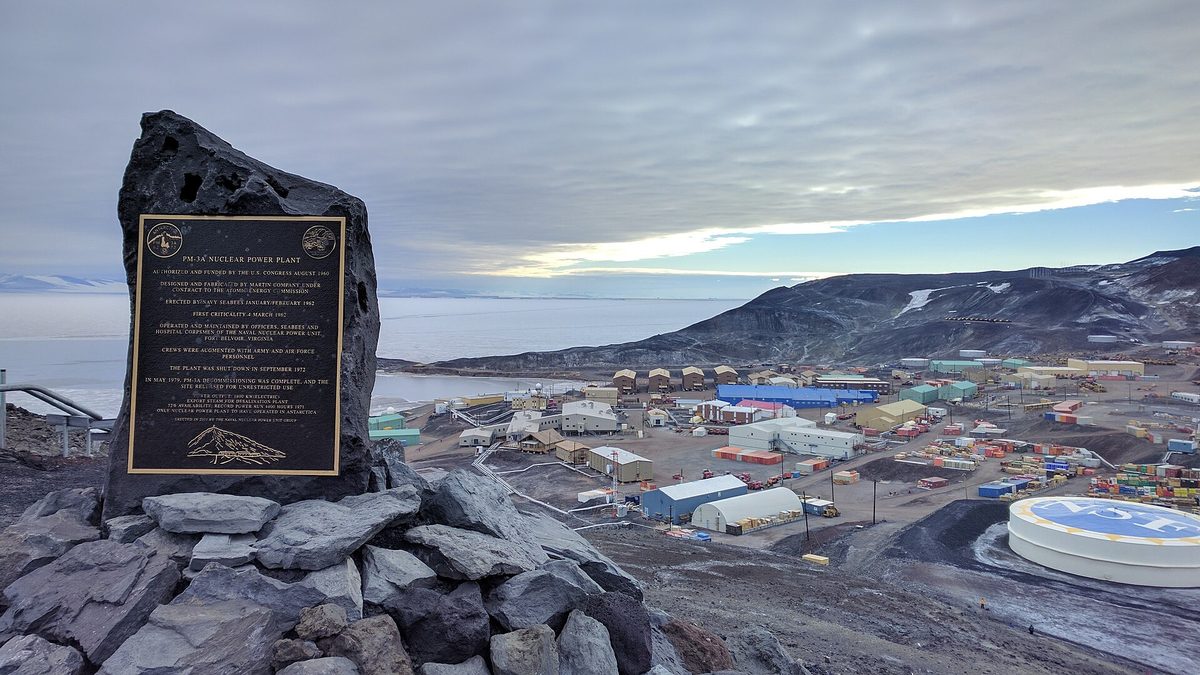
Around 55 countries operate research stations, from tiny seasonal huts to small towns. The largest by far is the United States’ McMurdo Station on Ross Island, which can house up to 1,200 people in summer and functions like a remote frontier settlement, complete with dormitories, labs, and its own harbour. Deep in the interior sits the Amundsen–Scott South Pole Station, built right at the geographic bottom of the world. People have been born in Antarctica — the first was an Argentine baby in 1978, part of a deliberate effort to bolster a territorial claim — but these are rare exceptions, not a resident population. For a closer look at what life on the ice is actually like, see does anyone live in Antarctica?
The discovery and exploration of Antarctica
For most of human history, Antarctica was a theory. Ancient geographers imagined a great southern landmass — Terra Australis — to balance the continents of the north, but no one had seen it. Captain James Cook crossed the Antarctic Circle in the 1770s and circumnavigated the continent without ever sighting land, concluding that if a southern continent existed, it lay locked behind impassable ice. He was right, and it would be another half-century before anyone laid eyes on it.
The continent was finally sighted in 1820, and — fittingly for a place no one owns — three different expeditions have a claim to the discovery within months of each other. A Russian expedition under Fabian von Bellingshausen is generally credited with the first sighting on 27 January 1820; the British naval officer Edward Bransfield spotted the tip of the Antarctic Peninsula just three days later; and the American sealer Nathaniel Palmer arrived later that same year. Who was “first” depends on whom you ask, which feels about right for Antarctica.
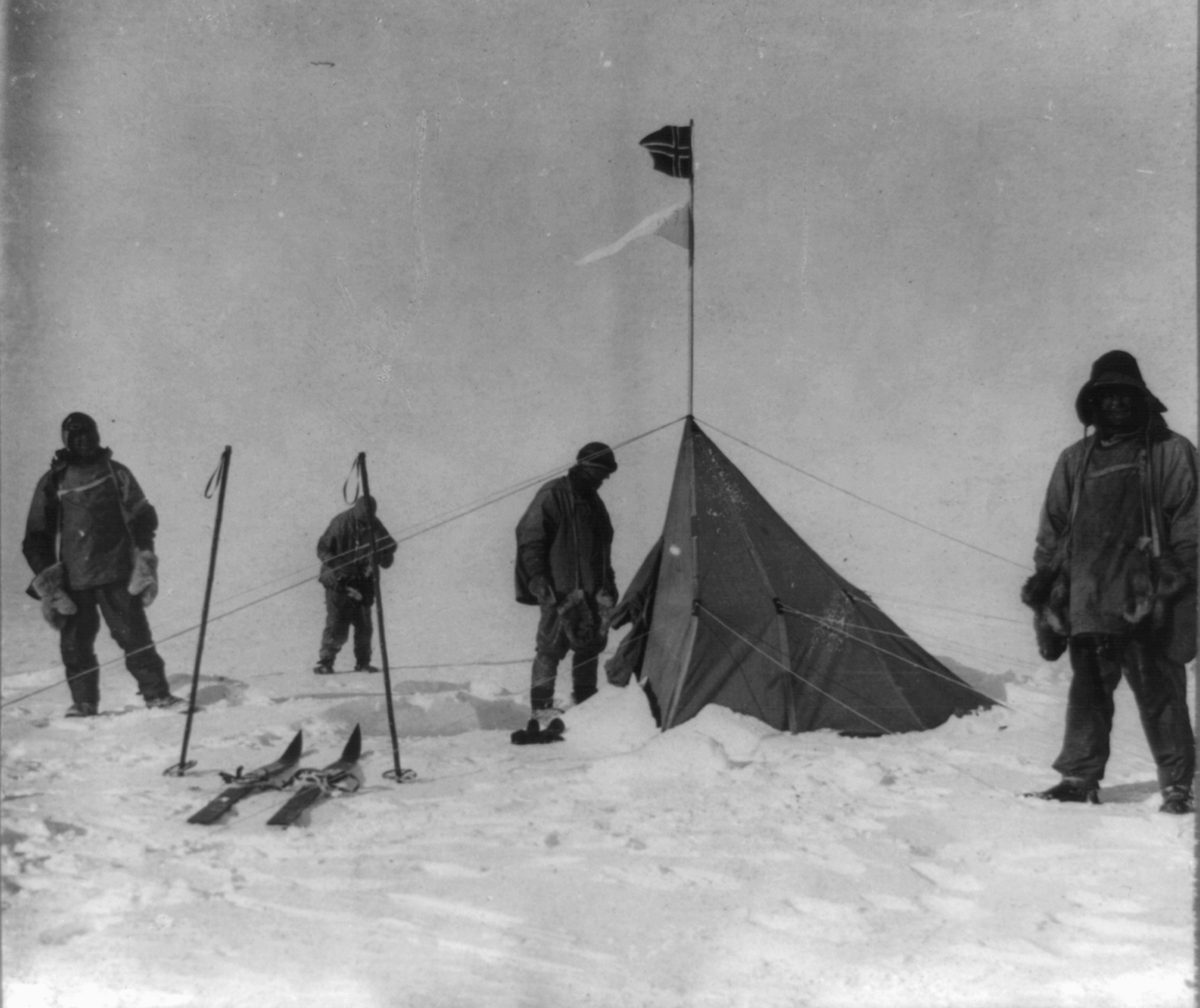
Then came the chapter that still defines Antarctica in the popular imagination: the Heroic Age of Antarctic Exploration, roughly 1897 to 1922. This was the era of wooden ships, wool clothing, man-hauled sledges, and almost unimaginable hardship — and of names that have become legend. Its defining drama was the race to the South Pole. The Norwegian Roald Amundsen, a meticulous planner who relied on skis and sled dogs, reached the Geographic South Pole first, on 14 December 1911. Britain’s Robert Falcon Scott arrived just over a month later, on 17 January 1912, only to find Amundsen’s tent and flag already there. Heartbroken and exhausted, Scott and his four companions died on the return journey, undone by cold, starvation, and bad luck, their bodies and diaries found by a search party months later.
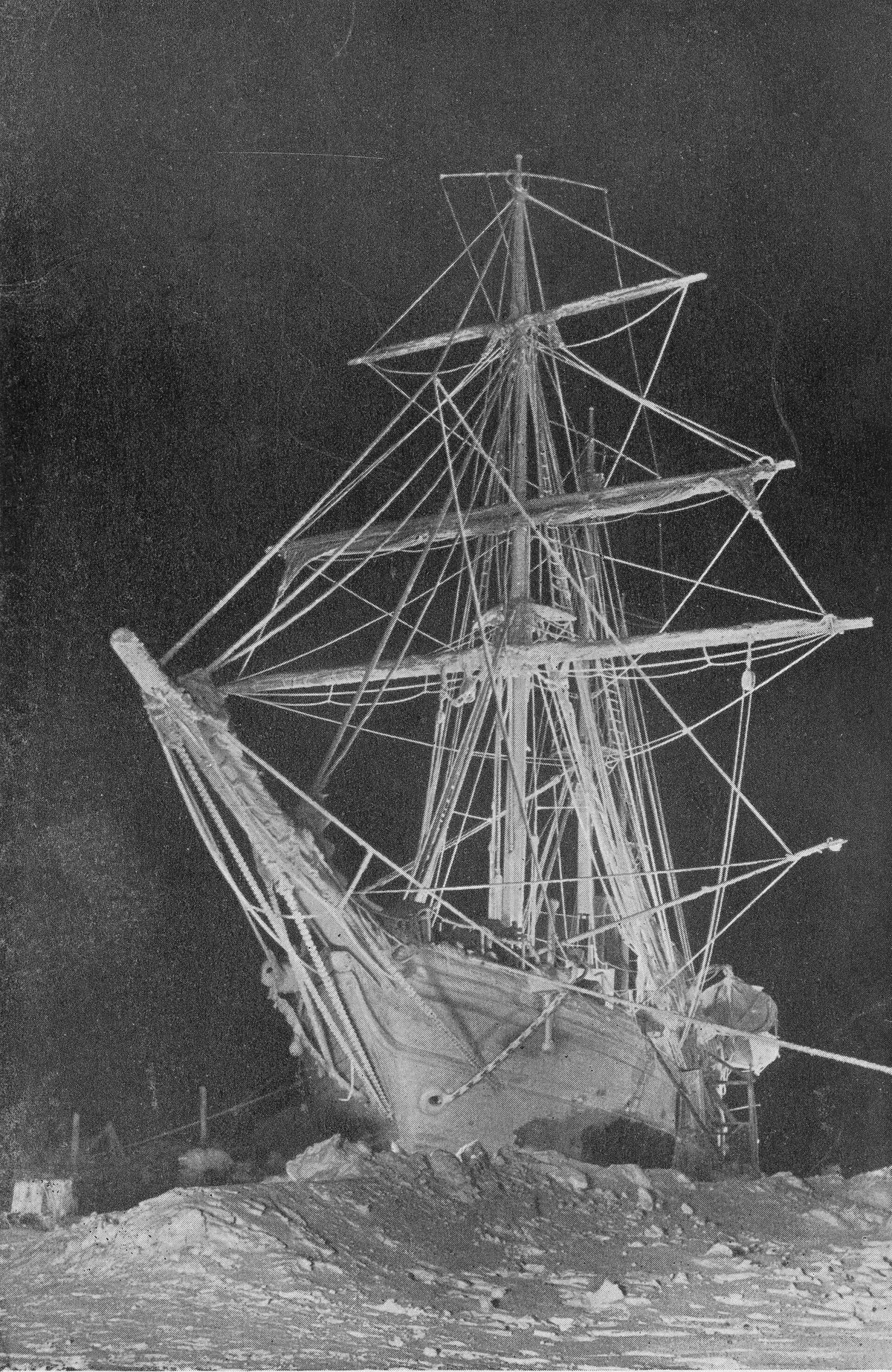
If Scott’s story is tragedy, Ernest Shackleton’s is the greatest survival story ever told. His 1914–1917 Imperial Trans-Antarctic Expedition set out to cross the continent, but his ship, the Endurance, was trapped and slowly crushed by pack ice in the Weddell Sea, finally sinking in November 1915. What followed — months camped on drifting ice floes, an open-boat voyage across the world’s stormiest seas to Elephant Island, and Shackleton’s desperate 1,300-kilometre crossing to South Georgia to fetch rescue — ended with every single one of his 28 men brought home alive. The wreck of the Endurance itself was lost for over a century until it was discovered, astonishingly well preserved, on the Weddell Sea floor in 2022. These stories deserve more than a paragraph; read them in full in our guides to the heroic age of Antarctic exploration and Shackleton and the Endurance.
What moves me about this history is that you can still touch it. Several of the actual huts from the Scott and Shackleton expeditions survive on the Ross Sea coast, preserved by the cold almost exactly as they were left — tins of food still on the shelves, a century later. A handful of itineraries visit them, a tangible link to the age of wooden ships and frostbitten heroes.
Antarctica before the ice: the Gondwana story
Here is the fact that reframes everything else: Antarctica has not always been a frozen wasteland. For much of its history it was warm, green, and teeming with life. Hundreds of millions of years ago the continent sat in a far gentler latitude as the heart of Gondwana, the great southern supercontinent that also bound together what we now call South America, Africa, India, and Australia. Where the ice sheet now lies kilometres thick, there were once dense forests.
We know this because the rocks remember. Geologists working in the Transantarctic Mountains have uncovered fossilised tree stumps and leaf litter from forests that grew more than 260 million years ago, at the end of the Permian — before the dinosaurs even appeared. These woods were dominated by an extinct seed-fern called Glossopteris, alongside mosses and ferns, and they thrived despite months of polar darkness each year. Later still, when the climate was warmer, Antarctica hosted lush temperate forests whose living relatives — southern beech, monkey-puzzle conifers, and plum pines — still grow today in Patagonia, New Zealand, and Tasmania, the scattered children of that lost supercontinent.
And there were animals. Fossil hunters have pulled dinosaur remains from Antarctic rock, along with a flying pterosaur and a mammal-like reptile, proof that this was once a living, breathing landscape rather than a sterile cap of ice. The deep freeze only set in around 34 million years ago, when shifting continents opened the Southern Ocean’s circumpolar current and sealed Antarctica off from the warmth of the world. In geological terms, the ice is a recent visitor — and the green continent beneath it is the older, truer Antarctica. It’s a humbling reminder, woven through our climate change guide, that even the most permanent-seeming landscapes are just a moment in a much longer story.
Arctic vs Antarctic: what’s the difference?
People mix these up constantly, so let’s settle it with the single fact that explains everything else: the Arctic is an ocean surrounded by land, while the Antarctic is land surrounded by ocean. The Arctic — the far north — is essentially a frozen sea ringed by the northern edges of Asia, Europe, and North America. The Antarctic is the mirror image: a genuine continent, sitting over the South Pole, encircled by the vast Southern Ocean. That one structural difference cascades into nearly every other contrast between the two poles.
It’s why the wildlife is so different. Polar bears live only in the Arctic, where they hunt seals across the sea ice; penguins live only in the Southern Hemisphere, overwhelmingly around Antarctica. The two never meet in the wild, which means every cartoon showing penguins and polar bears together is geographically impossible. The Arctic, connected to other continents, supports a rich cast of land mammals — foxes, wolves, hares, reindeer, musk oxen — and has been home to indigenous peoples for thousands of years. Antarctica, isolated by ocean and ice, has no native land mammals and no indigenous human population at all; its life is overwhelmingly marine, built around penguins, seals, whales, and seabirds. We unpack every contrast in our guide to Arctic vs Antarctic, and the creatures themselves get the full treatment in the Antarctica wildlife guide.
Antarctic wildlife in brief
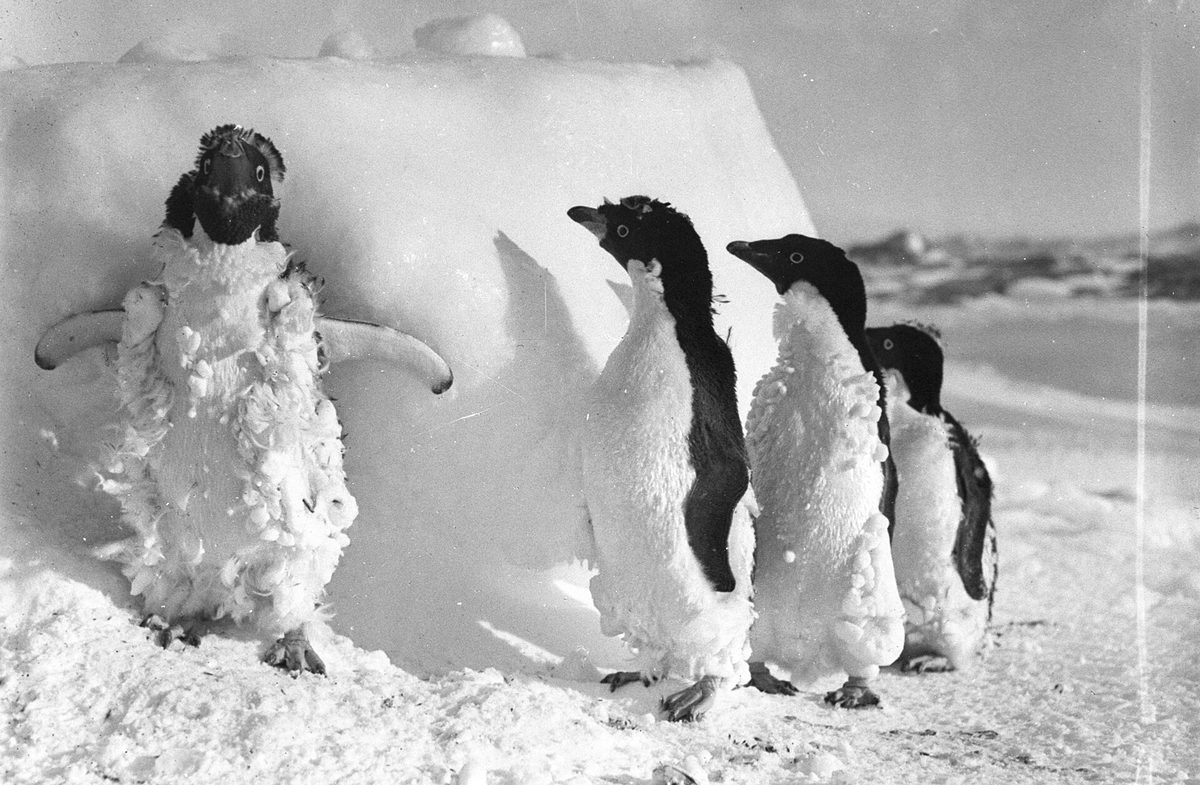
For a place so hostile to human life, Antarctica teems with it — just not where you’d expect. The land itself is nearly barren, home to little more than mosses, lichens, and a single tiny wingless midge that is the continent’s largest purely terrestrial animal. All the spectacle is at the edge, where the rich Southern Ocean meets the ice. Several penguin species breed here, from the ubiquitous gentoos, chinstraps, and Adélies of the Peninsula to the majestic emperors of the deep south. Seals haul out by the thousands — crabeater, Weddell, leopard, and the enormous elephant seal — and the summer seas fill with humpback, minke, and orca whales feeding on swarms of krill, the small crustacean that underpins the entire food web. Overhead wheel albatrosses, petrels, and skuas. It is one of the last great wildlife spectacles on Earth, and the single biggest reason most travelers go.
The ozone hole: Antarctica’s warning to the world
One of the most consequential discoveries of the twentieth century was made over Antarctica, and it’s a story I think every visitor should know. In May 1985, three British Antarctic Survey scientists — Joe Farman, Brian Gardiner, and Jon Shanklin — published a startling finding from their instruments at Halley research station: the ozone layer high above Antarctica was collapsing each spring, thinning into what the world would soon call the “ozone hole.” Follow-up expeditions confirmed the culprit was chlorofluorocarbons (CFCs), the chemicals then common in spray cans and refrigerators.
What happened next is, frankly, one of humanity’s proudest moments. From discovery, it took just eighteen months to reach a binding international agreement: the Montreal Protocol of 1987, which phased out the offending chemicals worldwide. It worked. Decades of monitoring show the ozone layer is now slowly healing; the 2024 hole was smaller and formed more slowly than in recent years, and scientists project a full recovery over Antarctica by around 2066. Because CFCs linger in the atmosphere for over half a century, patience is required — but the trajectory is unmistakable, and it stands as the clearest proof we have that coordinated global action on an atmospheric crisis can succeed.
That Antarctica was where we first saw the danger is no accident. Its uniquely cold, isolated stratosphere creates the exact conditions for ozone destruction, making the continent an early-warning system for the whole planet — the same role it now plays for climate change. The white continent doesn’t just sit at the bottom of the map; it watches the sky on our behalf.
Climate change and the future of Antarctica
No honest set of Antarctica facts can skip what’s happening to it now. Antarctica is both a victim of climate change and one of its most important early-warning systems. Parts of the continent, especially the Antarctic Peninsula and West Antarctica, are among the faster-warming regions on the planet, and the West Antarctic Ice Sheet in particular is showing signs of instability that worry scientists deeply — because the ice locked up here is the single largest potential contributor to future sea-level rise. The behaviour of these ice sheets over the coming decades carries genuinely global stakes.
There are subtler feedback loops too. Recent research suggests that as the ice thins, the reduced weight could even encourage eruptions from the many volcanoes buried beneath it — unloading the pressure on their magma chambers like loosening a bottle of soda — which would in turn melt more ice from below. These are slow processes, playing out over centuries, but they show how interconnected and fragile the system is. Antarctica is changing, and what happens to its ice will be felt on coastlines thousands of miles away. We explore the science and the stakes in our guide to climate change and the future of Antarctica.
The polar night, the midnight sun, and the southern lights
Spend any length of time thinking about Antarctica and you collide with its strangest quality of all: its relationship with the sun. Because the continent sits at the bottom of a tilted, spinning planet, it swings between extremes that have no parallel in the temperate world. Through the austral summer, when virtually all tourism happens, the sun never sets — the famous midnight sun bathes the ice in gold around the clock, which is why expedition days can run so gloriously long. Then, through the winter, the opposite reigns: weeks or months of unbroken darkness, the polar night, endured only by the skeleton crews who overwinter at the research stations.
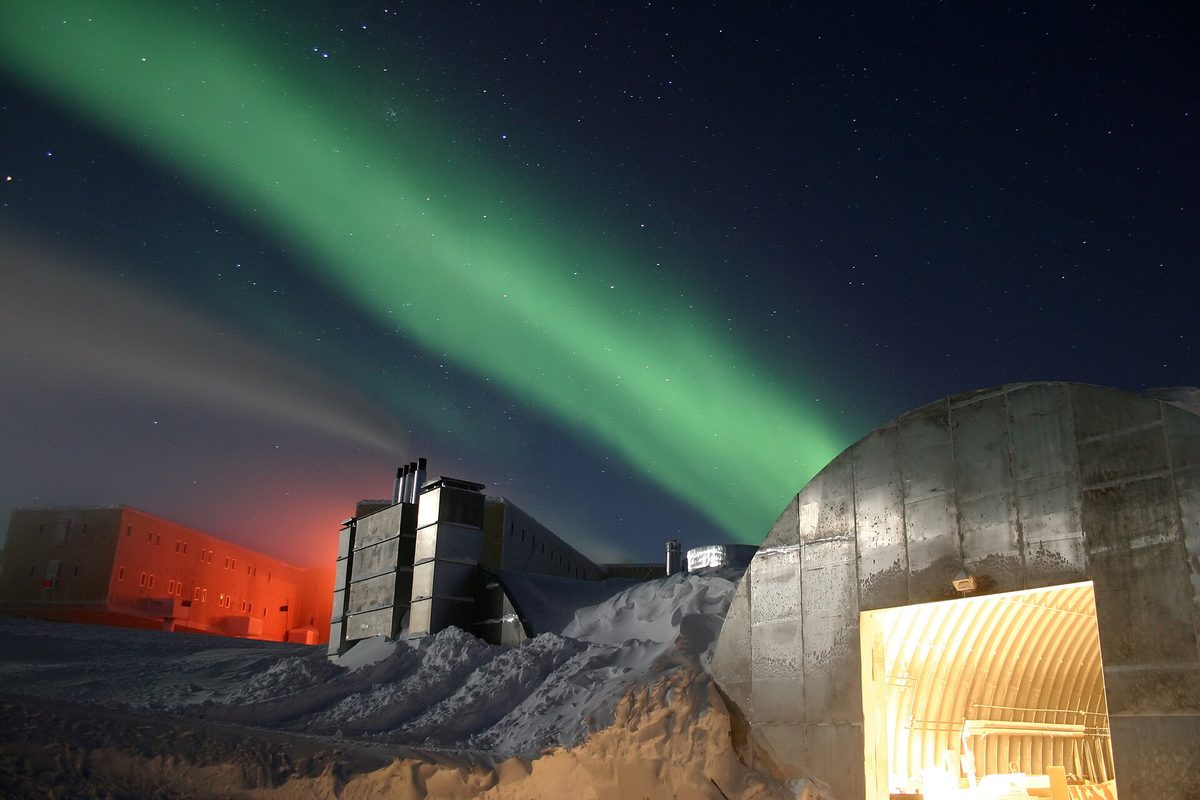
That long darkness has a consolation prize, and it is spectacular. The aurora australis — the southern lights, twin to the Arctic’s better-known aurora borealis — sets the winter sky rippling with curtains of green, pink, and violet as charged particles from the sun collide with the upper atmosphere. Few tourists ever see it, since it requires the dark skies of winter when no cruises operate, but for the winterers it’s one of the rare gifts of the long night. The same clear, dark, stable skies also make the high Antarctic plateau one of the finest places on Earth for astronomy, which is why telescopes peer outward from the South Pole. It is a place of darkness and dazzling light in equal, alternating measure.
Fascinating facts about Antarctica
Beyond the headline superlatives, Antarctica is a treasure chest of the genuinely strange. Here are some of my favourites — the kind of facts that make people say “no way” at dinner parties:
- It has a blood-red waterfall. Blood Falls, on the Taylor Glacier, oozes a deep rust-red liquid — iron-rich, ancient seawater from a hidden subglacial lake that oxidizes on contact with air.
- There are ice-free deserts. The McMurdo Dry Valleys are among the driest places on Earth, snow-free and rain-free for perhaps millions of years — so Mars-like that NASA tests equipment there.
- It’s the best place on Earth to find meteorites. Dark space rocks stand out starkly against the ice and are concentrated by the moving ice sheet, making Antarctica a premier meteorite-hunting ground.
- At the South Pole, you can stand in all time zones at once. Every line of longitude converges there, so time zones become meaningless; stations simply use the time of their home country or supply line.
- The sun doesn’t set for months — then doesn’t rise for months. The continent swings between the midnight sun of summer and the total darkness of polar winter.
- It was once warm and forested. Hundreds of millions of years ago Antarctica sat in a temperate zone as part of the supercontinent Gondwana, covered in forests; fossils of ancient plants and even dinosaurs have been found there.
- It produces the world’s largest icebergs. Tabular bergs that calve from the ice shelves can exceed the size of entire countries and drift for years.
There are dozens more where those came from — our roundup of fascinating facts about Antarctica collects the best of them in one place.
Can you actually visit Antarctica?
Here’s the fact that surprises people most: yes, you can — and far more easily than you’d think. Each summer, tens of thousands of ordinary travelers visit Antarctica, the overwhelming majority on expedition cruises to the Antarctic Peninsula, the same mild, wildlife-rich arm of the continent that the early explorers first sighted. You don’t need to be a scientist or an athlete; you need a sense of adventure, a couple of weeks, and some planning. Everything you’ve read about in this guide — the towering tabular icebergs, the penguin colonies, the historic huts, the sheer scale of the ice — is within reach of a well-organized trip.
If reading all this has stirred something in you, that’s the right instinct, and the rest of this site exists to help you act on it. Start with our overview of Antarctica cruises and the practical guide to how to get to Antarctica, figure out the best time to visit, and let our guide for every kind of traveler match the trip to you. The continent that was a myth for most of human history, and a deathtrap for its first explorers, is now one of the most extraordinary journeys an ordinary person can take.
The Southern Ocean: Antarctica’s moat
You can’t understand Antarctica without understanding the water that surrounds it. The Southern Ocean — formally recognized as the world’s newest ocean — encircles the entire continent in an unbroken ring, and it is the single greatest reason Antarctica is the way it is. Because no land interrupts it, a current called the Antarctic Circumpolar Current flows clear around the globe here, the largest ocean current on the planet, moving more water than all the world’s rivers combined. That current acts like a moat, thermally isolating Antarctica and keeping its frigid air and water from mixing freely with the warmer world to the north.
This isolation is why Antarctica is so much colder than the Arctic, why its wildlife evolved in such distinctive directions, and why the infamous Drake Passage — the stretch of that current between South America and the Peninsula — is so rough: the entire circumpolar flow squeezes through that relatively narrow gap. The same nutrient-rich, churning waters that make the crossing uncomfortable also make the Southern Ocean staggeringly productive, fuelling the krill swarms that feed the whales, seals, and penguins. If you want to feel this fact rather than just read it, our guide to the Drake Passage explains the crossing that every sea-going visitor remembers.
Why Antarctica matters to the whole planet
It would be easy to file Antarctica away as a remote curiosity, irrelevant to daily life thousands of miles away. That would be a mistake. Antarctica is one of the great engines and regulators of the global system. Its enormous white ice sheet reflects a significant share of the sun’s energy back into space, helping to keep the entire planet cool — a giant natural thermostat. The cold, dense water that forms around its edges sinks and spreads along the ocean floor, driving the deep currents that circulate heat, oxygen, and nutrients through every ocean on Earth. When Antarctica sneezes, in other words, the whole planet catches a cold.
It’s also an irreplaceable archive. The ice that has piled up over hundreds of thousands of years has trapped tiny bubbles of ancient atmosphere, and by drilling ice cores scientists can read the planet’s climate history back through multiple ice ages — a record that exists nowhere else. That’s why the research stations matter, and why the treaty that protects them is more than diplomatic housekeeping. Add in the sea-level stakes locked in that ice, and Antarctica stops being the most remote place on Earth and starts looking like one of the most consequential. Understanding these facts is the first step to caring about a place most people will never see — though, as this guide keeps insisting, more of us can see it than ever before. The regions guide shows where, and the wildlife guide shows what’s at stake.
Antarctica’s strangest places: the Dry Valleys and Blood Falls
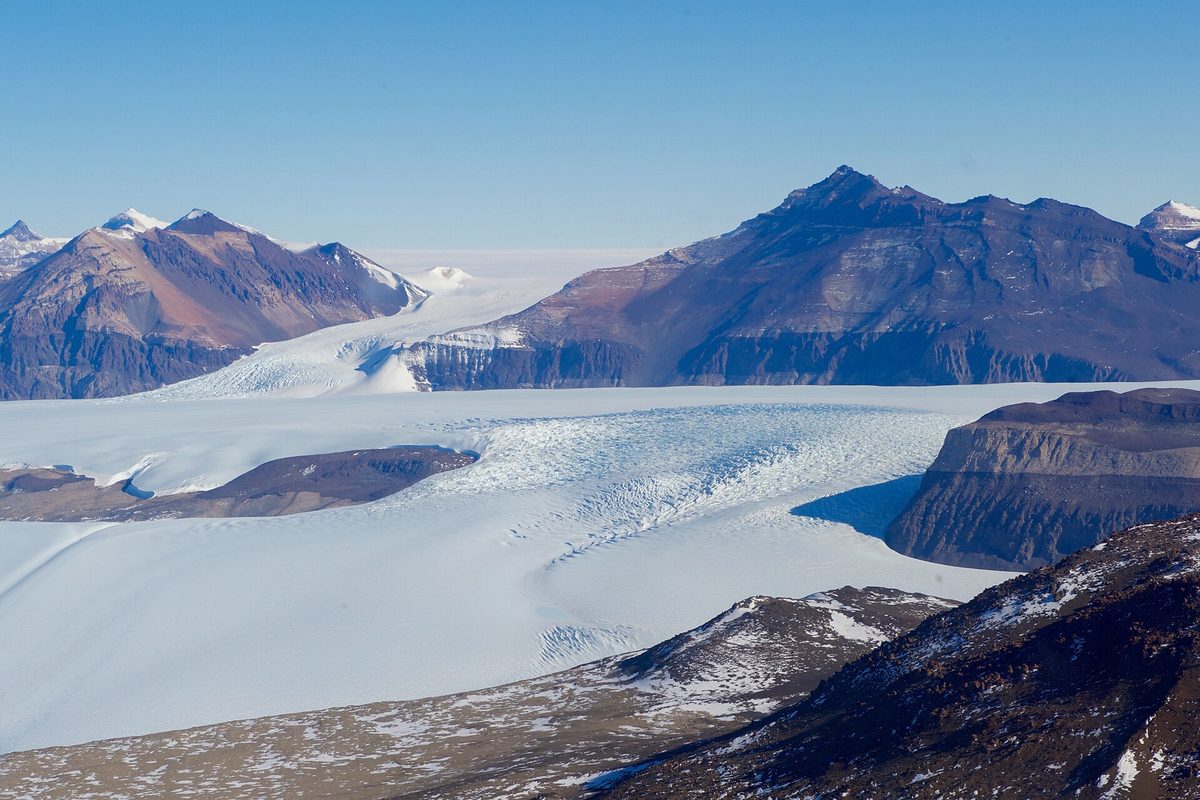
For all its uniformity of ice, Antarctica hides some genuinely bizarre landscapes, and two of them are worth a special mention. The first is the McMurdo Dry Valleys, a cluster of ice-free valleys swept bare by relentless katabatic winds that strip away any snow before it can settle. They are among the driest places on the entire planet — some areas may not have seen meaningful precipitation for millions of years — and their cold, arid, almost Martian conditions are so otherworldly that NASA uses them to test equipment bound for Mars. Standing in a Dry Valley, you would scarcely believe you were on the world’s iciest continent at all.
The second oddity lurks at the snout of the Taylor Glacier: Blood Falls, a slow, rust-red ooze that looks unnervingly like the glacier is bleeding. The cause is wonderfully strange — an ancient, iron-rich, salty lake sealed beneath the ice for perhaps a million years, its water so briny it stays liquid in the cold and so rich in iron that it oxidises to a deep red the moment it meets the air. It’s not just a curiosity; the microbes living in that sealed, sunless, oxygen-free brine are a window into how life might survive in the hidden oceans of other worlds. Antarctica, it turns out, keeps offering us previews of life beyond Earth — one more reason it remains the planet’s most fascinating laboratory, as our roundup of fascinating facts about Antarctica explores further.
Antarctica’s record-breaking superlatives
Antarctica is a continent that collects world records the way other places collect tourists. It holds, in one frozen package, more planetary extremes than anywhere else on Earth, and it’s worth gathering them in one place. It is the coldest place on the planet, having recorded −89.2°C; the windiest, with gusts measured above 320 kilometres per hour; and the driest, a desert whose interior valleys may not have seen rain in millions of years. It is also the highest continent by average elevation, thanks to that kilometres-thick cap of ice.
The superlatives keep coming. Antarctica holds about 90% of the world’s ice and the majority of its fresh water; it produces the largest icebergs on Earth, slabs that can dwarf entire countries; and it surrounds the southernmost point on the planet, the Geographic South Pole, where every direction is north. It has the planet’s strongest circumpolar ocean current, the cleanest air, and some of the darkest, clearest skies for astronomy. No other continent comes close to this concentration of extremes — which is exactly why scientists, and a growing number of travelers, find it so endlessly compelling. For the practical side of experiencing these extremes, see our guide to how cold it really gets.
How Antarctica is governed day to day
The Antarctic Treaty sets the grand framework, but it’s worth understanding how the continent is actually run on a practical level, because it’s unlike any other governance on Earth. There is no parliament, police force, or court down south. Instead, the treaty parties meet annually at the Antarctic Treaty Consultative Meeting to make decisions by consensus — everything from environmental protections to tourism guidelines flows from these gatherings rather than from any single authority.
On the ground, the system is remarkably decentralized. Each country is responsible for its own nationals and stations, operating under its own laws while respecting the shared treaty rules. Tourism, fascinatingly, is largely self-governed through IAATO, the industry body whose members enforce strict limits on landings, ship sizes, and wildlife distances — rules that are stricter, in practice, than any government imposes. It’s an imperfect, consensus-bound, almost utopian arrangement that has nonetheless kept an entire continent peaceful, demilitarized, and cooperatively managed for over six decades. Understanding it makes you appreciate just how unusual the place you’re visiting really is, as our Antarctic Treaty guide explores.
Frequently asked questions
Is Antarctica a country?
No. Antarctica is a continent, not a country — it has no government, no capital, no citizens, and no permanent population. It’s governed by the international Antarctic Treaty rather than owned by any nation, which makes it unique among the world’s landmasses. See who owns Antarctica for the full picture.
How cold does Antarctica get?
The coldest temperature ever recorded on Earth was −89.2°C (−128.6°F) at Vostok Station in 1983. The interior is brutally cold year-round, but the Antarctic Peninsula, where tourists go in summer, often sits near freezing and can rise above 10°C. Details in how cold is Antarctica.
Who owns Antarctica?
No one. Seven countries hold territorial claims that predate the Antarctic Treaty, but the 1959 treaty froze all claims and set the continent aside for peace and science. More than 50 nations are now party to it. Read the Antarctic Treaty explained.
Does anyone live in Antarctica?
Not permanently. There’s no indigenous or settled population — only scientists and support staff on rotation, numbering about 4,800 in summer and 1,200 in winter across roughly 55 nations’ research stations. See does anyone live in Antarctica.
Who discovered Antarctica?
The continent was first sighted in 1820, with a Russian expedition under Bellingshausen, the Briton Edward Bransfield, and the American Nathaniel Palmer all making claims within months. No single person is universally credited. The full story is in our heroic age of exploration guide.
Who was the first to reach the South Pole?
Norwegian explorer Roald Amundsen, on 14 December 1911. Britain’s Robert Falcon Scott reached it about five weeks later but died with his team on the return journey. It remains one of history’s most famous — and most poignant — races.
What happened to Shackleton’s Endurance?
It was trapped and crushed by pack ice in the Weddell Sea, sinking in November 1915. Remarkably, all 28 crew survived a near-two-year ordeal and were rescued. The wreck was rediscovered, beautifully preserved, in 2022. Read the full saga in our Shackleton and the Endurance guide.
Are there polar bears in Antarctica?
No — polar bears live only in the Arctic. Penguins live only in the Southern Hemisphere. The two never meet in the wild. This is the most common polar mix-up, explained in Arctic vs Antarctic.
What’s the difference between the Arctic and Antarctic?
The Arctic is a frozen ocean surrounded by land; the Antarctic is a continent surrounded by ocean. That structural difference drives the contrasts in wildlife, climate, and human history between the two poles.
Why is Antarctica a desert?
Because it’s extremely dry. Despite all the ice, very little new precipitation falls — under 200 mm a year on the coast and far less inland — which meets the definition of a desert. It’s the largest desert on Earth.
How much of the world’s fresh water is in Antarctica?
Roughly 70%, locked in an ice sheet that holds about 90% of all the ice on the planet. If it melted entirely, global sea levels would rise by around 60 metres — though that would take a very long time.
Is there a volcano in Antarctica?
Yes — several. Mount Erebus is the southernmost active volcano on Earth and holds a rare permanent lava lake, and more than a hundred other volcanoes lie buried beneath the ice. We touch on the climate-volcano link in our climate change guide.
Can tourists visit Antarctica?
Yes. Tens of thousands visit each summer, mostly by expedition cruise to the Antarctic Peninsula. It’s accessible to anyone with reasonable fitness, some time, and good planning. Start with our Antarctica cruises guide.
What time zone is Antarctica in?
All of them and none of them. Because every line of longitude meets at the South Pole, the continent has no single time zone; research stations simply adopt the time of their home country or their main supply route.
How big is Antarctica compared to other continents?
At about 14.2 million square kilometres, Antarctica is the fifth-largest continent — larger than Europe and roughly twice the size of Australia. Only Asia, Africa, North America, and South America are bigger. It looks even larger on most maps because of distortion near the poles.
How thick is the ice in Antarctica?
On average the ice sheet is well over a kilometre thick, and at its deepest it reaches close to 4.8 kilometres — about three miles of solid ice stacked over the underlying rock. That ice has accumulated over hundreds of thousands of years, which is what makes ice cores such a valuable climate record.
Is mining allowed in Antarctica?
No. The 1991 Madrid Protocol (the Protocol on Environmental Protection to the Antarctic Treaty) bans all mineral resource activity except for science, and designates the continent a natural reserve devoted to peace and science. The ban has no fixed expiry, though the protocol can be reviewed by agreement of the parties.
What is the Southern Ocean?
It’s the body of water encircling Antarctica, recognized as the world’s fifth and newest ocean. Its uninterrupted Antarctic Circumpolar Current is the largest on Earth and isolates the continent thermally, which is a big part of why Antarctica is so cold and its wildlife so distinctive.
Has anyone been born in Antarctica?
Yes, though rarely. The first was Emilio Marcos Palma, born at an Argentine base in 1978 as part of an effort to support a territorial claim. A small number of births have followed at South American bases, but there is no settled population — everyone is there temporarily.
Key dates in Antarctic history
If you want the whole sweep of Antarctica’s human story at a glance, here it is — from a continent that was pure speculation to one governed by international treaty and visited by tens of thousands each year.
| Year | Milestone |
|---|---|
| 1770s | Captain James Cook crosses the Antarctic Circle but never sights land |
| 1820 | First confirmed sightings of the continent (Bellingshausen, Bransfield, Palmer) |
| 1895 | One of the first confirmed landings on the Antarctic mainland |
| 1897–1922 | The Heroic Age of Antarctic Exploration |
| 1911 | Amundsen becomes the first to reach the South Pole (14 December) |
| 1912 | Scott reaches the Pole but dies with his team on the return |
| 1914–1917 | Shackleton’s Endurance expedition and its legendary survival story |
| 1957–58 | International Geophysical Year spurs modern scientific cooperation |
| 1959 | The Antarctic Treaty is signed (in force 1961) |
| 1978 | First human born on the continent |
| 1991 | The Madrid Protocol bans mining and protects the environment |
| 2022 | The wreck of the Endurance is rediscovered in the Weddell Sea |
It’s a remarkable arc: in the space of two centuries, Antarctica went from an unseen rumour to a deathtrap for heroes to a protected scientific commons that ordinary travelers can now experience for themselves. Few places on Earth have changed their relationship with humanity so completely, so fast.
Final thoughts
The thing I keep coming back to, after all these facts, is how Antarctica refuses to fit our categories. It’s a desert made of ice. A continent with no country. A wilderness with no natives but a hundred research stations. The coldest, driest, windiest, highest, emptiest place on the planet — and also one of the most beautiful and, increasingly, one of the most important, because what happens to its ice will shape the world the rest of us live in. Learning the facts about Antarctica isn’t just trivia; it’s a way of understanding the edges of what our planet can be.
And the best fact of all is the one this whole site is built around: you can go. The continent that swallowed Scott and tested Shackleton now welcomes travelers each summer to stand among its penguins and icebergs and feel, for a few days, the scale of something far larger than ourselves. When you’re ready to turn these facts into a trip, our guides on cruises, flights, and planning a trip for any kind of traveler are waiting. The white continent is real, it’s reachable, and it’s like nowhere else on Earth. Learn the facts, let them sink in, and then — if you possibly can — go and stand on the ice yourself, because no statistic in this guide, however staggering, quite prepares you for the silence and the scale of the place in person.
1 note
Notes are closed on this entry.