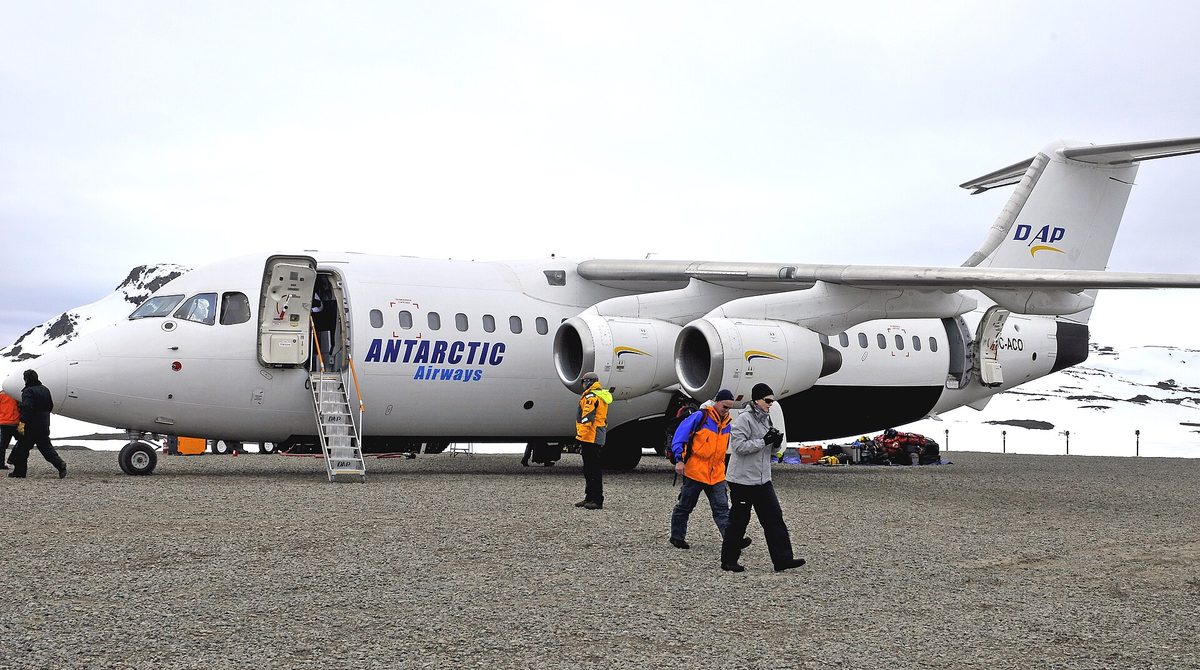
The first time I flew to Antarctica instead of sailing to it, I ate lunch in Punta Arenas, boarded a small jet, and was standing on King George Island four hours later watching penguins waddle past the gravel airstrip. No two days of pitching across the Drake Passage. No motion-sickness patches. Just a short hop over the most feared stretch of water on Earth and straight onto the ship. That is the promise of a fly cruise Antarctica trip, and after doing it both ways I understand exactly why it has become the fastest-growing way to reach the white continent.
This guide is the honest, detailed walk-through I wish I had read before I booked. I will explain how the fly-cruise actually works, what it costs in the 2026–27 season, which operators run it, what can go wrong, and who should choose it over a traditional sailing. I have flown the Drake, sailed the Drake, and waited out a weather delay on a runway at the bottom of the world, so this is the practical version, not the brochure.
What a fly cruise Antarctica trip actually is
A fly cruise Antarctica trip swaps the two-day open-ocean crossing of the Drake Passage for a roughly two-hour charter flight. Instead of leaving from Ushuaia and sailing south, you gather in Punta Arenas, Chile, fly across the Drake to King George Island in the South Shetlands, and board your expedition ship where it is already anchored in Antarctic waters. At the end of the voyage you do the same thing in reverse: the ship drops you back at the island and you fly home over the Drake rather than through it.
The industry calls this an air-cruise or fly-cruise, and a few companies brand it more vividly — Quark Expeditions sells it as the “Antarctic Express: Fly the Drake.” Whatever the name, the core idea is the same. You trade roughly four days of sailing (two each way) for two short flights, which means a complete Antarctic Peninsula trip can be done in about eight days instead of the eleven or twelve a classic sailing demands. For travellers who are short on time, prone to seasickness, or simply nervous about the Drake, that trade is the entire appeal.
How the fly-cruise works, step by step
Understanding the sequence removes most of the anxiety, so here is the day-by-day shape of a typical trip.
- Day 1 — Arrive in Punta Arenas. You fly commercially into Punta Arenas, Chile, the launch city for almost every fly-cruise. There is a mandatory group hotel night and a pre-departure briefing where the team checks your gear and explains the flight plan.
- Day 2 — Fly the Drake. Weather permitting, you transfer to the airport and board a charter jet (often a BAe 146 or similar regional aircraft) for the flight to King George Island. The crossing takes roughly two hours.
- Days 2–7 — Expedition cruising. You board the ship and spend your days exactly as a sailing passenger would: Zodiac landings, penguin colonies, kayaking, the polar plunge, and ship-cruising past icebergs and glaciers along the Peninsula.
- Final day — Fly home. The ship returns you to King George Island and you fly back to Punta Arenas, usually reaching the city in the early afternoon.
The flexibility is built around weather. If King George Island is fogged in, the flight waits, which is why every reputable operator builds buffer time into the schedule and why I will spend a whole section below on delays.
Why people choose to fly the Drake Passage
There are two honest reasons travellers pick a fly-cruise, and a third that nobody admits to until they are mid-crossing.
You save four days
The single biggest reason is time. A sailing round-trip from Ushuaia spends two days crossing the Drake in each direction — four days at sea where you see open water and seabirds but no land and no penguins. Flying erases almost all of that. If you only have a week of holiday, a fly-cruise is often the only realistic way to set foot on the continent at all.
You skip the seasickness
The Drake Passage is where the Pacific, Atlantic, and Southern Oceans collide with nothing to slow them, and it can serve up swells of six metres or more. Plenty of people sail it in flat “Drake Lake” conditions and feel fine, but plenty of others spend two days horizontal. A two-hour flight removes that gamble entirely on the way there and back.
The quiet reason: fear
Lots of travellers simply find the idea of the Drake frightening, whether or not they get seasick. Flying turns the most intimidating part of the trip into a short, ordinary plane ride. There is no shame in it — I have met seasoned sailors who fly the Drake just so they never have to think about it.

The catch: weather and King George Island
Here is the part the marketing glosses over. King George Island has notoriously fickle weather, and the gravel runway at the Chilean Frei Station has no instrument landing system worth relying on for a charter jet. Pilots need decent visibility to land and take off, and Antarctic weather can close that window in minutes. The result is that fly-cruise flights are delayed more often than sailings are, sometimes by a day or two, occasionally longer.
Operators manage this in different ways. Some hold you in Punta Arenas until the weather clears and the ship waits; others have the ship hold position and shuffle the itinerary. The good news is that you are rarely stranded in genuinely rough conditions — the system errs on the side of caution. The bad news is that a delay can eat into your Antarctic days or, in the worst case, your flight home. This is the fundamental trade of the fly-cruise: you swap the guaranteed discomfort of the Drake for the small but real risk of a weather delay.
Who a fly-cruise suits, and who should still sail
After doing both, my rule of thumb is simple. Fly if you are time-poor, seriously prone to seasickness, or genuinely anxious about the crossing. Sail if you have the days to spare, a flexible budget, and any romance at all about the journey itself.
Because here is the honest counterpoint: the Drake is part of the story. Crossing it the slow way builds anticipation, lets your body adjust to the rhythm of the ship, and rewards you with albatrosses wheeling off the stern for two solid days. The first iceberg means more when you have earned it. If that idea stirs something in you, read my companion piece on fly cruise vs sailing Antarctica before you decide, and have a look at what the Drake Passage is really like.
The flight itself: Punta Arenas to King George Island
The charter flight is the heart of the experience, so it is worth knowing what to expect. You will gather at Punta Arenas airport, often early and often with a weather hold, and board a regional jet operated on behalf of your cruise line. There is no first class and no in-flight entertainment beyond the window, which is all the entertainment you need. For much of the flight you are over cloud and water, but as you approach the South Shetlands the islands rise out of the sea, streaked with snow and ringed with ice, and the whole cabin presses against the windows.
Landing on King George Island is a thrill in itself. The runway is a gravel strip beside the Chilean and Russian bases, and as you taxi in you can usually see research buildings, fuel drums, and — almost always — a few unbothered penguins. From the airstrip it is a short Zodiac transfer out to your waiting ship. Within an hour of landing you can be cruising past your first iceberg.
What King George Island is like on arrival
King George Island is the largest of the South Shetland Islands and one of the busiest pieces of real estate in Antarctica, home to research stations from Chile, Russia, China, South Korea, and several other nations. It is not pristine wilderness — it is a working outpost — but it is unmistakably Antarctic: glaciers tumble to the shore, the air smells of cold and guano, and the wildlife is entirely indifferent to your arrival. For most fly-cruise passengers it is simply the gateway, a place you pass through on the way to the ship, but it is a memorable first and last footprint on the continent. If you want to understand the wider archipelago, my guide to the South Shetland Islands goes deeper.

The ships used on fly-cruises
Fly-cruises are almost always run on small expedition ships, typically carrying between 70 and 200 guests. There is a practical reason: the whole model depends on nimble vessels that can position near King George Island and make the most of a shorter itinerary. The pioneer of the format, Antarctica21, runs purpose-built small ships designed around the air-cruise concept, while lines like Quark, Silversea, and others have added fly-cruise departures to their fleets.
Smaller ships are a genuine advantage in Antarctica regardless of how you get there. Under IAATO rules only 100 passengers may be ashore at any landing site at once, so a 200-guest ship has to split into groups, while a 100-guest ship can land everyone together. If ship choice matters to you — and it should — spend time with my breakdown of Antarctica expedition ships and how cabin grade shapes the experience.
Sample fly-cruise itineraries
Most fly-cruises focus on the Antarctic Peninsula and the South Shetlands, the most wildlife-rich and reliably accessible corner of the continent. Here is how the common formats compare.
| Itinerary type | Total length | Days in Antarctica | Best for |
|---|---|---|---|
| Classic fly-cruise (fly both ways) | 8 days | 4–5 | Time-poor travellers, nervous sailors |
| Fly-cruise “express” | 6–7 days | 3–4 | The absolute shortest way to the continent |
| Hybrid (fly one way, sail one way) | 9–10 days | 5–6 | Experiencing the Drake once, safely |
| Extended fly-cruise (deeper Peninsula) | 9–11 days | 6–7 | More landings, Polar Circle attempts |
If you want to see how these compare with the full sailing experience, my Antarctica cruise itineraries hub lays out every route, and the fly-cruise itinerary day-by-day walks through a single trip hour by hour.
How much does a fly cruise Antarctica trip cost?
Flying is not cheap. Chartering jets to the bottom of the world is expensive, and that cost is baked into the fare, so fly-cruises generally run a few thousand dollars more than a comparable sailing on the same ship. For the 2026–27 season, expect the following ballpark per person, based on double-occupancy.
| Cabin / trip type | Typical price range (per person) |
|---|---|
| Entry-level porthole cabin, 8-day fly-cruise | $14,500 – $17,000 |
| Mid-range window or balcony cabin | $17,000 – $22,000 |
| Suite or premium small-ship | $22,000 – $26,000+ |
| Single traveller (with supplement) | add 30–100% depending on ship |
Those figures are for the cruise package including the charter flights. They do not include your international airfare to Punta Arenas, travel insurance, or the optional add-on activities. For the complete picture of what an Antarctic trip really costs once everything is added up, see my detailed Antarctica trip cost guide.
What is included, and what is not
A fly-cruise fare almost always includes the round-trip charter flights between Punta Arenas and King George Island, all meals and accommodation aboard ship, the daily Zodiac excursions and landings, the expedition team and lectures, and usually a pre-flight hotel night in Punta Arenas. What it does not include is your flight to Chile, mandatory travel insurance with medical evacuation cover, gratuities, and premium activities like kayaking, camping, or a guided summit climb, which carry extra fees. Always read the inclusions line by line, because the gap between “from” pricing and your final bill can be significant.
Which operators run fly-cruises
The fly-cruise field has grown quickly, but a handful of names dominate. Antarctica21 effectively invented the commercial air-cruise and still runs some of the most polished departures on purpose-built small ships. Quark Expeditions offers its “Antarctic Express” fly-the-Drake voyages across several vessels. Silversea brings a luxury angle to the format, and Swoop, Chimu, and other specialists package fly-cruises across multiple lines so you can compare. Because availability is genuinely limited — charter seats cap how many guests each departure can carry — fly-cruises sell out earlier than sailings, so book well ahead. My guide to Antarctica cruises covers how to choose an operator you can trust.
The best time of season for a fly-cruise
The Antarctic cruise season runs from late October to March, and fly-cruises operate across most of it. Early season (November) gives you pristine snow, dramatic ice, and courting penguins. The heart of summer (December and January) brings the longest days, the warmest temperatures, and hatching chicks. Late season (February and March) is prime time for whales and often the best discounts. Weather-wise, no month is immune to flight delays, but the long daylight of midsummer gives pilots the widest landing windows. For a month-by-month breakdown, see the best time to visit Antarctica.
How to handle flight delays like a veteran
Because delays are the defining risk of a fly-cruise, plan for them rather than hope against them. Three habits make all the difference. First, build at least one buffer night into your return travel — never book a tight onward connection out of Punta Arenas the same day your fly-cruise is scheduled to end. Second, buy comprehensive travel insurance that explicitly covers trip interruption and weather delays; this is non-negotiable for any Antarctic trip and doubly so for a fly-cruise. Third, pack a carry-on with a day or two of essentials in case you are held in Punta Arenas or, more rarely, on the island. Treat a delay as part of the adventure, not a disaster, and you will be fine. For the wider planning checklist, my Antarctica travel tips guide is the place to start.
Packing differences for a fly-cruise
Fly-cruises come with stricter luggage limits than sailings, because everything you bring has to fit on a charter aircraft. Most operators cap checked baggage at around 20 kilograms plus a small carry-on, so you cannot simply throw in “just in case” extras the way you might on a ship sailing from Ushuaia. Pack deliberately: the expedition parka is usually provided, waterproof trousers and quality base layers are essential, and rubber boots are typically loaned aboard. My full what to pack for Antarctica list translates directly, just trimmed to the weight allowance.
The hybrid option: fly one way, sail the other
My favourite compromise, and the one I now recommend most often, is the hybrid: sail the Drake in one direction and fly it in the other. You get to experience the legendary crossing once — the albatrosses, the swell, the slow build of anticipation — while capping your exposure and saving two days. It is the best of both worlds for travellers who are curious about the Drake but not willing to gamble four full days on it. Not every operator offers it, but enough do that it is worth asking.
What a typical day looks like once you are aboard
The thing worth remembering is that the flight is just the commute. Once you are on the ship, a fly-cruise day is indistinguishable from any other Antarctic expedition day, and they are glorious. You wake to the expedition leader’s voice on the cabin speaker announcing the morning’s plan, eat a big breakfast, and pull on your layers. By mid-morning you are in a Zodiac, nosing past brash ice toward a beach crowded with gentoo penguins, or cruising slowly beneath a glacier face waiting for it to calve. Lunch is back aboard, then a second landing or cruise in the afternoon, often the better light of the two. Evenings bring a recap and briefing over a drink, dinner, and — if the captain spots something — a late call to the deck for whales or a blazing sunset that refuses to end. Because the season’s daylight stretches toward 20 hours at the height of summer, the days feel enormous. You will fall into bed happily exhausted and do it all again tomorrow.
None of that changes because you flew. The only practical difference a fly-cruise makes to your time on the continent is that there is more of it relative to the length of your trip, since you are not spending the first and last 48 hours staring at open ocean. For many travellers, that density of experience is exactly the point.
Three mistakes first-timers make
The errors I see most often are all avoidable. The first is booking a same-day onward flight from Punta Arenas; if the fly-cruise runs even half a day late, you miss it, so always overnight in the city on the way home. The second is under-insuring — a bargain policy that excludes weather delays or polar evacuation is worse than useless down here, so buy cover designed for expedition travel. The third is over-packing against a strict charter weight limit, then having to repack in a panic at the airport. Pack to the allowance from the start, lean on the loaned boots and supplied parka, and you will sail through check-in. Get those three things right and the rest of the trip takes care of itself.
My honest take
I am glad fly-cruises exist, because they have opened Antarctica to people who could never spare two weeks or who would never have risked the Drake. If your time or your stomach rules out a sailing, a fly-cruise is not a lesser trip — once you are on the ship, the Antarctic experience is identical, and it is staggering. That said, if you have the days and the temperament for it, I still think sailing at least one direction is worth doing. The continent is the destination, but the Drake is the threshold, and crossing a threshold under your own keel changes how the place feels when you arrive.
Frequently asked questions
Is a fly cruise Antarctica trip safe?
Yes. The charter flights are operated by experienced polar aviation crews, and the entire system is built around weather caution — pilots simply do not fly when conditions are unsafe. The most common downside is a delay, not a danger.
How long is the flight across the Drake Passage?
The charter flight from Punta Arenas to King George Island takes roughly two hours each way, compared with about two days of sailing in each direction.
Can flights really be delayed by days?
They can. King George Island weather is unpredictable, and a delay of a day or two is uncommon but not rare. Build buffer time into your travel and carry insurance that covers weather interruptions.
Is a fly-cruise more expensive than sailing?
Generally yes, by a few thousand dollars per person, because chartering aircraft is costly. You are paying for time saved and the Drake avoided.
Do I still get seasick on a fly-cruise?
You avoid the worst of it by skipping the Drake, but you are still on a ship in Antarctic waters, which can be lively. Bring motion-sickness remedies just in case.
Where do fly-cruises depart from?
Almost all fly-cruises depart from Punta Arenas, Chile, not Ushuaia, Argentina. You fly commercially into Punta Arenas and join the group there.
How many days do I actually spend in Antarctica?
On a classic 8-day fly-cruise you typically get four to five full days of expedition cruising and landings, similar to a sailing once you subtract its Drake days.
Can I fly one way and sail the other?
Yes, some operators offer hybrid voyages that sail the Drake in one direction and fly it in the other. It is an excellent middle path.
Should I choose a fly-cruise or a regular cruise?
Choose a fly-cruise if time, seasickness, or fear of the Drake are real constraints. Choose a sailing if you value the journey and have the days. My fly cruise vs sailing comparison breaks it down in detail.
Final thoughts
A fly cruise Antarctica trip is, at its core, a clever piece of logistics that hands you the continent without the crossing. It is faster, gentler on the stomach, and for many travellers the only practical way south. Go in with clear eyes about the weather risk, protect yourself with buffer days and good insurance, and you will step off that charter jet onto King George Island with the whole white continent ahead of you. However you get there, Antarctica does not disappoint. If you are still weighing your options, start at the flights to Antarctica hub and explore the alternatives, from scenic overflights to land-based fly-in camps.