
If you ask me to describe the single trip that most people picture when they dream of the white continent, this is it: the classic antarctic peninsula itinerary, a roughly ten to twelve day expedition that flies you down to the bottom of Argentina, ferries you across the legendary Drake Passage, and then drops you into five or so days of glaciers, penguins, whales and silence so complete it rings in your ears. I have sailed this route more times than I can comfortably count, and I still get a flutter in my chest at the Ushuaia airport carousel every single time. This is the voyage I recommend to first-timers, to nervous travellers, to people who only get one shot at Antarctica in their lives. It is the greatest hits album of polar travel, and for very good reason.
What follows is an honest, day-by-day walk through how these voyages actually unfold, written from the perspective of someone who has stood on the bow at 5am watching the Lemaire Channel slide past. I will tell you what to expect, where you are likely to land, what you will see, and — crucially — why almost nothing about the printed schedule should be treated as gospel. The weather writes the real itinerary down here, and learning to love that is the secret to a good trip.
What a Classic Antarctic Peninsula Itinerary Looks Like
Let me set the shape of the thing before we dive into the daily detail. A classic Peninsula voyage is built around a simple, beautiful arc. You begin in Ushuaia, the windblown port city at the tip of Tierra del Fuego that bills itself as the end of the world. You embark on a small expedition ship — usually somewhere between 100 and 200 passengers, because the rules limit how many people can be ashore at once — and you sail east down the Beagle Channel as the sun sets. Then comes the crossing: two days of open ocean across the Drake Passage, that famous stretch of the Southern Ocean where the Atlantic, Pacific and Antarctic seas all collide.
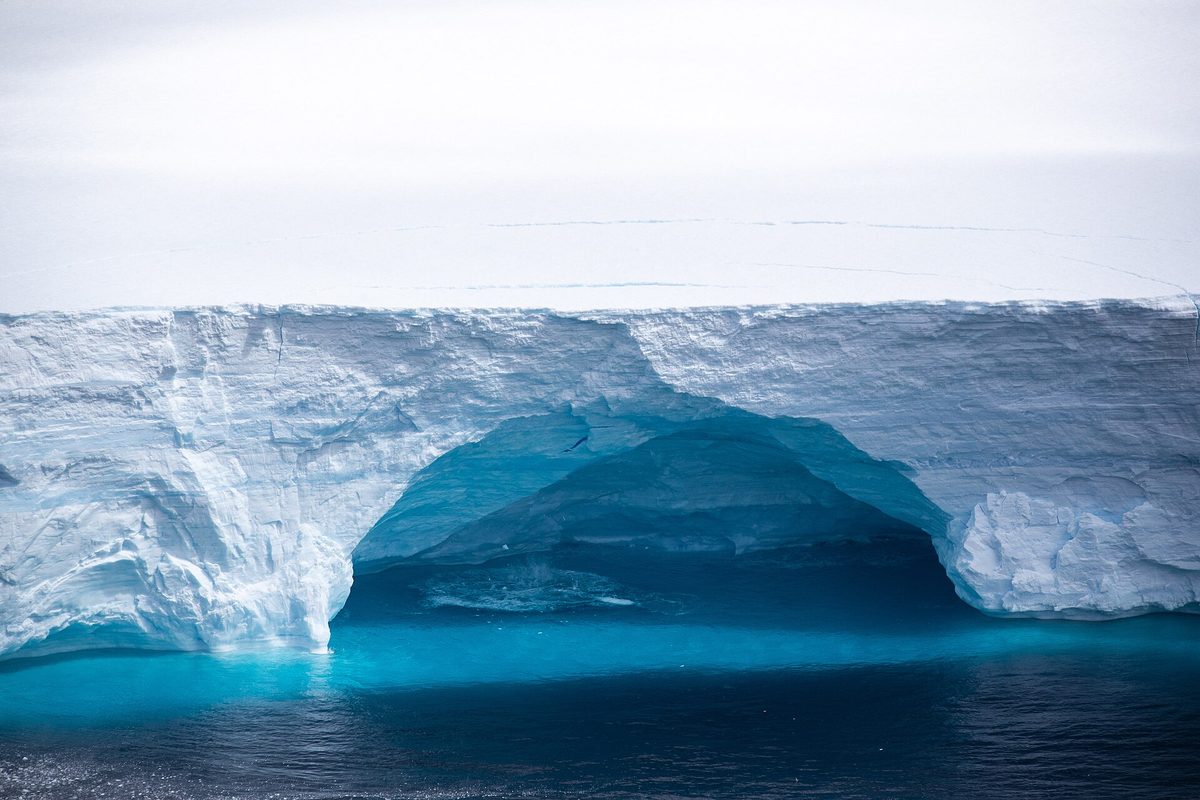
On the far side, the magic begins. For roughly five days you nose along the western edge of the Antarctic Peninsula and the South Shetland Islands, making two outings on most days — typically a shore landing and a Zodiac cruise, weather and ice permitting. You will hop into small inflatable boats, step onto beaches crowded with penguins, glide past icebergs the colour of swimming pools, and quite possibly watch humpback whales lunge-feed beside the ship. Then, all too soon, you turn north, recross the Drake, and disembark back in Ushuaia roughly twelve days after you started. That is the skeleton. Now let me put flesh on it.
A Day-by-Day Overview at a Glance
Before I narrate each day, here is the structure laid out plainly. I find people relax once they can see the whole shape on a single screen. Remember that the operator’s brochure will use slightly different wording, and that the order of the Peninsula days in particular gets shuffled constantly, but the rhythm below is what you can genuinely expect from a standard ten to twelve day departure.
| Day | Where | What you do |
|---|---|---|
| Day 1 | Ushuaia, Argentina | Fly in, overnight, explore the end-of-the-world town |
| Day 2 | Embarkation & Beagle Channel | Board the ship in the afternoon, sail east at sunset |
| Day 3 | Drake Passage | At sea; lectures, seabirds, settling in |
| Day 4 | Drake Passage | At sea; first icebergs, biosecurity check, briefings |
| Day 5 | South Shetlands / Gerlache Strait | First landing and Zodiac cruise, first penguins |
| Day 6 | Paradise Harbour / Neko Harbour | Possible continental landing, glacier cruising |
| Day 7 | Lemaire Channel / Petermann Island | Scenic sailing, Adelies, the polar plunge |
| Day 8 | Port Lockroy / Cuverville Island | Historic post office, huge gentoo colony |
| Day 9 | Half Moon Island / Deception Island | Chinstraps, volcanic caldera, last landings |
| Day 10 | Drake Passage | At sea heading north, recap lectures |
| Day 11 | Drake Passage / Beagle Channel | At sea, farewell dinner, repack |
| Day 12 | Ushuaia | Disembark in the morning, onward travel |
If you want to compare this against other route shapes — longer voyages that push south of the Antarctic Circle, or fly-cruise hybrids that skip the Drake entirely — I have written a fuller breakdown in my Antarctica cruise itineraries guide, and a more technical look at the sailing lines themselves in my piece on Antarctica cruise routes explained. For now, though, let us start at the beginning, with that long flight south.
Day 1: Arriving in Ushuaia, the End of the World
Almost every Peninsula trip begins in Ushuaia, and almost everyone arrives via Buenos Aires. You will fly into a small airport pinned between the Martial mountains and the steel-grey water of the Beagle Channel, and if the clouds part on descent you will get your first hit of the scenery to come: snow-streaked peaks dropping straight into the sea. My strong advice, repeated to anyone who will listen, is to arrive at least a day early. Flights from Buenos Aires get cancelled, baggage goes astray, and the one thing you cannot do is hold a 150-passenger ship at the dock because your connection slipped.
Ushuaia itself is a scrappy, likeable frontier town. Spend the spare day well. Wander the main drag, eat an enormous plate of king crab, photograph the cheerful “fin del mundo” signs, and maybe take the catamaran out onto the channel to warm up your sea legs and your binoculars on the cormorant and sea-lion colonies. The Tierra del Fuego National Park is a short drive away and makes a lovely half-day leg-stretch. Mostly, though, this is a day to breathe, repack your duffel, and let the reality sink in that tomorrow you sail for Antarctica.
Day 2: Embarkation and the Beagle Channel
Embarkation usually happens in the afternoon, which is a small mercy if your inbound flight is running late. You will hand over your luggage, board the ship, find your cabin, and almost immediately be swept into the first of many briefings: the mandatory lifeboat drill, the safety talk, the introduction to your expedition team. These guides — biologists, geologists, historians, seasoned Zodiac drivers — will become the most important people in your life for the next ten days, so pay attention to their names.
As the ship pulls away from the pier and noses east down the Beagle Channel, find a spot on deck with a glass of something and watch Ushuaia shrink behind you. The channel is sheltered and calm, lined with mountains, and often busy with black-browed albatrosses and petrels that will wheel along in the ship’s wake. It is a gentle, golden-hour introduction. Savour it, because by morning the water will look very different. Dinner that first night is buzzy with nervous excitement; everyone is sizing up the swell forecast and pretending they are not.
Days 3 and 4: Crossing the Drake Passage
Ah, the Drake. No stretch of water has a fiercer reputation, and none is more misunderstood. For two full days you are at sea, crossing roughly 1,000 kilometres of open ocean between Cape Horn and the South Shetland Islands. The crossing can be a millpond — the so-called “Drake Lake” — or it can be a heaving, white-knuckle “Drake Shake” with swells big enough to rearrange your cabin. Most crossings sit somewhere in between, and modern stabilised ships handle it far better than the old timbers that gave the passage its name. I have written a whole separate guide to crossing the Drake Passage for those who are nervous, but here is the short version: take your seasickness medication before you need it, not after, and trust that almost everyone finds their sea legs by the second day.
Far from being dead time, the Drake days are when an expedition cruise earns its name. The expedition team runs a packed programme of lectures — penguin biology, ice and glaciology, the heroic age of exploration, photography workshops. You will be fitted for your rubber boots, vacuum every speck of foreign seed and soil out of your outerwear at a mandatory biosecurity check (the rules to keep Antarctica pristine are strict and wonderful), and spend hours on deck watching the seabirds. The Drake is one of the great pelagic birding theatres on Earth. Wandering albatrosses with three-metre wingspans, cape petrels, prions and shearwaters all shadow the ship. And then, somewhere on the afternoon of day four, someone spots the first iceberg, and the whole ship erupts.
Day 5: Landfall — The South Shetlands and Gerlache Strait
You will probably wake on day five to a changed world. The pitching has stopped, the water has gone glassy, and outside your porthole there is ice — proper, architectural, blue-white ice. Crossing into the calmer waters around the South Shetland Islands and into the Gerlache Strait feels like passing through a gate. The first landing of the trip is an event no one forgets. You will pull on your waterproofs, queue at the mudroom, step down the gangway into a Zodiac, and motor toward a shore that is very probably covered in penguins.
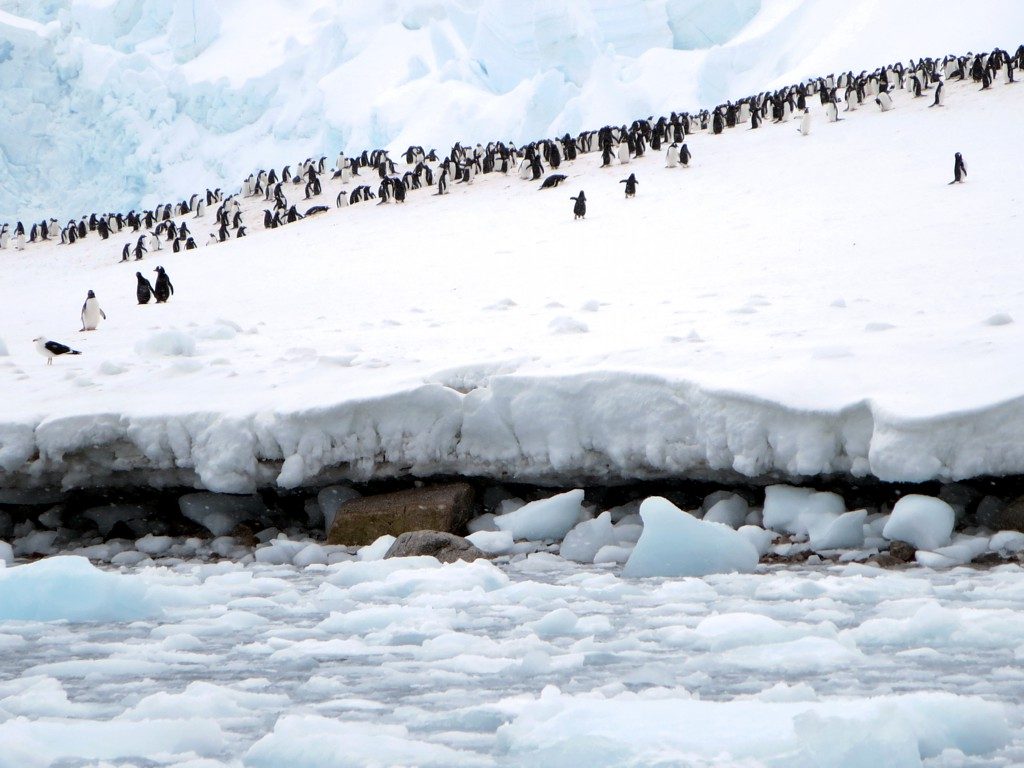
That first colony is sensory overload in the best way. Gentoo penguins porpoising through the shallows, waddling up their “penguin highways,” squabbling over pebbles, and filling the air with a smell you will never quite forget — a rich, ammoniac, fishy funk that becomes oddly nostalgic by the end of the trip. The expedition team marks out paths with flags and asks you to keep the regulation distance, but the penguins themselves have not read the rulebook and will often waddle straight up to inspect your boots. Pair the landing with a Zodiac cruise among the bergs and you have the template for the days ahead: two outings, two completely different flavours of wonder.
Day 6: Paradise Harbour and Setting Foot on the Continent
If the South Shetlands and many Peninsula landings are technically on offshore islands, somewhere around the middle of the voyage most itineraries aim to put you on the Antarctic continent proper — that coveted seventh-continent footstep. Paradise Harbour and nearby Neko Harbour are the classic spots for this. Paradise Harbour is, frankly, one of the most beautiful places I have ever set eyes on: a horseshoe of black cliffs, hanging glaciers, and water so still it doubles every mountain back at you. There is often a small research station here, sometimes with a cheeky colony of blue-eyed shags nesting on its roof.
Neko Harbour offers a continental landing with a steep snow slope you can climb for a view back over the bay — and, if you are lucky and patient, the heart-stopping crack-and-roar of the glacier calving into the sea. The Zodiac cruising here is sublime: your driver will cut the engine and let you drift in total silence among grounded icebergs, listening to the fizz of ancient air escaping the melting ice. Leopard seals haul out on floes with that unnervingly reptilian smile, crabeater seals doze in the sun, and the whole scene is so cinematic it barely feels real. This, more than anywhere, is why people come.
Day 7: The Lemaire Channel and the Polar Plunge
The Lemaire Channel has a nickname among ship’s crews — “Kodak Gap” — and once you have sailed it you will understand exactly why. It is a narrow, seven-mile passage between the mainland and Booth Island, hemmed in by sheer thousand-foot cliffs that seem close enough to touch, often choked with sculpted ice that forces the captain to thread a careful line. On a still morning with the peaks reflected in the water, it is the single most photographed stretch of the entire Peninsula, and the bow will be a thicket of tripods and gasps. Whether the ship can transit it at all depends entirely on the ice; some years it is wide open, others it is a solid white plug. That uncertainty is part of the romance.
South of the channel, sites like Petermann Island bring Adelie penguins into the mix alongside the gentoos, and the scenery only gets more dramatic. Day seven is also, on many ships, polar plunge day. Yes, people genuinely leap into water hovering around the freezing point, harnessed to a safety line, for a few seconds of full-body, brain-scrambling cold and a lifetime of bragging rights. I have done it several times and I cannot honestly recommend it on grounds of comfort — but the whooping, the towels, the hot chocolate afterwards, and the photo are all worth it. Skip it if you like; nobody judges.
Day 8: Port Lockroy and the Penguin Post Office
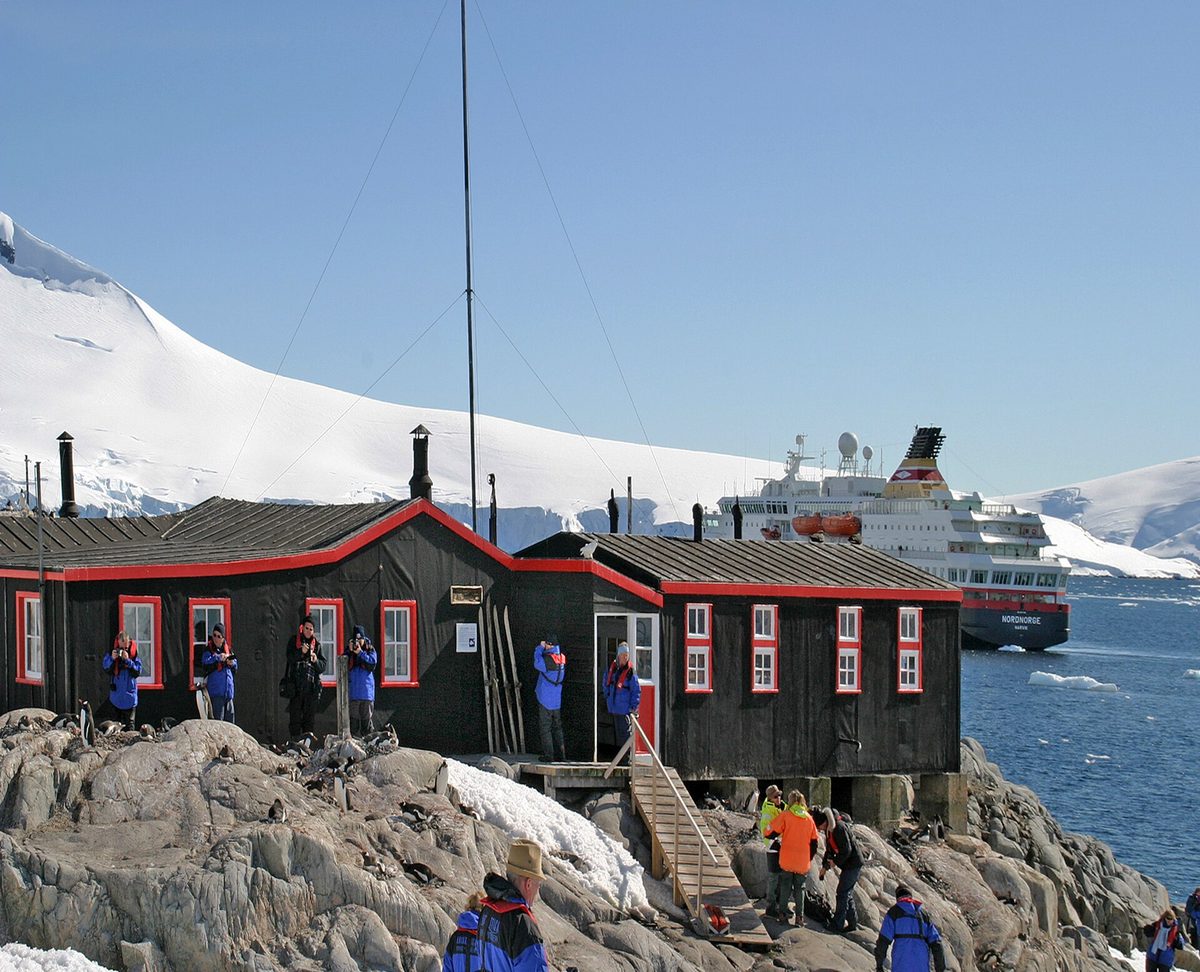
No classic antarctic peninsula itinerary would be complete without a visit to Port Lockroy, and it is genuinely one of the most charming half-days you will spend down south. Tucked on tiny Goudier Island, Lockroy was a British wartime and research base, lovingly restored and now run as a living museum and — gloriously — a working post office, the southernmost in the world. You can buy postcards, get your passport stamped, and send a letter home that will trundle north on the next ship and arrive, weeks later, postmarked from Antarctica. It is gimmicky and I adore it.
What makes Lockroy unforgettable, though, is the gentoo colony that shares the island with the museum staff. The penguins nest right up against the historic huts, utterly unbothered by the souvenir shop, and there is a long-running citizen-science study comparing penguins on the visited half of the island with the undisturbed half. Pair Lockroy with a landing at Cuverville Island, home to one of the largest gentoo rookeries on the Peninsula, and you have a day of penguins on an almost overwhelming scale. To go deeper on the creatures you will meet, my full guide to Antarctica wildlife is worth a read before you sail.
Day 9: Half Moon Island, Deception Island and the Chinstraps
As the voyage swings back toward the South Shetlands for the journey north, you often get one or two final, characterful landings. Half Moon Island is a curved sliver of rock that hosts a noisy, comical colony of chinstrap penguins — named for the thin black line that runs under their chins like the strap of a tiny helmet. They nest on the rocky ridges and commute up improbably steep slopes, and watching them stumble and recover is endlessly entertaining. There is often an Argentine research station here too, and the mountain backdrop of Livingston Island across the water is staggering.
Deception Island is the other great South Shetland set-piece, and it is unlike anywhere else on the trip. It is an active volcano whose collapsed caldera forms a flooded, ring-shaped harbour; ships sail in through a dramatic narrow gap called Neptune’s Bellows and drop anchor inside the crater itself. Ashore you will find the rusting ruins of an old whaling station, black volcanic sand, and geothermally warmed shallows where the truly brave take a steaming, sulphurous dip. It is a haunting, end-of-the-world sort of place, and a fitting last hurrah before you point the bow back toward Cape Horn.
How Many Outings You Actually Get
People often ask how many landings they will get, and the honest answer is: it depends, but a typical Peninsula voyage delivers somewhere between six and ten shore excursions plus a similar number of Zodiac cruises, spread across roughly five active days. On a good day you do two outings; on a weather-bound day you might do one or none. Here is roughly how a strong day breaks down:
- Early morning: wake-up call from the expedition leader over the tannoy, often before 7am, with the day’s plan and the latest ice report.
- Morning outing: a shore landing of one to two hours, or a Zodiac cruise among ice and wildlife.
- Midday: back aboard for a hot lunch and a chance to thaw, while the ship repositions to the afternoon site.
- Afternoon outing: the second excursion, usually the opposite flavour to the morning’s.
- Evening: a daily recap and briefing in the lounge, dinner, and — if the captain spots whales or alpenglow on the peaks — a spontaneous call back out on deck.
That flexibility is the entire point of an expedition. If you want a deeper sense of how the active days flow hour by hour, I have mapped out exactly that in my a day-by-day Antarctica itinerary companion piece.
Days 10 and 11: Crossing the Drake Home
Turning north is always bittersweet. You will re-enter the Drake Passage for two more sea days, and the mood aboard is noticeably different from the outbound crossing — quieter, more reflective, full of people scrolling back through thousands of photographs and trying to process what they have just seen. The lecture programme continues, often with sessions on conservation, climate, and how to be an advocate for Antarctica back home. There is usually a slideshow of the trip’s best passenger and crew photos, a farewell dinner, and a round of warm, slightly teary goodbyes with the people you have shared the adventure with.
The seabirds escort you north again, and as you approach Cape Horn the temperature creeps up and the first hints of land smell — green, earthy, alive — drift across the deck after days of nothing but salt and ice. You will repack your duffel, settle your bar bill, and lay out your disembarkation luggage in the corridor the final night. Sleep is hard to come by; your head is still full of glaciers.
Day 12: Disembarkation in Ushuaia
The ship docks back in Ushuaia early on the final morning, and disembarkation is brisk — breakfast, a last coffee, and you are walking down the gangway by mid-morning, slightly unsteady on land that no longer moves. Most people connect to an afternoon flight back to Buenos Aires, though I always counsel building in a buffer here too, because a delayed inbound flight on day one has nothing on a missed connection home with a head full of Antarctica. Some travellers tack on a few days in Patagonia, or fly onward to the Iguazu Falls, to soften the re-entry into ordinary life. However you do it, you will leave changed. Everyone does.
Why the Schedule Is a Guideline, Not a Promise
I cannot stress this enough, so I am giving it its own section: the day-by-day itinerary your operator sends you is a hopeful sketch, not a contract. In Antarctica, the captain and expedition leader rewrite the plan constantly — daily, hourly, sometimes mid-Zodiac-ride — in response to wind, swell, fog, and the ever-shifting pack ice. A site that is a flat calm paradise one morning can be an unlandable mess of brash ice and katabatic wind the next. This is not a failure of planning. It is the defining feature of genuine expedition travel.
The travellers who have the best time are the ones who arrive with loose expectations and deep trust in their team. You may not transit the Lemaire. You may miss a specific named landing you had your heart set on. But in exchange, you might get a humpback whale surfacing beside your Zodiac, an unplanned landing at a site the crew had not visited in weeks, or a midnight call to the deck because the whole sky has gone pink. Surrender to the weather and the Southern Ocean will reward you. Fight it, and you will spend a once-in-a-lifetime trip resenting the one thing nobody can control. Choose surrender.
How Long Should the Trip Be?
The ten to twelve day Peninsula classic exists because it is the shortest sensible way to see the real Antarctica by ship while still getting five proper days on the ice. Could you go shorter? Yes — fly-cruise options exist that skip the Drake by flying you across to King George Island, and I cover those in my guide to a short Antarctica trip. Could you go longer? Absolutely, and many do, adding the Antarctic Circle, the Weddell Sea, or even South Georgia and the Falklands. If you are weighing up exactly how much time to commit, my honest breakdown of how many days you need in Antarctica will help you decide.
My personal view, after many seasons down south, is that the classic eleven-day voyage hits a genuine sweet spot. It is long enough to cross the Drake, settle into the rhythm of the ice, and rack up a satisfying haul of landings, but short enough to fit into a normal person’s holiday allowance and budget. For most travellers, this is the trip. Save the epics for your second visit — and trust me, there is very often a second visit.
Best Time of Year to Sail the Peninsula
The Antarctic cruise season runs roughly from late October through March, and the Peninsula changes character as the summer progresses. Early season brings pristine snow, dramatic ice, and penguins courting and building nests. The heart of the season, December and January, gives you the longest days — near twenty-four hours of usable light — and hatching chicks. Late season, February and March, is peak whale-watching, with the snow retreating and fluffy penguin chicks fledging. There is no bad time, only different trade-offs, which I lay out fully in my guide to the best time to visit Antarctica. The wildlife and scenery deliver across the board.
What You Will Actually See
Setting expectations on wildlife is one of the kindest things I can do for a first-timer, so here is an honest tally of what a typical Peninsula trip turns up. Not every voyage gets every species, but across five active days the cumulative haul is genuinely spectacular:
- Penguins: gentoos almost everywhere, chinstraps in the South Shetlands, and Adelies as you push further south. Three species in a single trip is the norm.
- Seals: Weddell seals lazing on floes, crabeater seals in numbers, the predatory leopard seal, and the occasional huge Southern elephant seal.
- Whales: humpbacks are the stars, often curious and close; minke and the mighty orca also appear, with sightings improving as the season goes on.
- Seabirds: wandering and black-browed albatrosses, cape and giant petrels, skuas, blue-eyed shags and snowy sheathbills.
- Ice and landscape: tabular icebergs, hanging glaciers, calving ice fronts, and mountains that fall straight into the sea.
Life Aboard the Ship Between Outings
People sometimes worry that the time between landings will drag, and I promise you it does not. A good expedition ship is a floating field station, humming with activity. There is a near-constant stream of expert talks, an open bridge policy on most vessels where you can stand beside the officers and watch them navigate the ice, and binocular-toting guides scattered around the decks ready to point out a distant blow or a hauled-out seal. Meals are surprisingly excellent given where you are, the bar fills with storytelling each evening, and the library and lounge are perfect for thawing out with a book and a view that never stops being astonishing.
The vibe is more summer camp for curious adults than luxury cruise, even on the plusher ships. You will fall into an easy rhythm: wake-up call, outing, lunch, outing, recap, dinner, repeat. By day three on the Peninsula you will know everyone’s name, have a favourite expedition guide, and have completely forgotten what your phone is for. That digital detox, forced by the lack of reliable signal, is one of the quiet gifts of the trip.
What to Pack for the Outings
The single most important principle of Antarctic clothing is layering, because you will be sweating up a snow slope one minute and sitting motionless in a Zodiac in spray the next. Most operators provide the bulky waterproof outer parka and the essential rubber muck boots, so check what is included before you spend a fortune. Beyond that, the kit that matters most is:
- Waterproof trousers — non-negotiable for wet Zodiac landings; you will be sitting on damp tubes and stepping into shallow surf.
- Thermal base and mid layers — merino wool and fleece you can add or shed as the activity level changes.
- Warm gloves plus thin liner gloves — so you can operate a camera without freezing your fingers.
- A proper hat, neck gaiter and good sunglasses — the glare off snow and water is fierce even on grey days.
- A dry bag and lots of memory cards — to protect your camera from spray and your sanity from running out of storage.
For a fuller rundown of the experiences this kit unlocks — the kayaking, camping, mountaineering and photography add-ons many ships offer — have a look at my guide to things to do in Antarctica.
Choosing the Right Ship and Operator
Not all Peninsula voyages are equal, and the ship you choose shapes the trip as much as the itinerary. Smaller vessels of around 100 to 200 passengers get everyone ashore faster and more often, because IAATO regulations cap the number of people allowed on land at any site to 100 at a time; on a big ship of 500-plus, you may spend a chunk of your active days waiting your turn or doing ship cruising instead of landing. My consistent advice is to prioritise a genuine expedition ship with a high guide-to-guest ratio over a large cruise liner, even if the cabins are a little less plush. For a wider survey of the vessels, styles and price brackets available, my overview of Antarctica cruises is the place to start.
It is also worth understanding how the Peninsula fits into the broader geography of the continent, because some travellers assume Antarctica is one uniform place when in fact the Peninsula, the Ross Sea, and the interior are wildly different worlds. If you are curious about where else you could go and how the landing sites are distributed, my guide to Antarctica’s regions and landing sites paints the full picture.
Should You Add the Antarctic Circle?
A tempting upgrade on the classic Peninsula trip is to push further south and cross the Antarctic Circle at 66 degrees 33 minutes south, the line below which the sun does not set at midsummer. These voyages run a little longer — usually twelve to fourteen days — and trade some of the famous northern Peninsula sites for sheer remoteness and the bragging rights of having crossed the Circle. The ice gets heavier, the landings sparser, and the sense of true wilderness deepens. It is a wonderful trip, but I would only steer a first-timer there if they have the extra days and a hunger for the road less travelled. If it appeals, I have written specifically about crossing the Antarctic Circle and what it adds.
Is the Classic Peninsula Trip Right for You?
Here is my blunt assessment. If you want the most reliable, wildlife-rich, scenically jaw-dropping introduction to Antarctica that fits into a fortnight, the classic Peninsula voyage is almost certainly your trip. It suits first-timers, photographers, wildlife lovers, and anyone who wants to genuinely set foot on the seventh continent rather than just sail past it. It asks of you only two things: a tolerance for the Drake Passage, which medication and modern ships have largely tamed, and a willingness to let the weather be in charge. Give it those, and it will give you the trip of a lifetime. I have never met a single person who regretted going — only people who wished they had gone sooner.
Frequently Asked Questions
How long is a classic Antarctic Peninsula itinerary?
The classic Peninsula voyage runs ten to twelve days door to door, including your arrival day in Ushuaia, two days crossing the Drake Passage each way, and roughly five active days exploring the Peninsula and South Shetland Islands. Eleven days is the most common length on offer.
How many landings will I actually get?
On a typical trip you can expect somewhere between six and ten shore landings plus a similar number of Zodiac cruises, usually two outings per active day. The exact number depends entirely on weather and ice, and a well-run small ship will maximise your time ashore.
Do I have to cross the Drake Passage?
On a classic ship-based Peninsula itinerary, yes — two days each way. If the Drake genuinely terrifies you, fly-cruise options exist that fly you across to the South Shetlands instead, skipping the open-ocean crossing, though they cost more and offer slightly fewer days on the ice.
Will I get seasick crossing the Drake?
Possibly, but it is very manageable. Modern stabilised ships handle the swell far better than older vessels, and most people find their sea legs within a day. Take your seasickness medication before the crossing begins rather than waiting for symptoms, and you will likely be fine.
What wildlife will I see on the Peninsula?
Expect gentoo, chinstrap and Adelie penguins, several seal species including Weddell, crabeater and leopard seals, and whales such as humpbacks, minke and orca. Add a rich cast of seabirds like albatrosses and petrels, and the cumulative wildlife haul over five days is extraordinary.
Can I actually set foot on the Antarctic continent?
Yes. While some landings are on offshore islands, most classic itineraries include at least one true continental landing, typically at Neko Harbour or Paradise Harbour, so you can genuinely claim your seventh-continent footstep rather than only seeing it from the water.
Why does the itinerary keep changing?
Because the captain and expedition leader rewrite the plan daily in response to wind, swell, fog and shifting pack ice. The printed schedule is a hopeful guideline, not a guarantee. This flexibility is the defining feature of real expedition travel, and embracing it leads to the best trips.
What is the best month to sail the Peninsula?
The season runs from late October to March. Early season offers pristine ice and courting penguins, December and January bring the longest daylight and hatching chicks, and February and March are best for whales and fledging chicks. Every month has its own appeal.
Is the polar plunge mandatory?
Absolutely not. The polar plunge is an optional, supervised leap into near-freezing water for those who want the thrill and the bragging rights. Plenty of passengers skip it entirely and watch from the deck with a hot chocolate. Nobody judges either choice.
Final Thoughts
The classic Antarctic Peninsula voyage endures as the most popular way to see the white continent for one simple reason: it works. It delivers the penguins, the whales, the glaciers, the Drake, the continental footstep and the silence, all wrapped into a manageable fortnight, all guided by experts who live for this. Treat the printed schedule as a loose promise, trust your captain and the weather, pack your patience alongside your thermals, and you will come home with a head full of images that no photograph quite captures. I have sailed south many times, and the moment the first iceberg appears still undoes me every time. Go. You will not regret it.
Related Reading
- Antarctica cruise itineraries guide
- Antarctica cruise routes explained
- how many days you need in Antarctica
- a day-by-day Antarctica itinerary
- crossing the Antarctic Circle
- a short Antarctica trip
- Antarctica cruises
- crossing the Drake Passage
- Antarctica wildlife
- things to do in Antarctica
- the best time to visit Antarctica
- Antarctica’s regions and landing sites