
Somewhere in the middle of the Drake Passage, with the ship rolling through grey swells and most passengers gone quiet below, a wandering albatross appeared off the stern and simply hung there — three and a half metres of wing held motionless on the wind, banking and gliding for an hour without a single flap. That was the moment I became a convert. The antarctica birds are the most underrated wildlife of the whole journey south, and learning to watch them turns the long ocean crossings from an ordeal to endure into a privilege to savour. This guide introduces every group you can expect to see, from the colossal albatrosses to the dainty storm petrels, with tips on how to identify and photograph them.
The short version: beyond the penguins, the Southern Ocean hosts a spectacular community of seabirds — albatrosses with the longest wings on the planet, several kinds of petrel and prion, predatory skuas, the scavenging snowy sheathbill, the vivid blue-eyed shag, and graceful Antarctic terns. The Drake Passage and the open water around South Georgia are the prime birding theatres, and the birds follow the ship, giving you superb views from the deck.
Antarctica birds: the seabirds and albatrosses you will meet
Antarctic seabirds are masters of a brutal environment, and most of them are tube-nosed — members of the order that includes albatrosses, petrels, and storm petrels, all equipped with salt-excreting glands and tubular nostrils that let them drink seawater and smell food across vast distances. They spend almost their entire lives at sea, coming to land only to breed, and many circle the entire Southern Ocean in a single year. Once you understand that these are oceanic wanderers rather than coastal birds, their effortless command of the wind makes perfect sense.
You do not need to be a dedicated birder to enjoy them, but a little knowledge multiplies the pleasure enormously. The table below sorts the main groups by where and how you will encounter them.
| Group | Star species | Where you see them | Wingspan / size |
|---|---|---|---|
| Albatrosses | Wandering, black-browed | Drake Passage, open ocean | Up to 3.5 m (wandering) |
| Giant petrels | Southern & northern giant petrel | Near colonies, behind ships | ~2 m wingspan |
| Fulmarine petrels | Cape petrel, snow petrel, Antarctic petrel, southern fulmar | Open water, ice edge | ~0.8–1.1 m |
| Storm petrels | Wilson’s storm petrel | Following the ship | Tiny, ~40 cm |
| Skuas | South polar & brown skua | Penguin colonies | ~1.3 m |
| Sheathbill | Snowy sheathbill | On the ship; colonies | Pigeon-sized |
| Shags | Antarctic (blue-eyed) shag | Rocky coasts | ~1.2 m |
Albatrosses: the longest wings on Earth
The albatrosses are the headline act, and the wandering albatross is the king of them all, possessing the largest wingspan of any living bird at up to three and a half metres. Watching one shadow the ship across the Drake is a near-religious experience: it uses a technique called dynamic soaring to extract energy from the wind gradient above the waves, travelling thousands of kilometres with almost no flapping. Wanderers can circumnavigate the Southern Ocean repeatedly and live for over fifty years, mating for life and returning to sub-Antarctic islands like South Georgia to breed.
You will also meet the black-browed albatross, a large bird with a striking dark “eyebrow” and a wingspan over two metres, often the most numerous albatross on the crossing. Grey-headed and the beautiful light-mantled sooty albatross round out the likely list, the latter trailing long, mournful calls as pairs perform synchronised courtship glides along the cliffs of South Georgia. For many travellers, the albatrosses alone justify the rough passage across the Drake Passage.
Giant petrels: the vultures of the Southern Ocean
If the albatross is the aristocrat, the giant petrel is the undertaker. These big, heavy-billed birds — there are two near-identical species, the northern and southern giant petrel — fill the ecological role of vultures, scavenging seal carcasses and penguin remains and squabbling over them in a flurry of outstretched wings. Up close they are formidable, with a hooked bill and a habit of “running” across the water to take off. Despite their slightly gruesome reputation they are superb fliers, and the pale “white morph” of the southern giant petrel, dusted with dark flecks, is genuinely beautiful against a leaden sky.

Petrels, fulmars, and prions: the mid-sized multitudes
Between the giants and the tiny storm petrels lies a wonderful diversity of mid-sized tubenoses. The cape petrel, or pintado (“painted”) petrel, is a favourite — boldly checkered black and white, it wheels around the ship in flocks and is impossible not to love. The snow petrel is the ethereal opposite: pure white with black eyes and bill, one of the very few birds that breeds far inland on the continent itself, nesting on bare rock among the nunataks. The Antarctic petrel, patterned brown and white, spends most of its life on the wing over the pack ice, while the southern fulmar and the delicate blue petrel and prions flicker low over the swells in fast, twisting flight.
Wilson’s storm petrel: tiny and astonishingly abundant
Look down at the ship’s wake and you will often see small, dark, swallow-like birds pattering their feet on the surface as they pick food from the water. These are Wilson’s storm petrels, and despite weighing little more than a sparrow they are thought to be among the most abundant birds on the planet, with a population in the tens of millions. They breed in rock crevices on Antarctic and sub-Antarctic coasts and forage by “walking on water,” dangling their long legs to dance across the surface as they feed on krill and plankton. They are a delight to watch precisely because they are so improbable — such a fragile-looking creature thriving in the world’s roughest ocean.
The cape petrel: the bird everyone remembers
If one smaller seabird wins the hearts of a shipload of passengers, it is almost always the cape petrel. Boldly chequered in black and white like a flying chessboard, it gathers in lively flocks around vessels, wheeling and jinking just off the rail in numbers that make it easy to watch and photograph. Spanish-speaking sailors named it the pintado, or “painted,” petrel, and the name fits perfectly. Cape petrels breed on cliffs and rocky slopes around the Antarctic and sub-Antarctic and spend the rest of the year roaming the Southern Ocean. They are tame enough and abundant enough that even on a grey, queasy day in the Drake they will lift your spirits, and they are usually the first species new birders learn to name with confidence. Keep an eye on the wake whenever you are at sea and you will rarely be without their company.
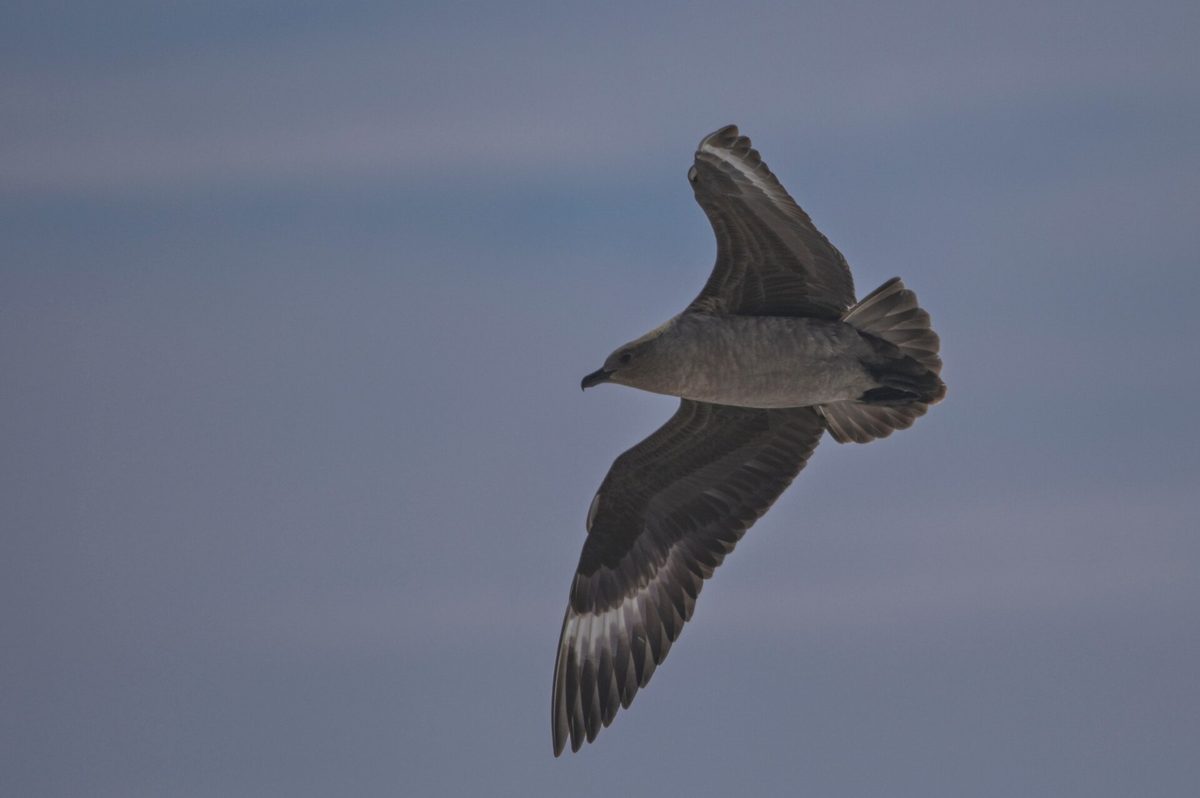
Skuas: the pirates of the colonies
Every penguin colony has its skuas, and they are not for the squeamish. South polar and brown skuas are powerful, gull-like predators and scavengers that patrol the rookeries, snatching unguarded eggs and chicks and harrying other birds to steal their food in a behaviour called kleptoparasitism. They will dive-bomb a person who strays too close to their nest, so guides keep groups well clear. As unsentimental as they are, skuas are a vital part of the system, recycling the dead and keeping the colonies in check. Watch one work a colony and you understand why the penguins guard their chicks so fiercely, a tension explored in our guide to Antarctica’s penguins.
The snowy sheathbill: Antarctica’s only true land bird
The snowy sheathbill is the eccentric of the group and a guaranteed crowd-pleaser, because it frequently lands on the ship to investigate the passengers. Snow-white but shaped almost like a pigeon, it is the only bird that breeds on the Antarctic Peninsula without webbed feet, because it does not swim or fish — instead it scavenges around penguin colonies and seal haul-outs, eating everything from spilled krill to droppings to afterbirth. It is, frankly, a bird with disgusting habits and enormous charm, waddling fearlessly between your boots while everyone reaches for their cameras. As Antarctica’s only real terrestrial bird, it holds a special place in the continent’s fauna, described more fully in our guide to the animals of Antarctica.
Blue-eyed shags and Antarctic terns
Two more coastal birds reward attention. The Antarctic shag — also called the blue-eyed shag or imperial cormorant — is a handsome black-and-white seabird with a vivid ring of blue skin around the eye and a yellow caruncle at the base of the bill, often seen nesting in tight colonies on rocky points and diving for fish in the shallows. The Antarctic tern, meanwhile, is a graceful grey-and-white bird with a blood-red bill, easily confused with the Arctic tern that migrates down for the southern summer — a reminder that some of these birds commute between the planet’s two polar regions in a single year. Both are regular sightings on Peninsula landings.
Are penguins birds too?
It is worth stating plainly: penguins are birds, the most famous birds in Antarctica by far, simply ones that traded flight for swimming. They are so central to the experience that they have their own guides, and I would not dream of squeezing them into this seabird overview. If penguins are what you are really after, start with our complete guide to Antarctica penguins and the dedicated piece on emperor penguins. This guide is about the flying birds you will meet alongside them — the ones that make the open-water stretches so rewarding.
The Drake Passage: the great birding theatre
For seabird watching, the two-day crossing of the Drake Passage is not dead time — it is the main event. Out here, far from land, the albatrosses, petrels, and prions gather behind the ship, riding the turbulence off the hull and giving prolonged, close views that are impossible to get on land. Dedicated birders spend the entire crossing on the stern deck, and even casual passengers are usually amazed by how much life surrounds a ship in the middle of the apparently empty ocean. The rougher the weather, ironically, the better the soaring conditions for the big albatrosses. Our full guide to the Drake Passage explains what to expect from the crossing itself.
Where and when to watch Antarctic birds
Birds are present throughout the November-to-March season, but timing shifts the experience. Early season brings the start of breeding, with birds in fresh plumage and colonies filling up. Midsummer is peak chick season at the skua and shag colonies. The open-water birding on the Drake and around South Georgia is excellent all season. South Georgia deserves special mention as one of the greatest seabird islands on Earth, with albatross colonies you can walk among and the air thick with petrels and prions. For the geography, see our guide to Antarctica’s regions, and to choose your dates, our guide to the best time to visit Antarctica.
Tips for birdwatching and photography at sea
A few habits make all the difference. Spend time on the open stern deck rather than behind glass, dress warmly enough to stay out for long stretches, and bring binoculars — for birds, unlike whales and seals, they are genuinely useful. For photography, a long lens and a fast shutter speed are needed to freeze a banking albatross, and panning with the bird as it crosses the wake produces the best flight shots. Ask the expedition’s ornithologist to help you tell a black-browed from a grey-headed albatross or a snow petrel from a fulmar; learning the identifications in real time, with an expert at your elbow, is one of the quiet joys of the voyage. Keep your gear dry in the spray, as our guide to what to pack for Antarctica describes.
How to identify albatrosses at sea
Telling the albatrosses apart is one of the great satisfactions of a Drake crossing, and it is easier than it looks once you focus on a few features. Start with size and overall colour. A truly enormous bird with a mostly white body and long, narrow wings tipped and trailed in black is a wandering albatross — the older the bird, the whiter it becomes, so the palest individuals are the venerable elders. A smaller albatross with a dark back, a clean white underwing bordered in black, and a dark smudge through the eye is a black-browed, the species you will see most often. If the head looks frosty grey and the bill shows a yellow ridge, you are likely watching a grey-headed albatross. And a slender, all-dark, smoky-grey bird that glides with particular grace, often in synchronised pairs along a cliff, is the light-mantled sooty albatross. Naming them as they bank past the stern transforms an hour on deck into an absorbing puzzle.
Birds of the pack ice versus birds of the open ocean
It helps to think of Antarctic birds in two broad arenas. The open ocean — the Drake Passage and the deep water around the islands — belongs to the great soarers: the albatrosses, the larger petrels, and the prions that exploit the endless wind. The pack ice and the continent’s edge, by contrast, are the realm of true ice specialists like the snow petrel and the Antarctic petrel, birds that have evolved to nest on bare rock surrounded by ice and to forage along the floes. A handful, like the giant petrels and skuas, bridge both worlds, following ships across the open sea and scavenging the colonies on land. Knowing which arena you are in tells you which birds to expect, and the transition from open-ocean soarers to ice-edge specialists is one of the subtle pleasures of sailing south toward the continent. The geography of those zones is mapped in our guide to Antarctica’s regions.
The role seabirds play in the ecosystem
Seabirds are not merely decorative; they are a working part of the Antarctic system. As predators they crop fish, squid, and krill across enormous areas of ocean; as scavengers, giant petrels and skuas recycle the carcasses of seals and penguins; and as transporters of nutrients, the vast colonies fertilise the land and shallow seas with guano, fuelling the mosses and the inshore food web. The same dependence on krill that drives the whales and penguins applies to most of the birds too, which is why their fortunes rise and fall with the health of the Southern Ocean. To see how every thread connects, our guide to Antarctic krill and the food web is the place to start.
Conservation: albatrosses in trouble
The albatrosses that so define the Southern Ocean are also among the most threatened birds on Earth. Many species are in decline, chiefly because they are hooked and drowned on longline fishing gear when they dive for bait, and because introduced rodents devastate their island breeding colonies. International agreements and simple measures — weighting lines, setting them at night, using bird-scaring streamers — have helped, and the eradication of rats from South Georgia has been a landmark conservation success. But the broader picture remains fragile, and the same krill and climate pressures that affect every Antarctic animal apply here too. Watching a wandering albatross, it is sobering to remember how precarious its future is. Our overview of Antarctica wildlife sets out the wider conservation context.
Frequently asked questions about Antarctic birds
What birds live in Antarctica besides penguins?
A rich community of seabirds: albatrosses (wandering, black-browed and others), giant petrels, smaller petrels and prions, Wilson’s storm petrels, south polar and brown skuas, the snowy sheathbill, the blue-eyed shag, and the Antarctic tern. Most are tube-nosed ocean wanderers that come ashore only to breed.
What is the bird with the largest wingspan in Antarctica?
The wandering albatross, which has the largest wingspan of any living bird at up to about 3.5 metres. It uses dynamic soaring to glide thousands of kilometres across the Southern Ocean with almost no flapping, and it is a common sight behind ships crossing the Drake Passage.
Where is the best place to see albatrosses?
At sea on the Drake Passage crossing, where they follow the ship, and on the breeding islands of South Georgia and the Falklands, where you can see colonies up close. The open ocean gives the best flight views; the islands give the best views of birds on the nest.
Why do birds follow the ship in Antarctica?
Ships create turbulence and updrafts off the hull that soaring birds use to save energy, and they stir the water, occasionally bringing food to the surface. Albatrosses, petrels, and prions will shadow a vessel for hours, which is exactly why the deck is such a rewarding place to watch them.
What is a snowy sheathbill?
Antarctica’s only land bird that breeds on the Peninsula without webbed feet. White and pigeon-shaped, it is a scavenger around penguin colonies and often lands on ships to investigate passengers. It does not swim or fish, making it an oddity among the region’s otherwise ocean-going birds.
Do Arctic terns really fly between both poles?
Yes. The Arctic tern makes one of the longest migrations of any animal, breeding in the far north and travelling to Antarctic waters for the southern summer, so it effectively experiences two summers a year. You may see it alongside the resident Antarctic tern, which it closely resembles.
Are Antarctic seabirds endangered?
Several are, especially the albatrosses, which are among the most threatened bird families on the planet due to longline fishing bycatch and introduced predators on their breeding islands. Conservation measures and island restoration projects have helped some populations, but many remain in decline.
Do I need to be a birdwatcher to enjoy Antarctic birds?
Not at all. Even travellers who have never owned a pair of binoculars are usually captivated by an albatross gliding off the stern or a sheathbill waddling around their boots. A little knowledge deepens the pleasure, and the expedition’s ornithologist will happily teach you, but the spectacle speaks for itself.
What is the difference between a petrel and an albatross?
Both are tube-nosed seabirds, but albatrosses are far larger with much longer, narrower wings built for sustained gliding, while petrels are generally smaller and more varied, from the two-metre giant petrels down to the tiny storm petrels. As a rule of thumb, the biggest birds gliding effortlessly behind the ship are albatrosses; the smaller, more fluttery or checkered ones are petrels.
Can you visit seabird colonies in Antarctica?
Yes, especially on South Georgia and the Falklands, where albatross, shag, and petrel colonies can be visited under guidance at a respectful distance. On the Antarctic Peninsula itself you will see shags and skuas around the landing sites. All visits follow strict wildlife rules to avoid disturbing nesting birds, as our guide to wildlife viewing etiquette explains.
When is the best time for birdwatching in Antarctica?
Seabirds are present across the whole November-to-March season, and the open-water birding on the Drake Passage is excellent throughout. Early season offers fresh breeding plumage, while midsummer is peak activity at skua and shag colonies. For sheer numbers of nesting albatrosses and petrels, a South Georgia itinerary at almost any point in the season is hard to beat.
Final thoughts
The antarctica birds are the soundtrack and the constant companions of a Southern Ocean voyage, present even when the whales and seals are not. Give the albatrosses your time on the Drake, learn the cape petrel and the snow petrel, laugh at the sheathbill, and you will come home with a richer sense of how thoroughly life has colonised this ocean. Best of all, the birding costs you nothing extra — it happens from the deck, on the days everyone else is hiding from the swell. To complete the picture, explore our guides to Antarctica wildlife, the whales of Antarctica, and where to see wildlife in Antarctica.