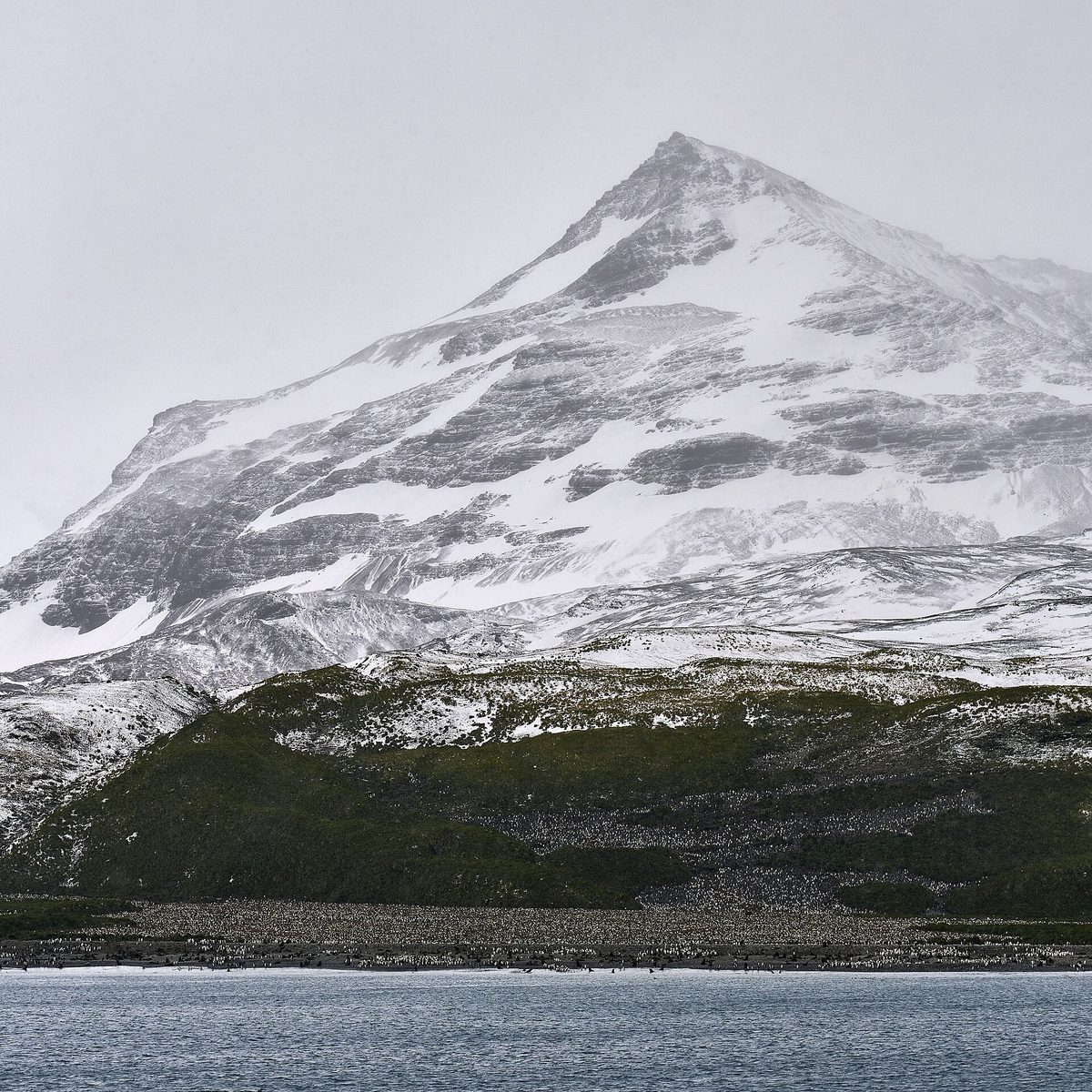
If someone forced me to choose a single greatest wildlife destination on the entire planet, I would not hesitate: it is South Georgia Island, a remote, mountainous crescent in the Southern Ocean that holds more concentrated, more overwhelming animal life than anywhere else I have ever stood. I have watched hundreds of thousands of king penguins stretch to the horizon, stepped over snoozing elephant seals the size of cars, and ducked beneath wandering albatross gliding on three-metre wings — all in a single, dizzying day. People come to Antarctica for the ice; they come to South Georgia for life on a scale that defies belief.
This is also one of the most history-soaked places in the south, the island where Ernest Shackleton’s greatest journey ended and where he lies buried among the rusting ruins of the whaling era. It is harder and costlier to reach than the Antarctic Peninsula, demanding a long ocean voyage, but ask anyone who has been and they will tell you the same thing: South Georgia is the trip of a lifetime within the trip of a lifetime. In this guide I will tell you why, and exactly what to expect.
South Georgia Island: The Serengeti of the Southern Ocean
People reach for grand comparisons to describe South Georgia Island — “the Galapagos of the poles,” “the Serengeti of the Southern Ocean” — and for once the hype is justified. This is not Antarctica proper but a subantarctic island, far enough north to escape the permanent ice yet deep enough into the cold to host wildlife in genuinely staggering numbers. The combination of rich surrounding seas, ice-free breeding beaches and isolation has produced one of the great wildlife spectacles on Earth.
What sets South Georgia apart is sheer density. Where a Peninsula landing might offer a colony of a few thousand penguins, here you stand before hundreds of thousands of king penguins at once, the beaches carpeted with elephant seals and overrun by fur seals. It is a sensory assault — the noise, the smell, the constant motion — that no photograph or film can prepare you for. It is the undisputed crown jewel of the wider Antarctica regions and landing sites.
Where Is South Georgia?
South Georgia lies in the South Atlantic, roughly 1,400 kilometres east-southeast of the Falkland Islands and about 2,000 kilometres from the Antarctic Peninsula. It is a long, narrow, fiercely mountainous island around 170 kilometres in length, its spine formed by the Allardyce Range, whose highest peak, Mount Paget, rises nearly 3,000 metres straight from the sea. More than half the island is permanently covered in ice and snow, with glaciers tumbling to the shore between green, tussock-covered lowlands.
It is a British Overseas Territory, administered together with the South Sandwich Islands from the Falklands, with no permanent civilian population — only a tiny government and research presence at King Edward Point and the museum staff at Grytviken. Its remoteness is the whole point: it is hard to reach, and that difficulty has kept it wild. Most travellers arrive as part of a long voyage that also takes in the Falkland Islands and the Antarctic Peninsula.
Why South Georgia Is the Greatest Wildlife Show on Earth
The numbers at South Georgia are almost comical in their excess. The island is home to the overwhelming majority of the world’s Antarctic fur seals — several million animals breed here each summer — and roughly half the world’s southern elephant seals. Its king penguin colonies number in the hundreds of thousands of birds, and its cliffs and tussock hold millions of nesting seabirds, from albatross to tiny storm petrels. No single place I know packs in so much life.
This abundance exists because the seas around South Georgia are extraordinarily productive, fed by nutrient-rich currents that support vast swarms of krill — the small crustacean at the base of the entire Southern Ocean food web. Everything radiates from that krill: the penguins, the seals, the whales offshore, the seabirds. To understand the creatures you will meet, my guide to Antarctica wildlife is the essential companion to this one.
King Penguins: The Beaches That Defy Belief
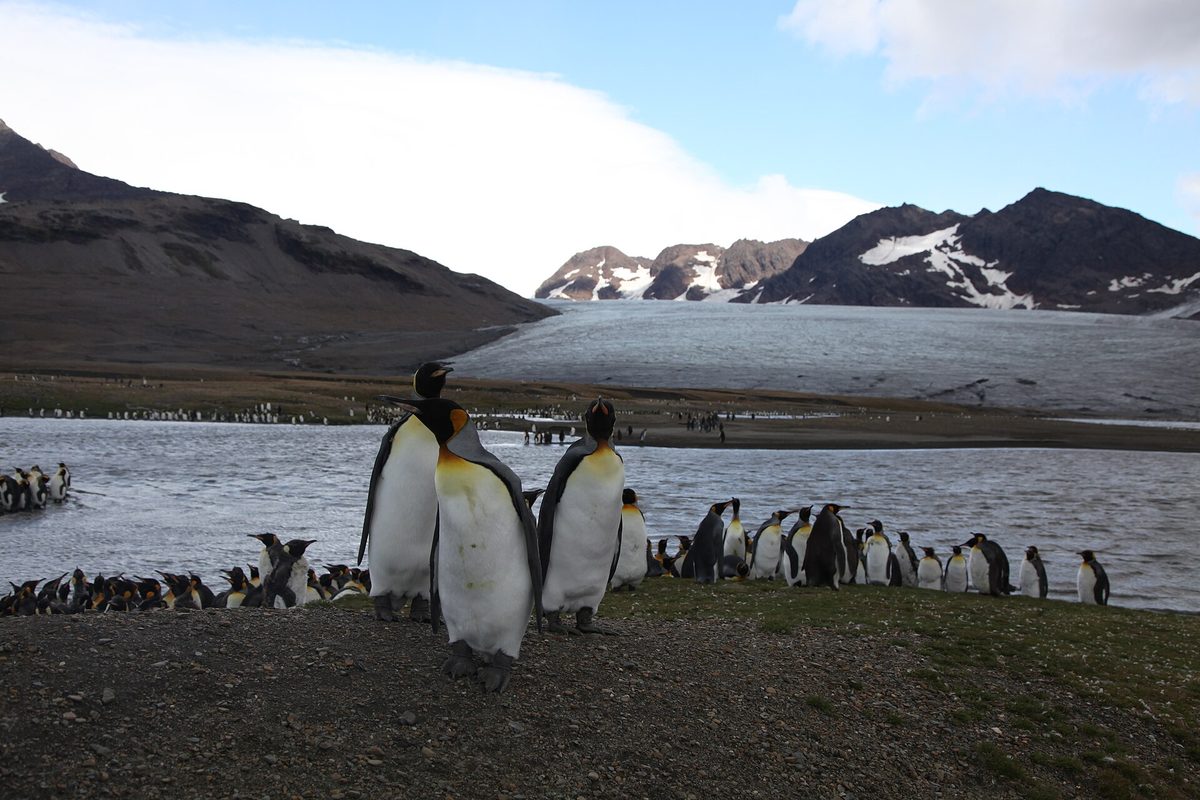
The signature animal of South Georgia is the king penguin, the second-largest penguin species, taller and more regal than any you meet on the Peninsula, with splashes of vivid orange at the throat and ears. And here they gather in numbers that simply have to be seen to be believed. The great colonies — at Salisbury Plain, St Andrews Bay and Gold Harbour — hold tens and even hundreds of thousands of birds, an unbroken carpet of penguins flowing from the surf to the foot of the glaciers.
St Andrews Bay is perhaps the most staggering of all, with an estimated 150,000 king penguins or more crowding a single beach beneath a backdrop of mountains and ice. Standing among them — keeping the required distance, though the curious chicks often approach you — is one of the most humbling experiences in all of travel. The brown, woolly chicks, once mistaken by early sailors for a separate species and dubbed “oakum boys,” add their own comedy to the spectacle.
The Seals: Fur Seals and Elephant Seals
If the penguins are the headline, the seals are the boisterous supporting cast — and on some beaches, the main obstacle. Antarctic fur seals breed here in the millions, and early in the season the beaches seethe with territorial bulls and skittish pups. The young fur seals are fast, fearless and prone to bluff-charging visitors, and guides spend much of their energy keeping a respectful, safe distance between travellers and these lively animals.
Then there are the southern elephant seals, the largest seals on Earth, the great bulls weighing up to four tonnes. They haul out in vast wallowing harems, the males rearing up to bellow and battle in clouds of spray and sand. To walk a South Georgia beach is to thread between sleeping giants, the air thick with their noise and smell. It is wildlife not behind glass or at a distance but all around you, going about its ancient business as if you were not there.
Albatrosses and the Great Seabird Cities
Above and beyond the beaches, South Georgia is one of the most important seabird breeding grounds on the planet. The star is the wandering albatross, the bird with the longest wingspan of any living creature, which nests on protected offshore islets such as Prion Island. To watch these vast, serene birds perform their courtship dances, or glide effortlessly over the swell on wings that barely move, is a privilege that hardened travellers speak of in hushed tones.
The island also hosts grey-headed, black-browed and light-mantled albatross, millions of burrowing petrels and prions, macaroni penguins in huge colonies, and the South Georgia pipit — the world’s most southerly songbird and the island’s only one. The pipit’s story is central to one of conservation’s great recent triumphs, which I will come to shortly. For now, simply know that the air here is as full of life as the beaches.
Grytviken: A Whaling Ghost Town
The human heart of South Georgia is Grytviken, a former whaling station tucked into a sheltered cove, now a hauntingly atmospheric ghost town. Founded in 1904 by the Norwegian captain Carl Anton Larsen, it was the first and longest-lived of the island’s whaling stations, and its rusting tanks, flensing platforms and ruined buildings stand as a stark monument to an industry that nearly emptied the Southern Ocean of whales. Today king penguins and fur seals wander freely among the wreckage.
Grytviken is also where you find the few signs of present-day life: the small South Georgia Museum, housed in the old manager’s villa, the restored white church where you can still ring the bell, a tiny post office, and the British government and research base at neighbouring King Edward Point. It is a place of powerful contrasts — industrial decay, natural abundance and quiet remembrance all in one small bay. It ranks among the most moving of all the historic bases and stations you can visit.
Shackleton’s Grave and the Greatest Survival Story
For many visitors, the emotional summit of a South Georgia voyage is a simple graveside. In the little cemetery at Grytviken lies Sir Ernest Shackleton, the great polar explorer who died here of a heart attack in 1922 at the start of a final expedition. By tradition, travellers gather at his grave to raise a toast — usually of whisky — to “the Boss,” and it is a genuinely affecting ritual, even for those who arrived knowing little of his story.
And what a story it is. After his ship Endurance was crushed by Weddell Sea ice in 1915, Shackleton led his men to safety in an epic that ended on South Georgia: an 800-mile open-boat voyage from Elephant Island, followed by the first crossing of the island’s unmapped mountains and glaciers to reach the whaling station at Stromness and raise the alarm. Not one of his men was lost. Standing on the island where that crossing ended, looking up at the peaks he traversed, you feel the weight of it. The tale begins in the Weddell Sea, and ends here.
The Triumph of the Rat Eradication
South Georgia is the setting for one of the greatest conservation successes of our time. For two centuries, rats and mice that arrived on sealing and whaling ships devastated the island’s ground-nesting birds, eating eggs and chicks and driving species like the South Georgia pipit toward oblivion. Between 2011 and 2018 a remarkable project spread bait by helicopter across the entire ice-free island — the largest rodent eradication ever attempted — and in 2018 South Georgia was declared rodent-free.
The results have been spectacular. The pipit’s song has returned to beaches that had been silent for generations, and burrowing seabirds are recolonising at speed. To visit South Georgia today is to witness an ecosystem in active, joyful recovery — which is precisely why the island’s strict biosecurity rules, designed to keep it free of new invaders, matter so much. It is a rare good-news story, and a deeply hopeful one.
Other Landing Sites and the Landscape
Beyond the famous king penguin beaches and Grytviken, South Georgia offers a wealth of landings, each with its own character. A strong voyage will sample several, weather permitting. Here are some of the sites you may hear named:
| Site | Why it’s special |
|---|---|
| Salisbury Plain | One of the largest king penguin colonies, on a broad glacial plain |
| St Andrews Bay | The biggest king colony of all, beneath mountains and glaciers |
| Gold Harbour | Kings, elephant seals and a glacier in a jewel-box amphitheatre |
| Grytviken | Whaling ruins, museum, church and Shackleton’s grave |
| Fortuna Bay | Kings and the end of Shackleton’s famous mountain crossing |
| Prion Island | Boardwalk among nesting wandering albatross |
| Stromness | The whaling station Shackleton finally reached |
The scenery itself rivals the wildlife. Glaciers spill between green tussock slopes, jagged peaks catch the low subantarctic light, and waterfalls thread the cliffs. It is a landscape of extraordinary drama, and a wonderful contrast to the pure white of the Antarctic Peninsula further south.
The Weather and Conditions
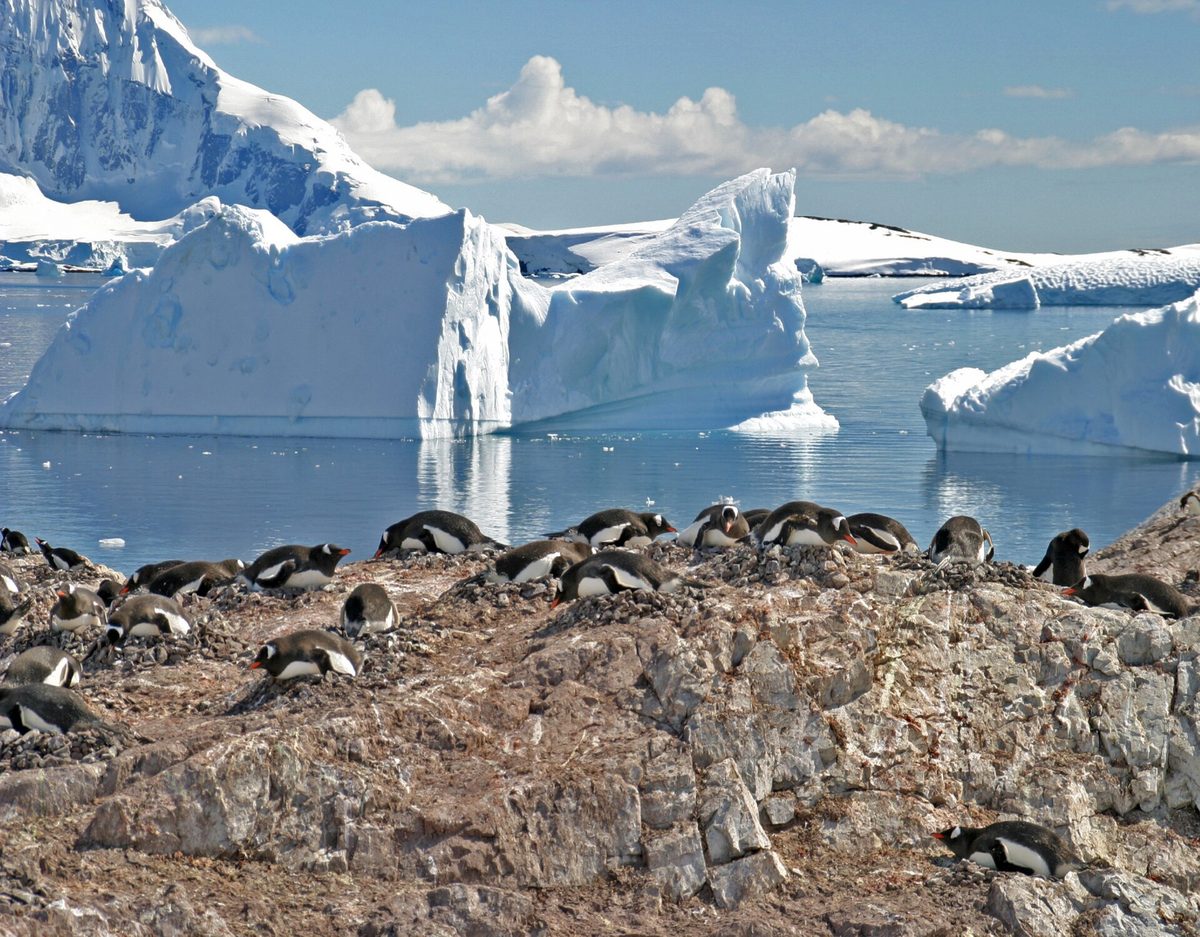
South Georgia’s weather is notoriously fierce and changeable, even by Southern Ocean standards. The mountainous spine wrings ferocious winds and sudden squalls from the passing storms, and a calm sunny morning can turn to driving sleet within the hour. Landings are frequently disrupted, and flexibility is essential; expedition teams seize good weather windows wherever they find them, sometimes reshuffling the whole day’s plan at short notice.
Temperatures in summer are cool rather than savage, generally a few degrees above freezing at sea level, but the wind-chill and wet make good gear vital. Layering, a serious waterproof shell and sturdy waterproof boots for surf landings are non-negotiable. My full checklist of what to pack for Antarctica applies here in full, with the added emphasis that South Georgia landings are often wetter and muckier than those further south.
Getting to South Georgia
There is no easy way to reach South Georgia, and that is part of its magic. The island has no airport for visitors; it is accessible only by sea, and the voyage is a serious one. Most travellers come on a longer expedition cruise that departs from Ushuaia or the Falklands and combines South Georgia with the Falklands and the Antarctic Peninsula — typically an 18-to-23-day epic that ranks among the great voyages left in the world.
The crossing from the Falklands to South Georgia takes a couple of days across open ocean, and the seas can be rough. But the reward is proportionate to the effort. For how these grand itineraries are structured, see my overview of Antarctica cruise itineraries, and for the broader options my guide to Antarctica cruises. South Georgia is rarely a destination on its own; it is the glittering centrepiece of a longer journey.
Biosecurity: Protecting a Fragile Paradise
Given the hard-won triumph of the rat eradication and the island’s irreplaceable wildlife, South Georgia enforces some of the strictest biosecurity rules in the world. Before every landing, visitors must thoroughly clean and inspect all clothing, boots and equipment, vacuuming pockets and Velcro, scrubbing boot soles and checking for a single seed or insect. It is meticulous, slightly obsessive work, and absolutely essential.
These measures protect the island from new invasive species that could undo decades of recovery in a single careless landing. As a visitor you become, briefly, a guardian of the place, and most people take the responsibility seriously and even gladly. It is a small price for the privilege of walking among such abundance, and a model for responsible travel everywhere.
When to Visit South Georgia
South Georgia is visited during the Antarctic travel season from October to March, and the experience shifts as summer progresses. Each part of the season has its own rewards:
- October and November — male elephant seals battling for harems, fur seals beginning to gather, snow still deep and dramatic, king penguins with large brown chicks.
- December and January — high summer, fur seal pups everywhere (and the most boisterous beaches), long daylight, busy colonies.
- February and March — king penguin colonies at their fullest with chicks of all ages, fur seals calmer, the best chance of settled weather and whales offshore.
There is no bad time, only different highlights. Since South Georgia is part of a longer voyage, the timing usually follows the wider trip; my guide to the best time to visit Antarctica helps you weigh the season as a whole.
Frequently Asked Questions
Is South Georgia part of Antarctica?
Not strictly. South Georgia is a subantarctic island in the South Atlantic, lying north of the Antarctic Convergence in some definitions and well north of the continent itself. It is a British Overseas Territory administered with the South Sandwich Islands. But it is almost always visited as part of an Antarctic expedition cruise, and its cold-climate wildlife makes it feel thoroughly polar.
Why is South Georgia so famous for wildlife?
Because its surrounding seas are extraordinarily rich in krill, supporting wildlife in numbers found almost nowhere else. The island hosts the majority of the world’s Antarctic fur seals, around half the world’s southern elephant seals, hundreds of thousands of king penguins and millions of seabirds, including the wandering albatross. The density and accessibility of this wildlife make it arguably the greatest such spectacle on Earth.
Can you visit Shackleton’s grave on South Georgia?
Yes. Sir Ernest Shackleton is buried in the small cemetery at Grytviken, and visiting his grave is a highlight of most South Georgia voyages. By tradition, travellers gather to raise a toast to “the Boss.” Nearby you can also explore the whaling ruins, the South Georgia Museum and the restored church.
How do you get to South Georgia Island?
Only by sea. There is no visitor airport, so travellers arrive on expedition cruises, usually as part of a longer itinerary combining the Falkland Islands, South Georgia and the Antarctic Peninsula. These voyages typically run 18 to 23 days from Ushuaia or the Falklands, with a couple of days of open-ocean sailing to reach the island.
What is the best king penguin colony on South Georgia?
St Andrews Bay is the largest, with an estimated 150,000 or more king penguins on a single beach beneath mountains and glaciers. Salisbury Plain and Gold Harbour are also magnificent. Which you visit depends on weather and your itinerary, but any of the three is an unforgettable, almost overwhelming spectacle.
Is South Georgia really free of rats now?
Yes. Following a vast helicopter-borne baiting project between 2011 and 2018 — the largest rodent eradication ever attempted — South Georgia was declared rodent-free in 2018. Ground-nesting birds, including the South Georgia pipit, are recovering strongly. Strict biosecurity rules now aim to prevent any new invasive species from arriving.
How rough is the sea getting to South Georgia?
It can be rough. The open-ocean crossings to and around South Georgia pass through some of the windiest seas on Earth, and swell is common. Modern expedition ships have stabilisers and the crossings are shorter than the Drake’s worst, but anyone prone to seasickness should be prepared. The island’s own weather is also famously fierce and changeable.
Do I need special preparation to land on South Georgia?
Yes — biosecurity is taken very seriously. Before landing you must thoroughly clean and inspect all clothing, boots and gear to ensure you carry no seeds, soil or insects ashore. You will also be briefed on keeping a safe distance from fur seals, which can be aggressive, and on staying clear of the wildlife generally. The rules protect a fragile, recovering paradise.
Final Thoughts
I have travelled a great deal in the polar regions, and nothing has ever moved me quite like South Georgia Island. It is wildlife on a biblical scale, set against mountains and glaciers of staggering beauty, layered with one of the most stirring human stories ever told and crowned by a conservation triumph that gives real hope for the natural world. To stand on a beach at St Andrews Bay, surrounded by a hundred thousand penguins with Shackleton’s mountains behind you, is to feel the full grandeur of the planet in a single view.
Yes, it is far, and yes, it is expensive, and yes, the weather will test you. None of it matters. South Georgia is the place I send people to when they ask what the single most extraordinary wildlife experience on Earth is — and not one of them has ever come back to argue. If you can possibly find the time and the means, go. It will rearrange your sense of what this world contains.
Related Reading
- Antarctica’s regions and landing sites
- The Falkland Islands
- The Antarctic Peninsula: complete guide
- The South Shetland Islands
- The Weddell Sea
- Antarctic research stations you can visit
- Antarctica wildlife
- Antarctica cruises
- Antarctica cruise itineraries
- The best time to visit Antarctica
- What to pack for Antarctica
- Things to do in Antarctica