
The first time I stood on Salisbury Plain at six in the morning, the cold air full of the noise of a quarter of a million king penguins, I understood why a south georgia antarctica cruise is the trip that ruins you for ordinary travel. Nothing prepares you for it. You can read every account, watch every documentary, study every photograph, and still the scale of it knocks the wind out of you. This is the great wildlife epic of the polar world, a voyage that strings together three of the most extraordinary destinations on Earth: the windswept, sheep-dotted Falkland Islands; the impossible abundance of South Georgia; and finally the white architecture of the Antarctic Peninsula itself. I have sailed this combined route several times now, and I want to tell you honestly what it is, why it costs what it costs, and whether it is the right trip for you.
Most people who dream of Antarctica picture the Peninsula. They picture zodiacs nosing between blue icebergs, gentoo penguins porpoising alongside the boat, a humpback rolling up to breathe. And the Peninsula delivers all of that. But the longer combined voyage, the one that takes in the Falklands and South Georgia first, is a different animal entirely. It is longer, slower, wilder, and far more demanding of your time and your sea legs. It is also, in my opinion, the single most rewarding way to experience the Southern Ocean. If the Peninsula is the headline, South Georgia is the whole front page, and the Falklands are the gentle, beautiful introduction that eases you into the rhythm of the far south.
In this guide I will walk you through the full itinerary leg by leg, explain what you actually see and why it matters, give you an honest accounting of the cost and time premium over a standard trip, talk through the season and which ships do this route well, and help you work out whether you are the kind of traveller this voyage suits. I have tried to make this more useful than the glossy brochure pages you will find on page one of your search results, because the brochures will not tell you about the four straight days at sea, or what it feels like to stand at Shackleton’s grave with a dram of whisky in your hand.
What a South Georgia Antarctica Cruise Includes
Let me set the shape of the thing first. A south georgia antarctica cruise is a long expedition voyage, typically running somewhere between eighteen and twenty-three days, that combines three distinct sub-regions of the sub-Antarctic and Antarctic into one continuous trip. The classic version is often marketed as a twenty-one-day cruise, and that twenty-one-day figure is the one you will see most often in operator brochures for the 2026 and 2027 seasons. The voyage almost always begins and ends in Ushuaia, the small Argentine port at the bottom of the world, though some itineraries start or finish in the Falklands, in Puerto Madryn, or even fly you in or out to shave a few days off the open-ocean transits.
The structure is roughly this. You spend the first stretch of the voyage in the Falkland Islands, exploring a couple of landing sites and the little capital of Stanley. Then you cross a substantial stretch of open ocean, usually two full days at sea, to reach South Georgia, where you spend four or five glorious days working your way down the north coast from one wildlife beach to the next. After South Georgia you turn south and west and face the longest crossing of the trip, often three or even four days at sea, to reach the South Shetland Islands and the Antarctic Peninsula. There you spend several days landing among the ice before turning north across the Drake Passage for the run home to Ushuaia. The whole arc traces a great loop through the Scotia Sea, and a good chunk of those days, more than half on some itineraries, are spent at sea rather than ashore.
That last point is the single most important thing to understand before you book. This is not a trip with a landing every morning and afternoon. It is a true ocean voyage, and the sea days are not a bug, they are an intrinsic part of the experience. If you have a clear sense of how the pieces fit, our broader Antarctica cruise itineraries guide lays out how this combined route compares with the shorter options, and our explainer on Antarctica cruise routes explained maps the geography of the Scotia Sea so you can picture the distances involved.
The Three Legs at a Glance
Before we get into the detail, here is the voyage broken into its three component legs, with the approximate number of days you spend on each, the headline highlights, and the wildlife you are most likely to encounter. Days vary from operator to operator and from year to year depending on weather, so treat these as the typical shape rather than a fixed timetable.
| Leg | Typical days | Headline highlights | Signature wildlife |
|---|---|---|---|
| Falkland Islands | 2 to 3 days | Stanley town, outlying island farmsteads, gentle introductory landings | Black-browed albatross, rockhopper penguins, gentoos, Magellanic penguins, striated caracaras |
| South Georgia | 4 to 5 days | King penguin megacolonies, Grytviken whaling station, Shackleton’s grave, snow-capped peaks | King penguins in the hundreds of thousands, Antarctic fur seals, southern elephant seals, wandering albatross |
| Antarctic Peninsula | 4 to 6 days | Iceberg-choked channels, continental landings, polar wilderness, historic huts | Gentoo, chinstrap and Adelie penguins, humpback and minke whales, crabeater and leopard seals |
Add the open-ocean transits between each leg and the Drake Passage crossing at the end, and you arrive at that twenty-one-day total. Notice how front-loaded the wildlife is. The Falklands and South Georgia together account for the bulk of the bird and seal spectacle, while the Peninsula brings the ice and the continent itself. It is a remarkably well-balanced trip when it works, and it works far more often than not.
Leg One: The Falkland Islands
The Falklands are where the voyage begins in earnest, and they are criminally underrated. Most people think of them as a stepping stone, a place to tick off on the way to the real prizes, but I have come to love them on their own terms. After a day or two crossing from Ushuaia you wake to low green islands, rolling moorland, and the surprising sight of sheep grazing on the hills. It feels, oddly, like a windswept corner of the Scottish Hebrides that has drifted thousands of miles south. The light is enormous, the wind is constant, and the birdlife is staggering.
The two things you really come for in the Falklands are the black-browed albatross colonies and the rockhopper penguins. On islands like Saunders or West Point, you can walk right up to the edge of a cliff-top albatross colony, where these magnificent birds, with their two-metre wingspans and their painted eyebrows, sit on their mud-pot nests and regard you with mild curiosity. The rockhoppers, with their punky yellow eyebrow tassels and their absurd hopping gait, nest cheek by jowl with the albatross, and the noise and the smell and the constant comings and goings make for one of the great wildlife theatres anywhere. You will also see gentoo penguins, Magellanic penguins burrowing into the turf, and the bold, almost menacing striated caracaras that the locals call Johnny rooks.
Most itineraries also include a stop in Stanley, the tiny capital, with its brightly painted roofs, its red phone boxes, its pub, and its surprisingly good little museum. After days at sea, wandering around a real town, buying postcards and a pint, feels like a small miracle. Stanley is also where you get a sense of the islands’ complicated history, which is worth understanding before you go.
- Black-browed albatross nesting in vast cliff-side colonies, often within a few metres of the path.
- Southern rockhopper penguins commuting up impossibly steep rock faces from the sea to their nests.
- Gentoo and Magellanic penguins on the beaches and in burrows behind the dunes.
- Striated caracaras and other raptors, bold and inquisitive, that will investigate your backpack if you let them.
- Stanley town, with its museum, cathedral, pubs, and the famous whalebone arch.
The Falklands serve a quiet practical purpose too. They ease you into the rhythm of expedition travel, the zodiac drills, the boot-washing, the briefings, before the bigger demands of South Georgia and the Peninsula. The landings are generally gentle, the walking is easy, and the wildlife is close and confiding. By the time you leave the Falklands and turn east toward South Georgia, you have your sea legs and your zodiac technique, and you are ready for what comes next. If you are weighing up exactly how the days add up across a trip like this, our piece on how many days you need in Antarctica is a useful companion read.
The Long Crossing to South Georgia
From the Falklands to South Georgia is roughly eight hundred nautical miles of open Southern Ocean, and you will spend the best part of two days crossing it. This is your first taste of the serious sea time that defines this voyage. The Scotia Sea here can be glassy and benign or it can be a heaving grey wilderness, and you do not get to choose. I have made this crossing in flat calm with albatrosses wheeling behind the ship, and I have made it in a gale that kept half the passengers horizontal in their cabins. Both are part of the deal.
But these sea days are not dead time. This is when the expedition team comes into its own with a programme of lectures, on penguins and seals, on Shackleton, on the whaling era, on Southern Ocean oceanography and the convergence zone you cross somewhere out here, where cold Antarctic water meets the warmer water of the north and the whole character of the ocean changes. You learn to read the wildlife from the deck: the first wandering albatrosses, the prions and petrels, the occasional pod of dolphins. You settle into the slow, hypnotic rhythm of life at sea, meals and lectures and long hours on the bridge wing with a thermos and a pair of binoculars. By the time the snow peaks of South Georgia rise out of the haze on the morning of the third day, you have earned them.
Leg Two: South Georgia, the Crown of the Voyage
If you take only one thing from this guide, let it be this: South Georgia is the reason to do the long trip. The Peninsula is magnificent, but you can see the Peninsula on a ten or eleven-day voyage. South Georgia you cannot reach without committing to the full epic, and South Georgia is, without exaggeration, one of the greatest wildlife spectacles on the planet. It is a long, mountainous, glacier-hung island, about a hundred miles end to end, and its beaches host concentrations of animals that simply do not exist anywhere else.
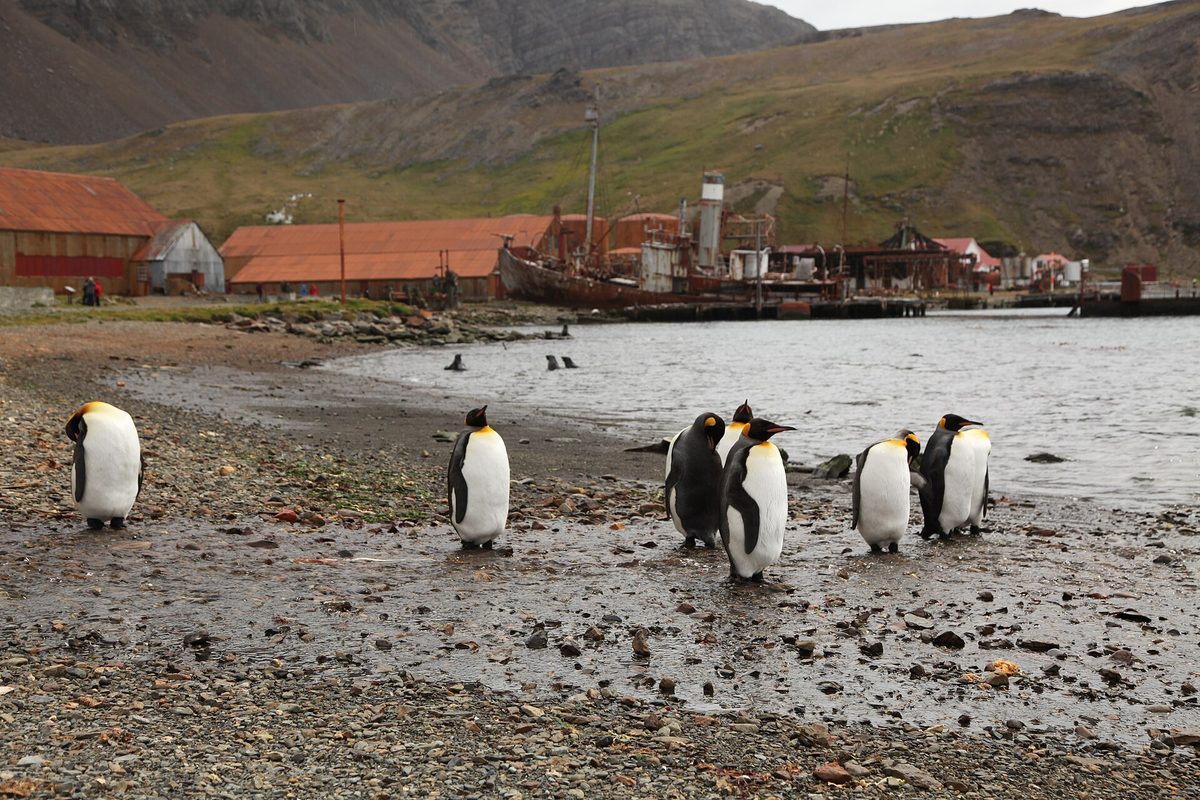
You spend four or five days working down the north coast, weather permitting, and each landing is a fresh assault on the senses. The headline act is the king penguin. These are the second-largest penguins in the world, tall and stately, with their burnished orange ear-patches and their absurdly cute brown chicks, the oakum boys, that look like overgrown kiwi fruit. And there are not hundreds of them, or thousands. There are hundreds of thousands. The great colonies of South Georgia are among the most densely populated places on Earth, and to stand at the edge of one is an experience that genuinely defies description.
Salisbury Plain, St Andrews Bay and Gold Harbour
Three names will dominate your South Georgia days, and they deserve to be famous. Salisbury Plain, on the Bay of Isles, holds a king penguin colony numbering in the hundreds of thousands, set against a backdrop of glaciers tumbling down from the mountains. The walk up from the landing beach takes you through a gauntlet of fur seals and elephant seals before the colony opens out in front of you, a shimmering, shifting carpet of birds that stretches to the foot of the hills.
St Andrews Bay is, if anything, even bigger. The colony here is often cited as the largest on the island, with figures of around a hundred and fifty thousand pairs, and on a clear morning with the three glaciers behind it, it is one of the most overwhelming sights in the natural world. The sound alone, the massed trumpeting of a quarter of a million adult birds plus their chicks, is something you feel in your chest.
And then there is Gold Harbour, my own favourite, a smaller and more intimate amphitheatre tucked beneath a hanging glacier, where the early morning light turns everything to gold and the kings, the elephant seals, and the fur seals are packed so tightly together that you have to pick your way carefully to avoid them. If you land Gold Harbour at dawn, as the operators try to, you will never forget it.
- King penguin colonies numbering in the hundreds of thousands at Salisbury Plain, St Andrews Bay and Gold Harbour.
- Antarctic fur seals, present in enormous numbers, with bolshie, charging pups you must learn to fend off with a calm voice and a raised tripod.
- Southern elephant seals, the largest seals on Earth, lolling in vast wallowing heaps and, in the early season, the bulls fighting and roaring.
- Wandering albatross nesting on the tussock islands, the largest flying birds in the world, sitting serenely on their nests.
- Snow petrels, light-mantled sooty albatross, South Georgia pipits and pintails, endemic and near-endemic birds found almost nowhere else.
The fur seals deserve a word of caution. In the breeding season the beaches are thick with them, and the territorial males and the playful, fearless pups will come at you. The expedition staff brief you carefully on how to behave, hold your ground, make yourself big, use a walking pole or tripod leg to keep them at arm’s length, and it becomes second nature. But it does mean South Georgia is not a place for the timid or the unsteady on their feet. For the broader picture of what you might encounter across the whole voyage, our overview of Antarctica wildlife is a good primer on the species and their behaviour.
Grytviken, Shackleton’s Grave and the Whaling History
South Georgia is not only about wildlife. It is also one of the most historically resonant places in the polar world, and a visit to Grytviken brings that history vividly to life. Grytviken was the largest of the South Georgia whaling stations, founded in 1904, and at its peak it was a grim industrial settlement rendering thousands of whales into oil. Today it is a hauntingly beautiful ruin: rusting blubber cookers and oil tanks, the bones of the old ships beached in the harbour, the little white church standing incongruously among the wreckage. Walking through it, you feel the full weight of what we did to the great whales of the Southern Ocean, and also the strange, melancholy beauty of industry returned to the wild.
But most people come to Grytviken for one reason above all: Sir Ernest Shackleton is buried here. After his miraculous open-boat journey and his crossing of South Georgia’s mountains to save the men of the Endurance, the Boss returned to the island in 1922 on another expedition and died of a heart attack aboard his ship in King Edward Cove. At his widow’s request he was buried in the little whalers’ cemetery at Grytviken, and his grave, marked by a rough granite headstone, has become a place of pilgrimage for everyone who sails these waters.
There is a tradition, and almost every operator observes it, of gathering at the grave and raising a toast to Shackleton. A bottle of whisky appears, small measures are poured, and the whole ship’s company stands among the headstones and drinks to the Boss. Some pour a dram on the grave itself. It is a small thing, but standing there in the wind, glass in hand, with the mountains he crossed rising behind you and his men’s stories fresh in your mind from the lectures, it is genuinely moving. I have done it several times and it gets me every time.
Grytviken also has the excellent South Georgia Museum, housed in the old whaling manager’s villa, with displays on the natural history, the whaling era, and the heroic age of exploration. And it has a working post office where you can send a postcard with a South Georgia stamp, an absurd luxury at the bottom of the world, and buy souvenirs that help fund the island’s conservation work. The contrast between the human history here and the natural abundance of the rest of the island is what gives South Georgia its extraordinary emotional depth. To understand where South Georgia sits in the wider geography of the far south, our guide to Antarctica’s regions and landing sites places it in context alongside the Peninsula and beyond.
- The whaling station ruins, with their rusting cookers, oil tanks and beached ships, now a protected historic site.
- Shackleton’s grave in the whalers’ cemetery, and the traditional whisky toast to the Boss.
- The South Georgia Museum, with its natural history, whaling and exploration displays.
- The restored Norwegian church, the southernmost functioning church of its kind for many years.
- The post office and shop at the research base, where you can post a card and support conservation.
The Long Haul: South Georgia to the Antarctic Peninsula
Now comes the part the brochures gloss over. From South Georgia to the South Shetland Islands and the Antarctic Peninsula is the longest open-water crossing of the entire voyage, around eight hundred to a thousand nautical miles depending on the route, and you will spend three full days at sea, sometimes four if the weather forces a longer or more cautious passage. This is the great test of the trip. There are no landings, no zodiac cruises, nothing but the ship and the swell and the endless grey-blue of the Scotia Sea.
I will be blunt: if you are prone to seasickness, this stretch is where you find out what you are made of. The Southern Ocean is the roughest body of water on the planet, and while modern expedition ships are stabilised and capable, three days of beam swell will test anyone. Bring your medication, see the ship’s doctor early, use the patches or the pills before you feel ill rather than after, and trust that it passes. The crossing south usually feels longer than the crossing east, partly because you have already had your big wildlife hit at South Georgia and partly because the anticipation of the continent builds with every passing hour.
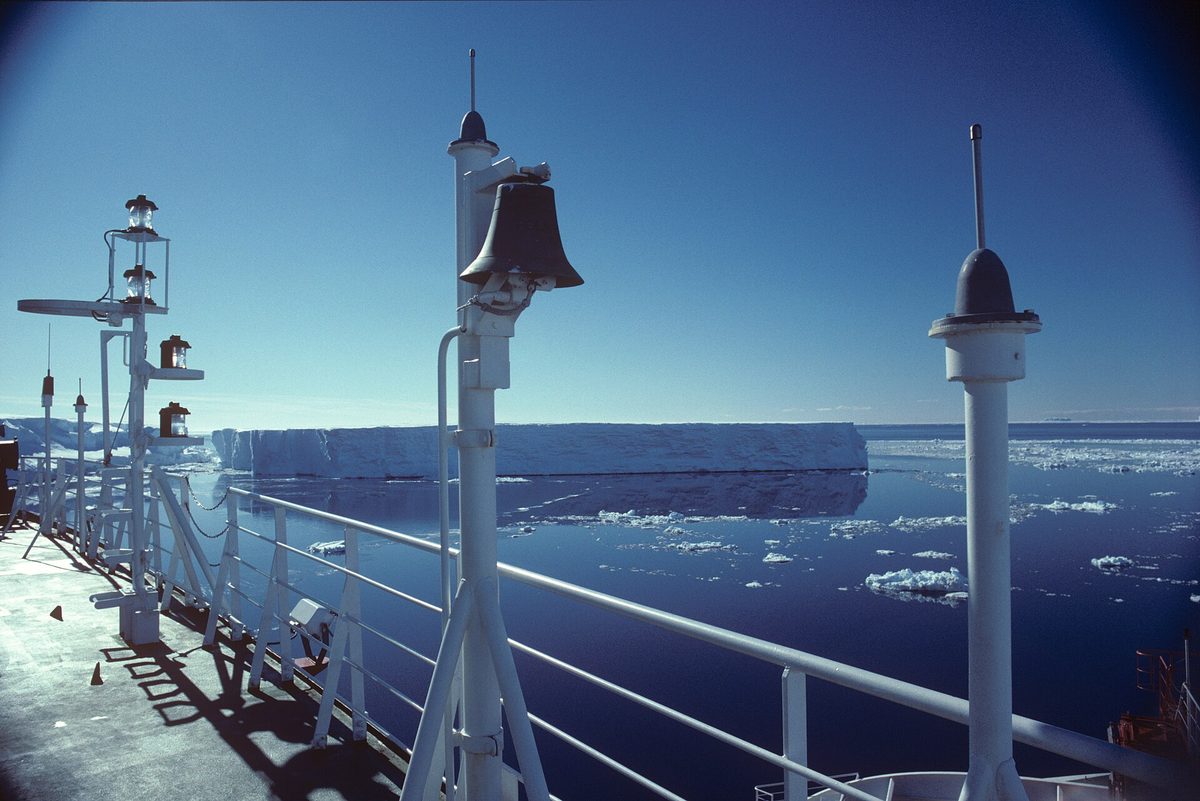
And yet, again, these are not wasted days. You cross back over the Antarctic Convergence, the water temperature drops, and the first icebergs begin to appear on the horizon, great tabular slabs that signal you are entering true Antarctic waters. The wildlife from the deck changes character: more whales, more of the high-Antarctic seabirds, the first sightings of pack ice. The lectures shift to the geology and glaciology of the continent, to the explorers of the Peninsula, to what you are about to see. By the time the dark peaks of the South Shetlands lift out of the sea, the ship is buzzing with anticipation.
Leg Three: The Antarctic Peninsula
After the long ocean leg, the Antarctic Peninsula feels like arriving in another world. The Falklands and South Georgia were about the abundance of life on relatively green, ice-free coasts. The Peninsula is about ice. This is the seventh continent proper, and the landscape is on a scale that dwarfs everything that came before: vast glaciers, mountains rising straight from the sea, channels choked with bergs in every shade of white and blue, and a silence, when the engines cut, that is unlike anything else on Earth.
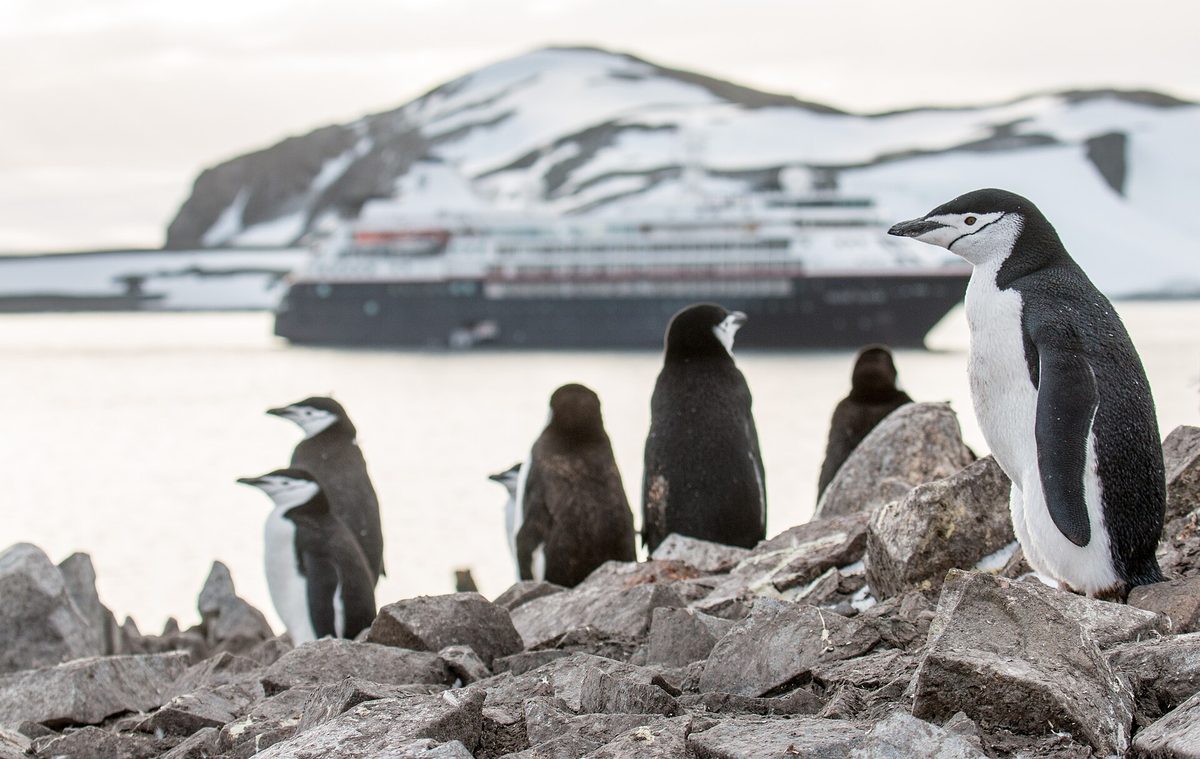
You typically spend four to six days here, working among the South Shetland Islands and down the western side of the Peninsula, with two zodiac outings most days, landings ashore and cruises among the ice. The penguins change too. Here it is gentoos, chinstraps and, the further south you go, the true Antarctic Adelies, smaller and more numerous, nesting on rocky ridges streaked pink with their krill-stained guano. The whales are often the highlight of this leg, humpbacks and minkes feeding lazily in the bays, sometimes so close to the zodiacs that you can smell their breath. And the seals haul out on the ice floes: crabeaters in their dozens, the occasional sleek and sinister leopard seal, and the fat, contented Weddell seals.
Iconic Peninsula Landings and Channels
The exact landing sites depend entirely on ice and weather, and a good expedition leader will adapt the plan daily, but certain places recur. You might cruise the Lemaire Channel, a narrow, cliff-walled passage so beautiful it has earned the nickname Kodak Gap. You might land at Neko Harbour or Paradise Bay for a rare continental landing, setting foot on the Antarctic mainland itself rather than an offshore island. You might visit the old British base at Port Lockroy, now a museum and post office on Goudier Island, or nose into the flooded volcanic caldera of Deception Island in the South Shetlands. Every day is different, and that unpredictability is part of the magic.
- Continental landings at sites like Neko Harbour or Paradise Bay, where you stand on the Antarctic mainland.
- Iceberg cruising among tabular and sculpted bergs in channels like the Lemaire and the Gerlache Strait.
- Penguin colonies of gentoos, chinstraps and Adelies on the rocky shores and islands.
- Whale encounters, principally humpbacks and minkes, often at very close range from the zodiacs.
- Historic sites such as Port Lockroy, with its museum, shop and post office.
If the Peninsula is the part of this voyage that most fires your imagination, it is worth knowing that you can experience it on its own as a shorter, cheaper trip. Our walk-through of the classic Antarctic Peninsula itinerary covers exactly what a standard ten to twelve-day Peninsula voyage looks like, and for those tight on time, our guide to a short Antarctica trip explains the fastest ways to reach the ice. But on the combined voyage the Peninsula is the grand finale, the white exclamation mark at the end of a sentence that began among the albatrosses of the Falklands.
Why You Need Sea Legs for This Voyage
I have mentioned the sea days repeatedly, and that is deliberate, because they are the single most common thing that surprises first-timers and, occasionally, the thing they most regret not knowing. On a standard Peninsula trip you cross the Drake Passage twice, two days down and two days back, and the rest is landings. On this combined voyage you have the two Falklands transit days, the two-day crossing to South Georgia, the three or four-day crossing to the Peninsula, and the two-day Drake crossing home. Add it up and you can easily spend ten or eleven of your twenty-one days primarily at sea.
For some people, this is heaven. There is a deep and underrated pleasure in a long sea passage: the lectures, the camaraderie that builds among passengers over shared meals, the meditative hours watching the wake and the wheeling albatrosses, the gradual unspooling of ordinary time. I have come to treasure those days. But you have to go in wanting them, or at least accepting them. If the idea of three consecutive days with no land in sight fills you with dread, this is not your trip. If you suffer badly from motion sickness, take it seriously, consult your doctor before you book, and know that the Southern Ocean can be genuinely rough. The reward for enduring the swell is a journey that almost no one else on Earth has made, but the swell is real.
The Cost and Time Premium Over a Standard Trip
Let us talk honestly about money and time, because a south georgia antarctica cruise is a serious commitment on both fronts. A standard Peninsula-only voyage of ten to twelve days is the entry point to Antarctic travel. The combined Falklands, South Georgia and Antarctica voyage is, in both duration and price, a significant step up from that. You are looking at roughly double the time, twenty-one days against ten or eleven, and a correspondingly higher cost, because every additional day at sea on an expedition ship carries real expense in fuel, crew, food and operations.
I am not going to quote you specific figures, because prices move every season and vary enormously by ship, cabin category and how far ahead you book, and you should always get current quotes from operators directly. But the shape of it is clear: expect this voyage to cost meaningfully more than a Peninsula-only trip, often substantially so, and to require the better part of three weeks plus travel days at either end. For most people that means a serious chunk of annual leave and a once-in-a-lifetime budget. Whether it is worth the premium depends entirely on how much South Georgia means to you. For me, having seen it, the answer is an emphatic yes. For someone whose dream is simply to set foot on the seventh continent, the shorter, cheaper Peninsula trip may make far more sense. Our breakdown of how much an Antarctica trip costs goes into the components of the price in detail, and the wider survey of Antarctica cruises shows where this combined voyage sits in the full spectrum of options.
| Factor | Peninsula-only voyage | Falklands–South Georgia–Antarctica voyage |
|---|---|---|
| Typical duration | 10 to 12 days | 18 to 23 days (commonly 21) |
| Days primarily at sea | 4 to 5 (mostly the Drake) | 10 to 11 across multiple crossings |
| Relative cost | Entry-level for Antarctica | Substantially higher, often close to double |
| Wildlife spectacle | Excellent (penguins, whales, seals) | Unmatched (adds South Georgia megacolonies) |
| Best suited to | First-timers, time-limited travellers | Repeat visitors, serious wildlife and photo lovers |
When to Go: The Best Season for the Combined Voyage
Timing this voyage is a genuine balancing act, and it is one of the more interesting decisions you will make. The Antarctic travel season runs from roughly late October to March, but the three legs of this trip peak at slightly different times, and you cannot have everything at once. The compromise you strike is part of the art of choosing your departure.
For South Georgia, which is the heart of the trip, the early season, late October through December, is glorious. This is when the island still wears its winter snow, when the king penguin colonies are at their most photogenic against white slopes, when the elephant seal bulls are fighting and roaring on the beaches, and when the fur seal pups are being born. The light is long and soft, the scenery is at its most dramatic, and the wildlife is at its most active. Many serious South Georgia aficionados, myself included, prefer November and early December for exactly these reasons.
The Peninsula, on the other hand, has its own rhythm. December and January bring the long days and the penguin chicks; February and early March bring the best whale watching as the humpbacks gather to feed and the ice retreats to open up the more southerly channels. So an early-season departure gives you South Georgia at its snowy best but a slightly less open Peninsula, while a later departure gives you peak whales and easier ice on the Peninsula but a greener, busier, more trampled South Georgia. There is no perfect answer, only trade-offs. On balance, for a voyage where South Georgia is the star, I lean toward the earlier departures. Our detailed guide to the best time to visit Antarctica breaks down month by month what each part of the season offers, and it is essential reading before you commit to a date.
The Ships That Sail This Route
Not every Antarctic ship does this itinerary, and the choice of vessel matters more here than on almost any other polar trip, because you will be living aboard for three weeks and crossing some of the world’s roughest seas. The combined Falklands, South Georgia and Antarctica voyage is the preserve of dedicated expedition ships, and within that category there is a real spread.
At the smaller and more intimate end are the classic expedition vessels carrying around a hundred passengers, which maximise landing time, since under the prevailing guidelines only a hundred people may be ashore at any landing site at once, and offer a more personal, more nimble experience. At the larger end are the newer, purpose-built polar ships carrying up to the regulatory limit of around two hundred landing passengers, often with greater stability, more luxurious cabins, and amenities like lecture theatres, spas and even submarines. Both can do this route well, but for a wildlife-focused trip with so many landings, I generally favour the smaller ships for their efficiency ashore and their atmosphere. Whatever you choose, look for a strong ice rating, modern stabilisers, an experienced expedition team with South Georgia knowledge, and a genuine commitment to the IAATO operating guidelines that protect these fragile places. Our detailed comparison of Antarctica expedition ships will help you match the vessel to your priorities and budget.
Who This Voyage Suits, and Who Should Skip It
After several of these trips, I have a fairly clear picture of who comes away from this voyage glowing and who comes away wishing they had done something else. Let me be honest about both.
This voyage suits, above all, the serious wildlife and photography enthusiast. If you have dreamed for years of standing among a quarter of a million king penguins, if you would happily spend three days at sea for the chance to photograph a wandering albatross on its nest, if South Georgia has been a name that quickens your pulse, then this is unambiguously your trip and you should do it without hesitation. It also suits the repeat Antarctic visitor, the person who has already done a Peninsula voyage, fallen in love with the south, and wants to go deeper, wider, further. And it suits the patient traveller who genuinely enjoys life at sea and the slow rhythm of a long ocean passage.
It suits less well the first-time polar traveller who simply wants to set foot on the continent, for whom a shorter Peninsula trip delivers the core Antarctic experience at half the time and cost. It suits less well anyone with serious mobility limitations, because the South Georgia landings in particular involve wet beach landings and walking among aggressive fur seals on uneven ground. And it suits least of all the traveller who hates sea time, gets badly seasick, or wants a packed daily schedule of activities, because this voyage demands that you embrace the long crossings as part of the experience rather than enduring them as an obstacle.
- Ideal for: serious wildlife and photography enthusiasts, repeat Antarctic visitors, patient travellers who relish life at sea.
- Think carefully if: this would be your first polar trip and your main goal is simply to reach the continent.
- Probably not for: those with significant mobility issues, severe seasickness, or a strong preference for short trips packed with daily activity.
If you find yourself in that middle category, unsure whether to commit to the full epic or start with something shorter, it is worth comparing the full range of routes. Beyond the Peninsula and this combined voyage, there is also the remote and rarely visited far side of the continent, covered in our guide to a Ross Sea cruise, which is an even longer and more committing expedition for the true polar obsessive.
Frequently Asked Questions
How long is a typical South Georgia Antarctica cruise?
Most combined voyages that take in the Falkland Islands, South Georgia and the Antarctic Peninsula run between eighteen and twenty-three days, with twenty-one days being the most common length you will see advertised for the 2026 and 2027 seasons. That total includes all the sea days, and roughly half of those days are spent crossing open ocean rather than ashore. You should also budget travel days at either end to reach and leave Ushuaia, so the full trip from home and back is closer to three and a half or four weeks for most people.
How many king penguins will I actually see on South Georgia?
An almost unimaginable number. The major colonies at Salisbury Plain, St Andrews Bay and Gold Harbour each hold king penguins in the hundreds of thousands, and St Andrews Bay in particular is often cited at around a hundred and fifty thousand breeding pairs. Across your four or five days on the island you will stand at the edge of multiple megacolonies, surrounded by more individual penguins than you are likely to see in any other single place on Earth. It is the defining experience of the whole voyage and the main reason people pay the premium for it.
Is the toast at Shackleton’s grave a real tradition?
Yes, it is a genuine and widely observed tradition. Sir Ernest Shackleton is buried in the small whalers’ cemetery at Grytviken, and almost every expedition that lands there gathers at his grave to raise a toast, usually with whisky, to the Boss. Some pour a measure onto the grave itself. After the lectures on his extraordinary survival story, standing among the headstones with a dram in your hand, with the mountains he crossed rising behind you, is one of the most moving moments of the trip for most travellers.
Why are there so many days at sea on this itinerary?
Because the three destinations are genuinely far apart across the Scotia Sea. It is roughly two days’ sailing from the Falklands to South Georgia, then three or four days from South Georgia down to the Antarctic Peninsula, plus the two-day Drake Passage crossing back to Ushuaia and the transit days out to the Falklands at the start. There is no way to shorten these distances, and the open-ocean crossings are an intrinsic part of the voyage. The expedition team fills the sea days with lectures and wildlife watching, but you do need to be comfortable with substantial time at sea.
Will I get seasick on the crossings?
You might, and you should prepare for the possibility. The Southern Ocean is the roughest body of water on the planet, and the long crossing from South Georgia to the Peninsula in particular can be challenging. Modern expedition ships are stabilised and very capable, but no ship is immune to a big swell. If you are prone to motion sickness, speak to your doctor before you book, bring whatever medication works for you, and start taking it before you feel unwell rather than after. Most people find the symptoms manageable, and the rough patches pass, but the seas are real and you should respect them.
How much more does the combined voyage cost than a Peninsula trip?
Significantly more. Because the voyage is roughly twice as long as a standard Peninsula-only trip and every additional day on an expedition ship is expensive, the combined Falklands, South Georgia and Antarctica voyage typically costs much more, often approaching double, than a Peninsula-only cruise. Exact prices vary widely by ship, cabin category and how far ahead you book, so always get current quotes from operators. The premium buys you South Georgia, which you simply cannot reach on a shorter trip, and for wildlife lovers that is money exceptionally well spent.
When is the best time to do this trip?
It depends on what you most want to see, because the legs peak at different times. For South Georgia at its most spectacular, with winter snow on the slopes, fighting elephant seals and newborn fur seal pups, the early season from late October through December is best. For the Antarctic Peninsula, February and early March bring the best whale watching and the most open ice. Since South Georgia is the heart of this particular voyage, many experienced travellers favour the earlier November and December departures, accepting a slightly less open Peninsula in exchange for South Georgia at its peak.
Do I need to be very fit and mobile?
You need to be reasonably fit and steady on your feet. The landings, especially on South Georgia, are wet zodiac landings onto beaches, often followed by walks over uneven ground among large numbers of fur seals, including territorial males and boisterous pups that you must learn to fend off. You do not need to be an athlete, and the pace is generally gentle, but significant mobility limitations or a fear of being close to large, fast-moving animals would make this a difficult trip. If in doubt, discuss your situation honestly with your operator before booking.
Can I do South Georgia without going to Antarctica?
Yes. Some operators offer shorter voyages that combine the Falklands and South Georgia without continuing to the Antarctic Peninsula, which cuts out the longest crossing and saves several days and a good deal of money. These trips still deliver the full South Georgia wildlife spectacle and the Shackleton history. However, most people who travel this far want to add the Peninsula and the seventh continent to the journey, which is why the full combined voyage remains the classic and most popular version of the trip.
Final Thoughts
I have sailed a lot of polar miles, and if someone asked me to recommend a single voyage that captures the full grandeur of the Southern Ocean, this would be it. The combined Falklands, South Georgia and Antarctica trip is not the easiest way south, nor the cheapest, nor the quickest. It demands three weeks of your life, a serious budget, and a stomach for the open ocean. But in exchange it gives you the Falklands’ albatross cliffs, the unrepeatable abundance of South Georgia, the haunting beauty of Grytviken and Shackleton’s grave, and the white majesty of the Antarctic Peninsula, all in one continuous arc through the wildest sea on Earth. It is the great wildlife epic, and it earns that title honestly.
My advice, after several of these voyages, is simple. If South Georgia calls to you, if the thought of standing among hundreds of thousands of king penguins makes the hair stand up on your arms, then do not hesitate. Save for it, book it well ahead to get the ship and cabin you want, prepare properly for the sea days, and go. You will come home changed, and you will spend the rest of your life trying, and failing, to describe it to people who were not there. That is the mark of a truly great journey, and this is one of the greatest there is.
Related Reading
- Antarctica cruise itineraries guide
- Antarctica cruise routes explained
- how many days you need in Antarctica
- the classic Antarctic Peninsula itinerary
- a Ross Sea cruise
- a short Antarctica trip
- Antarctica cruises
- Antarctica wildlife
- how much an Antarctica trip costs
- the best time to visit Antarctica
- Antarctica’s regions and landing sites
- Antarctica expedition ships