There is a moment on a voyage to Deception Island that I have watched silence an entire ship full of seasoned travellers. The vessel turns toward what looks like a solid wall of dark cliffs, the gap ahead seeming far too narrow to pass, and then — almost impossibly — slips through a slot barely two hundred metres wide and emerges inside a flooded volcano. The cliffs close behind you, the water turns black and still, and you understand that you have just sailed into the crater of an active volcano. Nowhere else in Antarctica, and almost nowhere else on Earth, can you do such a thing.
I have been many times, and Deception never feels routine. It is the strangest, most atmospheric landfall in the entire region: part wildlife spectacle, part industrial graveyard, part geological wonder, all wrapped in a faint whiff of sulphur and the knowledge that the ground beneath your boots is merely sleeping. In this guide I will take you through the narrow entrance and all the way around the caldera — the ruins, the thermal beaches, the vast penguin colony, and the volcano that has rewritten this island’s story more than once in living memory.
Deception Island: A Volcano You Can Sail Into
What makes Deception Island unique is its shape. It is a “caldera” — a volcano whose summit collapsed after a massive eruption, leaving a ring of land around a central basin. At some point the sea breached the ring, flooding the centre to create a near-circular natural harbour called Port Foster, almost entirely enclosed by the island itself. The result is one of the safest anchorages in Antarctica wrapped inside one of its most dangerous landforms, a paradox that has drawn sealers, whalers, scientists and now travellers for two centuries.
From above, the island looks like a broken horseshoe or a ragged letter C, roughly 12 kilometres across, with that single sea-gate on its southeast side. It belongs to the South Shetland Islands, the archipelago that forms most travellers’ first landfall in Antarctica, and it is one of the undisputed highlights of the wider regions and landing sites of the far south.
Where Is Deception Island?
Deception lies at the southwestern end of the South Shetland Islands, about 100 kilometres north of the Antarctic Peninsula and separated from it by the Bransfield Strait. Coming from Ushuaia, ships generally call here either near the start of a voyage, as part of their South Shetlands exploring, or on the way back north. Its position makes it a natural bookend to a Peninsula trip, and its sheltered inner harbour makes it a welcome refuge when the weather outside turns foul.
The island sits within an Antarctic Specially Managed Area, a designation that reflects both its fragile environment and its busy mix of tourism and science. Because landing conditions can be tricky, no operator can promise a Deception visit, but when the plan holds it is unforgettable. For a sense of how it slots into a longer route, see my Antarctic Peninsula guide and my overview of Antarctica cruise itineraries.
Neptune’s Bellows: The Dramatic Entrance
The entrance to Deception has one of the great names in Antarctic geography: Neptune’s Bellows, so called for the fierce winds that funnel through it. The gap is only about 230 metres wide, and a submerged rock named Ravn Rock lurks just beneath the surface on one side, narrowing the safe channel still further. Watching a hundred-metre ship thread this needle, with cliffs rearing on either hand, is heart-in-mouth theatre even when the captain makes it look easy.
Once through, the world changes. The open swell vanishes, the water flattens, and you are gliding across the dark mirror of Port Foster, ringed by ash-streaked slopes and the ghostly remains of human ambition. The contrast between the violence of the entrance and the calm within is part of what makes Deception so memorable. It feels less like arriving somewhere and more like being swallowed.
Whalers Bay: Ruins of a Vanished Industry
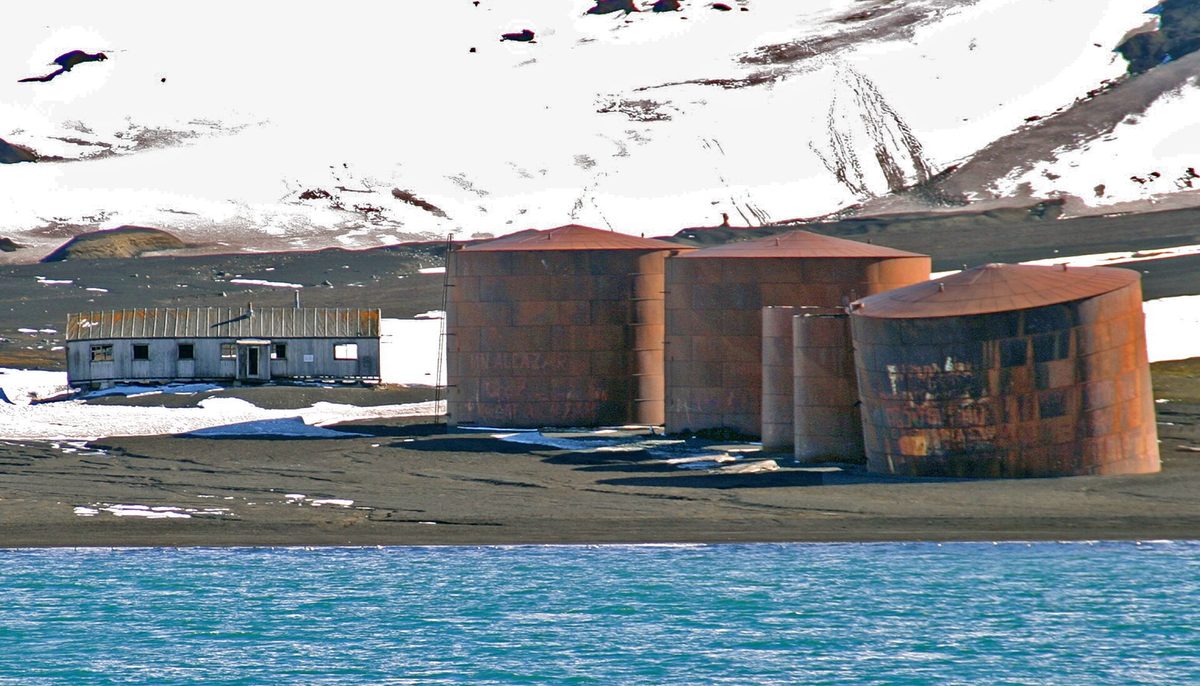
The most-visited spot inside the caldera is Whalers Bay, just inside Neptune’s Bellows, and it is a haunting place. In the early twentieth century this sheltered beach became a whaling station — the Norwegian-Chilean Hektor operation — where the carcasses of the Southern Ocean’s whales were rendered into oil. The rusting remnants still stand on the black sand: enormous corroded boilers and oil tanks, the skeletal frames of buildings, the timbers of wrecked water boats, and bleached whale bones half-buried in the ash.
Alongside the whaling relics sit the remains of British Base B, a scientific station evacuated when the volcano erupted, and an aircraft hangar with real claim to fame: it was from Deception Island that the explorer-aviator Hubert Wilkins made some of the earliest powered flights in Antarctica in 1928. To walk Whalers Bay is to walk through layers of human history — greed, science, exploration — all of it abandoned to the cold. It is one of the most evocative sites among all the research stations and historic bases you can visit.
The Volcano Is Still Very Much Alive
It is easy, wandering the peaceful ruins, to forget that Deception is not a dead relic but a sleeping giant. The volcano has erupted many times, and three eruptions in living memory — in 1967, 1969 and 1970 — caused real destruction, burying and damaging the Chilean and British research stations and forcing dramatic evacuations. Mudflows and ash transformed the landscape, and you can still see the scars.
The island remains volcanically active today, monitored constantly by scientists. In places the ground is warm to the touch, steam rises from the beaches, and the sea near shore can be noticeably heated. Standing on a beach that is literally warm in the heart of Antarctica is one of the great sensory contradictions of polar travel — and a reminder that the island’s deceptive calm could end at any time.
Pendulum Cove and the Thermal Beaches
Deception’s geothermal heat gives rise to its most famous party trick: the “Antarctic swim.” At Pendulum Cove and a few other spots, volcanic warmth seeps up through the sand, heating the shallows enough that hardy travellers have long stripped off and waded in. The reality is more bracing than the legend — the warmth is patchy and the surface water often stays icy — but digging a little hollow in the sand and feeling hot water well up is genuinely surreal.
These days, environmental rules and common sense have made the full swim less common, but the thermal beaches remain a highlight. Some travellers combine a quick, screaming dip here with the broader tradition of the polar plunge that features on so many voyages. Either way, the steaming black sands of Deception are unlike anything else you will encounter in the south.
Baily Head: The Great Chinstrap Amphitheatre
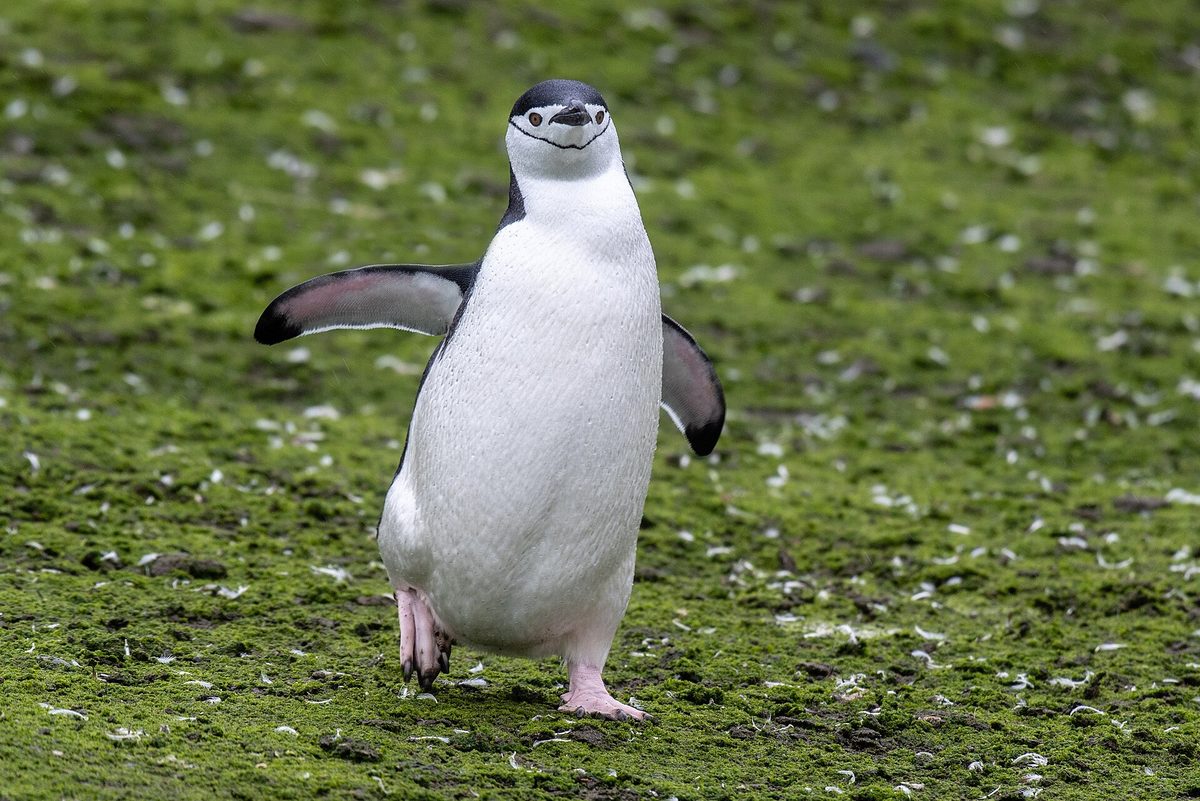
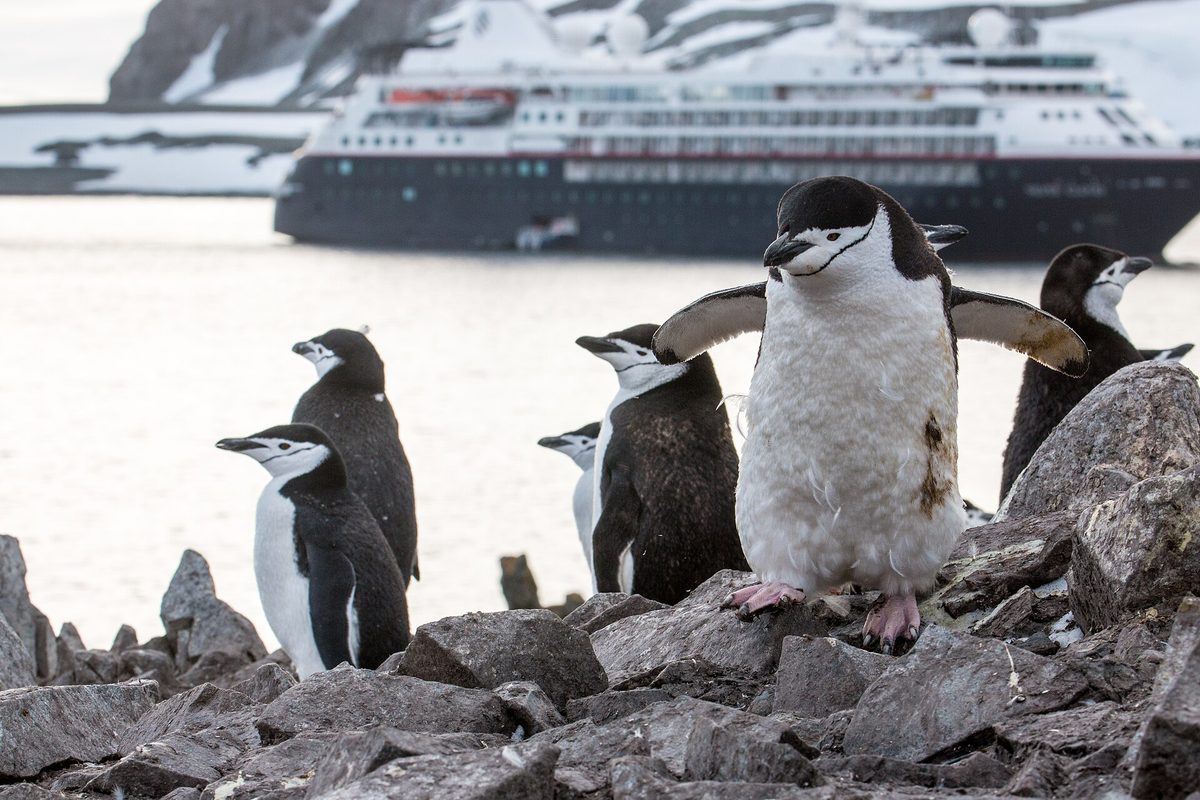
On the exposed outer coast of Deception, facing the open sea, lies one of the most staggering wildlife spectacles in Antarctica: Baily Head. This natural amphitheatre of dark volcanic rock cradles a colony of chinstrap penguins estimated at tens of thousands of breeding pairs — some counts run as high as a hundred thousand birds. The sight, sound and smell of it are overwhelming; penguins stream in endless lines down a “penguin highway” from the heights to the surf, a living conveyor belt that runs all day.
The catch is that Baily Head sits on the outside of the island, fully exposed to Southern Ocean swell, and the surf landing is notoriously difficult. Many voyages try and fail, forced back by the waves. When a landing does succeed, it is the kind of experience travellers talk about for years. To understand the birds you are watching, pair this with my guide to Antarctica wildlife, which covers the chinstrap and its cousins in depth.
Telefon Bay and the Lunar Landscape
For a complete change of mood, some visits head to Telefon Bay in the northern part of the caldera, where recent eruptions have scoured the land into a bleak, beautiful moonscape. Here there are no ruins and few animals — just ash cones, craters formed within living memory, and ridges of volcanic debris stretching toward the inner slopes. A walk here feels like trekking across another planet, the silence broken only by wind and the crunch of cinders underfoot.
Telefon Bay is a favourite of geology enthusiasts and anyone who wants to grasp the island’s violent recent past. Standing among craters that did not exist a few decades ago drives home how alive Deception remains. It is a stark counterpoint to the wildlife-rich landings elsewhere, and all the more fascinating for it.
The Wildlife of Deception Island
Deception is famous for its penguins, but the volcanic island supports a surprising range of life around its shores and cliffs. On a typical visit you might encounter:
- Chinstrap penguins — in their tens of thousands at Baily Head, the island’s headline wildlife act.
- Gentoo penguins — in smaller numbers at various spots around the caldera.
- Antarctic fur seals — increasingly common ashore, fast and territorial, to be given a wide berth.
- Cape petrels and storm petrels — nesting on the cliffs and wheeling over the water.
- Kelp gulls, skuas and Antarctic terns — patrolling the beaches and colonies.
- Unusual plant life — rare mosses and lichens, some found nowhere else, thriving on the geothermally warmed ground.
That last point is easy to overlook: the warm soil creates micro-habitats for specialised plants and even invertebrates, making Deception of real scientific interest beyond its dramatic scenery. It is a living laboratory as much as a tourist marvel.
A History of Sealers, Whalers and Aviators
Deception’s human story is as layered as its geology. Discovered in 1820, its hidden harbour was quickly seized upon by sealers seeking shelter, then by whalers who built the Hektor station at Whalers Bay and used the calm of Port Foster as a base for the slaughter that nearly emptied these waters of whales. When the whaling collapsed in the 1930s, the station was abandoned, left to rust where it stood.
Then came the scientists and explorers — the aviator Hubert Wilkins and his pioneering flights, the establishment of permanent research bases by Britain, Chile and Argentina, and the dramatic evacuations when the volcano awoke in the late 1960s. Few square kilometres on Earth hold so much human drama. For the wider context of how people first reached and exploited these waters, see my overview of Antarctica cruises.
The Research Stations Today
Despite the volcano, science continues on Deception. Two summer-only stations operate here today — Spain’s Gabriel de Castilla base and Argentina’s Decepción base — their researchers monitoring the volcano and studying the island’s unusual ecology. Their presence is part of why the island is so carefully managed, with agreed codes of conduct dividing it into zones for science, tourism and strict protection.
This careful management is a model for how busy Antarctic sites can balance competing uses. As a visitor you will be briefed on exactly where you may walk and what you must avoid, both to protect the fragile environment and to stay clear of scientific work. It is one of the more tightly choreographed landings in Antarctica, and rightly so given its popularity.
What You’ll Actually Do on a Visit
A Deception visit usually combines a ship transit of the spectacular entrance with one or two shore activities, ice and weather permitting. The classic outing is a walk along Whalers Bay among the ruins, with time to absorb the eerie atmosphere and photograph the rusting relics against the black sand. More energetic options include a hike up to Neptune’s Window, a cliff-top notch with sweeping views out to sea where some of the first sightings of the Antarctic mainland may have been made.
Where the rare Baily Head landing is possible, that becomes the priority. Some travellers brave a thermal dip; others explore the lunar craters of Telefon Bay. The exact menu depends entirely on conditions, but Deception rarely disappoints. For the broader range of polar activities, my guide to things to do in Antarctica sets the scene.
When to Visit and What to Expect
Deception is visited throughout the Antarctic season, from November to March, as part of South Shetlands itineraries. The chinstraps at Baily Head are busiest from December through February, when chicks are growing. Early season brings deeper snow and fewer fur seals; late season brings more seals ashore and the chance of better surf-landing windows. As with everywhere in the region, the weather is the final arbiter — my guide to the best time to visit Antarctica covers the seasonal trade-offs in full.
Conditions inside the caldera are often calmer than outside, but the entrance and the outer coast can be wild. Dress for wind and wet, expect the plan to change at short notice, and treat a successful Deception landing as the gift it is rather than a certainty.
Photographing Deception Island
Deception is a photographer’s dream and a photographer’s challenge in equal measure. The light inside the caldera can be extraordinary — flat grey one minute, shafts of sun spotlighting the rusted boilers the next — and the contrast between black ash, white snow patches and orange corrosion gives images a graphic punch you find nowhere else in Antarctica. The transit of Neptune’s Bellows deserves your full attention; have a wide lens ready as the ship squeezes through the cliffs, because the moment passes quickly.
Ashore at Whalers Bay, resist the urge to shoot only the wildlife and instead work the ruins: the skeletal hangar, the lines of riveted tanks, the whale bones half-sunk in cinders. For the chinstrap rivers of Baily Head, a longer lens lets you compress those endless penguin highways into the dense, dizzying patterns that capture the colony’s scale. Keep your gear shielded from the fine volcanic grit, which gets everywhere, and from the spray on the Zodiac ride in.
How Deception Compares to Other Landings
What sets Deception apart from the rest of the region is that it is a landscape experience first and a wildlife experience second — the opposite of most Antarctic stops. At a place like Half Moon Island or Cuverville, the animals are the show; at Deception, the volcano, the ruins and the sheer strangeness of the setting dominate, with the penguins as a thunderous supporting act. That makes it a perfect complement to the more conventional landings on a Peninsula voyage.
If you are weighing which sites matter most to you, think of Deception as the trip’s wild card — the stop that surprises people who came only for penguins and icebergs. It broadens the whole experience, adding geology, industrial history and a jolt of the uncanny. In a region full of superlatives, it remains genuinely one of a kind.
Frequently Asked Questions
Is Deception Island an active volcano?
Yes. Deception Island is an active volcano that has erupted many times, most recently in 1970. Three eruptions between 1967 and 1970 damaged research stations and forced evacuations. The volcano is monitored continuously, and signs of its activity — warm ground, steaming beaches and heated shallows — are part of what makes a visit so extraordinary.
Can ships really sail inside Deception Island?
They can, and it is the island’s signature experience. Ships enter through a narrow gap called Neptune’s Bellows, only about 230 metres wide, into a flooded caldera that forms a near-circular natural harbour called Port Foster. Sailing through the cliffs into the heart of a volcano is one of the most dramatic moments of any Antarctic voyage.
Can you swim at Deception Island?
In places, yes, thanks to geothermal heat that warms the sand and shallows at spots like Pendulum Cove. The reality is patchy and bracing rather than a warm bath, and environmental rules have made the full “Antarctic swim” less common than it once was. Many travellers settle for digging a warm hollow in the sand or a quick, screaming dip.
What is at Whalers Bay?
Whalers Bay holds the rusting ruins of an early-twentieth-century whaling station — huge corroded boilers and oil tanks, collapsing buildings and whale bones — alongside the remains of British Base B and an aircraft hangar linked to Hubert Wilkins’ pioneering 1928 flights. Set on black volcanic sand, it is one of the most atmospheric historic sites in Antarctica.
Why is it so hard to land at Baily Head?
Baily Head sits on the exposed outer coast of Deception, facing the open Southern Ocean, so its beach is often pounded by surf that makes Zodiac landings dangerous or impossible. Many voyages attempt it and are turned back by the waves. When a landing succeeds, you are rewarded with one of Antarctica’s greatest chinstrap penguin spectacles.
How many penguins live at Deception Island?
The chinstrap colony at Baily Head is enormous — commonly estimated at around 50,000 breeding pairs, with some counts suggesting up to 100,000 birds at peak. It is one of the largest chinstrap colonies in Antarctica. Smaller numbers of gentoo penguins also breed at various points around the caldera.
Is Deception Island part of the South Shetland Islands?
Yes. Deception is one of the South Shetland Islands, lying at their southwestern end, about 100 kilometres north of the Antarctic Peninsula. It is usually visited as part of a South Shetlands itinerary, often near the beginning or end of a Peninsula cruise.
Will my cruise definitely visit Deception Island?
Not guaranteed. Deception is a popular stop and features on many itineraries, but landings depend on weather, swell and volcanic conditions, and the narrow entrance can be impassable in strong winds. Treat a Deception visit as a hoped-for highlight rather than a certainty, and you will be delighted when it comes off.
Final Thoughts
Deception Island is, for my money, the single most extraordinary place a traveller can stand in the entire region. Where else do you sail through cliffs into a living volcano, walk among the rusted bones of a whaling industry on a warm black beach, and listen to a hundred thousand penguins braying on the far shore? It compresses Antarctica’s geology, history and wildlife into one small, smouldering ring of land, and it does so with a strangeness that no photograph can convey.
If your itinerary lists Deception, cross your fingers for the weather and prepare to be astonished. And if the swell turns you away from Neptune’s Bellows — as it sometimes will — take heart that the island has been deceiving and defying visitors for two hundred years. That, after all, is how it earned its name. Few places on Earth reward the effort of reaching them so richly.
Related Reading
- Antarctica’s regions and landing sites
- The South Shetland Islands
- The Antarctic Peninsula: complete guide
- Half Moon Island
- King George Island
- Antarctic research stations you can visit
- Antarctica cruises
- Antarctica cruise itineraries
- Antarctica wildlife
- The best time to visit Antarctica
- Things to do in Antarctica