Almost every traveller who sails to Antarctica has their first landfall in the same place, and it is not the mainland at all. It is the south shetland islands — a wild, weather-battered archipelago strung across the top of the continent like a row of stepping stones, the first land you reach after the Drake Passage and, for many, the first time they ever set boots on Antarctic ground. I have made that first landing more times than I can count, and it never loses its charge: the Zodiac grinds onto a black beach, a thousand penguins ignore you completely, and you realise you have actually arrived.
These islands are the unsung heroes of an Antarctic voyage. People come dreaming of the Peninsula’s grand channels, and rightly so, but it is the South Shetlands that break them in gently — a forgiving introduction to ice, wildlife and the strange etiquette of polar travel. In this guide I will take you island by island through the archipelago: where it sits, what you will see, the history beneath your feet, and why these rugged outposts deserve far more than the passing mention they often get.
The South Shetland Islands: Antarctica’s Welcome Mat
If the Peninsula is Antarctica’s front door, the south shetland islands are the doormat you wipe your boots on first. This chain of eleven major islands and countless islets lies just north of the Antarctic Peninsula, separated from it by the Bransfield Strait. Because they are the closest substantial land to South America after the Drake, they are almost always the opening and closing act of a Peninsula cruise — the place where the ocean crossing ends and the real exploring begins.
Do not mistake “first stop” for “lesser stop,” though. The South Shetlands hold some of the richest penguin colonies, the most extraordinary volcanic landscape on the continent, and the densest cluster of research stations anywhere in Antarctica. They are a microcosm of everything the wider Antarctica regions and landing sites have to offer, compressed into a single archipelago you can sample in a couple of days.
Where Are the South Shetland Islands?
The archipelago runs roughly 540 kilometres in a southwest-to-northeast line, lying about 120 kilometres off the northern tip of the Antarctic Peninsula across the Bransfield Strait, and around 1,000 kilometres south of Cape Horn. They sit at about 62 degrees south — far enough for full Antarctic conditions, yet just north enough to catch a slightly milder, wetter, more maritime climate than the mainland to the south.
That position is the whole story of why they matter. Coming from Ushuaia, a ship clears the Drake and the South Shetlands are simply the first thing it hits. Many fly-cruise itineraries also use King George Island’s gravel airstrip as their gateway, flying passengers in from Punta Arenas to board the ship right here. Either way, for most visitors the South Shetlands are the literal threshold of Antarctica, the subject of my broader Antarctic Peninsula guide.
A Quick Tour of the Main Islands
The archipelago is bigger and more varied than most people realise. While a single cruise will only call at a handful of sites, it helps to know the lie of the land. Here are the islands you are most likely to hear named on your voyage:
| Island | Why it matters | What you’ll find |
|---|---|---|
| King George Island | Largest island; hub of Antarctic science | Airstrip, many research bases, glaciers |
| Livingston Island | Second largest; rugged and mountainous | Hannah Point wildlife, Bulgarian and Spanish bases |
| Deception Island | Active volcanic caldera you sail into | Whalers Bay ruins, thermal beaches |
| Half Moon Island | Tiny crescent off Livingston | Chinstrap colony, Argentine Cámara base |
| Greenwich Island | Home of the Aitcho islets nearby | Barrientos Island penguins, mossy slopes |
| Robert & Nelson Islands | Quieter, less-visited links in the chain | Seals, seabirds, occasional landings |
Three of these — Deception, Half Moon and King George — are important enough to have their own dedicated guides, which I link to below. Together they show just how much variety a single archipelago can hold.
Why Almost Every Cruise Stops Here First
There is a practical genius to opening a voyage in the South Shetlands. After two days at sea, passengers are itching to get off the ship, and the archipelago offers easy, sheltered landings with guaranteed wildlife to reward the crossing. Guides use these first stops to teach the drill — how to board a Zodiac, how to keep your distance from animals, how to scrub your boots — in relatively forgiving conditions before the more committing sites further south.
The islands also act as a buffer against the Drake’s moods. If weather delays the crossing, an itinerary can compress or expand its South Shetland time without wrecking the whole trip. For a sense of how operators sequence these stops across a typical route, my overview of Antarctica cruise itineraries lays out the usual rhythm of a southern voyage.
The Aitcho Islands and Barrientos
Of all the introductory landings, my sentimental favourite is Barrientos Island in the little Aitcho group, just north of Greenwich Island. It is a near-perfect first taste of Antarctica: a manageable walk along a ridge between two beaches, gentoo and chinstrap colonies on either side, wallowing elephant seals in the shallows, and improbable carpets of green moss and pale Antarctic hair grass underfoot. The name “Aitcho,” incidentally, comes from “H.O.” — the British Hydrographic Office.
What makes Barrientos special is how much it packs into a short, gentle outing. New travellers who arrive nervous about the cold and the terrain leave grinning, having photographed two penguin species, dodged a territorial fur seal, and understood for the first time what they have signed up for. It is the South Shetlands working exactly as they should — easing you into wonder.
Half Moon Island: A Crescent of Chinstraps
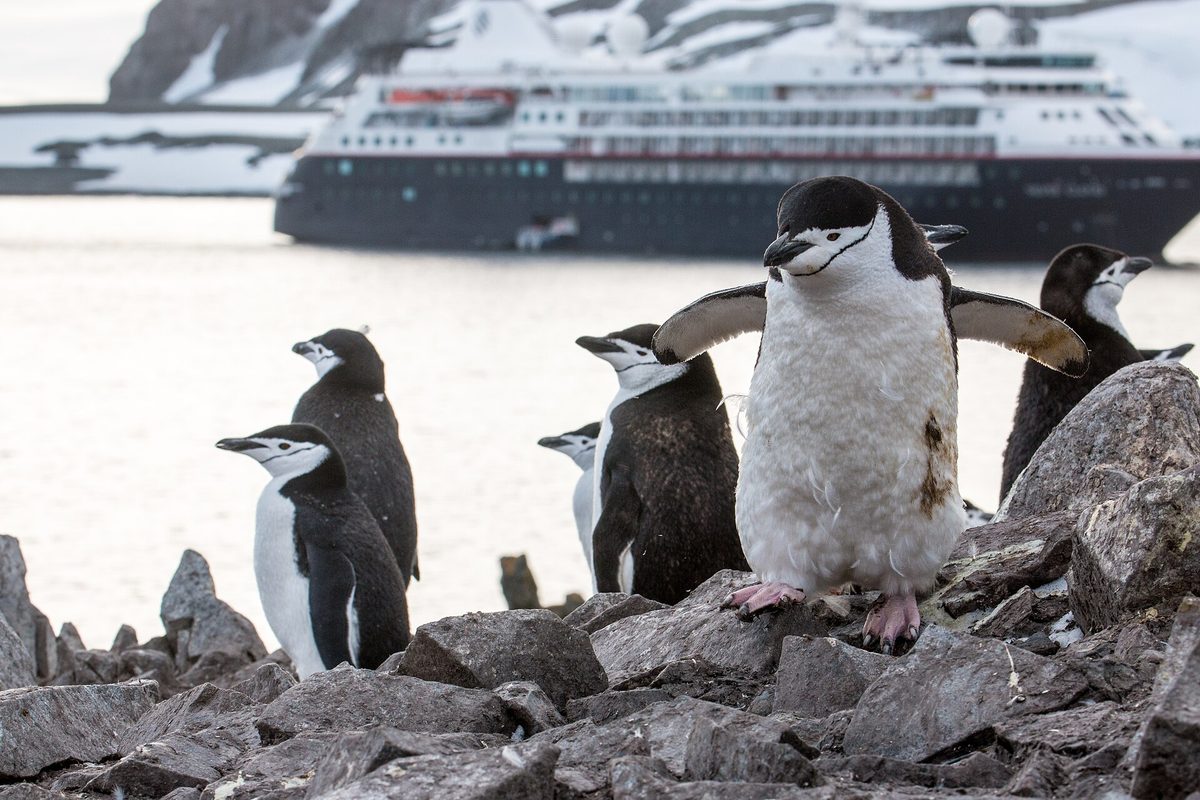
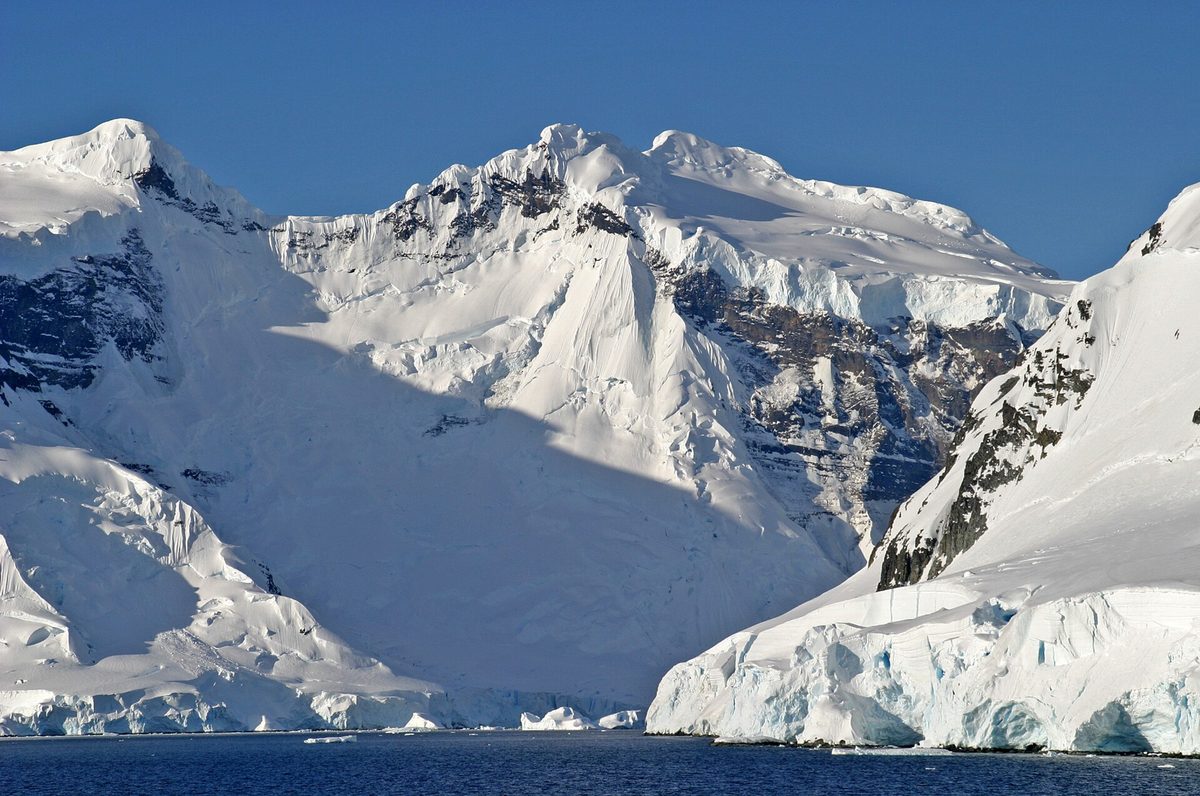
Tucked against the flank of Livingston Island, Half Moon Island is a slim crescent of rock barely two kilometres long, and one of the most reliably rewarding stops in the whole archipelago. Its big draw is a boisterous chinstrap penguin colony scattered across the rocky outcrops, with a backdrop of the jagged, glacier-hung peaks of Livingston that ranks among the finest views in the South Shetlands.
Argentina’s small Cámara base sits on the island, usually unmanned during tourist visits, and Weddell seals often haul out on the beaches. I have a soft spot for Half Moon because it feels complete — wildlife, mountains, history and a sense of intimacy all on one tiny island. I give it the full treatment in my dedicated guide to Half Moon Island.
Yankee Harbour, Hannah Point and Other Gems
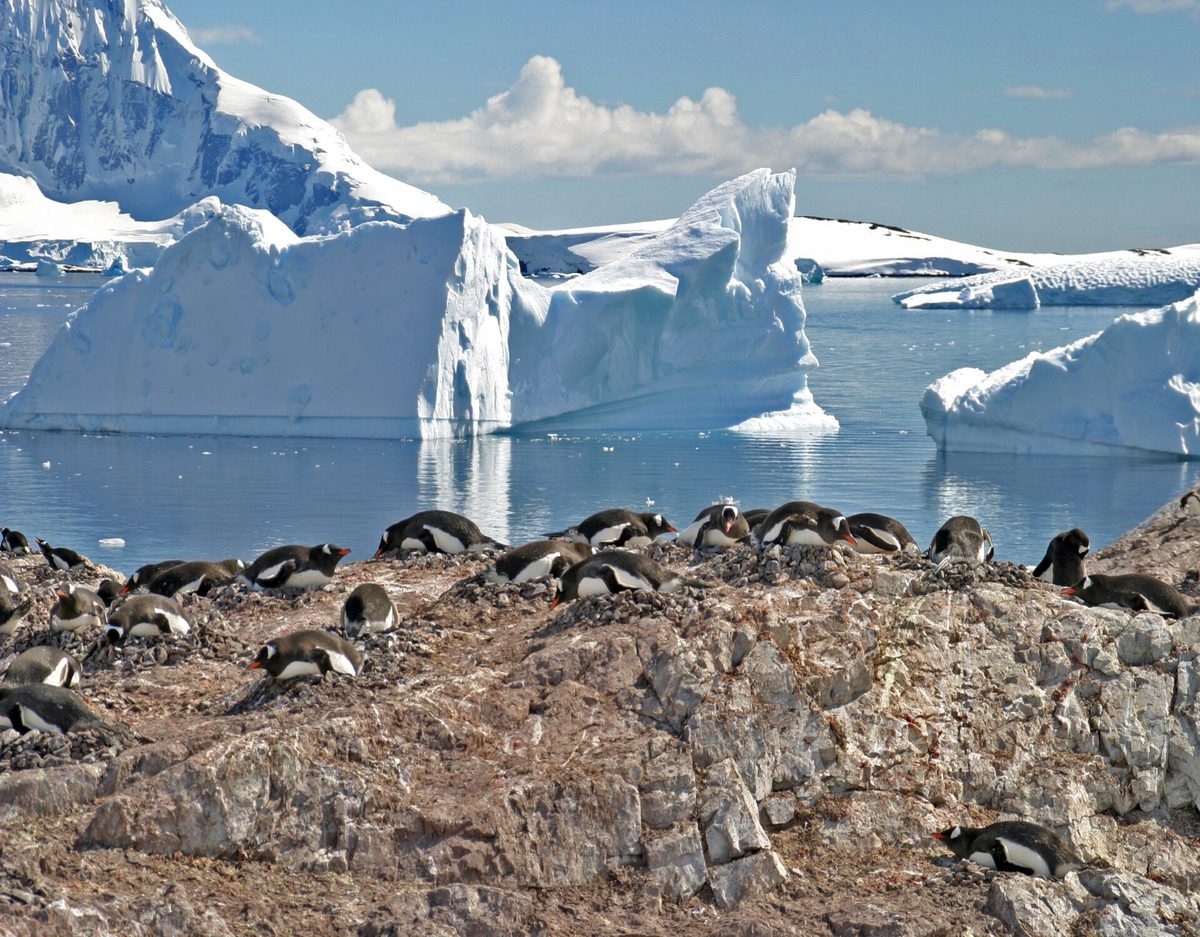
The archipelago rewards repeat visits because there is always another landing to discover. Yankee Harbour, a natural anchorage on Greenwich Island once used by sealers, shelters a large gentoo colony behind a curving gravel spit. Hannah Point on Livingston Island is a wildlife jackpot — gentoos, chinstraps, the occasional macaroni penguin, giant petrels, and elephant seals piled like rubber barrels — though its fragile terrain means access is sometimes restricted to protect it.
These lesser-known sites are where the South Shetlands shrug off any reputation as a mere warm-up. On a quiet morning at Yankee Harbour, with the gentoos braying and the spit curling out into still water, you would never dream of rushing south. There is far more to do here than a single visit allows, as my guide to things to do in Antarctica makes clear.
Deception Island: The Volcano You Sail Into
No account of the South Shetlands is complete without Deception Island, the most surreal landfall in Antarctica. It is an active volcano whose caldera flooded long ago, leaving a ring-shaped island with a narrow, cliff-walled entrance — Neptune’s Bellows — through which ships sail directly into the crater. Inside lies a sheltered black-sand harbour, the rusting ruins of a whaling station and a British base, and beaches where geothermal heat warms the shallows.
It is eerie, post-apocalyptic and utterly unforgettable, and it is volcanically alive — eruptions in the late twentieth century destroyed bases here. Because it deserves more than a paragraph, I have written a separate, detailed guide to Deception Island. If your itinerary includes it, count yourself fortunate; it is one of the strangest places I have ever set foot.
King George Island: Capital of Antarctic Science
King George Island, the largest in the archipelago, is the closest thing Antarctica has to a capital. Nowhere on the continent crams in more research stations: Chilean, Russian, Chinese, Argentine, Korean, Brazilian, Polish, Uruguayan and Peruvian bases all share this one ice-capped island, served by a gravel airstrip that makes it the main gateway for fly-cruise passengers. It is a strange, almost suburban corner of Antarctica, where flags of many nations fly within sight of each other.
For travellers, King George is more about people and politics than pristine wilderness — though it has its glaciers and penguins too. It is the best place to grasp how nations cooperate on the ice under the Antarctic Treaty. I explore it fully in my guide to King George Island, and it features prominently among the Antarctic research stations you can visit.
The Wildlife of the South Shetland Islands
The South Shetlands are one of the most wildlife-dense regions in all of Antarctica, and the penguins are the stars. Three species breed here in great numbers, and you will likely meet all three within your first day or two ashore. Knowing them apart adds enormously to the experience:
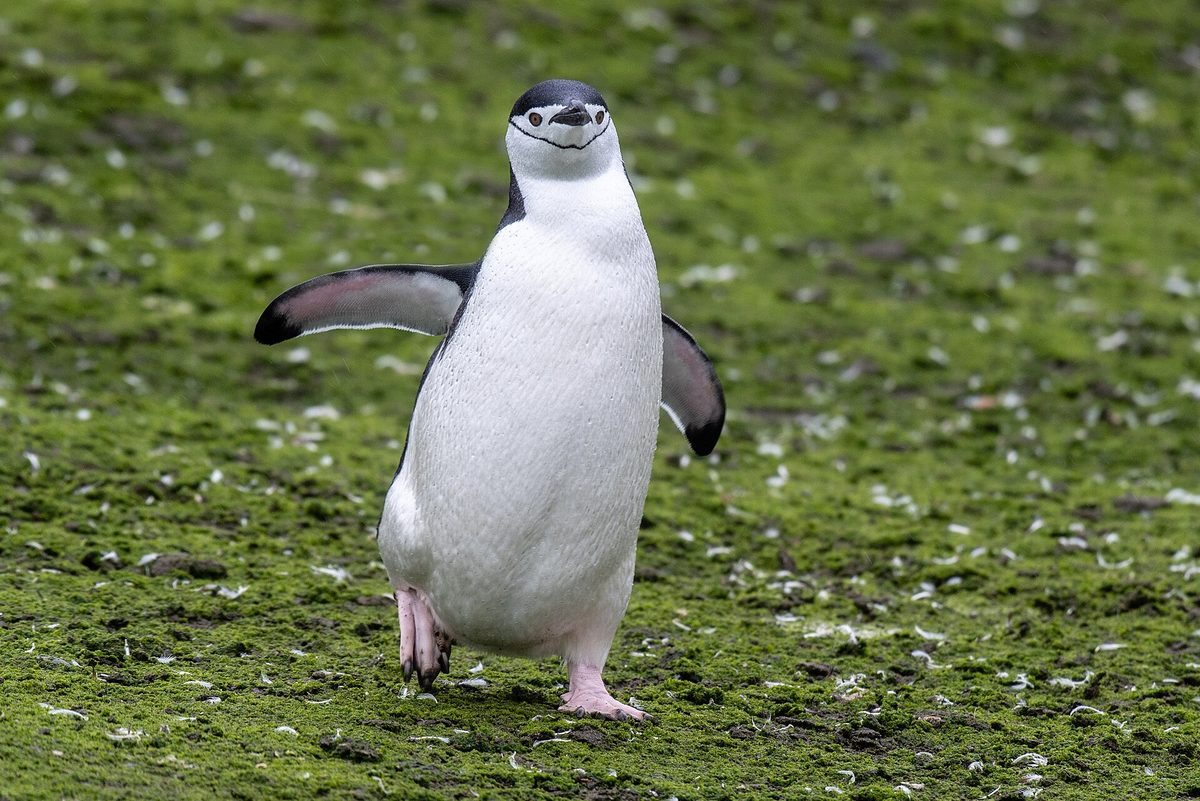
- Chinstrap penguins — named for the thin black line under the chin, fond of steep rocky slopes; Half Moon and the Aitchos are strongholds.
- Gentoo penguins — orange-billed and mellow, the most widespread, with big colonies at Yankee Harbour and Barrientos.
- Adélie penguins — the classic tuxedoed penguin, more common toward the colder southern parts of the chain.
- Macaroni penguins — a rare treat, with yellow head-plumes, occasionally spotted among chinstraps at Hannah Point.
For the full picture of behaviour, breeding and the etiquette of watching them, pair this with my guide to Antarctica wildlife. Even so, nothing prepares you for the sheer sensory assault of a colony in full summer swing.
Seals, Whales and Seabirds
Beyond the penguins, the archipelago teems with other life. Southern elephant seals haul out in blubbery heaps on beaches like Hannah Point, the great bulls belching and sparring. Antarctic fur seals — sprightly, fast and surprisingly aggressive on land — gather in growing numbers as the season wears on, and guides will warn you to give them a wide berth. Weddell and leopard seals lounge on ice and beaches, the latter an apex predator of the penguin colonies.
The skies and seas are busy too: southern giant petrels patrol the colonies for weak chicks, skuas dive-bomb the unwary, and blue-eyed shags nest on the cliffs. Out in the Bransfield Strait, humpback and minke whales feed through the summer. The South Shetlands are a full Antarctic ecosystem in miniature.
A Brief, Bloody History
The South Shetlands were discovered in 1819 by the British merchant captain William Smith, and the consequences were swift and brutal. Within a couple of seasons, sealing gangs from Britain and America descended on the islands and all but exterminated the Antarctic fur seal for its pelt, in one of the earliest and most ruthless resource rushes in polar history. The anchorages you visit today, like Yankee Harbour, take their names from those rough years.
Later came the whalers, who used Deception Island’s flooded crater as a floating factory, and later still the scientists, whose stations now dominate King George Island. To walk these beaches is to walk through two centuries of human appetite and ambition at the bottom of the world — a history I set in its wider context in my overview of Antarctica cruises.
Weather and What to Expect
The South Shetlands have a reputation for grey, damp, changeable weather, and it is mostly deserved. Lying further north and more exposed to ocean systems than the sheltered Peninsula channels, they catch more cloud, wind and drizzle. Summer temperatures hover around freezing, but the wind can make landings bracing, and a brilliant blue morning can turn to sleet by lunch. It is rarely savagely cold; it is frequently wet.
This is no reason for dismay — it simply shapes how you dress. Waterproofs are non-negotiable here, and good boots for wet, mucky landings essential. My full checklist of what to pack for Antarctica applies in full. Embrace the moodiness; a brooding sky over a chinstrap colony is its own kind of beautiful.
When to Visit the South Shetlands
Because they bookend nearly every Peninsula cruise, the South Shetlands are visited throughout the season, from late October to March, and like the rest of the region they change character as summer unfolds. Early-season visits offer deep snow and courting penguins; midsummer brings hatching chicks and the longest days; late season delivers fledging chicks, hungry fur seals and the best whale watching in the Bransfield Strait.
There is no bad time to call here, and since you rarely choose the South Shetlands in isolation, the right answer is whatever suits your wider Antarctic plans. My guide to the best time to visit Antarctica walks through the trade-offs month by month so you can match the season to your priorities.
How the South Shetlands Fit a Bigger Trip
Very few people travel only to the South Shetlands; instead the archipelago is the opening movement of a larger symphony. The standard pattern is South Shetlands first, then south through the Bransfield Strait to the Peninsula proper and its channels. Longer voyages may also reach across to the Weddell Sea on the continent’s other flank, or combine the trip with the Falklands and South Georgia for a wildlife epic.
However your route is shaped, the South Shetlands set the tone. They are where you learn to read the ice, find your Zodiac legs, and feel the first thrill of standing among creatures that have no fear of you. Get there having crossed the Drake — see my guide to the Drake Passage — and the rest of Antarctica opens up before you.
Your First Antarctic Landing: Practical Tips
Because the South Shetlands are where most people make their very first landing, a little preparation pays off. Your first Zodiac ride to a black-pebble beach can be a flurry of nerves and excitement, so it helps to know the rhythm before you go. Listen carefully to the expedition team’s briefings — they are not bureaucratic theatre but the distilled wisdom of people who do this every day, and following them keeps both you and the wildlife safe.
A few hard-won lessons from my own first fumbling landings: wear your waterproof trousers and boots from the cabin, because Zodiac landings are wet; keep one hand free for the “sailor’s grip” when boarding; tuck your camera inside your jacket on the ride over to keep spray off the lens; and resist the urge to rush toward the penguins — sit down, stay still, and they will often wander right up to you of their own accord. Above all, look up from the viewfinder now and then. The South Shetlands are best experienced, not just photographed.
Frequently Asked Questions
Are the South Shetland Islands part of Antarctica?
Yes. They lie south of 60 degrees south and so fall within the area governed by the Antarctic Treaty, making them firmly part of Antarctica both geographically and politically. They are an offshore archipelago of the Antarctic Peninsula region rather than part of the continental mainland, but they are unmistakably Antarctic in climate, wildlife and feel.
Do all Antarctica cruises visit the South Shetland Islands?
The great majority of Peninsula voyages do, because the islands are the first land reached after the Drake Passage and offer easy, wildlife-rich landings. Exact stops depend on weather and ice, but it would be unusual to sail a classic Peninsula itinerary without setting foot somewhere in the South Shetlands. Fly-cruises often begin here too, at King George Island’s airstrip.
What is the best landing site in the South Shetlands?
It is a matter of taste, but Half Moon Island (chinstraps and mountain views), Barrientos in the Aitcho Islands (an easy two-species introduction) and Deception Island (the volcanic caldera) are the perennial favourites. Yankee Harbour and Hannah Point are also superb. Most cruises manage two or three of these, conditions permitting.
What wildlife will I see in the South Shetland Islands?
Expect chinstrap, gentoo and Adélie penguins in large colonies, elephant and fur seals on the beaches, Weddell and leopard seals on ice, and seabirds such as skuas, giant petrels and blue-eyed shags. Humpback and minke whales feed in the surrounding Bransfield Strait. The archipelago is one of the most wildlife-rich corners of the entire region.
Why are there so many research stations in the South Shetlands?
Because they are the most accessible part of Antarctica, with relatively mild conditions and, on King George Island, an airstrip. This makes them comparatively cheap and practical to supply, so many nations site their flagship Antarctic bases here. King George Island alone hosts bases from nearly a dozen countries, making it the busiest patch of human activity on the continent.
Is Deception Island in the South Shetlands?
Yes. Deception Island is one of the South Shetland Islands, and arguably the most dramatic — an active volcanic caldera that ships sail into through a narrow gap called Neptune’s Bellows. Inside are a sheltered harbour, geothermal beaches and the ruins of a whaling station. It is a highlight of any cruise lucky enough to include it.
How cold is it in the South Shetland Islands?
Milder than you might fear. Summer temperatures generally sit around freezing, a few degrees either side, rather than the deep cold of Antarctica’s interior. The bigger challenges are wind and persistent damp; the South Shetlands are cloudier and wetter than the sheltered Peninsula channels. Good waterproofs matter more here than extreme insulation.
Can you fly to the South Shetland Islands?
Yes — King George Island has a gravel airstrip, and fly-cruise itineraries fly passengers from Punta Arenas in Chile to board their ship there, skipping the Drake Passage. It is the only practical air gateway in the archipelago, and a popular option for travellers short on time or wary of the open-ocean crossing.
Final Thoughts
The south shetland islands rarely top anyone’s list of reasons to visit Antarctica, and that is precisely why they so often surprise people. They are the threshold, the welcome, the gentle teacher — and yet they hold a volcanic caldera, the densest science community on the continent, and some of the liveliest penguin colonies you will ever stand beside. I have never once treated a South Shetlands landing as a mere formality, and neither should you.
Give these islands your full attention. Walk the ridge at Barrientos, sail into Deception’s crater, stand among the chinstraps on Half Moon with Livingston’s peaks behind them, and you will understand why the archipelago lingers in the memory long after the grander mainland scenery blurs. Antarctica begins here, and it begins magnificently.
Related Reading
- Antarctica’s regions and landing sites
- The Antarctic Peninsula: complete guide
- Deception Island
- Half Moon Island
- King George Island
- Antarctic research stations you can visit
- The Weddell Sea
- Antarctica cruises
- Antarctica cruise itineraries
- Antarctica wildlife
- The best time to visit Antarctica
- Crossing the Drake Passage
- Things to do in Antarctica
- What to pack for Antarctica