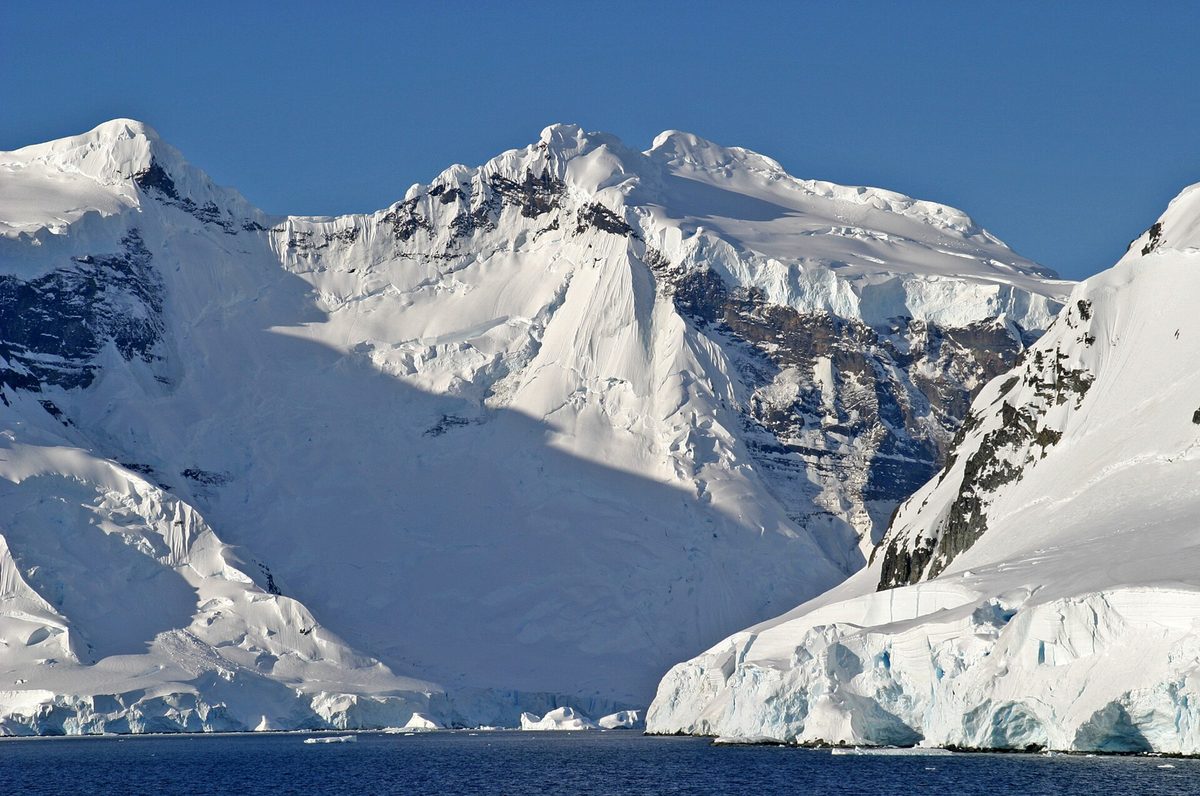
Search for King George Island Antarctica and you will quickly discover something that surprises almost everyone: this is the most crowded, most international and least pristine corner of the entire frozen continent. While the rest of Antarctica is a wilderness of ice and silence, King George Island is its unlikely capital — a single ice-capped island that hosts research bases from nearly a dozen nations, a gravel airstrip, a Russian Orthodox church, and even a small civilian town with a school and a bank. It is Antarctica’s strangest, busiest, most human place.
I have passed through King George many times, usually as a gateway rather than a destination, and it never fails to fascinate me. It is the closest thing the continent has to a border town: a place of flags and runways and radio masts, where the politics of the Antarctic Treaty play out in concrete and steel. In this guide I will explain where it sits, why so many countries planted their bases here, what there is to see, and how the island serves as the front door through which many travellers fly to reach the ice.
King George Island Antarctica’s Science Capital
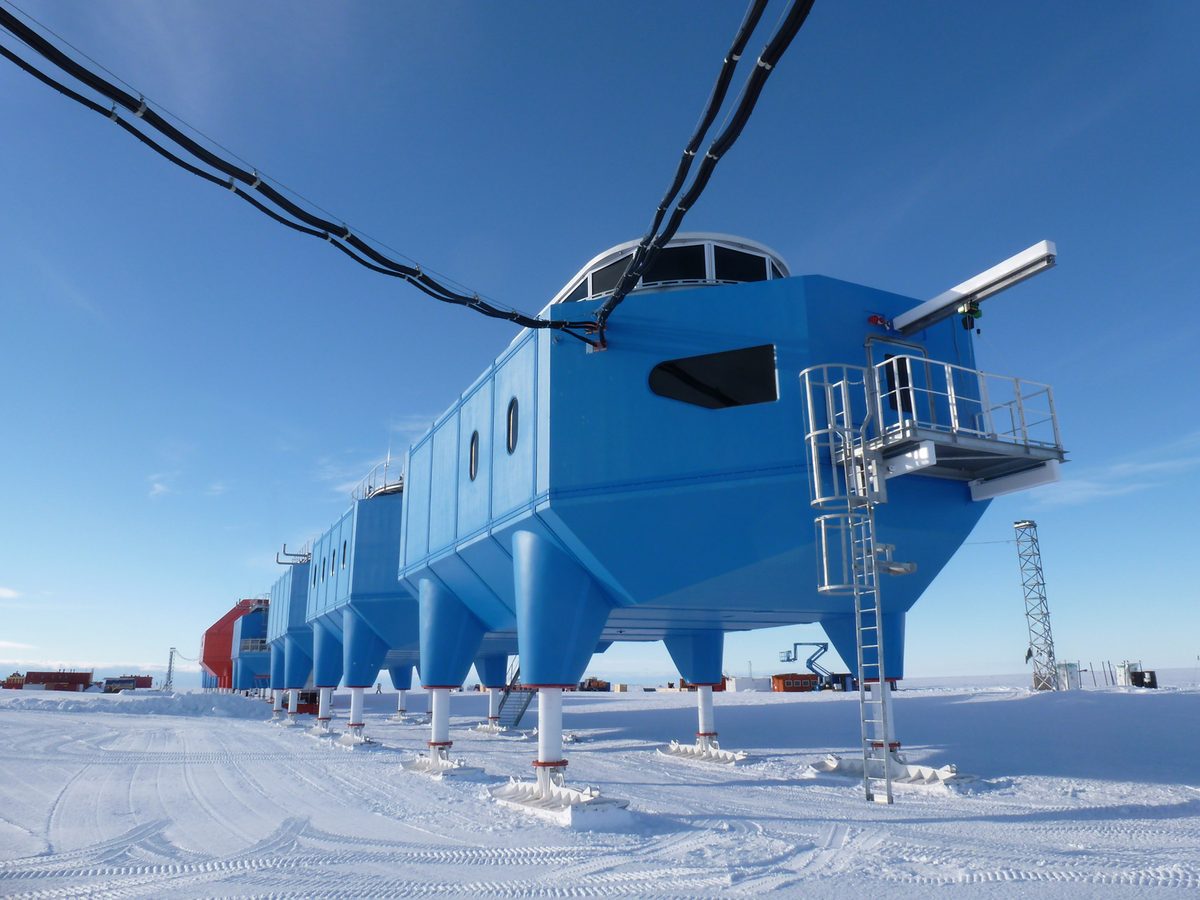
To understand King George Island Antarctica’s role, picture it less as a tourist attraction and more as a logistics and science hub. It is the largest of the South Shetland Islands, roughly 95 kilometres long, and around nine-tenths of it lies buried under permanent ice. Yet on its few exposed shores sits the densest concentration of human activity anywhere on the continent — more research stations packed into one island than you will find across vast tracts of the interior.
This makes King George a place of contradictions. It is unmistakably Antarctic — glaciers, penguins, brutal weather — yet humming with people, vehicles and aircraft in a way no other part of the continent is. For travellers it is most often a means to an end, the airfield where fly-cruise passengers begin their voyage, but it rewards curiosity in its own right. It is a key piece of the wider puzzle of Antarctica’s regions and landing sites.
Where Is King George Island?
King George Island lies at the northeastern end of the South Shetland Islands, about 120 kilometres off the tip of the Antarctic Peninsula across the Bransfield Strait, and roughly 1,200 kilometres from the southern tip of South America. Its relatively northerly position, by Antarctic standards, gives it a milder if famously damp and cloudy maritime climate, and — crucially — makes it reachable by air from Punta Arenas in Chile.
That accessibility is the single fact that explains everything else about the island. Because it is comparatively easy and cheap to reach and supply, nations seeking a foothold in Antarctica gravitated here, and the fly-cruise industry grew up around its airstrip. It is, in effect, the most connected point on the least connected continent. For the bigger picture of reaching the ice, see my guide to how to get to Antarctica.
The Most Crowded Island in Antarctica
Nowhere else in Antarctica comes close to King George Island for sheer density of bases. A roll call of the stations clustered on its shores reads like a miniature United Nations, and several are within walking or short driving distance of one another — a genuine rarity on a continent where neighbours are usually hundreds of kilometres apart. Here are some of the main stations you may hear named:
| Station | Country | Notes |
|---|---|---|
| Frei & Escudero | Chile | Beside the airstrip and the civilian town |
| Bellingshausen | Russia | Home of the Antarctic Orthodox church |
| Great Wall | China | China’s first Antarctic station, opened 1985 |
| King Sejong | South Korea | On the Barton Peninsula, Maxwell Bay |
| Carlini | Argentina | Long-running base in Potter Cove |
| Artigas | Uruguay | On the shore of Collins Harbour |
| Arctowski | Poland | In Admiralty Bay, beside a penguin colony |
| Comandante Ferraz | Brazil | Rebuilt after a 2012 fire, in Admiralty Bay |
That is not even the full list — Peru, Ecuador and others maintain a presence too. The clustering is so dense that some bases are linked by actual roads, an almost comic novelty in a place where most travel is by ship or helicopter. King George is, quite simply, where the world keeps its Antarctic doorstep.
Villa Las Estrellas: A Town in Antarctica
Perhaps the most extraordinary thing on King George Island is Villa Las Estrellas — “Village of the Stars” — a small Chilean civilian settlement beside the Frei base. It is one of only two civilian towns on the entire continent, with a summer population of around 150 and a hardy winter community of perhaps 80, including families. It has a school, a bank, a post office, a small shop, a gym and a chapel; children grow up here, attending class within sight of glaciers.
Visiting Villa Las Estrellas drives home just how exceptional King George is. Nowhere else can you post a letter, visit a school and buy a souvenir on the Antarctic continent in the same afternoon. It is a glimpse of what a more permanently inhabited Antarctica might look like, and a reminder that even here, in the harshest place on Earth, people make homes. Its post office is a cousin of the famous one I describe among the research stations you can visit.
The Airstrip: Gateway to the Peninsula
For many travellers, King George Island is not a sight to see but the place where the adventure begins. The Teniente Rodolfo Marsh airfield beside the Chilean base has a gravel runway long enough to take the chartered aircraft that fly passengers across the Drake Passage from Punta Arenas. Step off the plane, walk down to the shore, board a Zodiac to your waiting ship, and you have reached Antarctica in a couple of hours rather than two days at sea.
This fly-cruise model has transformed Antarctic travel, opening the Peninsula to those short on time or wary of the notorious crossing. It costs more and depends utterly on the island’s fickle weather — flights are frequently delayed by fog and wind — but when it works it is a marvel. I cover the option in detail in my guide to flights to Antarctica.
Bellingshausen Base and Trinity Church
One of the most photographed sights on King George Island is something you would never expect to find in Antarctica: a Russian Orthodox church. Trinity Church, a handsome wooden building of Siberian larch and pine, was assembled in Russia, shipped south, and erected on a hill above the Russian Bellingshausen station, where it stands as the southernmost Eastern Orthodox church on Earth and the only permanently staffed one in Antarctica. Priests rotate down to serve the small congregation of base personnel.
Bellingshausen itself, founded by the Soviet Antarctic Expedition in 1968, is one of the older stations on the island and a centre for meteorological, glaciological and biological research. The juxtaposition of the timber church against the ice and the cluster of utilitarian base buildings is unforgettable — a small, golden-domed piece of Russia transplanted to the bottom of the world.
The Multinational Mosaic of Bases
What gives King George Island its peculiar character is the way so many nations rub shoulders here. Within a small area you find Chilean, Russian, Chinese, Korean, Uruguayan and other facilities, their personnel borrowing tools, sharing meals and occasionally playing football against one another. It is the Antarctic Treaty made tangible — a continent reserved for peace and science, where rival powers cooperate in conditions that demand it.
This concentration also makes King George a living showcase of how Antarctic science is organised and funded internationally. Each base reflects its nation’s ambitions and resources, from sprawling, well-equipped stations to modest summer huts. For travellers interested in the human and political story of Antarctica, no single place explains it better. It is the beating administrative heart of the continent, the counterpoint to the empty grandeur described in my Antarctic Peninsula guide.
Admiralty Bay and the Arctowski Penguins
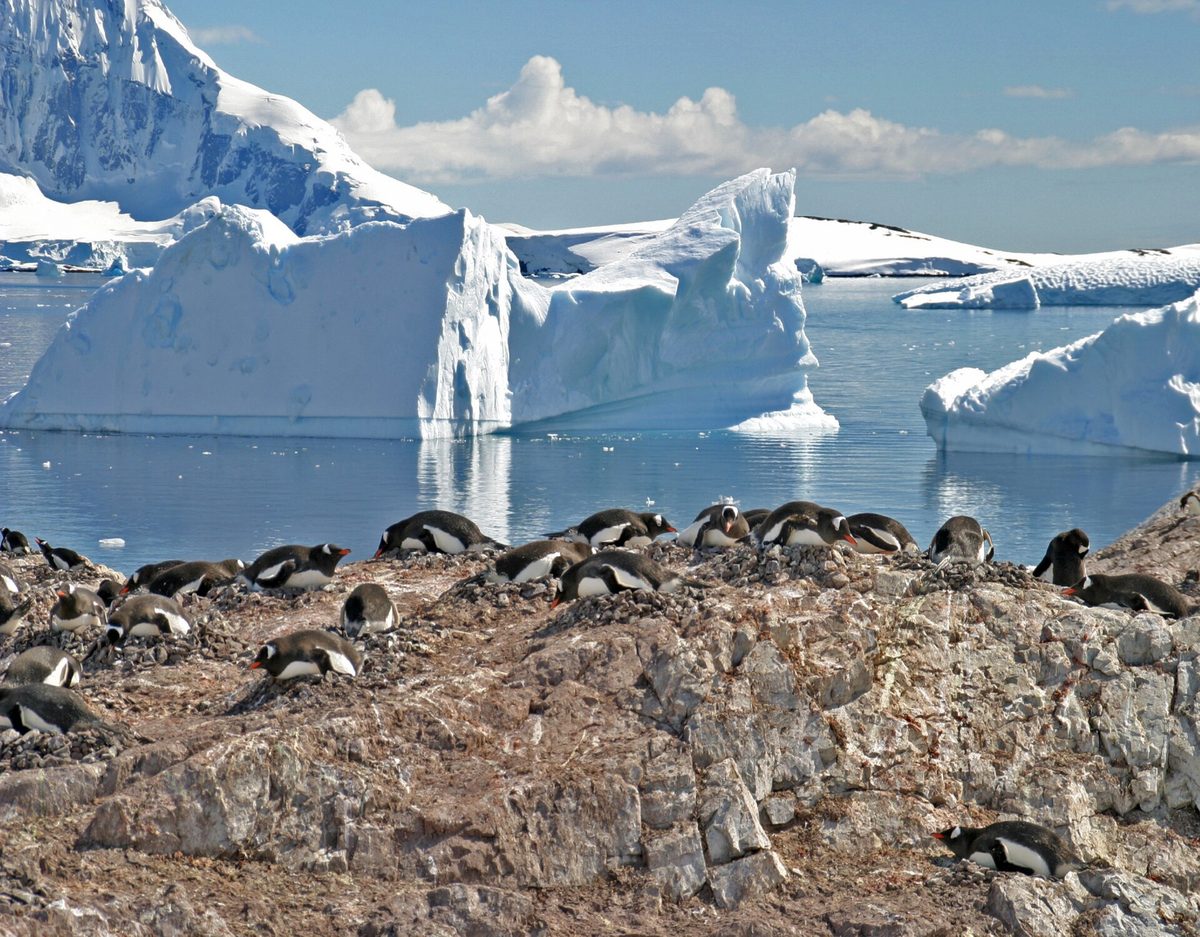
For all its human bustle, King George Island has genuine wild corners, and the finest is Admiralty Bay, a large, glacier-fringed fjord on the island’s southern side. The Polish Arctowski station sits here beside a lively colony of gentoo, Adélie and chinstrap penguins, and a specially protected area safeguards the rich birdlife. A landing at Arctowski offers the rare combination of warm Polish hospitality and excellent wildlife in one spot.
Admiralty Bay shows the other face of King George — not the runways and radio masts but the ice cliffs, the seals on the floes and the penguins going about their business. It is a reminder that beneath all the human activity, this is still very much Antarctica. To make sense of the wildlife you will meet, keep my guide to Antarctica wildlife to hand.
The Wildlife of King George Island
Despite the bases, King George supports plenty of Antarctic wildlife, particularly around its quieter bays and protected areas. On and around the island you may encounter:
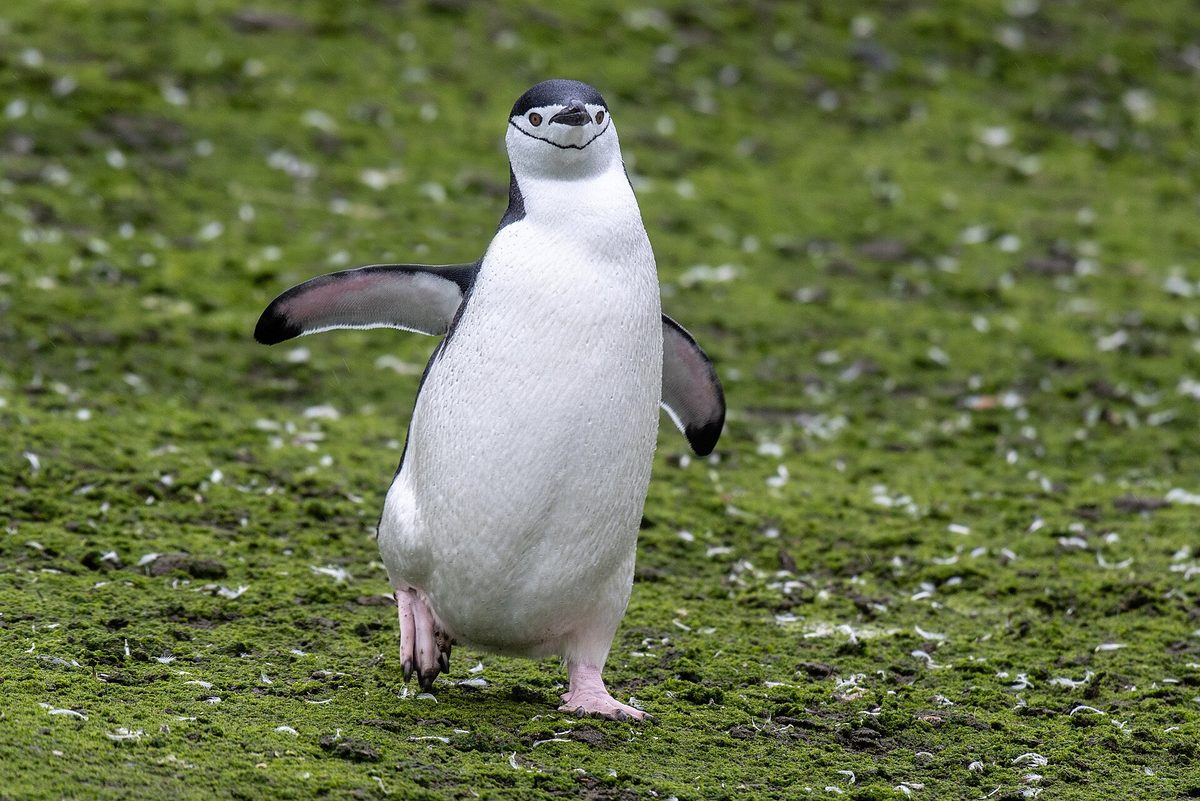
- Gentoo, Adélie and chinstrap penguins — all three breed here, with notable colonies near Arctowski in Admiralty Bay.
- Southern elephant seals — hauling out in wallowing groups on several beaches.
- Weddell and fur seals — on the ice and shorelines, the fur seals more numerous late in the season.
- Skuas, giant petrels and sheathbills — patrolling the colonies and the edges of the bases.
- Blue-eyed shags — nesting on the cliffs around the bays.
- Whales — humpbacks and minkes feeding in the surrounding straits in summer.
The presence of so many people has not driven the wildlife away, though it does mean visitor behaviour is tightly managed to protect the animals and the science. It is a delicate coexistence, and watching it work is part of the island’s interest.
The Ice, the Landscape and the Weather
Around 90 percent of King George Island is covered by an ice cap, and glaciers spill down to the sea on every side, calving into the bays. The exposed coastal fringes where the bases cluster are a mix of gravel, moss and rock, often muddy in the summer thaw. It is not the soaring, mountainous Antarctica of the Peninsula channels — the island is lower and more rounded — but the ice cap gives it real grandeur in good light.
The weather is the island’s defining challenge. Lying in the path of Southern Ocean storms, King George is notoriously cloudy, windy and wet, with fog that frequently grounds the flights that depend on its airstrip. Travellers using the fly-cruise option learn to build in patience, because a clear window for landing or take-off cannot be commanded, only awaited.
Getting There and What Visitors Do
Most travellers reach King George Island in one of two ways: by ship, calling in as part of a South Shetlands itinerary, or by air, flying in to begin a fly-cruise. Either way, time ashore is usually short and focused — a visit to a base or the town, a look at Trinity Church, a wildlife landing at Admiralty Bay, or simply the transfer from runway to ship. The island is rarely a leisurely stop; it is a hub through which people and supplies flow.
Because access depends on cooperation with the research stations, the experience is more structured than a wilderness landing. You go where you are invited, and the focus is on people and place rather than untouched nature. For how this fits the shape of a wider voyage, see my overview of Antarctica cruise itineraries.
King George Island Versus the Pristine Peninsula
It would be easy to be sniffy about King George — to call it the least “Antarctic” part of Antarctica, all concrete and machinery where the rest is ice and silence. But that misses the point. King George is fascinating precisely because it is the exception: the one place where you see how humans actually live and work on the continent, the gritty, practical underside of the gleaming wilderness everyone photographs.
My advice is to embrace it for what it is. Do not come to King George expecting the sublime emptiness of the deep Peninsula or the Weddell Sea; come to understand the human story of Antarctica. Seen that way, the bases and the runway and the little town are not a disappointment but a revelation — the most thought-provoking stop on many a voyage south.
When to Visit
King George Island is accessible throughout the Antarctic travel season, from November to March, with the fly-cruise flights running through those summer months. Wildlife around Admiralty Bay peaks in the heart of summer when penguin chicks are growing, while the shoulder months can offer quieter, more atmospheric visits. As ever, the weather rather than the calendar tends to dictate what actually happens. My guide to the best time to visit Antarctica lays out the seasonal trade-offs that apply here as elsewhere.
A Short History of King George Island
King George Island was sighted in 1819 by the British captain William Smith, whose discovery of the South Shetlands opened the entire region to the wider world. Named for the reigning British king, the island was swiftly drawn into the brutal sealing rush that followed, as gangs from Britain and America descended on the archipelago and slaughtered the fur seals almost to extinction. For a century afterwards the island saw little but the occasional whaler and explorer.
Its modern era began in the mid-twentieth century, as nations raced to establish a scientific and political presence in Antarctica. The Soviet Union founded Bellingshausen in 1968, Chile built up Frei and later the town of Villa Las Estrellas, and through the 1980s and beyond China, South Korea, Brazil, Poland, Uruguay, Peru and others added their bases. In a few short decades the empty island became the most densely occupied ground on the continent — a transformation that mirrors the rise of organised Antarctic science itself.
That history still shapes how the island feels today. The sealers’ anchorages, the Cold War-era stations and the modern research facilities layer over one another, telling the whole story of human involvement with Antarctica in one compact place. It is a fitting prelude to the great wilderness that lies beyond, and a reminder of how recently humans gained any real foothold here at all. For the broader sweep of how people first reached these waters, see my overview of Antarctica cruises.
Frequently Asked Questions
Why are there so many research stations on King George Island?
Because it is the most accessible part of Antarctica. Its relatively northerly position, milder maritime climate and gravel airstrip make it comparatively cheap and practical to reach and supply by air and sea. That ease drew nation after nation to plant its flagship Antarctic base here, creating the densest cluster of research stations anywhere on the continent.
Can tourists visit King George Island?
Yes. Many South Shetlands cruise itineraries call here, and fly-cruise passengers begin their voyages at its airstrip. Visits often include a research base, Trinity Church or the town of Villa Las Estrellas, plus wildlife landings at places like Admiralty Bay. Access depends on cooperation with the stations and on the island’s notoriously changeable weather.
Is there really a town in Antarctica on King George Island?
Yes — Villa Las Estrellas, a small Chilean settlement beside the Frei base, is one of only two civilian towns on the continent. It has a school, a bank, a post office, a shop and a chapel, with a summer population around 150 and a winter community of about 80, including families with children.
How do fly-cruises to Antarctica use King George Island?
Fly-cruise passengers board a chartered aircraft in Punta Arenas, Chile, and fly across the Drake Passage to King George Island’s gravel runway, then transfer by Zodiac to their expedition ship. This skips two days of open-ocean sailing each way. The trade-off is higher cost and dependence on the island’s fog and wind, which often delay flights.
Is there a church on King George Island?
Yes. Trinity Church, a wooden Russian Orthodox church built in Russia and assembled above the Bellingshausen station, is the only permanently staffed Eastern Orthodox church in Antarctica and the southernmost on Earth. Priests rotate down to serve the base communities, and it is one of the island’s most striking and photographed sights.
What wildlife can you see on King George Island?
Gentoo, Adélie and chinstrap penguins all breed here, with good colonies near the Polish Arctowski station in Admiralty Bay. You may also see southern elephant seals, Weddell and fur seals, skuas, giant petrels, blue-eyed shags and, offshore, humpback and minke whales in summer. Despite the human activity, the island retains genuinely wild corners.
Is King George Island worth visiting?
If you are interested in the human story of Antarctica, very much so. It is not the place for untouched wilderness — that lies further south — but nowhere else shows how people actually live, work and cooperate on the continent. The bases, the town, the church and the multinational bustle make it the most thought-provoking, if least pristine, stop on many voyages.
What is the weather like on King George Island?
Damp, cloudy and windy. Lying in the path of Southern Ocean storms, the island is one of the wetter, foggier parts of Antarctica, with summer temperatures hovering around freezing. The frequent fog and wind regularly delay the flights that use its airstrip, so patience is essential for anyone arriving or leaving by air.
Final Thoughts
King George Island will never be the postcard image of Antarctica, and that is exactly why it deserves your attention. It is the continent’s improbable capital — a place of runways and radio masts, of a wooden church and a little town, of a dozen nations sharing one ice-capped island in the name of science and peace. To stand here is to see the Antarctic Treaty not as an abstraction but as a living arrangement, written in concrete and steel and good-natured cooperation.
Whether you fly in to start your voyage or call by ship between wilder landings, give King George its due. Visit a base, climb to Trinity Church, watch the penguins at Admiralty Bay, and reflect on the strange fact of human life flourishing at the edge of the ice. It is, in its own peculiar way, one of the most remarkable places in Antarctica — and the gateway through which a great many dreams of the continent come true.
Related Reading
- Antarctica’s regions and landing sites
- The South Shetland Islands
- Deception Island
- Half Moon Island
- The Antarctic Peninsula: complete guide
- Antarctic research stations you can visit
- Flights to Antarctica
- How to get to Antarctica
- Antarctica cruise itineraries
- Antarctica wildlife
- The best time to visit Antarctica
- The Weddell Sea