The first time the clouds tore open and I saw the mountains of the Antarctic Peninsula rise straight out of a black sea, I forgot to take a photograph. I simply stood at the rail and stared, the way you might stare at something you had been told about your whole life and never quite believed. This antarctic peninsula guide is the one I wish someone had handed me before that voyage — the honest, practical, slightly besotted account of the most accessible and, to my mind, most rewarding corner of the entire frozen continent. If you are dreaming of Antarctica and wondering where to actually go, you are almost certainly dreaming of here.
I have now sailed these waters more times than I can neatly count, in fair weather and foul, and the Peninsula has never once felt ordinary. It is the long, curling arm of the continent that reaches north toward South America, the warmest and greenest-tinged sliver of a place otherwise locked in white. It is where the overwhelming majority of travellers set foot on Antarctica, and for very good reason. Below I will walk you through where it is, how you get there, what you will see, when to go, and how to decide whether this — rather than the wilder, costlier far south — is the right first chapter of your own polar story.
The Antarctic Peninsula Guide: Why Start Here
If you read only one section of this antarctic peninsula guide, make it this one. The Peninsula is the answer to the question almost every first-timer asks: “Where do Antarctica cruises actually go?” The honest answer is that around nine in ten of them go here, to the strip of coast and islands south of the Drake Passage, because it offers the richest concentration of wildlife, scenery and landing sites anywhere on the continent that an ordinary traveller can realistically reach. You get towering glaciers, penguin colonies tens of thousands strong, breaching humpbacks, historic huts and research bases, all within a region you can explore on a ten-day trip.
Think of the Peninsula as Antarctica’s front door — and a magnificent one. The deep interior, the South Pole, the great ice shelves of the Ross and the Weddell: those are the realms of scientists and a handful of extraordinarily expensive expeditions. The Peninsula is where the continent opens itself to the rest of us. It is the heart of the place I describe in my overview of Antarctica’s regions and landing sites, and the natural starting point for anyone planning their first Antarctica cruise.
Where Exactly Is the Antarctic Peninsula?
Picture the continent as a rough circle with a thin tail flicking up toward the top of the map. That tail is the Peninsula, and its tip lies roughly 1,000 kilometres south of Cape Horn, separated from South America only by the Drake Passage. This proximity is everything: it is the closest part of Antarctica to any inhabited land, which is precisely why it became the cradle of Antarctic tourism. From the port of Ushuaia at the bottom of Argentina, a ship can be among Peninsula icebergs in a little over two days.
The region is not a single coastline but a tangle of the mainland’s western shore plus a scatter of offshore islands, channels and bays. To the north sit the South Shetland Islands, the first land most ships reach. South of them the true Peninsula coast unfurls in a sequence of straits and harbours that read like a roll call of polar legend. Geographers sometimes call this northern, milder stretch the “Banana Belt” of Antarctica — only half in jest, because it really is the gentlest face the continent shows.
Why the Peninsula Is the Most Popular Place in Antarctica
People sometimes assume the Peninsula is popular simply because it is easy, as though convenience were its only virtue. Having been many times, I can tell you that is backwards. It is popular because it is superb, and the fact that it is reachable is a happy bonus. The density of experience here is extraordinary: in a single day you might cruise beneath a glacier calving into the sea, land among a colony of gentoos, watch a leopard seal patrol the ice, and toast the sunset that never quite arrives at midnight.
The Peninsula also has the infrastructure of decades of expedition cruising behind it. Captains and guides know these waters intimately; landing sites are well understood; the weather, while never tame, is the most forgiving on the continent. For a fuller sense of everything you can do once you arrive, my guide to things to do in Antarctica covers the full menu, but the short version is this: nowhere else gives you so much Antarctica for your time and money.
Getting There: The Drake Passage and the Fly-Cruise Alternative
Reaching the Peninsula means, for most people, crossing the Drake Passage — the famous, infamous stretch of ocean where the Atlantic, Pacific and Southern Oceans collide with nothing to slow them down. It can be a millpond (“the Drake Lake”) or a washing machine (“the Drake Shake”), and you rarely know which until you are in it. I have had both, and even the rough crossing became, in hindsight, part of the adventure. My detailed account of crossing the Drake Passage will tell you what to expect and how to cope.
There is a shortcut for those short on time or stomach: the fly-cruise. You fly from Punta Arenas in Chile across the Drake to an airstrip on King George Island, then board your ship there, skipping two days of open ocean in each direction. It costs more and trades the slow, earned approach for speed, but it has opened the Peninsula to travellers who could never spare three weeks. Either way, the moment land appears, the journey justifies itself.
The Great Channels: Gerlache, Neumayer and the Lemaire
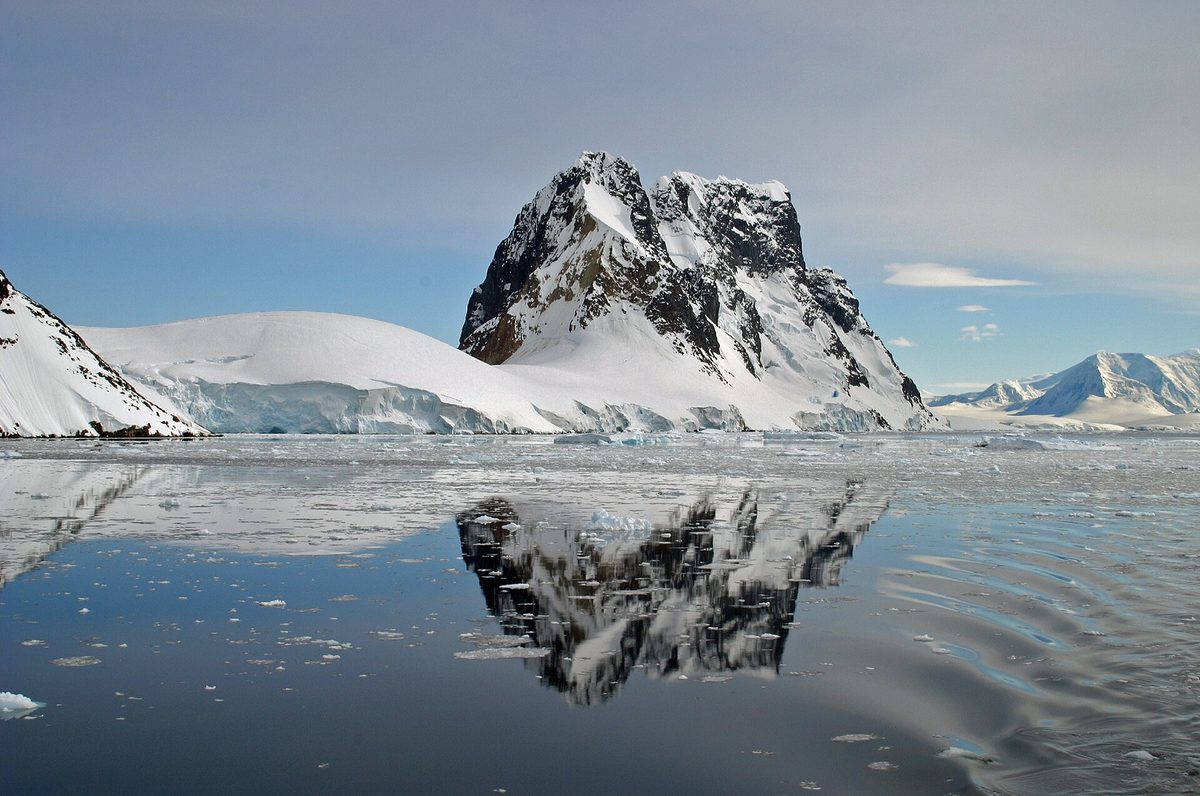
If the Peninsula has a soul, it lives in its channels — narrow passages where the ship threads between sheer mountain walls and the water turns to black glass. The Gerlache Strait is the grand avenue, lined with glacier-draped peaks and busy with whales feeding on summer krill. Off it branches the Neumayer Channel, tighter and more dramatic still, and the jewel of them all, the Lemaire Channel — a kilometre-wide cleft so photogenic that sailors nicknamed it “Kodak Gap.”
Sailing the Lemaire on a still morning, with reflections doubling the peaks and the only sound the crackle of brash ice against the hull, is one of the defining experiences of any Peninsula voyage. The channels are also where you feel the scale of the place most acutely: the mountains do not photograph as tall as they feel, and no lens captures the silence. These passages are, for me, the reason a Peninsula trip beats almost any rival.
The Best Landing Sites on the Antarctic Peninsula
A Peninsula voyage is really a string of landings and Zodiac cruises, two a day if weather allows, each at a different site. No two itineraries are identical — ice, wind and the rhythms of other ships all shape the plan — but a strong trip will hit a selection of the classics. Here are the landing sites I most hope to see on any voyage south:
- Neko Harbour — a glacier-ringed bay and one of the few spots you stand on the continental mainland itself, with a busy gentoo colony and a glacier that calves with a sound like thunder.
- Paradise Bay (Paradise Harbour) — perhaps the most beautiful anchorage in Antarctica, a mirror of ice and rock that earned its name honestly.
- Port Lockroy — a historic British base turned museum and post office on tiny Goudier Island, ringed by gentoos.
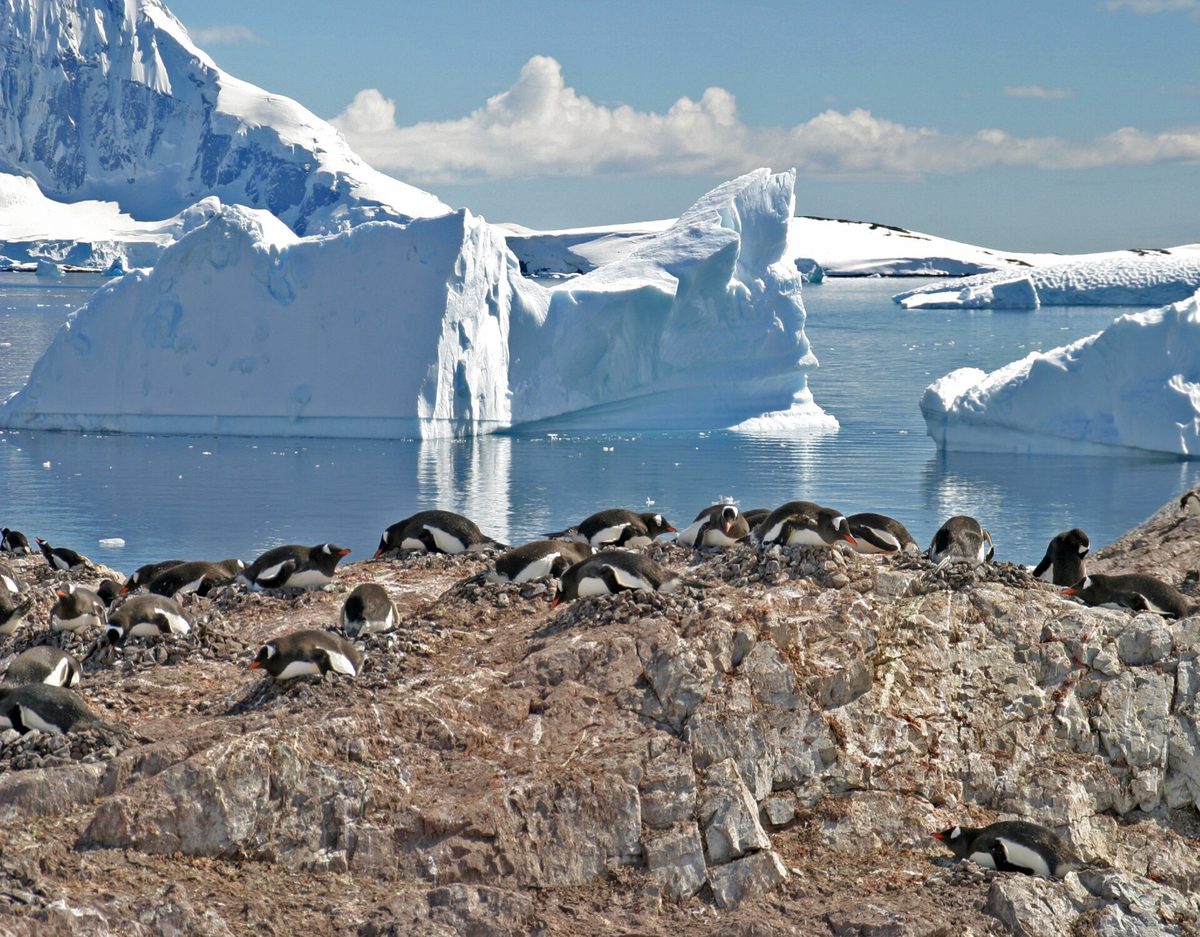
- Cuverville Island — home to one of the largest gentoo penguin colonies on the Peninsula.
- Danco Island — a gentle climb to a summit view over the Errera Channel, penguins all the way up.
- Petermann Island — the southernmost gentoo colony and a haunt of Adélie penguins, near the bottom of the typical route.
- Orne Harbour — a steep snow climb to a ridge with a chinstrap colony and a heart-stopping view.
- Brown Bluff — a rust-red volcanic cliff on the Peninsula’s tip, with Adélies and gentoos beneath it.
You will not see them all on one trip, and that is part of the appeal — every voyage is a different cut of the same magnificent cloth. I dig deeper into the southern bays in my piece on Paradise Bay, which alone is worth the journey.
Neko Harbour and Paradise Bay: Standing on the Continent
For many travellers the emotional peak of a Peninsula trip is the first continental landing, and Neko Harbour is often where it happens. Most South Shetland landings are technically on islands; at Neko you plant your boots on Antarctica proper. The bay is hemmed by an active glacier whose calvings send miniature tsunamis rolling across the water — guides keep you high on the shore for good reason. Gentoos trundle their “penguin highways” through the snow around you, utterly indifferent to your awe.
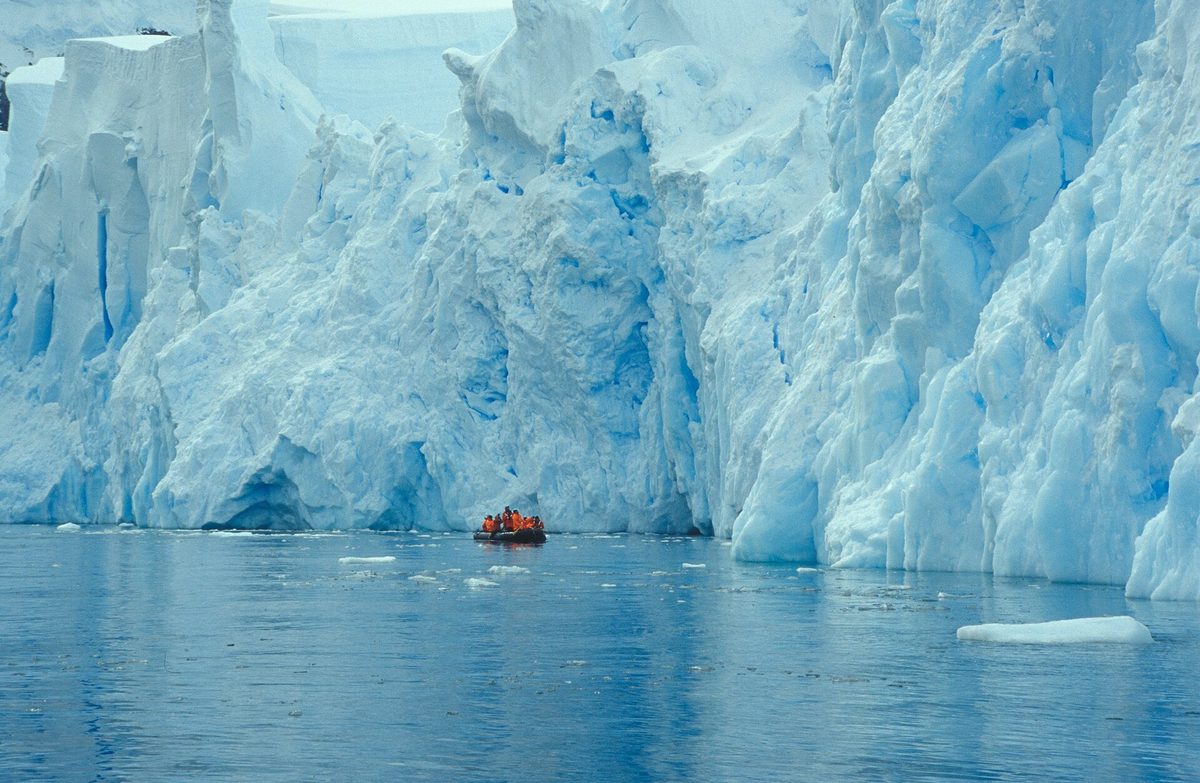
Paradise Bay, a little to the north, is the other contender for most moving stop. Ringed by ice cliffs that glow blue from within, dotted with the rusting remains of old bases and the blue-eyed shags nesting on the rocks, it is the kind of place where even chatty passengers fall silent. A Zodiac cruise here, drifting among icebergs sculpted like cathedrals, is the Peninsula distilled.
Port Lockroy and the Famous Penguin Post Office
Few stops charm people as reliably as Port Lockroy. Set on the speck of Goudier Island, this restored 1940s British base now serves as a small museum, gift shop and the southernmost public post office on Earth, staffed each summer by a handful of cheerful volunteers who live without running water amid a colony of gentoos. You can send a postcard from here, stamped and franked, that will reach home weeks later carrying a genuine Antarctic postmark. It is gloriously, defiantly human in a landscape that otherwise dwarfs us.
The penguins, for their part, have learned to nest right up against the historic huts, and the volunteers run a long-standing study comparing penguin behaviour on the visited and unvisited halves of the island. It is a neat reminder that even here, tourism and science share the same few square metres. Port Lockroy is one of the most beloved of all Antarctic research stations you can visit.
The Wildlife of the Antarctic Peninsula
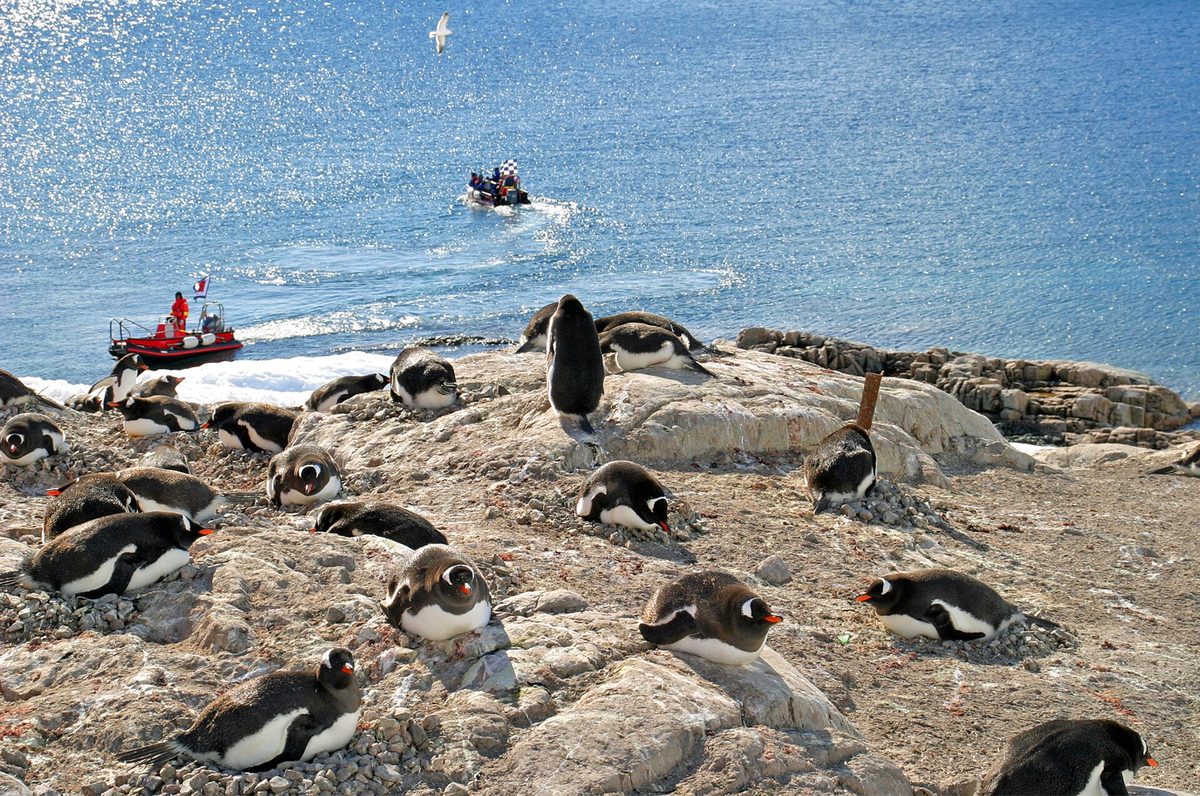
The wildlife is, for most of us, the whole point, and the Peninsula delivers it in volume. The headline act is the penguin, in three Peninsula-breeding species, each with its own character. You will likely meet all three on a good trip, often within the same day, and learning to tell them apart is half the fun. Here is how the three stack up:
| Penguin | How to spot it | Where you’ll see it | Character |
|---|---|---|---|
| Gentoo | Orange beak, white “headphone” patch over the eyes | Everywhere — the Peninsula’s most common penguin | Curious, mellow, the easiest to photograph |
| Chinstrap | Thin black line under the chin, like a helmet strap | Steep, rocky sites such as Orne Harbour and Half Moon | Loud, feisty, fond of vertiginous nest sites |
| Adélie | All black head, white eye-ring, stubby beak | Colder southern sites like Petermann and Brown Bluff | Comical, frantic, the “classic” tuxedo penguin |
To go deeper on behaviour, breeding cycles and the rules around watching them, my full guide to Antarctica wildlife is the companion piece to this one. But even without a single fact in your head, standing downwind of a colony ten thousand strong — the noise, the smell, the relentless comedy of it — is something you never forget.
Whales, Seals and the Life of the Sea
Above the waterline it is the penguins’ show; below it, the whales and seals take over. The Gerlache Strait and surrounding waters fill with humpback whales through the late summer, gorging on krill before their long migration north, and encounters can be astonishingly intimate — a Zodiac engine cut, and a forty-tonne animal surfacing close enough to mist you with its breath. Minke whales slip through the brash ice, and lucky travellers catch the dramatic, intelligent orca hunting in pods.
Seals haul out on floes throughout the region: the languid Weddell, the abundant crabeater (which despite its name eats krill), the fur seals that gather in rowdy numbers later in the season, and the formidable leopard seal, a sinuous predator that hunts penguins at the colony edges. I have spent whole afternoons simply drifting past a single sleeping leopard seal, mesmerised. The Peninsula’s marine richness is the engine that powers everything else you see.
When to Go: The Peninsula Month by Month
The season runs from roughly late October to March, and the Peninsula changes character as it progresses. There is no single “best” time — only the time that best matches what you most want to see. My broader guide to the best time to visit Antarctica breaks this down in detail, but here is the Peninsula-specific shape of the season:
- November — early season. Pristine, deep snow, dramatic ice, penguins courting and building nests. Fewer ships, pack ice can still limit how far south you go.
- December and January — high summer. Near-24-hour daylight, the warmest weather, penguin chicks hatching, the busiest and most reliable conditions for landings.
- February and March — late season. The best whale watching by far, fluffy chicks fledging, retreating ice opening the southern routes, softer light and fur seals ashore.
If pressed, I send first-timers in December or January for the sheer reliability and the round-the-clock light, and send returning travellers in February for the whales. There is no wrong answer.
What You Actually Do Each Day
People imagine an Antarctic cruise as days of staring out of windows. The reality is far more active. A typical Peninsula day involves two off-ship excursions — a morning and an afternoon — separated by lunch and lectures from the expedition team. One excursion might be a landing, where you walk ashore among wildlife within carefully marked limits; the other a Zodiac cruise, nosing among icebergs and along ice cliffs where landing is impossible.
Between outings, the ship’s naturalists, historians and glaciologists give talks that transform what you are seeing, and the bridge is usually open for whale-spotting. It is a rhythm that sounds gentle but fills every hour. For the practicalities of choosing a voyage that matches the activity level you want, see my overview of Antarctica cruise itineraries.
Kayaking, Camping, Snowshoeing and the Polar Plunge
Beyond the standard landings, most operators offer optional adventures that deepen the experience, usually booked in advance for an extra fee. Sea kayaking is the one I recommend most warmly: paddling silently among the ice, at eye level with the water, you feel the place in a way no Zodiac allows. Camping on the ice — a night ashore in a bivvy bag under the polar sky — is unforgettable for the hardy, even if few people sleep much.
There is also snowshoeing and ski-touring for the energetic, mountaineering on some specialist trips, and the near-universal rite of the polar plunge: a screaming, exhilarating leap into water hovering around zero degrees, redeemed instantly by a hot shower and a stiff drink. None of these are compulsory, and the Peninsula is wonderful without any of them, but they turn a great trip into a personal one.
Weather, Climate and What to Pack
The Peninsula is the warmest part of Antarctica, which is a relative statement. In the summer season daytime temperatures hover around freezing, often a few degrees either side, rather than the brutal cold of the interior. The real challenges are wind and damp: a calm day can feel balmy, while a katabatic gust off the glaciers can drop the felt temperature alarmingly. Layering is the whole game.
You do not need to look like a polar explorer, but you do need a proper waterproof shell, insulated waterproof boots for wet Zodiac landings, warm mid-layers and good gloves and a hat. Operators usually provide or loan a parka and sometimes boots; check before you buy. My complete rundown of what to pack for Antarctica covers every item, but the principle is simple: stay dry, stay layered, and you will be comfortable in conditions that look ferocious from home.
The Rules: IAATO and Protecting the Peninsula
Antarctic tourism is more carefully regulated than almost anywhere on Earth, and the Peninsula, as the busiest region, sits at the heart of those rules. Almost every reputable operator belongs to IAATO, the International Association of Antarctica Tour Operators, whose guidelines govern everything you do. The headline rule is the limit of 100 passengers ashore at any one landing site at any one time, which keeps the experience intimate and the impact low.
You will be briefed thoroughly: stay five metres from wildlife (more for fur seals), never block an animal’s path to the sea, scrub your boots before and after every landing to prevent spreading anything between sites, and take nothing and leave nothing. These rules are not bureaucratic box-ticking — they are the reason the Peninsula remains as pristine as it is, and observing them is part of the privilege of being here.
The Peninsula Versus the Far South
Travellers who have caught the Antarctic bug eventually ask how the Peninsula compares with the legendary, far-flung corners of the continent. The honest answer is that they are different trips for different people. The Peninsula is accessible, wildlife-rich and achievable in two weeks; the far south is an expedition. A voyage to the Weddell Sea, with its tabular icebergs and emperor penguins, or to the Ross Sea on the continent’s opposite flank, demands far more time, money and tolerance for open ocean.
My strong advice to first-timers is to start here. Walk the Peninsula, cross the Drake, see whether the ice gets into your blood — and it very likely will. The deep south will still be there for your second or third trip, when you are ready for it. There is no shame in the popular route; it is popular because it is the finest introduction to Antarctica that exists.
Is the Antarctic Peninsula Right for You?
So who should choose the Peninsula? In my experience, almost everyone dreaming of Antarctica for the first time. It suits travellers who want maximum wildlife and scenery for their time, who are reasonably mobile but not necessarily athletic, and who would rather spend their days exploring than enduring weeks at sea. It works for photographers, for wildlife lovers, for couples and solo travellers and reasonably adventurous families.
It is less ideal only for the small group who specifically crave the remotest, least-visited reaches and have the budget and weeks to chase them. For everyone else, the Peninsula is not a compromise — it is the main event. It is, quite simply, where Antarctica lets you in.
Frequently Asked Questions
How long is a typical Antarctic Peninsula trip?
The classic Peninsula voyage runs about 10 to 12 days door to door from Ushuaia: two days crossing the Drake Passage each way, and five or six days actually exploring the ice. Fly-cruises that skip the Drake can compress this to as little as eight days, while trips adding the South Shetlands, South Georgia or the Falklands stretch to three weeks or more.
How much does it cost to visit the Antarctic Peninsula?
Prices vary enormously with ship, cabin and season, but a Peninsula voyage typically starts in the region of US$8,000 to $12,000 per person for a standard cabin and climbs steeply from there for suites and luxury vessels. The Peninsula is, however, the most affordable way to reach Antarctica — far cheaper than the remote Ross or Weddell expeditions. Always budget for flights to Ushuaia and a night or two there on top.
Do I actually set foot on the Antarctic continent?
On most Peninsula itineraries, yes. Many landings are on offshore islands, but classic continental landing sites such as Neko Harbour, Paradise Bay and Brown Bluff put your boots on the Antarctic mainland itself. If treading the seventh continent is important to you, confirm with your operator that a continental landing is planned.
Will I get seasick crossing the Drake Passage?
You might, and there is no shame in it — the Drake can be genuinely rough. The good news is that modern expedition ships have stabilisers, the crossing lasts only about two days each way, and effective remedies from patches to tablets are widely used. Many people feel queasy for a day and are fine thereafter. If the open ocean truly worries you, a fly-cruise removes the Drake entirely.
What wildlife will I definitely see on the Peninsula?
Nothing in nature is guaranteed, but penguins are as close to certain as it gets — gentoos in particular are everywhere, usually in their thousands. Seals on the ice are near-certain, and whales are highly likely from December onward and almost assured by February. Leopard seals and orca are wonderful bonuses rather than promises. You will not leave the Peninsula short of wildlife.
When is the best month to visit the Antarctic Peninsula?
It depends on your priority. November offers pristine snow and penguin courtship; December and January bring 24-hour daylight, the warmest weather and hatching chicks; February and March deliver the finest whale watching and fledging chicks. First-timers do well in December or January; whale lovers should aim for late season.
Is the Antarctic Peninsula suitable for older or less fit travellers?
Generally yes. You need to be able to climb into and out of a Zodiac with help and walk on uneven, sometimes snowy ground, but landings are not strenuous and you can always choose to skip one and enjoy the ship. Many travellers are in their sixties, seventies and beyond. The optional adventures like kayaking and mountaineering are there for those who want more.
How far south does a Peninsula cruise actually go?
Most reach somewhere around 64 to 65 degrees south, in the region of Petermann Island and the Lemaire Channel, with the exact limit set by ice each year. Some longer voyages push toward or across the Antarctic Circle at 66.5 degrees south, a milestone many travellers prize. The far interior and the Pole remain entirely the domain of specialist expeditions.
Can I visit the Peninsula without crossing the Drake Passage?
Yes — fly-cruise itineraries fly you from Punta Arenas in Chile to King George Island, where you board the ship, bypassing the Drake in both directions. You gain time and skip the open-ocean crossing; you pay more and miss the slow, atmospheric approach by sea. For travellers tight on time or prone to seasickness, it is an excellent option.
Final Thoughts
I have tried in this antarctic peninsula guide to be both honest and enthusiastic, because the Peninsula deserves both. It is the part of Antarctica that the world has agreed to share, and it shares generously: the channels, the colonies, the whales, the silence that presses on your chest when the engines cut. It is reachable, it is affordable by polar standards, and it is, without exaggeration, one of the great travel experiences left on this planet.
Start here. Cross the Drake, sail the Lemaire, stand at Neko Harbour while a glacier thunders into the sea, and let the place do its quiet work on you. You will come home changed, and quite possibly already planning the next voyage — to South Georgia, to the Weddell Sea, to wherever the ice next calls you. But it begins on the Peninsula, and there is no finer place for it to begin.
Related Reading
- Antarctica’s regions and landing sites
- The South Shetland Islands
- The Lemaire Channel
- Paradise Bay (Paradise Harbour)
- Deception Island
- Half Moon Island
- The Weddell Sea
- Antarctic research stations you can visit
- Antarctica cruises
- Antarctica wildlife
- The best time to visit Antarctica
- Crossing the Drake Passage
- Things to do in Antarctica
- What to pack for Antarctica