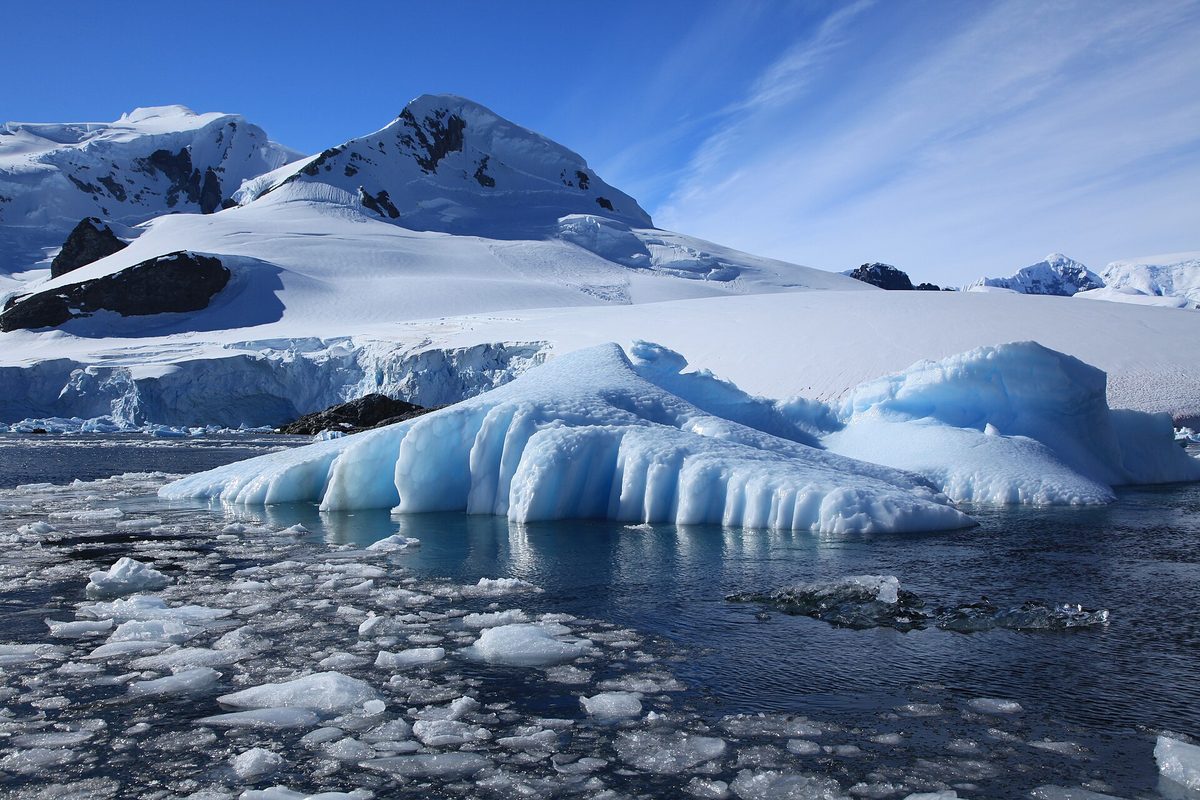
Search for Paradise Bay Antarctica online and the same word keeps coming back, the word the early whalers chose when they named this place: paradise. I was sceptical the first time — surely no corner of a continent this harsh deserves so soft a name — and then the ship slipped into the bay on a still morning, the ice cliffs glowing blue, the water doubling the mountains, a humpback rolling lazily in the reflections, and I understood completely. Paradise Bay, also called Paradise Harbour, is as close to heaven as the frozen south gets.
This sheltered, glacier-ringed bay on the Antarctic Peninsula is one of only a handful of places where travellers actually set foot on the Antarctic mainland itself, rather than an offshore island, and it is routinely named the single most beautiful anchorage in all of Antarctica. In this guide I will explain where it is, how it earned its name, what you do when you get there, and why this serene, ice-bound bay leaves such a deep impression on everyone fortunate enough to visit.
Paradise Bay Antarctica’s Most Beautiful Anchorage
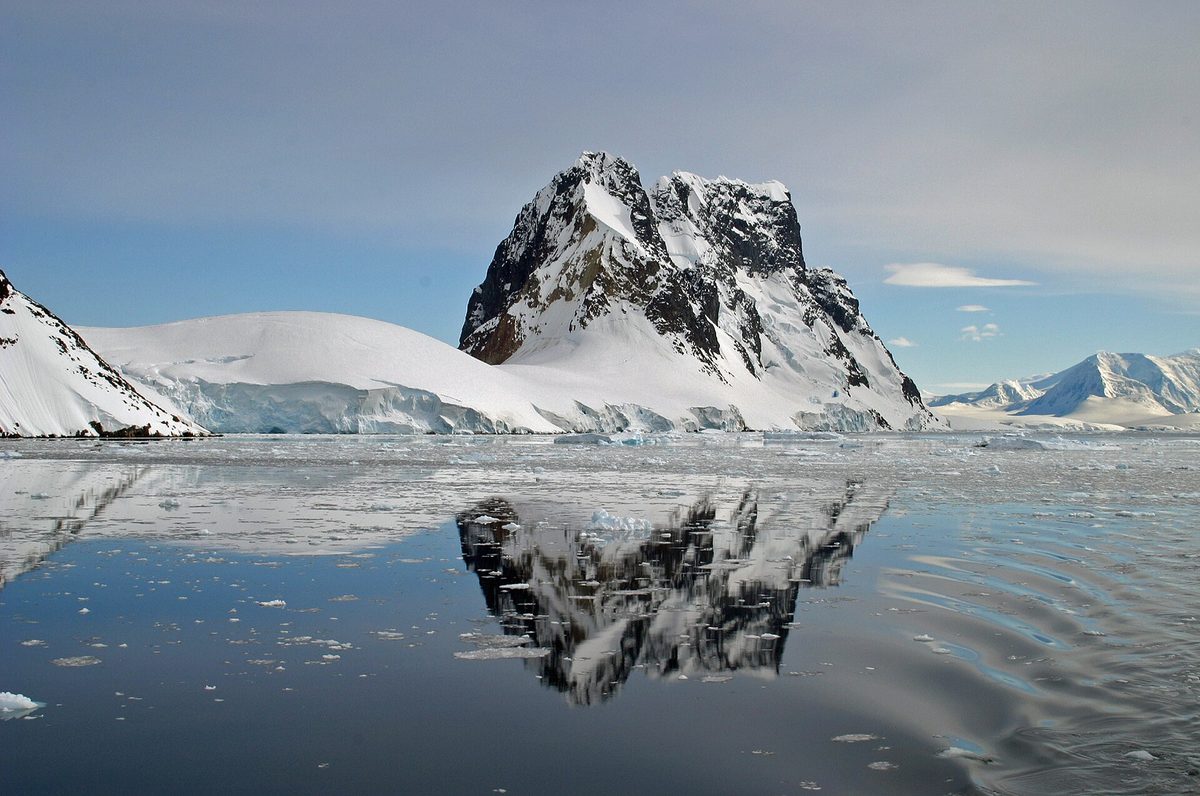
The reputation of Paradise Bay Antarctica’s loveliest harbour is no marketing invention; it is the consensus of people who have seen the whole continent. The bay is a deep, sheltered indentation in the Peninsula coast, ringed by towering ice cliffs and glaciers that calve directly into its waters, with steep rock faces where seabirds nest and icebergs drifting in slow, silent procession. Protected from the open ocean, its water is often glassy calm, mirroring the peaks in a way that feels almost unreal.
What lifts Paradise Bay above even its spectacular neighbours is the combination of beauty and intimacy. This is not a vast, intimidating seascape but an enclosed, almost embracing one, a place that feels made for quiet contemplation from a drifting Zodiac. It sits just north of the famous Lemaire Channel and ranks among the very finest of all the Antarctica regions and landing sites.
Where Is Paradise Bay?
Paradise Bay lies on the western coast of the Antarctic Peninsula, off the Gerlache Strait, roughly midway along the classic Peninsula cruising route. It is tucked into the mainland coast near the Sanavirón Peninsula, sheltered by surrounding land and ice, which gives it the calm that so defines the place. Because it sits on the continental mainland rather than an offshore island, it carries a special significance for travellers chasing a genuine landing on Antarctica itself.
Its position on the well-trodden Gerlache route means many classic Peninsula itineraries include it, often pairing it with a nearby landing such as Danco Island or Neko Harbour. It is a fixture of the southern Peninsula experience described in my Antarctic Peninsula guide, and a natural complement to the dramatic channels that lie just to the south.
How Paradise Bay Got Its Name
The name dates to the early twentieth century, when whalers working these waters used the bay as a sheltered anchorage for their floating factory ships. Surrounded by some of the harshest seas on Earth, these hard men were so struck by the bay’s calm and beauty that they called it Paradise — a remarkable tribute from people not given to sentiment. The name has stuck ever since, in both its forms, Paradise Bay and Paradise Harbour.
There is something poignant in the thought of those whalers, in the midst of a brutal industry, pausing to name a place for its loveliness. It is a reminder that even at the bottom of the world, in its harshest era, the beauty of Antarctica could stop people in their tracks. Today’s travellers, arriving by comfortable expedition ship, feel exactly the same pull — the name is as apt now as it was a century ago. That whaling past links it to the wider story in my overview of Antarctica cruises.
Standing on the Continent
For many travellers, Paradise Bay carries an extra layer of meaning, because it is one of the few places on a typical voyage where you actually set foot on the Antarctic continent itself. So much of a Peninsula trip is spent landing on offshore islands that the chance to plant your boots on the mainland — the true seventh continent — is genuinely momentous. People who have dreamed of “setting foot on Antarctica” their whole lives often realise that dream right here.
The landing is usually made near the Argentine Brown Station, where a makeshift set of steps and a gentle slope let you climb ashore from the Zodiacs. There is a real emotional charge to that first step onto continental rock and ice, and expedition teams know it; many travellers describe it as the moment Antarctica became real for them. It is one of the most meaningful of all the things to do in Antarctica.
Brown Station and the Hill Climb
The Argentine Almirante Brown Base, established in 1951 and now operating only in summer, sits on the shore of Paradise Bay and provides the focus for most landings. The real reward, though, lies just behind it: a steep climb up the snow slope above the station to a viewpoint that takes in the whole bay — the glaciers, the icebergs, the ship at anchor far below, and the mountains marching away in every direction. It is one of the great panoramas of the Peninsula.
The descent has become a beloved tradition: many travellers slide back down the snow slope on their backsides, a gleeful, undignified toboggan run that sends everyone back to the Zodiacs grinning and dusted with snow. It is a moment of pure, childlike joy in a place of overwhelming grandeur, and one of the happiest memories people carry home from Antarctica.
The Curious Tale of Brown Station’s Burning
Brown Station has one of the strangest stories in Antarctic history. In 1984, at the end of a long, dark winter, the station’s doctor was reportedly told he would have to stay for a second consecutive winter rather than return home. In desperation, the story goes, he set fire to the base, destroying it and forcing the entire team to be evacuated by a passing American research ship. Whatever the precise truth, the base burned, and it has operated only as a summer station ever since.
It is a tale that says much about the psychological toll of Antarctic isolation, the crushing weight of the polar winter on the human mind, and the lengths to which it can drive people. Guides love to tell it as you stand among the cheerful red buildings, and it lends this most beautiful of bays an unexpectedly human, slightly dark undercurrent. Paradise, it turns out, has its shadows too.
Zodiac Cruising Among the Ice
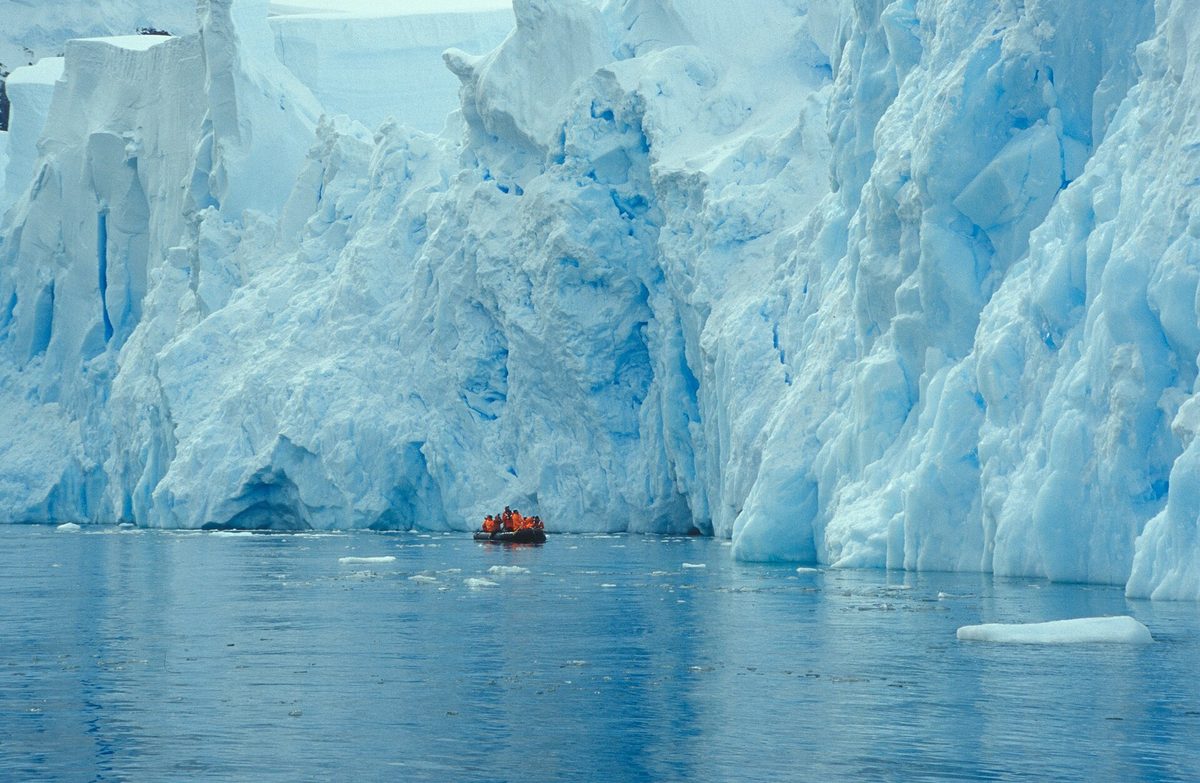
If landing on the continent is the headline, the Zodiac cruise is the heart of a Paradise Bay visit. There is no finer place in Antarctica to drift in a small boat among the ice. With the engine cut, you glide silently past towering blue ice cliffs, weave between sculpted icebergs, and nose into quiet coves where the only sound is the fizz of ancient air escaping the melting ice and the distant crack of a calving glacier.
The calm, sheltered water makes Paradise Bay ideal for this kind of slow, intimate exploration, and the reflections turn every photograph into something dreamlike. Crabeater seals doze on the floes, blue-eyed shags wheel overhead, and with luck a whale surfaces nearby. It is the Peninsula at its most serene and beautiful, and for many the single most magical hour of the entire trip.
Kayaking in Paradise
For those who want to get even closer to the water, Paradise Bay is one of the premier kayaking spots in Antarctica. Paddling your own craft across that mirror-still water, at eye level with the seals and the brash ice, surrounded by the glittering amphitheatre of glaciers, is an experience of a different order to riding in a Zodiac. The silence is total, broken only by the dip of your paddle and the breathing of the bay itself.
Kayaking is usually an optional, pre-booked activity for the reasonably fit and adventurous, and Paradise Bay’s sheltered calm makes it one of the safest and most rewarding places to try it. If the option appears on your itinerary, I cannot recommend it highly enough. For the broader menu of polar adventures, see my guide to things to do in Antarctica.
The Wildlife of Paradise Bay
Paradise Bay is as rich in wildlife as it is in scenery, and a visit usually delivers a fine cross-section of Peninsula animals. Keep watch around the cliffs, the ice and the water for:
- Humpback and minke whales — feeding in the bay and the Gerlache Strait through the summer, often seen from the Zodiacs.
- Crabeater seals — lounging on the ice floes, the most abundant seal in Antarctica.
- Leopard seals — patrolling for penguins, sometimes hauled out on a berg.
- Blue-eyed shags — nesting in noisy colonies on the red rock faces above the water.
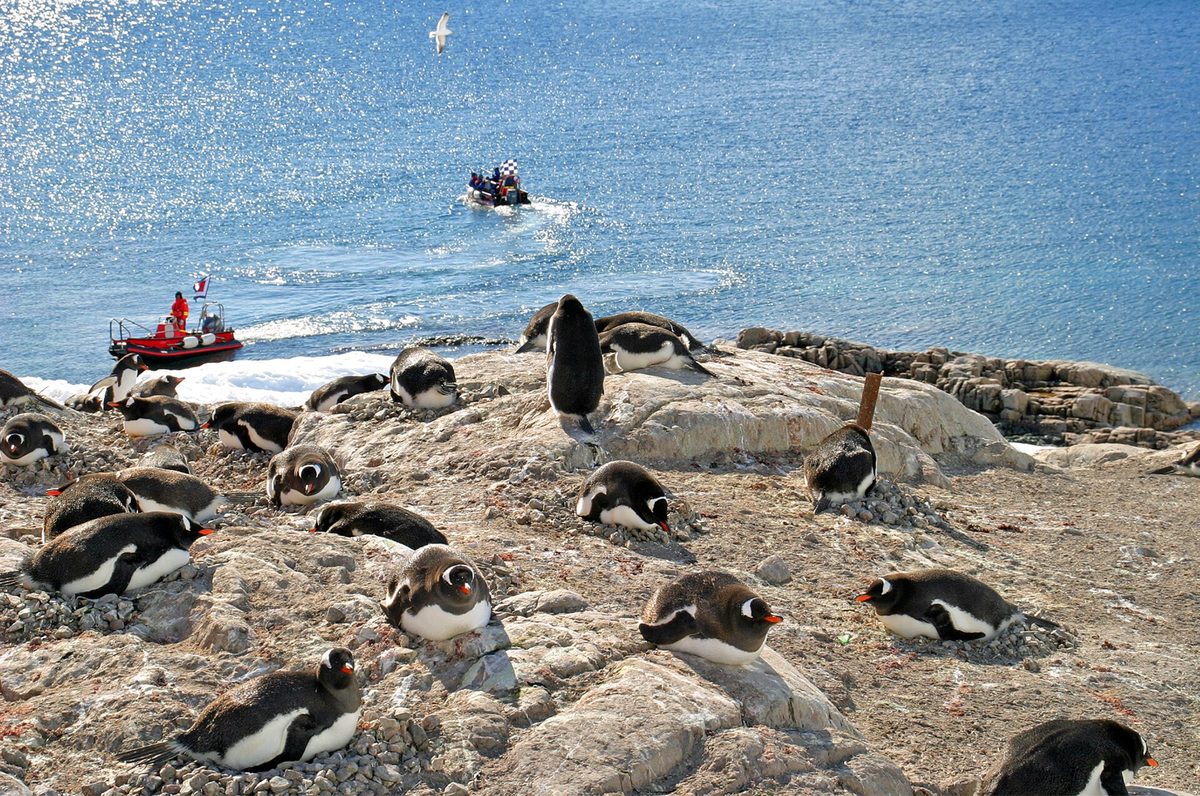
- Gentoo penguins — in colonies on the shores around the bay.
- Snowy sheathbills and skuas — scavenging around the colonies and the station.
The blue-eyed shags are a special feature here, their nests clinging to the rust-red cliffs at spots like Skontorp Cove in a vivid splash of colour against the ice. To understand the creatures you will meet, keep my guide to Antarctica wildlife close at hand.
Skontorp Cove and the Red Cliffs
One of the most photographed features of Paradise Bay is the dramatic red rock face at Skontorp Cove, where colonies of blue-eyed shags nest on the ledges and meltwater streaks the cliff. The contrast of the rust-red, lichen-stained rock against the surrounding white ice and blue water is unforgettable, and a slow Zodiac cruise beneath the cliff is a highlight of many visits. Glaciers tumble into the cove around it, calving with sudden, thunderous drama.
It is in quiet corners like this that Paradise Bay reveals its full character — not a single grand vista but a series of intimate, perfect scenes, each one framed by ice and rock and still water. You could spend a whole day exploring its coves and never tire of it, which is exactly why so many travellers rank it as their favourite stop of the entire voyage.
Photographing Paradise Bay
Paradise Bay is a photographer’s dream, and its calm water is the key. On a still day the reflections are so perfect that images look almost mirrored top to bottom, so compose with the waterline in mind and look for symmetry. A wide lens captures the sweep of the glaciers and cliffs; a longer lens isolates the shags on the red rock, the seals on the floes and the detail of calving ice. The soft, low light of high summer’s “night” is especially magical here.
From a moving Zodiac, keep your shutter speed up and your gear shielded from spray, and be ready for the unexpected — a whale, a calving, a shaft of sun breaking through. And as always, take your photographs and then put the camera down to simply absorb the place. For the gear that survives Antarctic conditions, see my notes in what to pack for Antarctica.
When to Visit and How It Fits a Voyage
Paradise Bay is visited throughout the Antarctic season, from November to March, on classic Peninsula itineraries. Early season brings deep, pristine snow on the hill behind Brown Station; midsummer offers the warmest weather, long days and active whales; late season delivers the best whale watching of all. As ever, the exact experience depends on weather and ice on the day. My guide to the best time to visit Antarctica sets out the seasonal trade-offs.
Because it lies on the main Gerlache route, Paradise Bay slots naturally into most southern Peninsula voyages, often on the same day as another landing. For how operators sequence these stops, see my overview of Antarctica cruise itineraries. It pairs especially beautifully with the nearby Lemaire Channel for a day of pure Peninsula magic.
The Glaciers and the Calving Ice
Paradise Bay is rimmed by active glaciers, and watching them calve is one of its great spectacles. From time to time a slab of ice the size of a building shears away from a glacier face and crashes into the sea, sending a low boom rolling across the bay and a swell of waves rippling outward. Guides keep the Zodiacs at a respectful distance, because the displaced water can be dangerous, but the sight and sound of a calving is unforgettable — the raw machinery of Antarctica at work before your eyes.
The ice here comes in every shade from blinding white to deep, glowing blue, the blue revealing the most compressed, oldest ice with all the air squeezed out of it. Floating among these bergs and beneath these cliffs, you become acutely aware that you are inside a living, moving landscape, one that is constantly remaking itself. It is humbling in the best way, and it gives Paradise Bay an edge of dynamism beneath its serene surface.
The Chilean Connection: González Videla
Brown Station is not the only base associated with Paradise Bay. Nearby stands the Chilean González Videla station, named for a Chilean president who in 1948 became the first head of state of any nation to set foot in Antarctica, visiting the base in person — a striking demonstration of how seriously the southern nations took their Antarctic claims in that era. Like Brown, it operates seasonally today, and gentoo penguins nest right around its buildings.
The presence of these two bases, Argentine and Chilean, in such a small and beautiful bay is a reminder that even Paradise has its geopolitics. The southern nations have long regarded this stretch of the Peninsula as their own backyard, and the rival stations reflect decades of competing claims, now held peacefully in abeyance under the Antarctic Treaty. You can learn more about these outposts in my guide to the research stations you can visit.
Frequently Asked Questions
Why is it called Paradise Bay?
The name was given by whalers in the early twentieth century who used the sheltered bay as an anchorage for their factory ships. Surrounded by harsh seas, they were so struck by its calm and beauty that they named it Paradise. The name, in both its forms — Paradise Bay and Paradise Harbour — has endured ever since, and it remains entirely apt.
Can you set foot on the Antarctic continent at Paradise Bay?
Yes — and that is part of its appeal. Paradise Bay is one of the few places on a typical Peninsula voyage where you land on the Antarctic mainland itself rather than an offshore island. The landing is usually made near the Argentine Brown Station, making it a momentous “set foot on the continent” experience for many travellers.
What is there to do at Paradise Bay?
The classic experience combines a continental landing near Brown Station — often with a climb up the hill behind it for a panoramic view and a snow-slide back down — with a Zodiac cruise among the ice cliffs and icebergs. Kayaking is a superb option where offered, and wildlife watching for whales, seals and seabirds is excellent throughout.
What wildlife lives at Paradise Bay?
Paradise Bay offers humpback and minke whales in summer, crabeater and leopard seals on the ice, gentoo penguin colonies on the shores, and notable colonies of blue-eyed shags nesting on the red cliffs at Skontorp Cove. Skuas and sheathbills scavenge around the colonies. It is one of the richest and most scenic wildlife stops on the Peninsula.
What happened to Brown Station?
Brown Station, an Argentine base established in 1951, famously burned down in 1984 — according to the well-known story, set alight by the station’s doctor after he was told he must stay for a second winter, forcing the team’s evacuation. Whatever the exact details, the base burned and has operated only as a summer station ever since.
Is Paradise Bay the most beautiful place in Antarctica?
Many seasoned travellers think so. Paradise Bay is consistently named among the most beautiful anchorages on the entire continent, prized for its sheltered, glassy water, towering ice cliffs, calving glaciers and serene, intimate atmosphere. Whether it tops the Lemaire Channel or Neko Harbour is a matter of taste, but it is always in the conversation.
Is kayaking available at Paradise Bay?
Yes, and it is one of the best kayaking spots in Antarctica. The sheltered, calm water makes Paradise Bay ideal for paddling among the ice and seals, usually as an optional, pre-booked activity for reasonably fit and adventurous travellers. If your itinerary offers kayaking here, it is well worth taking up.
Will my cruise visit Paradise Bay?
Many classic Peninsula itineraries include Paradise Bay, as it lies on the main Gerlache Strait route, but no stop is ever guaranteed in Antarctica — weather and ice always have the final say. If a continental landing and Paradise Bay matter to you, choose an itinerary that explores the southern Peninsula and the Gerlache region.
Final Thoughts
Paradise Bay lives up to its extravagant name, and then some. It is the place where Antarctica stops being a harsh abstraction and becomes, for an hour or a day, something almost tender — a sheltered, shining bay where you step onto the continent, slide down a snowy hill like a child, and drift in silence among ice cliffs and reflections that defy belief. The whalers who named it knew exactly what they were doing.
If your voyage includes Paradise Bay, savour every moment of it: the first step onto the mainland, the view from the hill, the silent Zodiac cruise beneath the red cliffs, the whale rolling in the mirror-still water. It is the Peninsula at its most beautiful and most generous, and the place, more than any other, that I find myself longing to return to. Paradise, indeed.
Related Reading
- Antarctica’s regions and landing sites
- The Lemaire Channel
- The Antarctic Peninsula: complete guide
- The South Shetland Islands
- Antarctic research stations you can visit
- The Weddell Sea
- Antarctica cruises
- Antarctica cruise itineraries
- Antarctica wildlife
- The best time to visit Antarctica
- Things to do in Antarctica
- What to pack for Antarctica