Money is one of those practical puzzles that feels strangely hard to research before an Antarctic trip, because the usual rules do not apply. There is no antarctica currency, no economy on the continent, no ATM on the ice, and nowhere to spend a peso among the penguins. Yet you absolutely still need to think about money — for tips, for your onboard account, for your days in the gateway city, and for the handful of gift shops at historic sites. The good news is that handling money for an Antarctic expedition is simple once someone explains the system, and getting it slightly wrong is one of the few avoidable annoyances on an otherwise magical trip. This guide is that explanation.
I have learned the money side the practical way, including the year I arrived in Ushuaia assuming I could just pull tip cash from an ATM and found the machines drained dry. Below I will walk through exactly what to bring, how onboard billing works, how much to tip and to whom, how to handle the Argentine and Chilean pesos in the gateway cities, and how to keep it all safe. Sort this out before you fly south and you will never give money a second thought once you are aboard.
Antarctica Currency: Does the Continent Have Money?
Let me answer the core question plainly: there is no antarctica currency, because Antarctica has no government, no permanent population, and no economy. Nothing is bought or sold across the vast majority of the continent, there are no banks, no ATMs, and no shops in the icy wilderness. In day-to-day terms, money is simply unnecessary the moment you step onto the ice — the landings are free, the wildlife does not charge admission, and everything you need is provided by your ship. The only places money changes hands “in Antarctica” at all are a few gift shops and post offices at historic sites and research stations, and even those run on ordinary credit cards and major world currencies rather than anything local.
So the mental model is this: Antarctica itself is cashless and currency-free, your ship runs a tidy onboard account, and the only place you handle real-world money is the gateway city at either end of your voyage. Three simple zones, each with its own approach.
How Onboard Payments Work
Life aboard an expedition ship is effectively cashless. At embarkation you register a credit card to an onboard account, and any extras you buy during the voyage — drinks at the bar, spa treatments, premium excursions, laundry, boutique purchases — are charged to that account and settled at the end of the trip. The onboard billing currency is usually US dollars, though some operators use euros, and the final balance is paid by card or, if you prefer, in cash in the billing currency. You will rarely if ever handle physical money inside the ship. This is wonderfully convenient: you can leave your wallet in the cabin safe and simply sign for the occasional glass of celebratory Malbec. The one thing to confirm in advance is your operator’s billing currency, so you are not caught out by exchange on your card statement.
What Currency Should You Bring?
For the trip as a whole, you want a small, deliberate mix. The single most useful cash to carry is US dollars in small denominations, because they are the de facto currency for tipping the crew and expedition staff and are widely accepted in the gateway cities as a backup. Alongside that, a modest amount of local currency — Argentine pesos for Ushuaia or Chilean pesos for Punta Arenas — is handy for taxis, cafes, small shops, and local tips, where paying in the local currency usually gets you a better rate than dollars. You do not need to carry large sums; cards cover most larger purchases. The mistake to avoid is arriving with no cash at all and assuming you can withdraw it on the spot, which brings us to the gateway cities. Budgeting the whole trip is covered in depth in our Antarctica trip cost guide.
Tipping on an Antarctic Cruise
Tipping is the main reason you carry cash at all, and it matters, because expedition staff and crew often rely on gratuities as a meaningful part of their income. The widely accepted guideline is around US$8–10 per passenger per day for the crew and expedition team combined, though you should always check your specific operator’s recommendation, as some build gratuities into the fare and others leave them entirely to your discretion. Here is a simple way to think about it:
| Trip length | Rough tip at US$8–10/day per person |
|---|---|
| Short 8-day voyage | US$64–80 per person |
| Classic 11-day Peninsula trip | US$88–110 per person |
| Longer 14-day voyage | US$112–140 per person |
| Epic 21-day South Georgia & Falklands | US$168–210 per person |
Most operators provide an envelope system at the end of the voyage, often split between a general crew pool and the expedition guides, and some allow tips to be added to your onboard card account instead of cash. Bring enough small-denomination US dollars to cover this comfortably, because there is no way to top up your cash once you sail.
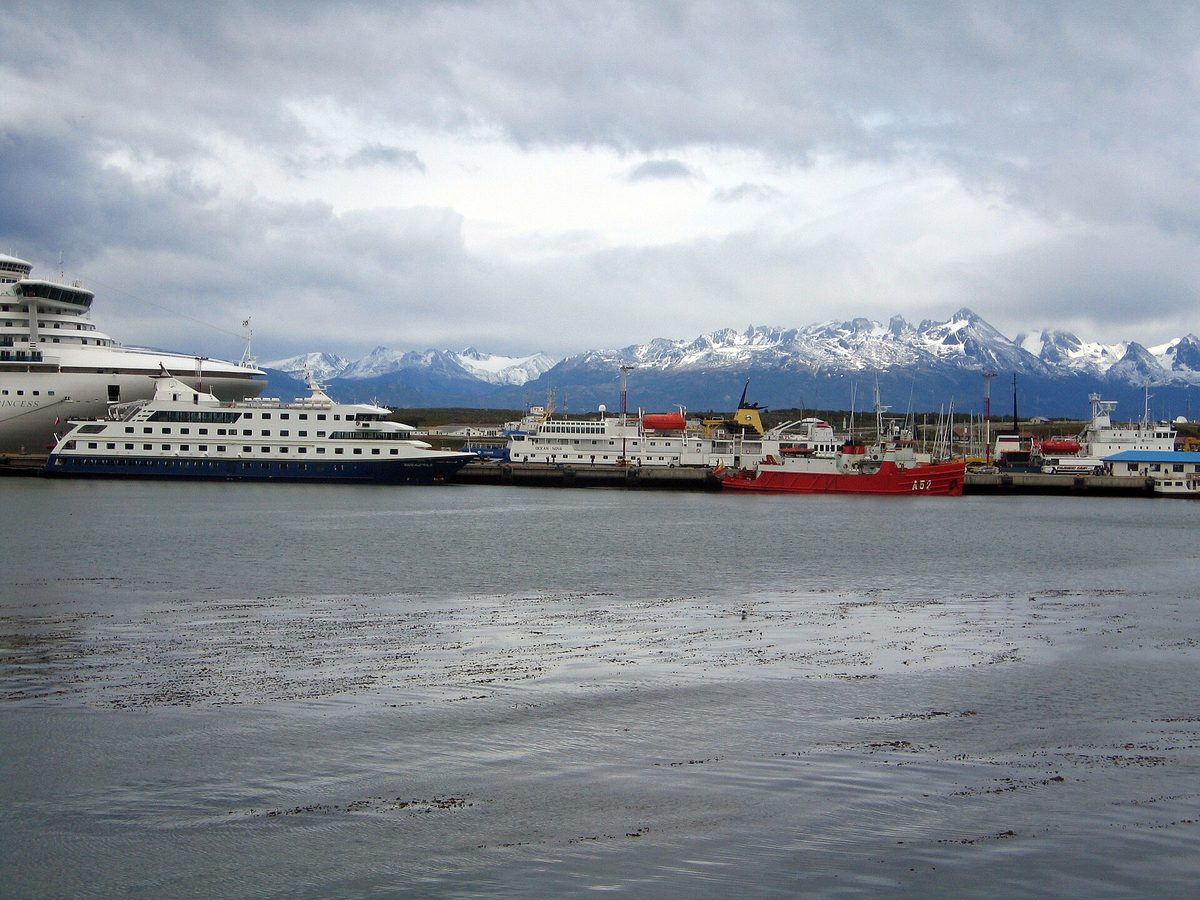
Cash in Ushuaia and Punta Arenas: Get It Early
Here is the hard-won lesson I opened with: do not rely on getting your tip cash from an ATM in the gateway city. Bank machines in Ushuaia and Punta Arenas can and do run out of currency, especially in peak season when shiploads of travelers all want dollars at once, and withdrawal limits and fees can be steep. The safe approach is to bring the US dollars you will need for tipping with you from home, in clean, small-denomination bills, and to treat any local ATM as a bonus rather than a plan. Withdraw a modest amount of pesos on arrival for incidentals if the machines are working, but never let your whole tipping budget depend on them. This single habit prevents the most common money headache of the entire trip.
Handling the Argentine Peso
Ushuaia, the launch point for most voyages, uses the Argentine peso, and Argentina’s currency situation has long been more complicated than most. Inflation and shifting exchange rules mean rates can move, so check the current situation close to your trip rather than relying on old advice. As a practical matter, major credit cards and US dollars are widely accepted in Ushuaia, but you will usually get a better effective rate paying in pesos in shops and restaurants, and cards can offer competitive rates too. Carry a little peso cash for taxis, coffees, and tips, use cards for larger purchases, and keep some US dollars as a universally accepted fallback. Argentina is a strongly tipping-oriented culture, so keep small change handy for restaurants, porters, and drivers. The logistics of getting to and from Ushuaia are covered in our guide to how to get to Antarctica.
Handling the Chilean Peso
If your voyage departs from Punta Arenas — common for fly-cruises that skip the Drake — you will use the Chilean peso instead. Chile is generally straightforward for travelers: cards are widely accepted, ATMs are common in the city though still worth not relying on for your whole budget, and the same principle applies of paying in local currency for the best rate on smaller purchases. As in Argentina, carry a little local cash and some US dollars, and keep your card as the workhorse for bigger spends. Whichever gateway you use, the pattern is identical: cards for big things, local cash for small things, US dollars for tips and emergencies.
Credit Cards and Foreign Transaction Fees
Your credit card is the backbone of your money plan, so prepare it properly. Tell your bank your travel dates and destinations so a sudden charge in Argentina or Chile does not trigger a fraud freeze at the worst moment. Check your card’s foreign transaction fees and, if you have one, favour a card that waives them, since those small percentages add up across an expensive trip. Make sure your cards support chip-and-PIN and contactless, which are standard in the gateway cities, and carry a backup card stored separately from your main wallet in case one is lost or blocked. A working card with no surprise fees and no fraud-hold drama is worth more than any amount of cash on this trip.
Spending Money Onboard
Beyond tips, the things you might actually pay for during the voyage are optional extras: alcoholic drinks if they are not included, premium activities like kayaking or camping, spa and massage services, laundry, and anything from the ship’s small boutique. Many expedition fares are remarkably inclusive — meals, standard excursions, and often house wine and beer with dinner are part of the package — so onboard spending is usually modest. If you plan to add paid adventure activities, factor those in ahead of time and check whether they must be pre-booked. Our guide to things to do in Antarctica explains which experiences typically carry an extra charge, and our Antarctica cruises guide covers what is and is not included on different voyages.
Money at Port Lockroy and Gift Shops
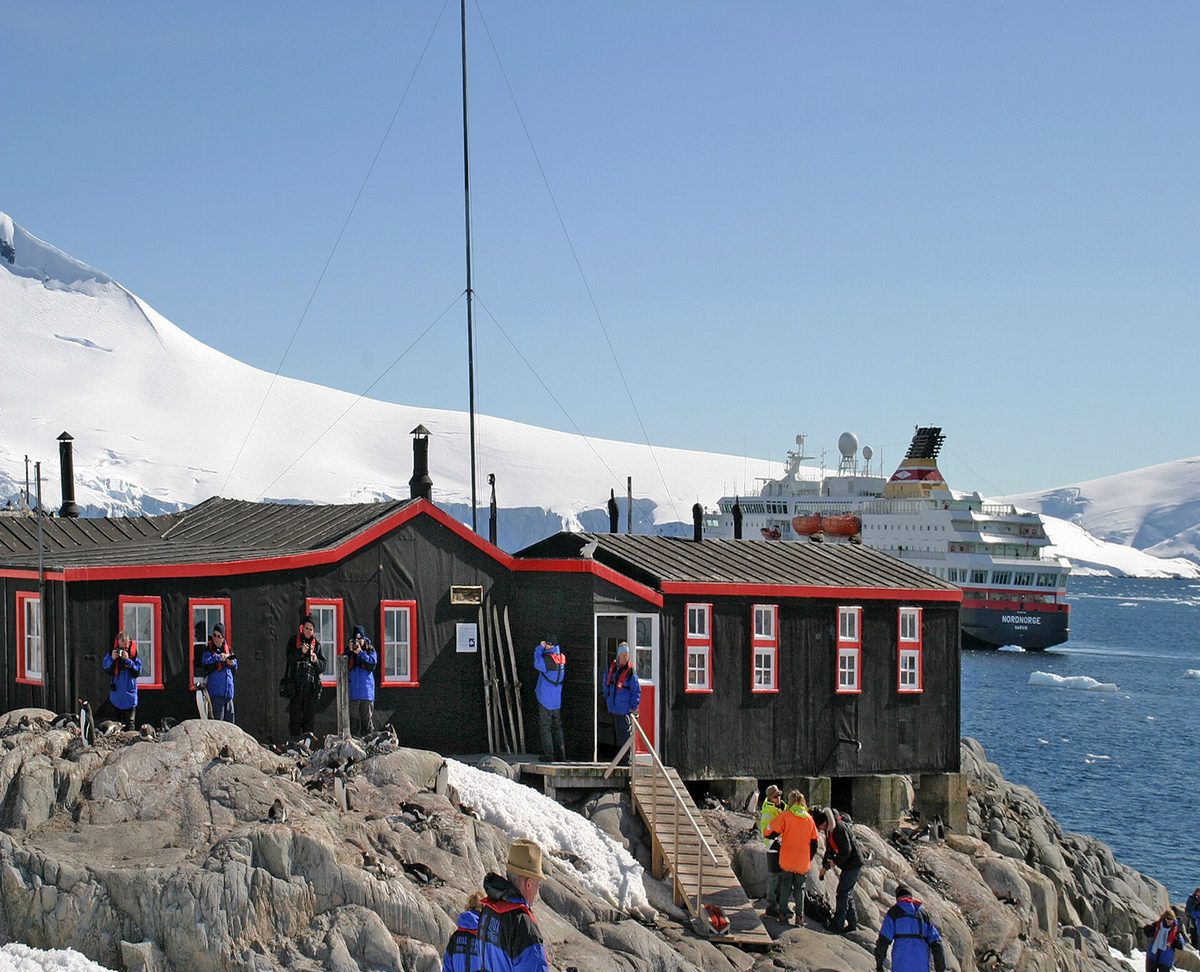
The closest thing to spending money “in Antarctica” is at a handful of gift shops and post offices at historic sites, most famously Port Lockroy, the restored British base on Goudier Island with its tiny museum, shop, and the world’s most southerly public post office. These outlets sell souvenirs, postcards, and stamps, and proceeds support the heritage and conservation work that maintains these sites. They generally accept major credit cards, and sometimes US dollars or British pounds, rather than any local currency. If you want to send a postcard from the bottom of the world — a genuinely lovely thing to do — a card will usually cover it, but carrying a few small US bills as backup never hurts. Allow for the fact that mail from Antarctica takes weeks or months to arrive, traveling out on the next ship.
The “Antarctic Dollar” and Other Novelties
You may come across the so-called Antarctic dollar, a privately issued collector’s item dressed up to look like real money. It is a souvenir, not legal tender, accepted nowhere as actual currency, and produced for novelty and fundraising rather than spending. By all means buy one as a keepsake if it amuses you, but do not mistake it for usable money. It belongs in the same category as the novelty passport stamp at Port Lockroy: a charming memento of a place that has no real currency of its own.
How Much Spending Money to Budget
Putting it together, here is a realistic per-person cash and spending plan for a standard Peninsula voyage, on top of your prepaid fare and insurance:
- Tips: roughly US$8–10 per day, so around US$90–110 for an 11-day trip.
- Gateway incidentals: a modest amount of pesos for meals, taxis, and coffees across a day or two in the city.
- Onboard extras: variable — budget for premium drinks, any paid activities, spa, and souvenirs.
- Buffer: a little extra US dollar cash for emergencies and weather delays in the gateway city.
Carry the tip money as US dollars from home, draw small local cash on arrival, and let your card handle the rest. For the big-picture budget, including the fare itself, see our cost of an Antarctica trip guide.
Keeping Your Money Safe
Practical security is easy here. Use your cabin safe for cash, your passport, and any cards you are not carrying that day, as covered alongside your other documents in our travel requirements guide. Split your cash and cards across two locations so a single loss is never catastrophic, and keep a photo of your cards’ emergency contact numbers somewhere you can reach offline. In the gateway cities, exercise the same ordinary urban caution you would anywhere. On the ship, theft is essentially a non-issue in the contained, friendly community aboard, but the safe is there for peace of mind. None of this is onerous; it is just the sensible habits of any traveler, applied to a slightly unusual itinerary.
A Money Checklist for Your Trip
- Bring US dollars in small denominations from home for tips — do not rely on gateway ATMs.
- Draw a modest amount of Argentine or Chilean pesos on arrival for incidentals.
- Notify your bank of your travel dates and destinations.
- Use a card with low or no foreign transaction fees, and carry a backup card.
- Confirm your operator’s onboard billing currency and tipping policy.
- Keep a card handy for Port Lockroy and gift-shop purchases.
- Store cash and documents in the cabin safe; split cards across two places.
Apps, Connectivity and Managing Money at Sea
Modern connectivity has quietly made money management easier on Antarctic voyages. On the many ships now equipped with Starlink, you can check a balance, move money between accounts, or confirm a card transaction during the stronger open-water stretches — though I would never rely on it for anything time-critical, since the signal comes and goes. Sort your banking before you leave the gateway city’s fast Wi-Fi, where you should also make any large transfers, pay bills due during your absence, and confirm your cards are travel-ready. Our guide to internet and Wi-Fi in Antarctica explains exactly what connectivity to expect, and our guide to phones and staying in touch covers how your device behaves on the ice. The short version: treat the gateway city as your financial base camp and the ship as a place where money simply stops mattering.
Exchanging Currency Before You Travel
A little pre-trip preparation beats scrambling on arrival. Where possible, obtain your US dollar tipping cash from your home bank well before departure, asking specifically for clean, crisp, small-denomination bills, since worn or torn notes are sometimes refused and large bills are awkward for tips. You generally do not need to buy Argentine or Chilean pesos in advance — rates at home are usually poor and the currency situation can shift — so it is often better to draw a modest amount on arrival or pay by card. Keep your dollars somewhere secure during travel, ideally split between your carry-on and your person, and never pack cash in checked luggage. This modest bit of planning means you arrive in the gateway city already holding everything you need for the voyage itself, with local incidentals the only thing left to sort.
Money, Insurance and Peace of Mind
One last connection worth making: the biggest money decision for an Antarctic trip is not how many pesos to carry but whether you are properly insured, since an uninsured emergency can dwarf every other cost combined. Comprehensive travel insurance with a high medical-evacuation limit is mandatory for the voyage and protects you from the genuinely large financial risks, as detailed in our Antarctica travel insurance guide. Set against that, tips and gateway spending are rounding errors. Get the insurance right first, then handle the cash logistics, and your whole financial picture for the trip is secure. Even the strict biosecurity checks you will pass through cost you nothing but a few minutes — proof that the expensive part of Antarctica is the getting there, not the being there.
Frequently Asked Questions
What currency is used in Antarctica?
None. Antarctica has no currency and no economy of its own. Your ship runs a cashless onboard account, usually billed in US dollars, and the only money you handle is in the gateway cities and at a few gift shops that take cards.
Are there ATMs in Antarctica?
No. There are no banks or ATMs anywhere on the continent. Withdraw any cash you need in your gateway city before you sail, and even there, bring US dollars from home rather than depending on local machines.
How much should I tip on an Antarctic cruise?
Around US$8–10 per passenger per day for the crew and expedition staff combined is the common guideline, so roughly US$90–110 per person on an 11-day voyage. Always confirm your operator’s specific policy, as some include gratuities in the fare.
What currency should I bring to Ushuaia?
Bring US dollars in small bills for tips and as a backup, and draw a modest amount of Argentine pesos on arrival for taxis, meals, and small purchases, where paying in pesos usually gives a better rate.
Can I use credit cards on the trip?
Yes, widely. Cards work for your onboard account, in the gateway cities, and at gift shops like Port Lockroy. Notify your bank before you travel, check foreign transaction fees, and carry a backup card.
Do I need cash in Antarctica itself?
Effectively no. Everything is provided by your ship and the landings are free. The only “spending” is at occasional gift shops and post offices, which take cards. Your cash is really for tips and the gateway cities.
How do payments work at Port Lockroy?
Port Lockroy’s shop and post office generally accept major credit cards, and sometimes US dollars or British pounds. Proceeds support heritage conservation. Postcards mailed from there take weeks or months to arrive, leaving on the next ship.
Is the Antarctic dollar real money?
No. It is a privately produced collector’s novelty, not legal tender, and is accepted nowhere as actual currency. Buy one as a souvenir if you like, but do not count on spending it.
Should I exchange money before I leave home?
Get your US dollar tipping cash from your home bank in clean, small bills before you travel. You usually do not need pesos in advance — rates at home are poor and Argentina’s situation shifts — so draw a modest amount on arrival or simply pay by card for local incidentals.
Is onboard spending expensive?
Usually modest, because many expedition fares are highly inclusive of meals and standard excursions, and often house wine and beer. Your onboard account mainly covers premium drinks, paid adventure activities, spa, laundry, and boutique buys, so most travelers spend relatively little beyond tips.
Final Thoughts
Money in Antarctica is a study in simplicity: the continent has no currency, your ship handles spending through a tidy cashless account, and your only real cash needs are tips and a couple of days in the gateway city. Bring US dollars in small bills from home, draw a little local currency on arrival, prepare a fee-friendly card with your bank forewarned, and you have removed the last bit of friction from an otherwise seamless trip. Get it sorted before you fly south and you can give your full attention to the only thing that matters down there — the ice, the wildlife, and the silence. For the rest of the practical picture, our Antarctica travel tips hub and our guide to what to pack for Antarctica bring the whole checklist together.