
It is one of the first things people ask me, so let me answer it plainly: how much is a flight to antarctica depends entirely on what you mean by “flight.” There is no budget airline to the ice and no $200 hop south. Instead there are four very different ways to fly, ranging from a roughly $6,600 fly-in day trip and the few-thousand-dollar premium of a fly-cruise, up to sightseeing overflights and a $63,000-plus private jet to the South Pole. On top of whichever you choose, you still pay an ordinary airfare to your South American gateway, typically $850 to $3,000 depending on where you start. This guide untangles all of it.
Flights are one of the most misunderstood costs of a polar trip, so read this alongside our how to get to Antarctica guide, our dedicated flights to Antarctica overview, and the full cost of visiting Antarctica hub.
How much is a flight to antarctica, exactly?
The honest answer is that “a flight to Antarctica” is not a single product. The most common form is the air segment of a fly-cruise, where you fly across the Drake Passage instead of sailing it; that convenience carries a premium of several thousand dollars over the equivalent sailing. The cheapest standalone fly-in excursions start around $6,600. Sightseeing overflights that circle the continent without landing are priced like a premium day tour. And a private charter into the deep interior to stand at the South Pole starts around $63,000. So before you can price your flight, you have to decide which of these experiences you actually want.
Why there is no cheap direct flight
Antarctica has no commercial airports, no scheduled passenger airlines and no infrastructure built for mass tourism. The few runways are gravel, ice or compacted snow, operated for science stations and specialist charter flights, and they depend utterly on weather that changes by the hour. Every tourist flight is therefore a charter or a specialised operation, with all the cost that implies. This is the same reason the sea route exists at all: for most travellers, a ship remains the practical, and far cheaper, way to reach the Peninsula. Understanding this explains why even the “budget” flight options still cost thousands rather than hundreds.
The four ways to fly to Antarctica
Before the numbers, here is the lay of the land. First, the fly-cruise, where a flight replaces the Drake crossing at the start or end of a voyage. Second, full air-cruise packages built around that flight. Third, sightseeing overflights from Australia, New Zealand or South America that never land. Fourth, private jet expeditions to the interior and the South Pole. Each answers a different desire, time-saving, comfort, a taste of the continent, or the ultimate bucket-list landing, and each sits at a wildly different price point. Let me take them one at a time.
Option 1: the fly-cruise air segment
This is the option most travellers actually mean. On a fly-cruise, you fly from Punta Arenas in Chile across the Drake Passage to King George Island in about two hours, then board your expedition ship there. It saves two days each way and sidesteps the open-ocean crossing entirely. The trade-off is cost: a fly-cruise package typically runs several thousand dollars more than the comparable ship-only voyage. For travellers short on time or prone to seasickness, that premium buys genuine peace of mind, and it is the single most popular way to put a flight into an Antarctic trip.
The Punta Arenas to King George Island hop
The flight itself is a small adventure. Charter aircraft leave Punta Arenas when a weather window opens, cross the Drake in roughly two hours, and land on the gravel strip at King George Island in the South Shetlands, where Zodiacs ferry you to your waiting ship. Because everything hinges on weather, flexibility is built in: flights can be delayed a day or more, and operators plan buffer nights accordingly. That weather dependence is the hidden cost of flying, since a delay can eat into your itinerary, but the operators manage it well and the time saved over sailing is still substantial.
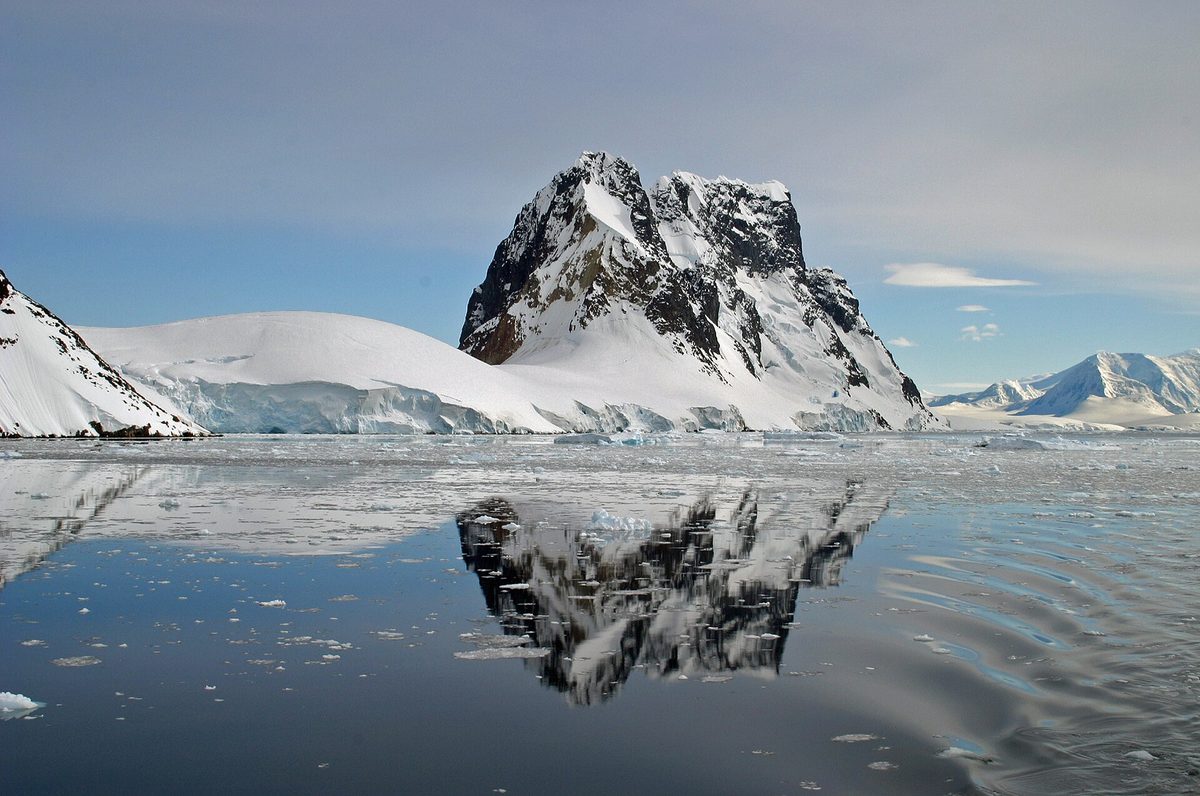
What the fly-cruise premium actually buys
It is fair to ask whether skipping the Drake is worth several thousand dollars. For some travellers it absolutely is. You reclaim up to four days of your life, you avoid the possibility of a rough crossing, and you arrive at the Peninsula fresh rather than recovering your sea legs. For others, the Drake Passage is part of the pilgrimage, lined with albatrosses and the slow build of anticipation, and sailing it saves real money. There is no universally right answer; there is only the right answer for your time, your stomach and your budget.
Option 2: full air-cruise packages
Beyond the bare air segment, operators sell complete air-cruise packages that bundle the flight, the voyage, gateway hotels and transfers into one price. These are convenient and predictable, and they are the easiest way to fly to Antarctica without assembling the pieces yourself. They sit at the premium end of the market precisely because they include that flight, so expect them to price well above a ship-only Drake voyage. If you value a single, tidy booking and the time savings of flying, an air-cruise package is the path of least resistance, just be clear that you are paying for that convenience.
Option 3: sightseeing overflights
A completely different product is the sightseeing overflight, a long day flight that cruises over the continent and turns back without ever landing. These operate seasonally from Australia and occasionally elsewhere, using large jets, and they let you gaze down on the ice for a few hours from your seat. Prices vary enormously by seat class, from economy windows to premium business positions that rotate so everyone gets a view. They are a fraction of the cost of an expedition and a fraction of the experience too, since you never set foot on the ice, smell the penguin colonies or ride a Zodiac. For some, though, the aerial spectacle is reason enough.
Option 4: private jet to the interior
At the very top sits the deep-field option: a private or charter jet from Punta Arenas or Cape Town to a remote interior camp, often combined with a flight to the geographic South Pole or to an emperor penguin colony. This is the rarefied end of polar travel, with trips starting around $63,000 per person and climbing steeply from there. You are paying for genuinely extreme logistics, fuel cached on the ice, specialist aircraft and tiny group sizes. It is extraordinary and entirely out of reach for most budgets, but it answers the question of how to actually land deep inside the continent rather than along its coast.
Flight options and costs at a glance
| Flight option | What it is | Indicative cost |
|---|---|---|
| Fly-cruise air segment | Fly the Drake, sail the Peninsula | Several $1,000s over a sailing |
| Short fly-in excursion | Brief fly-in trip to the South Shetlands | From ~$6,600 |
| Full air-cruise package | Flight + voyage + hotels bundled | Premium tier, $15,000+ |
| Sightseeing overflight | Day flight over the ice, no landing | Day-tour pricing by seat |
| Private jet to the interior | Charter to South Pole / deep field | From ~$63,000 |
| Airfare to the gateway city | Commercial flight to Ushuaia/Punta Arenas | $850–$3,000 return |
International flights to your gateway
Whatever Antarctic flight you choose, you first have to reach South America, and that ordinary airfare is a real part of the budget. The Peninsula’s gateways are Ushuaia in Argentina for sailings and Punta Arenas in Chile for fly-cruises. You fly into Buenos Aires or Santiago from home, then take a domestic flight south. These commercial fares are the most controllable flight cost you have, so it pays to book them early and watch for deals, especially the domestic legs that sell out in peak season.
Airfares from the United States
From major U.S. hubs, round-trip airfare to Ushuaia or Punta Arenas typically runs $850 to $1,500 in economy, more in premium cabins or at peak times. Routings usually connect through Buenos Aires or Santiago, sometimes with an overnight that nudges you toward a hotel night. Booking several months ahead, staying flexible on dates, and using airline miles where you can will keep this number toward the lower end. It is one of the easier places to economise on a trip where so much else is fixed.
Airfares from Europe and Asia
From Europe, expect roughly $1,000 to $2,900 return to the gateway, with the long haul to South America driving the spread. From Asia it climbs to around $1,900 to $3,000, and from Australia or New Zealand the routing via Santiago is long but well served. Travellers from these regions should weigh the higher airfare when comparing the fly-cruise premium against sailing, because the further you have come, the more a guaranteed, seasickness-free arrival at the Peninsula can be worth the extra cost. Our budget guide has tactics for trimming these long-haul fares.
Booking the domestic leg to Ushuaia
One specific piece of advice saves people real money and stress: book the domestic flight to Ushuaia as early as you book anything. This short leg, from Buenos Aires down to the end of Argentina, sells out in the December–February peak and prices spike as it fills. It is also the leg most likely to be disrupted, so build a buffer day in the gateway city rather than connecting tightly to your ship. Treat this little flight with the same seriousness as the expensive parts of the trip, because missing it can mean missing the ship.
Fly or sail? The cost comparison
Here is the decision in a nutshell. Sailing the Drake is included in your cruise fare, so it is effectively free and it is part of the experience. Flying it adds several thousand dollars but saves up to four days and removes the open crossing. If your holiday time is tight or seasickness genuinely frightens you, the fly-cruise earns its premium. If you have the days and a reasonable stomach, sailing is the clear value choice, and the crossing is more rewarding than its reputation suggests. Our cheapest way to get to Antarctica guide always lands on sailing for the budget-minded.
How to save on the flying parts
You have more control here than you might think. The biggest savings:
- Sail the Drake instead of flying it to avoid the fly-cruise premium entirely.
- Book international and domestic airfares early, in economy, and use miles where possible.
- Choose a shoulder-season departure, when both fares and cruise prices ease.
- Consider a self-connection through Buenos Aires or Santiago if you can manage the risk.
- Skip sightseeing overflights and private charters unless they are a specific bucket-list goal.
- Bundle only if the convenience of an air-cruise package genuinely outweighs its premium.
Baggage, gear and weight limits
Charter flights to King George Island enforce strict baggage limits because the aircraft are small and the strip is short, often allowing far less than a commercial flight. Pack light, use soft duffels rather than hard cases, and check your operator’s exact allowance, since excess can be refused outright. On ordinary commercial legs to the gateway, standard airline rules apply, but remember you are carrying bulky cold-weather gear, so weigh your bags at home. Our cruises guide and packing resources help you keep the load sensible.
Weather delays and buffer days
Flying to Antarctica means accepting weather risk. A charter can be held a day or more waiting for a safe window, which is why operators build buffer nights into fly-cruise itineraries and why you should never plan a tight onward connection. Those buffer nights are a real, if small, cost, hotels and meals while you wait, but they are non-negotiable insurance against the sky. Factor a flexible day or two at the end of any flying itinerary, and treat a weather delay as part of the adventure rather than a disaster, because down here the weather always has the final say.
Putting flights and cruise together wisely
The smartest travellers think of flights and cruise as one system, not separate purchases. If you fly the Drake to save days, make sure you are not then booking a rock-bottom fare that undermines the comfort you paid to reach. If you sail to save money, pour some of the savings into a better cabin or an activity. Align the pieces with what you actually want from the trip. For the full budget picture, our price breakdown and average cruise price guides show how flights slot in among the larger costs.
Is flying to Antarctica comfortable and safe?
Within the constraints of weather, yes. The charter operators flying the Drake are experienced specialists who only fly in safe windows, which is exactly why delays happen, they wait for good conditions rather than push through bad ones. The aircraft are modest but perfectly comfortable for a two-hour hop, and arriving at King George Island fresh and dry, with the open crossing behind you, is a genuine pleasure. Sightseeing overflights use large commercial jets and are as routine as any long day flight. None of these options should worry a nervous flyer more than ordinary air travel does.
Gateway choice: Ushuaia or Punta Arenas
Your gateway depends on how you cross. If you are sailing the Drake, you fly commercially to Ushuaia in Argentina, the southernmost city and the classic embarkation port. If you are flying the Drake on a fly-cruise, your hub shifts to Punta Arenas in Chile, where the charter flights to King George Island depart. This matters for your airfare planning, because the two cities sit on different routings: Buenos Aires feeds Ushuaia, while Santiago feeds Punta Arenas. I always price both before committing, since a few hundred dollars of difference in the long-haul fare, multiplied across a couple or a family, is a real number that can tip which crossing makes sense.
Insurance and flight disruption
Because flying to Antarctica leans so heavily on weather, your travel insurance earns its keep around the flights as much as the voyage. Comprehensive cover should include trip delay and missed-departure protection, so that a held charter or a cancelled domestic leg does not leave you out of pocket for extra hotel nights or, worse, a missed ship. This is the same mandatory insurance that operators require for medical evacuation, so you are buying it anyway; just make sure the policy you choose handles flight disruption properly. Read the fine print on delays, because polar itineraries test it more than ordinary holidays do.
A realistic flight budget example
Let me total the flying side for a typical traveller from the United States who chooses to sail rather than fly the Drake. The commercial round trip to Ushuaia, booked early in economy, comes to about $1,300, including the domestic Argentine leg. There is no fly-cruise premium because they are sailing. They add one buffer hotel night in case the domestic flight is disrupted, perhaps $150. Their total “flight” spend is therefore around $1,450, all of it ordinary airfare. Now compare a fly-cruise traveller who adds several thousand dollars to skip the Drake, and you can see how this single choice reshapes the flight portion of the budget more than any airline deal ever could.
The bottom line on flying south
If you take one thing from all of this, let it be that the word “flight” hides five very different price tags, and choosing among them is really choosing what kind of trip you want. Most travellers will only ever weigh the simplest version of the question: fly the Drake for several thousand dollars and save four days, or sail it for free and savour the crossing. The exotic options, the overflights and the South Pole charters, are wonderful to know about but irrelevant to the vast majority of budgets. Decide your crossing first, book the ordinary gateway airfare early and cheaply, and the flying side of your Antarctic trip falls neatly into place.
Frequently asked questions
So how much is a flight to antarctica overall?
It ranges from a fly-cruise premium of several thousand dollars over a sailing, to fly-in excursions from about $6,600, up to $63,000-plus for a private jet to the interior. You also pay $850 to $3,000 for the commercial airfare to your gateway city.
Can I fly to Antarctica without a cruise?
Mostly no, if you want to land. Apart from costly private interior charters, landing trips are tied to expedition ships. Sightseeing overflights let you see the continent from the air without a cruise, but you never touch down.
How much does the fly-cruise option add?
Typically several thousand dollars more than the equivalent ship-only voyage. In exchange you fly the Drake Passage in about two hours each way rather than sailing two days, saving up to four days total.
Why are flights to Antarctica so expensive?
There are no commercial airports or scheduled airlines. Every tourist flight is a specialist charter dependent on weather and gravel or ice runways, which makes even the cheapest fly-in option cost thousands.
What does it cost to fly to the South Pole?
Deep-interior private jet expeditions to the South Pole start around $63,000 per person and climb from there, reflecting the extreme logistics of operating aircraft far inside the continent.
How much is the airfare just to the gateway city?
Round trips run roughly $850 to $1,500 from the United States, $1,000 to $2,900 from Europe and $1,900 to $3,000 from Asia, into Ushuaia or Punta Arenas via Buenos Aires or Santiago.
Should I fly or sail the Drake Passage?
Sail it to save money, since the crossing is included in your fare; fly it to save up to four days and avoid seasickness. The right choice depends on your time, budget and stomach.
What are the baggage limits on Antarctic charter flights?
They are strict, often well below commercial allowances, because the aircraft are small and the runway short. Pack light in soft bags and confirm your operator’s exact limit in advance.
Final thoughts
So, how much is a flight to Antarctica? Anywhere from a few thousand dollars of fly-cruise premium to the price of a small car for a South Pole charter, plus the ordinary airfare to South America that every traveller pays. For most people the real decision is simply whether to fly the Drake or sail it, and that comes down to time, money and seasickness rather than any single right answer. Weigh it against the rest of your budget using our cost hub and is Antarctica worth the money guide, and you will arrive at the choice that fits your trip.