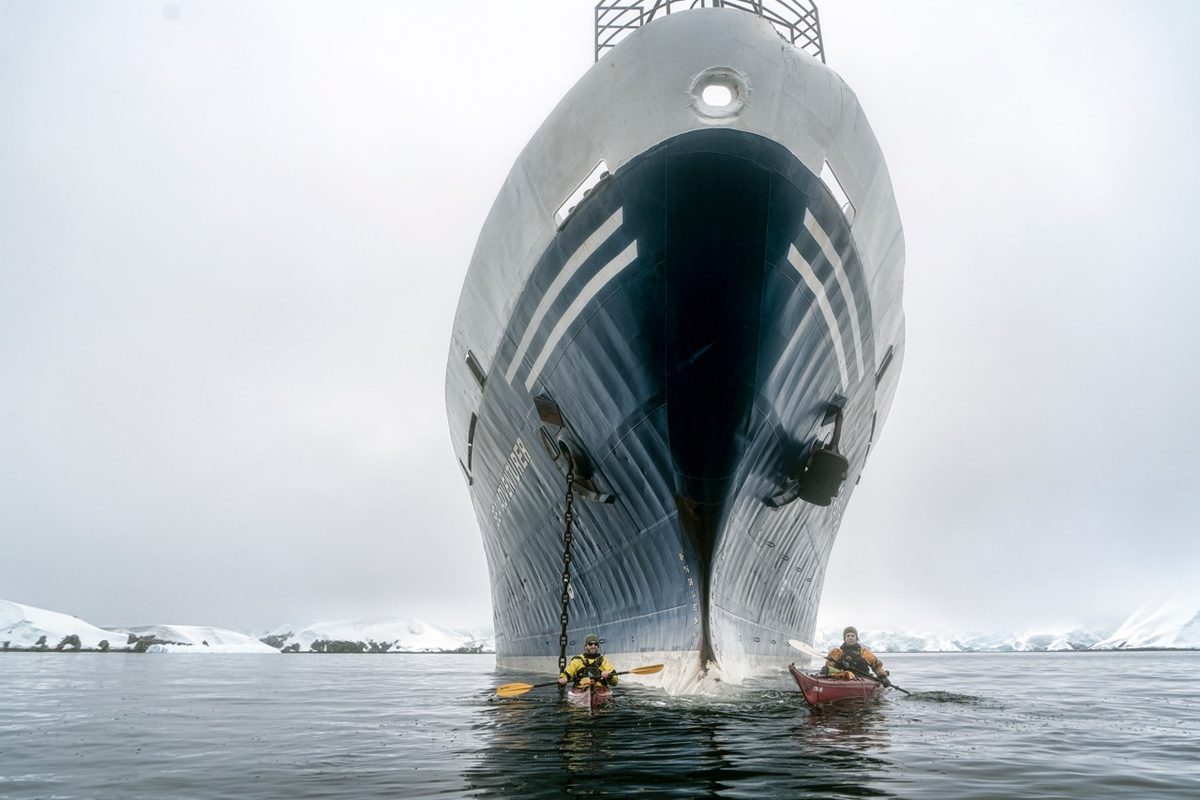
The cruise fare is the number everyone fixates on, but the hidden costs of an antarctica trip are what quietly turn a $12,000 voyage into a $16,000 reality. None of them are scams; they are simply the expenses the glossy brochures tuck below the fare line, from mandatory insurance and long-haul flights to gear, tips, weather-buffer hotel nights and the optional activities you will desperately want once you are there. A useful rule, and one I have watched hold true again and again, is to budget about 130% of the cruise fare to land on your true all-in cost. This guide drags every hidden expense into the daylight so your final bill never ambushes you.
Think of this as the companion to the headline number. Read it with our full price breakdown and the cost of visiting Antarctica hub for the complete financial picture before you book.
The hidden costs of an antarctica trip, defined
By “hidden” I do not mean dishonest; I mean easy to overlook. These are the real, predictable costs that sit outside the cruise fare and therefore escape the mental budget of first-timers who anchor only to the headline price. They fall into two camps: the unavoidable ones, like insurance and flights, that every traveller pays, and the optional ones, like kayaking and premium drinks, that you choose to add. Knowing which is which is the whole game. Once you can see all of them laid out, the 130% rule stops feeling like a markup and starts feeling like simple, honest accounting that protects you from a nasty surprise.
Why these costs stay hidden
Operators advertise the fare because it is the comparable, headline number, and because the extras vary so much by traveller that bundling them would make the price look uncompetitive. Flights depend on where you live, insurance on your age, activities on your appetite, tips on your generosity. So the brochure quotes the one number it can, and leaves the rest to you. There is nothing sinister in it, but it does mean the responsibility for a complete budget falls on the traveller. The people who get surprised are simply the ones who never added the second column; the people who sail relaxed are the ones who did.
The hidden costs at a glance
| Hidden cost | Typical amount | Avoidable? |
|---|---|---|
| Travel & evacuation insurance | $200–$500 | No (mandatory) |
| International + domestic flights | $850–$3,000 | No |
| Pre/post hotels & meals | $300–$900 | Partly |
| Clothing & gear (if buying) | $300–$1,000 | Partly |
| Gratuities | $150–$300 | Mostly no |
| Optional activities | $200–$1,200 each | Yes |
| Drinks, Wi-Fi, shop | $100–$600 | Yes |
| Single supplement (solo) | 50–100% of fare | Often |
Mandatory travel insurance
This is the hidden cost people most want to skip and absolutely cannot. Operators require comprehensive travel insurance, and a policy typically costs $200 to $500 depending on your age, the trip length and the level of cover. Beyond price, the key is that ordinary credit-card or basic holiday cover almost never qualifies for polar travel, so you must buy a policy that explicitly covers expedition cruising to Antarctica. Treat it as a fixed, non-negotiable line right next to the fare, because sailing without it is not an option operators will allow, and for good reason.
Medical evacuation cover
The specific requirement that surprises people is emergency medical evacuation coverage, commonly a minimum of $150,000 and sometimes up to $300,000. There is no hospital in Antarctica and a rescue from the ice is astronomically expensive, which is why operators insist on this level of cover. When you shop for insurance, check the evacuation limit first, before the price, because a cheap policy that fails this threshold is useless to you. The good news is that suitable polar policies are widely available; the bad news is that the cheapest generic travel insurance you might buy for a beach holiday will not do.
Flights to the gateway
The cruise fare almost never includes your flights, yet they are one of the largest hidden costs. Round trips to Ushuaia or Punta Arenas run roughly $850 to $1,500 from the United States, $1,000 to $2,900 from Europe and $1,900 to $3,000 from Asia, including the domestic leg south. Because they are so significant, flights are also where careful booking pays off. Our flight cost guide covers the routings and the fly-cruise premium, while our how to get to Antarctica guide maps the journey.
Hotels and the all-important buffer night
You will need a hotel before the voyage and ideally one after, at roughly $120 to $250 a night in the gateway city, plus meals and transfers. More importantly, you should never fly in on embarkation morning, because one delayed connection and you watch the most expensive thing you have ever booked sail without you. A buffer night or two is the cheapest insurance in the whole trip. Weather-dependent fly-cruises build in extra buffer nights too. Add $300 to $900 for these stays, and treat the pre-cruise night as part of the cost of the ship itself.
Clothing and gear
Most ships lend you a parka, often yours to keep, and waterproof boots, which removes the two priciest items. But a layering system, waterproof trousers, gloves, hats and good sunglasses are on you, and if you are starting from scratch they add $300 to $1,000. Hikers and skiers already own most of it and spend little. The trap is over-buying premium polar brands you will use once; our what to pack for Antarctica guide separates the genuine essentials from the marketing so this hidden cost stays modest.
Gratuities
Tipping is customary and adds up to roughly $150 to $300 over a standard voyage, at $12 to $25 per person per day. It is mostly unavoidable in the sense that the crew’s pay depends on it and stripping it is poor form, so budget it as a near-fixed cost. Carry US dollars in small bills, especially on ships that collect tips by envelope, since there are no ATMs in Antarctica. Our dedicated gratuities guide breaks down who to tip and how the different systems work.
Optional activities
The big optional costs are the marquee add-ons. Sea kayaking typically runs $800 to $1,200 for the voyage, overnight camping on the ice $200 to $400, and photography workshops $500 to $1,000. These are genuinely hidden in the sense that they are not in the fare and they sell out, so you must decide and budget in advance. They are also entirely optional; the included landings carry the trip on their own. My advice is to pick the one that calls to you most, usually the kayaking, and treat the rest as someday extras rather than blowing the budget on all three.
Drinks, Wi-Fi and the shop
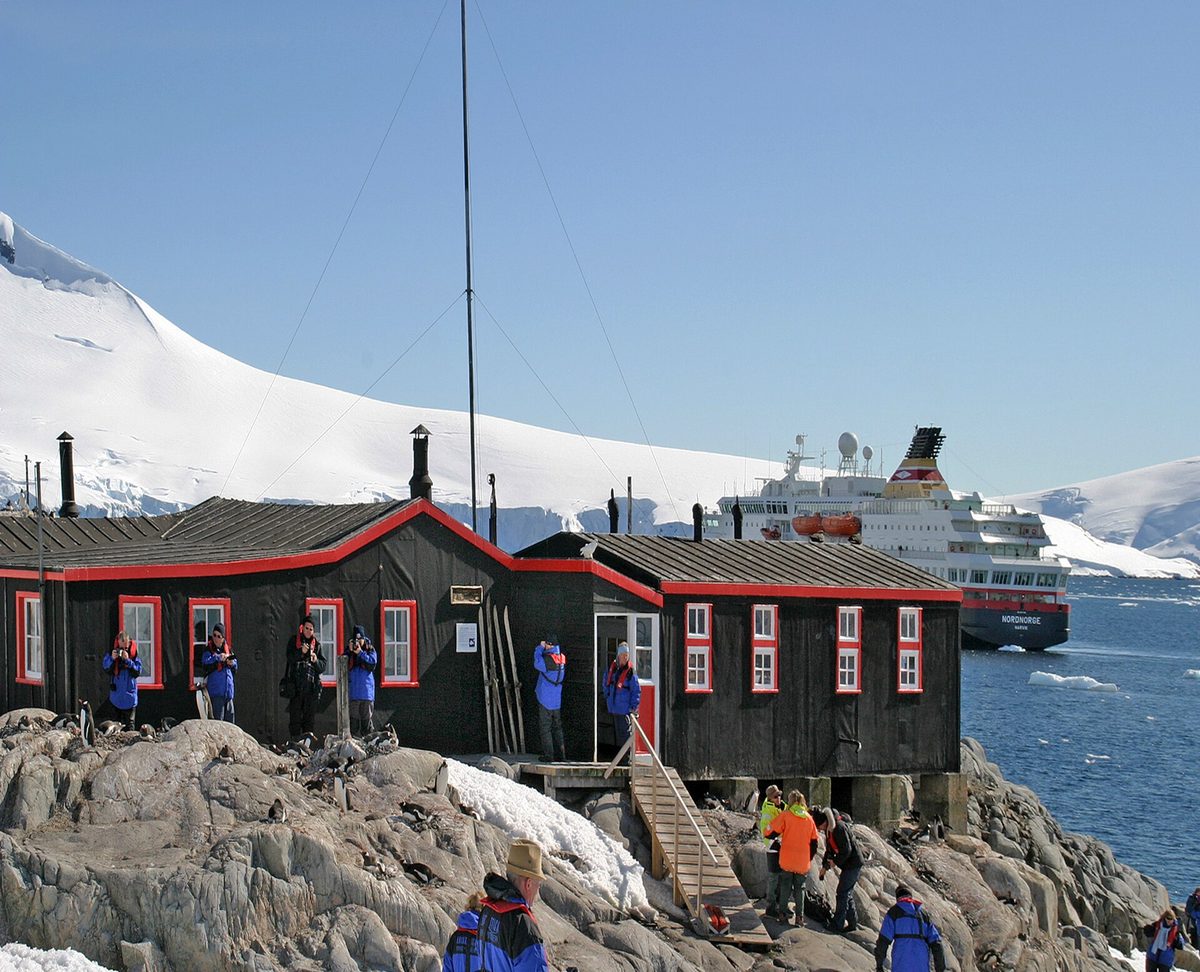
The onboard account gathers a cluster of smaller hidden costs. Premium drinks run $10 to $15 each and a daily glass adds up over a voyage. Satellite Wi-Fi, where not included, sells in packages of $50 to $200 or more. The boutique and the Port Lockroy gift shop tempt you toward souvenirs. None is large alone, but together they can add several hundred dollars. Set an onboard spending limit before you board and these stay in check; ignore them and the final-night bill can startle you. The simplest saving of all is to embrace the disconnection and skip the Wi-Fi.
The single supplement for solo travellers
If you travel alone, the single supplement is the largest hidden cost of all, often adding 50% to 100% to the fare to occupy a cabin built for two. The good news is that it is frequently avoidable by sharing a cabin or booking a ship with dedicated no-supplement solo cabins. Solo travellers should read our Antarctica single supplement guide before anything else, because handling it well saves far more than every other hidden cost combined. Ignore it and a solo trip can cost nearly double; plan for it and the gap can shrink to almost nothing.
Passports, visas and the small print
Most Western passport holders need no visa for Argentina or Chile, so that line is often zero, but check your passport’s validity well ahead, because a rushed renewal carries expedite fees. There are no mandatory vaccinations for Antarctica itself, though routine travel jabs are sensible and any you need cost money and time. These are minor amounts, but they are the kind of thing that, left to the last week, becomes an expensive scramble. Sorting documents early keeps this hidden cost at its natural minimum rather than ballooning into rush charges.
Transfers, baggage and card fees
A scatter of small logistics costs round out the list. Airport transfers in the gateway city, excess or specialist baggage on charter flights, foreign-transaction fees on cards, and currency exchange spreads all nibble at the budget. On their own each is trivial; together they can quietly add a hundred dollars or more. Carrying a no-foreign-fee card, packing within charter baggage limits and arranging transfers in advance keeps them small. These are the truly invisible costs, the ones that never appear on any brochure, and simply expecting them is half the battle.
Cancellation and change fees
One hidden cost hides in the terms rather than the trip: cancellation and change penalties. Expedition cruises take a deposit and tighten their cancellation ladder as departure nears, so changing plans late can be costly. This is exactly why the mandatory insurance should include trip-cancellation cover, turning a potential loss into a claim. Read the cancellation schedule before you pay your deposit so you know the dates where penalties step up, and time your final, non-refundable commitment with eyes open. Understanding these terms is free; being caught out by them is not.
How to budget for the hidden costs
Bring it all together with a simple method:
- Start with the cruise fare as your anchor.
- Add insurance and flights as fixed, non-negotiable costs.
- Add hotels, gear and gratuities as near-fixed costs.
- Decide your optional extras deliberately, picking one splurge rather than all.
- Set an onboard spending limit for drinks, Wi-Fi and the shop.
- Apply the 130% rule as a sanity check on your total.
The 130% rule explained
The single most useful shortcut in Antarctic budgeting is to multiply the cruise fare by about 1.3 to estimate your all-in cost. A $10,000 fare implies roughly $13,000 all-in; a $15,000 fare implies about $19,500. The multiplier captures the typical weight of flights, insurance, hotels, tips and modest extras for a traveller who is sensible but not spartan. If you add many optional activities or fly business class, nudge it higher; if you are frugal and travel from nearby, it can be lower. As a planning anchor, though, the 130% rule has saved more budgets than any coupon ever will.
Which hidden costs you can actually avoid
Not all hidden costs are equal. Insurance, flights and gratuities are essentially fixed; you will pay them in some form. Hotels and gear are partly controllable through buffer choices and borrowing. The single supplement is often avoidable by sharing. And the optional activities, drinks, Wi-Fi and souvenirs are entirely yours to command. So when you trim, trim the optional column hard and leave the fixed column intact. Cutting insurance or the buffer night to save money is a false economy that risks far larger losses, while skipping a drinks package costs you nothing but a little restraint.
Don’t over-correct into anxiety
A word of balance: the goal of seeing all these costs is preparation, not dread. Antarctica is expensive, but the hidden costs are knowable and, once budgeted, they simply become part of the plan. Do not let the long list talk you out of the trip or push you toward cutting things that keep you safe. The travellers who enjoy the journey most are the ones who budgeted honestly, protected the non-negotiables, chose one or two joyful extras, and then stopped worrying about money and started watching for whales. Plan thoroughly so that, once aboard, you can forget the spreadsheet entirely.
A worked hidden-cost example
Numbers make this real, so let me total the hidden costs for a typical traveller from the United States on an $11,000 cruise fare. Round-trip flights to Ushuaia, booked early in economy, come to about $1,300. Two hotel nights with meals add $350. Mandatory insurance with full medical evacuation cover is $300. Gear top-ups, since the ship lends a parka and boots, run $200. Gratuities over eleven days total about $220. One kayaking package is $1,000, and incidentals, drinks and souvenirs add $300. Stack those hidden costs and you reach roughly $3,670 on top of the fare, for an all-in total near $14,670, which is almost exactly the 130% rule in action. Strip the kayaking and trim the extras and you drop toward $13,500; add a second activity and business-class flights and you sail past $18,000.
Hidden costs by traveller type
The hidden costs land differently depending on who you are. A couple sharing a twin cabin splits hotels and dodges the single supplement entirely, so their hidden costs are the leanest per person. A solo traveller carries the full hotel-room rate and faces the single supplement unless they share, making their hidden column the heaviest, which is why solo planning matters so much. A family or group can split hotels and book triple or quad cabins to soften both the fare and the per-person extras, and may pay for several activity packages that add up. Knowing which profile you fit tells you which hidden costs to attack first and which simply will not apply to you.
When a hidden cost is worth paying
Not every extra is one to minimise. Some hidden costs are among the best money you will spend on the trip. The kayaking package, for many, becomes the defining memory of the voyage, worth far more than its price. The buffer hotel night that saves you from missing the ship is priceless insurance. Comprehensive insurance with a high evacuation limit buys genuine peace of mind in a place with no hospitals. The skill is distinguishing the extras that protect or elevate the trip from the ones that merely pad the bill. Spend freely on the first kind and trim hard on the second, and your budget works for you rather than against you.
How the hidden costs compare to the fare
It is worth keeping perspective on scale. For most travellers the fare is still by far the largest single cost, and the hidden extras together typically add 25% to 40% on top, which is exactly the band the 130% rule captures. That means no single hidden cost rivals the fare, but collectively they are too big to ignore, a few thousand dollars that can be the difference between a budget that holds and one that blows. The mistake is treating them as rounding errors. Treat them instead as a genuine second budget, smaller than the fare but every bit as real, and you will never be caught short.
A final hidden-cost checklist
Before you pay your deposit, run through this quick list so nothing slips through:
- Have I priced flights, both international and the domestic leg south?
- Have I bought insurance with a $150,000+ medical evacuation limit and cancellation cover?
- Have I booked a buffer hotel night before embarkation?
- Do I know what gear the ship lends versus what I must bring?
- Have I set aside US cash for gratuities and Port Lockroy?
- Have I chosen which optional activity, if any, is worth the splurge?
- Have I set an onboard spending limit for drinks, Wi-Fi and the shop?
- If solo, have I addressed the single supplement by sharing or a solo cabin?
Tick every box and your all-in number will be the one you planned, not a shock on the final night.
The takeaway on hidden costs
The reason hidden costs derail budgets is never that any one of them is enormous; it is that travellers forget to count them at all. See them coming and they lose their power. Anchor to the fare, add a fixed column of insurance, flights, hotels and tips, choose your optional joys deliberately, and check the whole thing against the 130% rule. Done that way, the second half of the budget becomes as predictable as the first, and you board your ship with a number you trust and nothing left to dread but the size of the icebergs.
Frequently asked questions
What are the biggest hidden costs of an antarctica trip?
Flights, mandatory insurance, hotels, gratuities and, for solo travellers, the single supplement. Optional activities like kayaking and camping are the largest avoidable extras at $200 to $1,200 each.
How much should I add on top of the cruise fare?
Budget about 130% of the fare for your all-in cost. A $12,000 fare becomes roughly $15,600 once flights, insurance, hotels, tips and modest extras are included.
Is travel insurance really required?
Yes. Operators require comprehensive cover with emergency medical evacuation, often a minimum of $150,000 to $300,000. Budget $200 to $500 for a policy that genuinely qualifies for polar travel.
How much do optional activities cost?
Sea kayaking typically runs $800 to $1,200 for the voyage, camping $200 to $400, and photography workshops $500 to $1,000. They are optional and often sell out, so decide early.
Do I need to budget for gear?
Possibly. Ships usually lend a parka and boots, but layers, waterproofs and gloves are yours. Starting from scratch costs $300 to $1,000; experienced hikers spend little.
What hidden cost catches solo travellers?
The single supplement, which can add 50% to 100% to the fare. It is often avoidable by sharing a cabin or choosing a ship with dedicated no-supplement solo cabins.
Are gratuities avoidable?
Technically discretionary, but the crew’s pay depends on them and trimming is poor form. Budget $150 to $300 per person for a standard voyage and treat it as near-fixed.
What small costs do people forget?
Buffer hotel nights, airport transfers, charter baggage limits, foreign-transaction card fees, Wi-Fi, and souvenirs. Individually small, together they can add a few hundred dollars.
Final thoughts
The hidden costs of an Antarctica trip are not a trap; they are simply the second half of the budget, and they are entirely manageable once you see them. Anchor to the fare, add the fixed costs, choose your extras with intention, and apply the 130% rule as a check. Do that and the only surprises left on your voyage will be the ones with flippers and flukes. For the rest of your planning, lean on our budget guide, the average cruise price guide, and decide whether it all adds up in is Antarctica worth the money.