Antarctica has no towns, no cities and no permanent population, and yet thousands of people live and work on the ice. They do so in the scattered antarctica research stations that dot the coast and the deep interior — the only human footholds on a continent reserved, by remarkable international agreement, for peace and science. For travellers, these bases are some of the most fascinating stops of any voyage: a chance to meet the people who call the frozen south home, to post a letter from the bottom of the world, and to glimpse how humanity actually survives in the harshest place on Earth.
Over many voyages I have visited museums in old wooden huts, toasted the staff of a Ukrainian base at the southernmost bar on the planet, and watched gentoo penguins nest against the walls of a working post office. In this guide I will walk you through the antarctica research stations you can realistically visit, the extraordinary treaty that makes them possible, the science they pursue, and the etiquette and realities of stepping inside a working Antarctic base.
Antarctica Research Stations You Can Visit
Let me start with the practical question most travellers ask: which antarctica research stations can you actually set foot in? The honest answer is that it varies year to year, because access depends on each station’s own policies, the season, and cooperation with tour operators. A handful of bases have long welcomed visitors — chief among them the museum-station of Port Lockroy — while many working scientific bases admit guests only occasionally, by prior arrangement, or not at all.
It is also worth knowing that visitor access tightened considerably in recent years, and some bases that once received tourists have been slower to reopen their doors. Even so, seeing these outposts — whether ashore or from the water — is a highlight of many itineraries. They are among the most distinctive of all the Antarctica regions and landing sites, and a recurring feature of the experiences in my Antarctic Peninsula guide.
The Antarctic Treaty: Science and Peace
You cannot understand the research stations without the Antarctic Treaty, one of the most successful international agreements ever made. Signed in 1959 by twelve nations and now backed by more than fifty, it sets aside the entire continent south of 60 degrees for peaceful purposes and scientific cooperation, banning military activity and freezing all territorial claims. Antarctica is, uniquely, a continent governed not by any one nation but by collective agreement for the good of all.
The stations are the physical expression of that ideal. Bases from rival nations sit side by side, their staff sharing tools, meals and rescue duties in conditions that demand cooperation. A later Protocol on Environmental Protection added strict rules safeguarding the Antarctic environment, shaping everything from waste disposal to how visitors behave. To learn more about the continent’s governance and character, see my guide to Antarctica facts.
How Many Stations Are There?
Antarctica hosts roughly 70 research stations operated by around 30 countries, though only about half of these are staffed year-round; the rest open only for the summer research season. They range from tiny summer huts holding a handful of scientists to substantial bases like the American McMurdo Station, which houses well over a thousand people at its peak and resembles a small, gritty mining town more than a polar outpost.
The stations cluster where access and science make sense: many along the relatively mild Antarctic Peninsula and its islands, others scattered around the coast, and a few at the most extreme inland locations on Earth. Most travellers will only ever encounter the coastal Peninsula bases, but the inland stations — at the South Pole, atop the polar plateau — capture the imagination as the ultimate human outposts. Many are concentrated on King George Island, the continent’s busiest patch of ground.
Port Lockroy: The Penguin Post Office
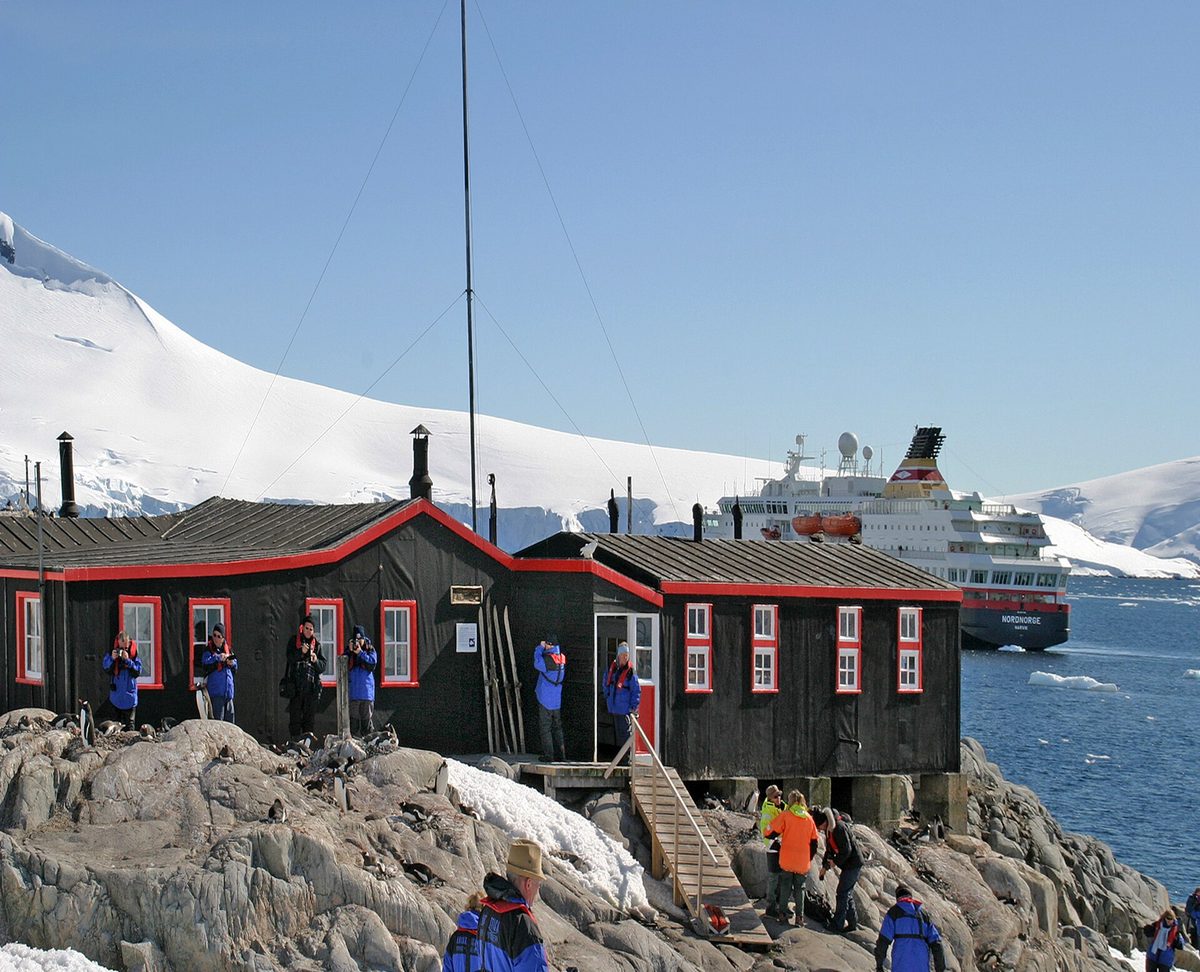
The most famous and most-visited base in Antarctica is Port Lockroy, a restored 1940s British station on tiny Goudier Island, now run as a museum and post office by the UK Antarctic Heritage Trust. Each summer a small team of volunteers lives here without running water, operating the world’s southernmost public post office — the celebrated “Penguin Post Office” — from which you can send a postcard home bearing a genuine Antarctic postmark.
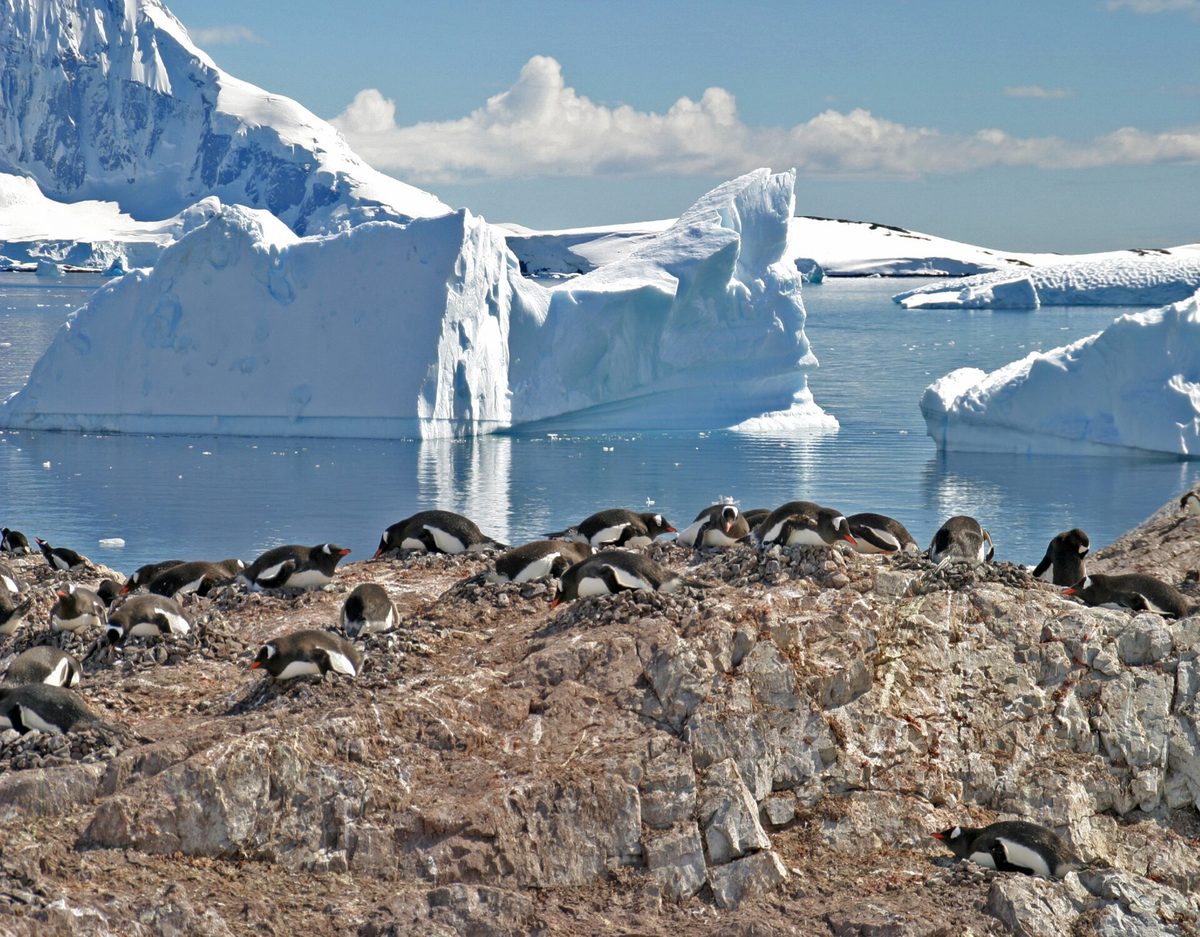
The base is also a living museum, its rooms preserved as they were in the mid-twentieth century, and it is ringed by a gentoo penguin colony so close that the volunteers run a long-standing study of how the birds fare alongside visitors. Charming, slightly eccentric and gloriously human, Port Lockroy is a fixture of Peninsula itineraries and one of the most beloved of all the things to do in Antarctica.
Vernadsky: The Southernmost Bar
Further south on the Peninsula lies Vernadsky Research Base, operated by Ukraine and formerly the British Faraday Station — the very place where, in the 1980s, scientists detected the hole in the ozone layer, one of the most important environmental discoveries of the twentieth century. Britain transferred the base to Ukraine in 1996 for a symbolic single pound, and it has been a Ukrainian outpost ever since.
Vernadsky is famous among travellers for a more convivial reason: the Faraday Bar, a wooden bar reputedly built by the British carpenters who were supposed to be building a pier, now the southernmost bar on the planet. When visits are possible, the staff welcome travellers with home-distilled vodka and the chance to buy a drink at the end of the world. It is one of the most characterful of all the bases, and a story I love to tell.
The Bases of Paradise Bay
The beautiful setting of Paradise Bay is home to two seasonal bases that often feature on Peninsula voyages. The Argentine Almirante Brown station sits on the shore, the focus of the famous continental landing and the hill climb behind it, while the Chilean González Videla base lies nearby — named for the Chilean president who in 1948 became the first head of state of any nation to set foot in Antarctica. Gentoo penguins nest right among its buildings.
These bases, like so many on the Peninsula, reflect the long and sometimes competitive interest of the southern nations in maintaining a presence on the ice. Visiting them, set against the glaciers and mirror-still water of one of Antarctica’s loveliest bays, combines human history with sheer natural beauty. I cover the setting in full in my guide to Paradise Bay.
Esperanza and the First Antarctic Family
At Hope Bay, near the tip of the Peninsula, stands the Argentine Esperanza base, one of the few stations in Antarctica to host civilian families. It has a school, a chapel and a small community, and it holds a unique distinction: in 1978 it became the birthplace of Emilio Palma, the first person ever born on the Antarctic continent, part of a deliberate Argentine effort to strengthen its territorial claim by establishing family life on the ice.
Esperanza, whose name means “hope,” is also surrounded by a huge Adélie penguin colony and steeped in Heroic Age history, standing near where members of a Swedish expedition survived a desperate winter in 1903. Travellers whose routes enter Hope Bay may glimpse the base from the ship or, conditions and policies permitting, ashore. It is one of only two genuine civilian settlements on the entire continent.
The Great Inland Stations
Beyond the reach of any tourist lie the most extraordinary stations of all, deep in the frozen interior. The American Amundsen-Scott Station sits squarely at the geographic South Pole, a gleaming modern base where scientists study the cosmos through the clearest air on Earth. Russia’s Vostok station, high on the polar plateau, recorded the coldest natural temperature ever measured — minus 89.2 degrees Celsius — and sits above a vast lake sealed beneath kilometres of ice.
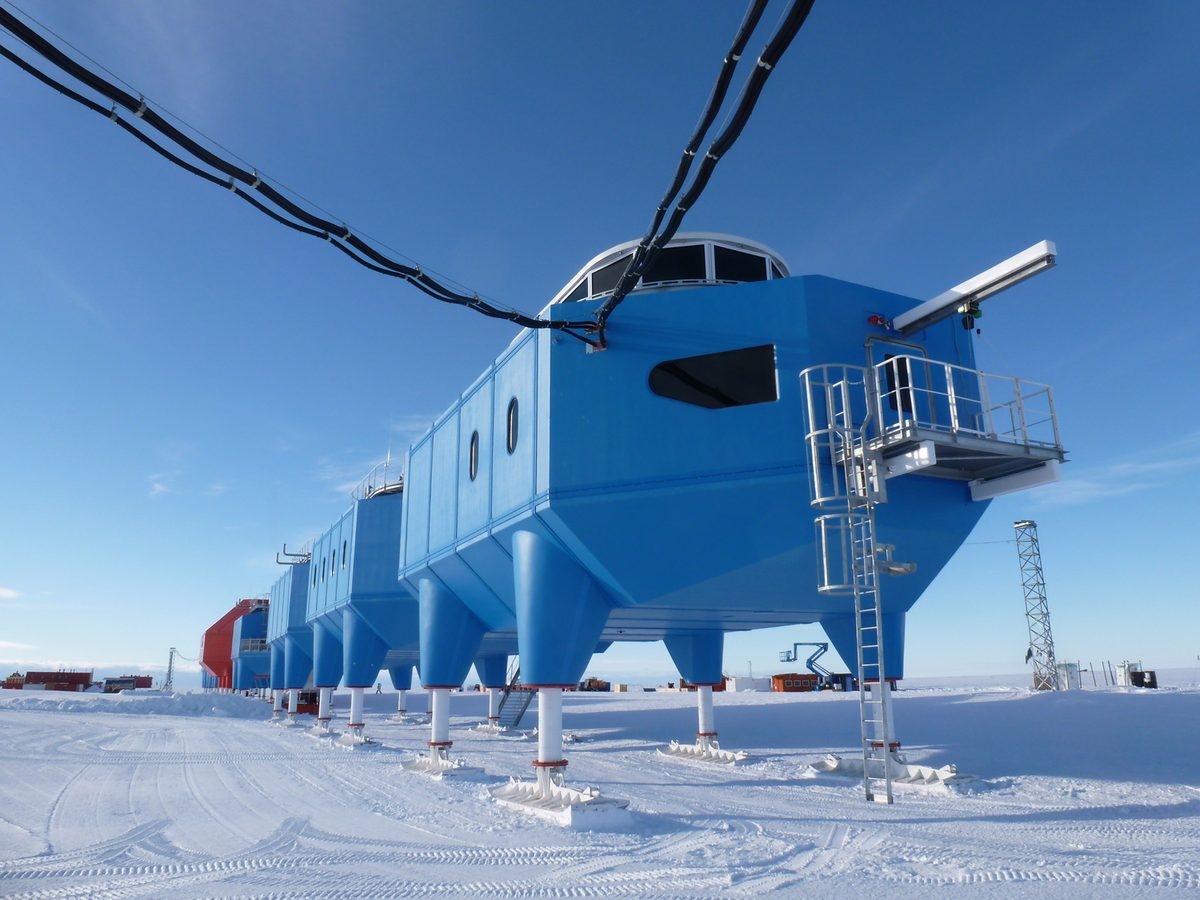
The French-Italian Concordia station, so remote and cold it is studied by space agencies as an analogue for life on Mars, and Britain’s relocatable Halley base, riding the floating Brunt Ice Shelf on giant skis, complete a roll call of human ingenuity at the limits of survival. No traveller will visit these, but they capture the imagination as the ultimate outposts, and they anchor the science that gives the whole continent its purpose. Their stories feature in my guide to Antarctica facts.
The Historic Huts of the Heroic Age
Not all the bases you can visit are modern or even occupied. Scattered around the continent, and especially around the Ross Sea, stand the wooden huts of the Heroic Age explorers — the actual buildings raised by Scott, Shackleton and their contemporaries over a century ago, preserved by the cold with their contents largely intact. Stepping into Scott’s hut at Cape Evans, its shelves still stocked with century-old tins, is one of the most moving experiences the continent offers.
On the Peninsula, the restored Wordie House and the base at Port Lockroy serve a similar role, conserved as living museums of early Antarctic life. These historic sites, protected under the Antarctic Treaty, are time capsules of exploration, and visiting them connects you directly to the men who first dared the ice. They are best reached on the long voyages described in my guide to the Ross Sea.
What Scientists Actually Study
The stations exist for science, and the research conducted on the ice shapes our understanding of the whole planet. The work is astonishingly varied, and a visit or a lecture from a base scientist can be a highlight of a voyage. Here is a sample of what the bases study:
| Field | What they study | Why it matters |
|---|---|---|
| Climate science | Ice cores holding 800,000 years of atmosphere | Reveals Earth’s climate history and future |
| Glaciology | Ice shelves, glaciers and sea ice | Predicts sea-level rise worldwide |
| Atmospheric science | The ozone layer and air chemistry | Ozone hole was discovered in Antarctica |
| Astronomy | Cosmic rays, neutrinos and the early universe | The dry, dark air is ideal for observation |
| Biology | Penguins, seals, krill and microbes | Tracks the health of the Southern Ocean |
This research is the entire justification for the human presence on the continent, and it touches everyone on Earth — from the climate models that guide global policy to the ice cores that reveal our planet’s deep past. The wildlife studies in particular connect closely to my guide to Antarctica wildlife.
The Etiquette and Realities of Visiting a Base
Visiting a working research station is a privilege, not a right, and it comes with responsibilities. You go where you are invited and nowhere else, you keep clear of scientific equipment and work in progress, and you observe the same strict biosecurity and environmental rules that govern every Antarctic landing. The staff are working, often on tight summer schedules, and tourism is a generous extra rather than their purpose.
It is humbling to glimpse the realities of base life: the cramped quarters, the reliance on resupply ships and aircraft, the long isolation of those who “winter over” through months of darkness. Many travellers come away with deep respect for the people who choose this life. When a base does welcome you — with a tour, a stamp in your passport, a drink at the bar — it is a memorable human connection in a vast, inhuman landscape, and one of the quiet rewards of a voyage covered in my overview of Antarctica cruises.
Living Through the Antarctic Winter
To grasp what these stations really mean, consider what it takes to “winter over.” When the last ship and aircraft leave at the end of the summer season, the small teams who remain are sealed off from the outside world for months — through the long polar night, when the sun never rises, temperatures plunge and rescue becomes all but impossible. A winterer must be self-reliant, psychologically resilient and able to live cheek by jowl with the same handful of colleagues in total isolation.
The challenges are as much mental as physical. The unbroken darkness, the confinement and the sheer remoteness take a real toll, and stations work hard to sustain morale with traditions like the midwinter feast, film nights and the famous polar plunge through a hole cut in the sea ice. Hearing a winterer describe that experience — the eerie beauty of the auroras, the camaraderie, the strange peace of total isolation — is one of the most memorable things a visitor can take away from a base. It is a side of Antarctica no day visitor ever truly sees, and it deepens your respect for everyone who calls the ice home.
Wordie House and the Peninsula’s Historic Bases
Alongside the working stations, the Antarctic Peninsula preserves several historic British bases as living museums, protected under the Antarctic Treaty. The most charming is Wordie House, a small 1940s hut near Vernadsky, kept much as it was when its occupants left, down to the tinned food on the shelves and the bunks against the wall. Stepping inside is like walking into the 1950s, a vivid snapshot of how early scientists lived on the ice.
Other conserved sites, such as Damoy Point — a former British air facility used as a summer transit station — and the relics at Stonington Island, tell the story of the mid-twentieth-century push to map and study the Peninsula. Cared for by the UK Antarctic Heritage Trust and its counterparts, these little buildings are far more than curiosities; they are the roots of the modern science programmes, and visiting them is a quiet, atmospheric pleasure that complements the grander spectacle of the ice and wildlife all around. They sit naturally on the same itineraries as the landings in my South Shetland Islands guide.
Frequently Asked Questions
Can tourists visit research stations in Antarctica?
Some, yes, though access varies year to year and depends on each station’s policies. Port Lockroy, a museum and post office, is the most reliable visit. Others, such as Vernadsky or the bases around Paradise Bay, admit visitors occasionally or by arrangement. Many working scientific bases receive few or no tourists, and access tightened notably in recent years, so nothing is guaranteed.
How many research stations are in Antarctica?
Around 70 research stations operated by about 30 countries, though only roughly half are staffed year-round; the rest open only for the summer season. They range from tiny huts holding a few scientists to the American McMurdo Station, which houses well over a thousand people at its summer peak. Many cluster along the relatively accessible Antarctic Peninsula and its islands.
What is the most visited base in Antarctica?
Port Lockroy, a restored British base on Goudier Island run as a museum and post office by the UK Antarctic Heritage Trust. Each summer volunteers operate the world’s southernmost public post office there, surrounded by a gentoo penguin colony. It is a fixture of Peninsula cruise itineraries and one of the most beloved stops on the whole continent.
Is there really a bar at an Antarctic research station?
Yes — the Faraday Bar at Ukraine’s Vernadsky Research Base is the southernmost bar in the world, reputedly built by British carpenters who were meant to be constructing a pier. When visits are possible, the staff welcome travellers with home-distilled vodka. Vernadsky is also where scientists detected the ozone hole in the 1980s.
What is the Antarctic Treaty?
The Antarctic Treaty, signed in 1959 and now backed by more than fifty nations, reserves the continent south of 60 degrees for peaceful purposes and scientific cooperation. It bans military activity, freezes territorial claims, and — through a later environmental protocol — protects the Antarctic environment. The research stations embody this spirit of international cooperation on the ice.
Can you visit the South Pole station?
Not on a standard cruise. The American Amundsen-Scott Station at the geographic South Pole lies deep in the interior, reachable only by specialist and very expensive fly-in expeditions. The same is true of other inland bases like Vostok and Concordia. Cruise travellers visit only coastal stations, chiefly on the Antarctic Peninsula and its islands.
What do scientists study at Antarctic bases?
A great deal: climate history from deep ice cores, glaciology and future sea-level rise, atmospheric science including the ozone layer, astronomy and cosmic rays in the clear polar air, and the biology of penguins, seals, krill and microbes. This research, the whole reason for the human presence, informs our understanding of the entire planet’s past and future.
Has anyone been born in Antarctica?
Yes. The first person born on the continent was Emilio Palma, in 1978 at Argentina’s Esperanza base at Hope Bay, part of a deliberate effort to bolster Argentina’s territorial claim. Esperanza is one of only two civilian settlements in Antarctica, with a school, a chapel and resident families, and a handful of children have since been born on the continent.
What is the largest research station in Antarctica?
The American McMurdo Station, on Ross Island, is by far the largest, housing well over a thousand people at the height of the summer season and resembling a small, rugged town with dormitories, workshops, laboratories and an airfield. It serves as the main logistics hub for the entire United States Antarctic Program, including the inland South Pole station.
Final Thoughts
The research stations are the human heartbeat of a continent that otherwise belongs entirely to ice and wildlife. They are where the Antarctic Treaty becomes real — where rival nations cooperate, where the science that guides our whole planet is done, and where a few hardy people make a temporary home at the edge of what is survivable. Visiting them, even briefly, adds a profoundly human dimension to a journey otherwise defined by the non-human grandeur of the south.
Whether you post a card from Port Lockroy, raise a glass at Vernadsky, or simply gaze at the flags of a dozen nations on King George Island, take a moment to appreciate what these outposts represent: a continent governed for peace and knowledge, a rare triumph of cooperation over rivalry. In a divided world, the antarctica research stations stand as quiet proof that we can, when we choose, share a place for the good of all. That, to me, is as moving as any iceberg.