For most travellers, a voyage to the white continent is already the adventure of a lifetime. But a small and growing number of ships now offer something that pushes the experience into another dimension entirely: the chance to soar above the ice in a helicopter or descend beneath it in a submarine. Booking an antarctica cruise with helicopter flightseeing, or one carrying a submersible, transforms a great trip into an extraordinary one — opening up perspectives on Antarctica that no Zodiac and no pair of boots can ever reach. It is the most thrilling frontier in polar travel, and also the most misunderstood.
Over the years I have watched these capabilities go from rare novelty to genuine option, and I get asked about them constantly: which ships have them, what they cost, whether the weather actually allows them, and whether they are worth the considerable extra money. This guide answers all of that honestly. It sits within our wider guide to Antarctica expedition ships and operators and builds on my comparison of the best Antarctica cruise lines.
Why add a helicopter or submarine to your voyage?
The appeal is simple: scale and access. From the air, Antarctica reveals itself in a way that is impossible from sea level — the true vastness of the ice sheet, the geometry of crevasse fields, the endless tabular bergs marching to the horizon. A helicopter can also ferry you over impassable terrain to remote landing sites, high vantage points and untouched corners that ships and Zodiacs simply cannot reach. It compresses the immensity of the continent into a single, unforgettable flight.
A submarine offers the mirror image: a descent into the alien world beneath the surface, where the underside of icebergs glows blue and bizarre cold-water creatures drift through the dark. Together, these tools let you experience Antarctica in three dimensions rather than one. They are not for everyone, and they are never cheap, but for the right traveller they are the highlight of the whole journey. For a sense of the ordinary days they punctuate, see my guide to life onboard an Antarctica expedition ship.
What an Antarctica cruise with helicopter access adds
Helicopters on expedition ships serve two distinct purposes, and it is worth understanding the difference before you book. The first is flightseeing: scenic flights that lift you off the ship for a sweeping aerial tour of the ice, glaciers and coastline. The second is heli-landing or heli-access: using the helicopter as transport to reach remote sites, high plateaus or otherwise inaccessible terrain where you then explore on foot. The most capable ships offer both, weather permitting.
The flagship example is Quark Expeditions’ Ultramarine, which carries two twin-engine helicopters and aims to give every guest a flightseeing opportunity included in the fare. This is a genuine game-changer, because it builds aerial exploration into the core of the voyage rather than treating it as a rare add-on. If helicopters are your reason for going, Ultramarine should top your shortlist. I profile her among the best small expedition ships for Antarctica.
Which ships carry helicopters?
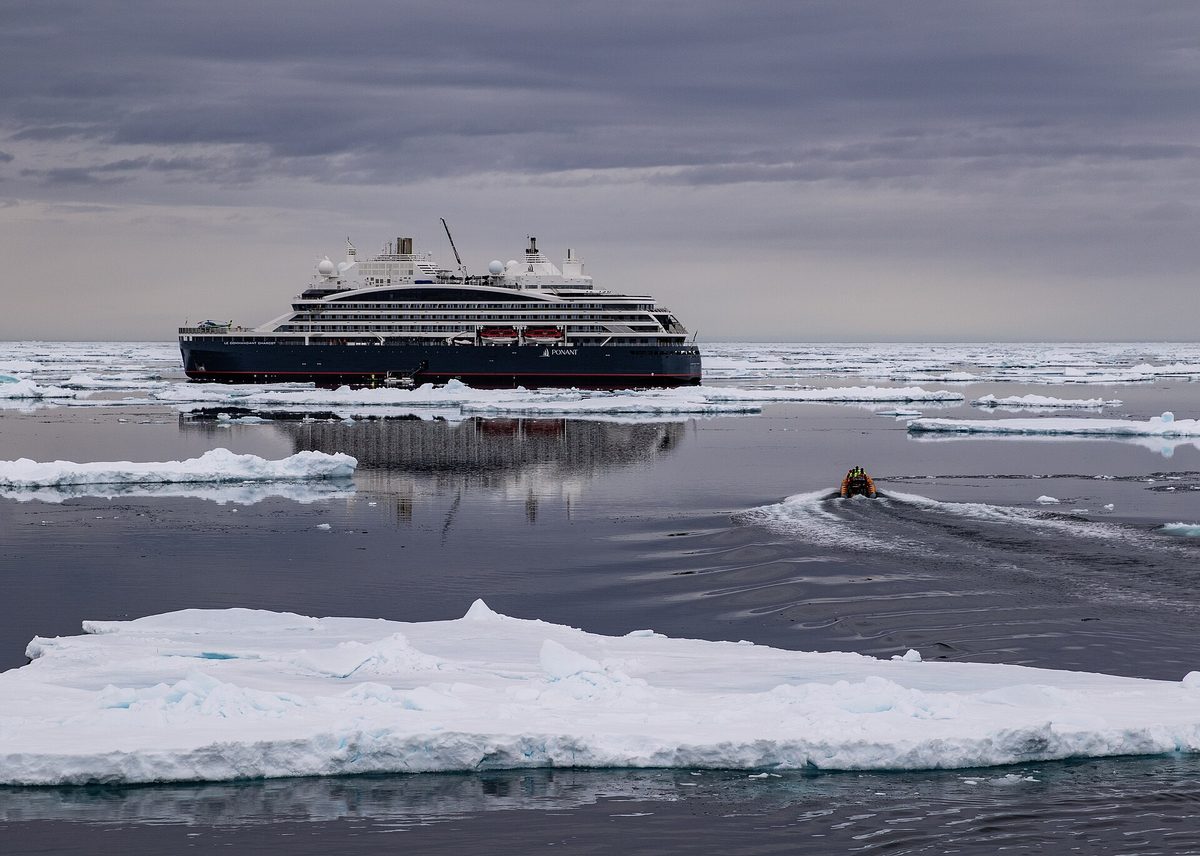
Helicopter-equipped ships remain rare, which is part of what makes the experience special. Quark’s Ultramarine leads the field with its two helicopters and included flightseeing. Ponant’s luxury icebreaker Le Commandant Charcot carries a helicopter primarily for ice reconnaissance — scouting routes through the pack — though it also enriches the expedition. And Scenic’s ultra-luxury Scenic Eclipse ships famously carry both helicopters and a submarine, making them the only vessels to offer the full aerial-and-underwater package in one fare.
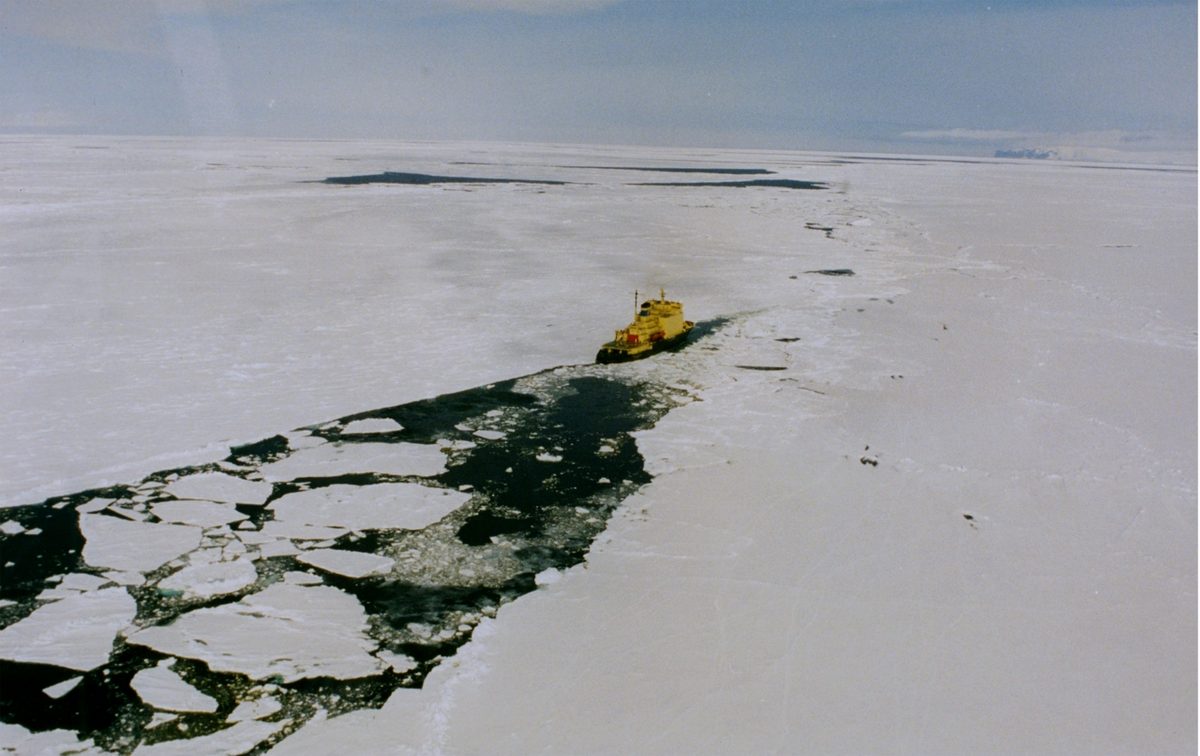
A handful of dedicated icebreaker voyages, such as those historically run aboard the mighty Kapitan Khlebnikov to the remote Ross Sea and emperor penguin colonies, have also used onboard helicopters to reach places no other tourism reaches. These are specialist, expensive and unforgettable expeditions. The common thread is that helicopters pair naturally with the most capable ships, which I explore in my guide to ice-class ships and icebreakers.
Flightseeing versus heli-landings
If you are choosing a helicopter voyage, clarify exactly what the flights involve, because it shapes the experience enormously. Pure flightseeing keeps you airborne for a scenic loop and returns you to the ship — exhilarating, but a spectator’s thrill. Heli-landings, by contrast, drop you in places you could never otherwise reach: a high glacier viewpoint, a remote emperor penguin rookery, a plateau above the clouds. These are the flights that become the story you tell for the rest of your life.
Heli-landings are more weather-dependent and more tightly regulated, and they are not offered on every helicopter voyage, so confirm precisely what is included before you book. The difference between a scenic flight and a genuine heli-landing expedition is the difference between admiring Antarctica from above and stepping onto a piece of it that almost no human has touched. Both are remarkable; only one lets you walk on the secret continent.
Submarines: Antarctica from beneath the waves
The other frontier is downward. A growing number of luxury expedition ships now carry small, custom-built submarines that take a handful of guests at a time on dives beneath the surface, revealing the submerged faces of icebergs, the kelp forests and the strange, hardy creatures of the cold deep. It is a genuinely rare privilege — far fewer people have seen Antarctica’s underwater world than have stood on its shores — and for many guests it becomes the unexpected highlight of the trip.
Seabourn’s expedition ships, Venture and Pursuit, each carry two submarines; Viking’s Octantis and Polaris include submersibles within a research-focused programme; and Scenic Eclipse pairs its submarine with helicopters. These are sophisticated machines with large viewing windows, piloted by trained operators, that descend gently to give you a window onto a world almost no traveller ever sees. The underwater realm complements the wildlife you meet above, which I cover in my guide to Antarctica wildlife.
What a submarine dive is actually like
Stepping into one of these submersibles is more comfortable than the word “submarine” suggests. You climb down into a pressurised cabin with broad acrylic windows, settle into a seat, and descend smoothly into the green-blue gloom while the pilot narrates the journey. As the light fades and the water deepens, the underside of an iceberg looms into view — sculpted, luminous, utterly silent — and you understand that you are seeing something that perhaps a few thousand people in all of history have ever witnessed. Dives typically last around 45 minutes and stay within carefully controlled depths.
It is worth knowing that submarine dives are usually not included in the cruise fare. On Seabourn’s ships, for example, expect to pay somewhere between 500 and 1,000 US dollars per person for a roughly 45-minute dive, booked separately and subject to availability and weather. Places are strictly limited, so if a submarine experience is important to you, reserve it as early as you reserve your cabin. The scarcity is part of the magic, but it also means you cannot count on a spur-of-the-moment dive.
The cost of a helicopter or submarine cruise
These experiences sit at the premium end of an already expensive activity. Helicopter-equipped voyages on Ultramarine can range from around 7,000 US dollars for a basic departure to well over 20,000 for longer or fly-in itineraries, with the flightseeing typically included. The luxury submarine ships — Seabourn, Viking, Scenic — generally start around 14,000 to 15,000 dollars per person and climb steeply for suites, with submarine dives charged as a separate extra on top.
Across the board, most ten-to-twelve-day Peninsula voyages with these capabilities fall between roughly 12,000 and 18,000 dollars per person, while the most exclusive suites and longest expeditions exceed 35,000. The helicopters and submarines are a meaningful part of what you are paying for, so weigh how much you will actually use them. For the full money picture, see my guide to how much an Antarctica trip costs and my breakdown of the most affordable Antarctica ships for context at the other end.
| Ship | Operator | Helicopter | Submarine | From (pp) |
|---|---|---|---|---|
| Ultramarine | Quark | Yes (two, included flightseeing) | No | ~$12,000 |
| Le Commandant Charcot | Ponant | Yes (reconnaissance) | No | ~$20,000 |
| Scenic Eclipse I & II | Scenic | Yes | Yes | ~$18,000 |
| Seabourn Venture / Pursuit | Seabourn | No | Yes (two) | ~$14,500 |
| Viking Octantis / Polaris | Viking | No | Yes | ~$14,000 |
The weather reality: why nothing is guaranteed
Here is the honest truth every operator should tell you and not all of them stress enough: helicopter and submarine operations in Antarctica are entirely at the mercy of the weather, and nothing is guaranteed. Wind, low cloud, fog, sea state and ice conditions can ground the helicopters or cancel the dives at a moment’s notice, and an itinerary that promises flightseeing may deliver none if the weather refuses to cooperate. This is not a failing of the operator; it is the nature of the most volatile environment on Earth.
So go in with the right mindset. Treat a helicopter flight or a submarine dive as a glorious possibility rather than a guaranteed inclusion, and you will be delighted when it happens rather than crushed when it does not. The operators that handle this best are upfront about the odds and flexible in seizing weather windows. Understanding Antarctic conditions helps set expectations, which is why I always recommend reading my guide to the best time to visit Antarctica before you book.
Safety, regulation and the environment
Helicopter and submarine operations are tightly governed, and rightly so. Every reputable operator is a member of IAATO, and aerial and underwater activities are subject to strict environmental rules designed to protect wildlife — keeping helicopters well clear of bird colonies and seal haul-outs, limiting noise, and following carefully planned flight paths and dive sites. These constraints exist to ensure that tourism leaves the continent unharmed, and they are non-negotiable.
The machines themselves are operated by highly trained professional pilots and submersible operators, with rigorous safety protocols, and the leading ships are purpose-built for these operations. None of this removes the inherent seriousness of flying and diving in a remote, unforgiving place, but it is managed by people who take it extremely seriously. The importance of choosing a compliant, professional operator cannot be overstated, as I explain in my guide to IAATO and why operator membership matters.
Is a helicopter or submarine cruise worth it?
This is the question I am asked most, and my answer depends entirely on you. If aerial or underwater exploration genuinely thrills you, and the budget is comfortable, these experiences are unforgettable and worth every penny — there is simply no other way to see Antarctica from above or below. For photographers, bucket-list travellers and those who want to push their voyage to its absolute limit, they are transformative.
But if your budget is tight, or your dream is really about penguins and icebergs at eye level, you should know that a standard small-ship expedition delivers a magnificent Antarctica experience without any of these extras. The wildlife does not look any better from a helicopter, and the great landings are extraordinary regardless. Spend on these add-ons only if the experience itself, not the prestige, is what you want. My guide to choosing an Antarctica cruise operator helps you weigh that trade-off.
How helicopters and submarines reached Antarctic tourism
These capabilities did not appear overnight. Helicopters have a long history in Antarctic science and logistics, ferrying researchers and supplies across terrain no vehicle could cross, and the pioneering tourism icebreakers of the 1990s — vessels like the Kapitan Khlebnikov — first put helicopters in the hands of adventurous travellers to reach emperor penguin colonies and the remote Ross Sea. For decades, aerial access was the preserve of a tiny, intrepid few willing to endure spartan ships for extraordinary reach.
Submarines arrived far more recently, riding the wave of purpose-built luxury expedition ships launched in the late 2010s and early 2020s. As operators like Seabourn, Scenic and Viking competed to build the most capable expedition vessels ever made, custom submersibles became the signature flourish of the new generation. What was once unimaginable for a paying guest — descending beneath an Antarctic iceberg in comfort — is now a bookable, if pricey, reality. It is a remarkable expansion of what polar travel can be, and it sits at the apex of the modern fleet I survey in my best expedition ships guide.

Combining flights and dives with the rest of your expedition
It is worth remembering that helicopters and submarines are the spectacular punctuation marks, not the whole sentence. On any of these ships you will still do everything a classic expedition offers: daily Zodiac landings among penguin colonies, cruises past calving glaciers, lectures from naturalists, and the slow, soul-stirring business of simply being present in the most beautiful wilderness on Earth. The aerial and underwater experiences enrich that core; they do not replace it.
Many of these premium ships also offer kayaking, paddleboarding, camping and other adventures, so a single voyage can combine the air, the sea surface and the deep into one extraordinary whole. If you are investing in a helicopter or submarine cruise, plan to make the most of the entire activity programme, because the sum is greater than any single thrilling part. A typical day weaving these together is exactly what I describe in my guide to life onboard an Antarctica expedition ship.
How to book and secure your place
Because the ships are few and the capacity for these activities is strictly limited, demand far outstrips supply. If a helicopter or submarine experience is central to your trip, book the voyage twelve to eighteen months ahead and reserve the activity at the same time as your cabin — do not assume you can add it later. On ships where flightseeing is included, you are buying into the whole experience; on ships where dives are extra, lock in your slot early.
A specialist expedition travel agent is especially valuable here, because they know exactly which departures carry which capabilities, how the activities are priced, and how reliable each operation tends to be. Given the sums involved, that expertise is well worth having. Tie your planning together with my complete guide to Antarctica cruises.
Frequently asked questions
Which ship is best for an Antarctica cruise with helicopter flights?
Quark Expeditions’ Ultramarine leads, carrying two twin-engine helicopters and aiming to give every guest included flightseeing. Ponant’s Le Commandant Charcot and Scenic’s Eclipse ships also carry helicopters, with Scenic uniquely pairing helicopters and a submarine on the same vessel. Choose based on whether you want flightseeing, heli-landings or the full aerial-and-underwater package.
Are helicopter flights included in the cruise price?
On some ships, yes. Ultramarine includes flightseeing in its fare, while other vessels offer helicopter activities as paid extras or use the helicopter mainly for ice reconnaissance. Always confirm exactly what is included, as the difference between included flightseeing and an optional add-on can be thousands of dollars.
How much does a submarine dive in Antarctica cost?
Submarine dives are usually charged separately from the cruise fare. On Seabourn’s ships, expect to pay roughly 500 to 1,000 US dollars per person for a 45-minute dive, subject to weather and availability. Places are strictly limited, so reserve early if a submarine experience matters to you.
Can the weather cancel helicopter or submarine activities?
Absolutely, and frequently. Wind, cloud, fog, sea state and ice can ground helicopters or cancel dives at short notice, and nothing is ever guaranteed in Antarctica. Treat these activities as wonderful possibilities rather than certainties, and choose an operator that is honest about the odds and quick to seize weather windows.
Are Antarctica helicopter and submarine cruises safe?
They are operated by highly trained professional pilots and submersible operators under rigorous safety protocols, on purpose-built ships, by IAATO-member companies following strict rules. No activity in such a remote, extreme environment is without risk, but these operations are managed by serious professionals who treat safety as paramount.
Is a helicopter or submarine cruise worth the extra cost?
If aerial or underwater exploration genuinely excites you and the budget allows, yes — these are unforgettable, once-in-a-lifetime experiences. But if your priority is wildlife and landings at eye level, a standard small-ship expedition delivers a magnificent Antarctica without the premium. Spend on these extras only if the experience itself is what you crave.
Do Viking and Scenic include submarine dives in the fare?
Policies vary by operator and departure, and submarine access is always subject to weather, capacity and sometimes an additional charge. Viking builds submersibles into a research-focused programme, while Scenic Eclipse pairs a submarine with helicopters. Always confirm with the operator exactly what is included, what costs extra, and how places are allocated before you book.
Can you reach emperor penguins by helicopter?
Sometimes, yes. A handful of specialist icebreaker expeditions use onboard helicopters to reach remote emperor penguin colonies on the fast ice, places utterly inaccessible by ship or Zodiac. These voyages are rare, expensive and weather-dependent, but for dedicated wildlife travellers a heli-supported emperor colony visit is one of the most extraordinary experiences in all of Antarctic tourism.
How many people fit in an Antarctic submarine?
The custom submersibles carried by expedition ships are small, typically seating a pilot and a handful of guests at a time behind large viewing windows. Because capacity per dive is so limited and demand is high, slots fill quickly. If a submarine dive is a priority, reserve it as early as possible, ideally when you book your cabin.
Final thoughts
An antarctica cruise with helicopter flightseeing or a submarine dive represents the cutting edge of polar travel — the chance to experience the continent in dimensions almost no one ever sees, from high above the ice or deep beneath the waves. The ships that offer it are few, the cost is high, and the weather holds the final say, but for the traveller who craves the ultimate Antarctic experience, nothing else compares to lifting off the deck or sinking below the surface.
My advice is to be clear-eyed about what you want. If the aerial and underwater frontiers genuinely call to you and the budget is there, seize them — you will never forget it. If not, take heart that the classic expedition, boots on the ice among the penguins, remains one of the greatest experiences on Earth all by itself. Either way, the secret continent is waiting.
Related reading
- Antarctica expedition ships and cruise operators
- Best Antarctica cruise lines compared
- Best small expedition ships for Antarctica
- Ice-class ships and icebreakers explained
- How to choose an Antarctica cruise operator
- How much does it cost to go to Antarctica?
- Antarctica wildlife
- The best time to visit Antarctica
- Antarctica cruises: the complete guide