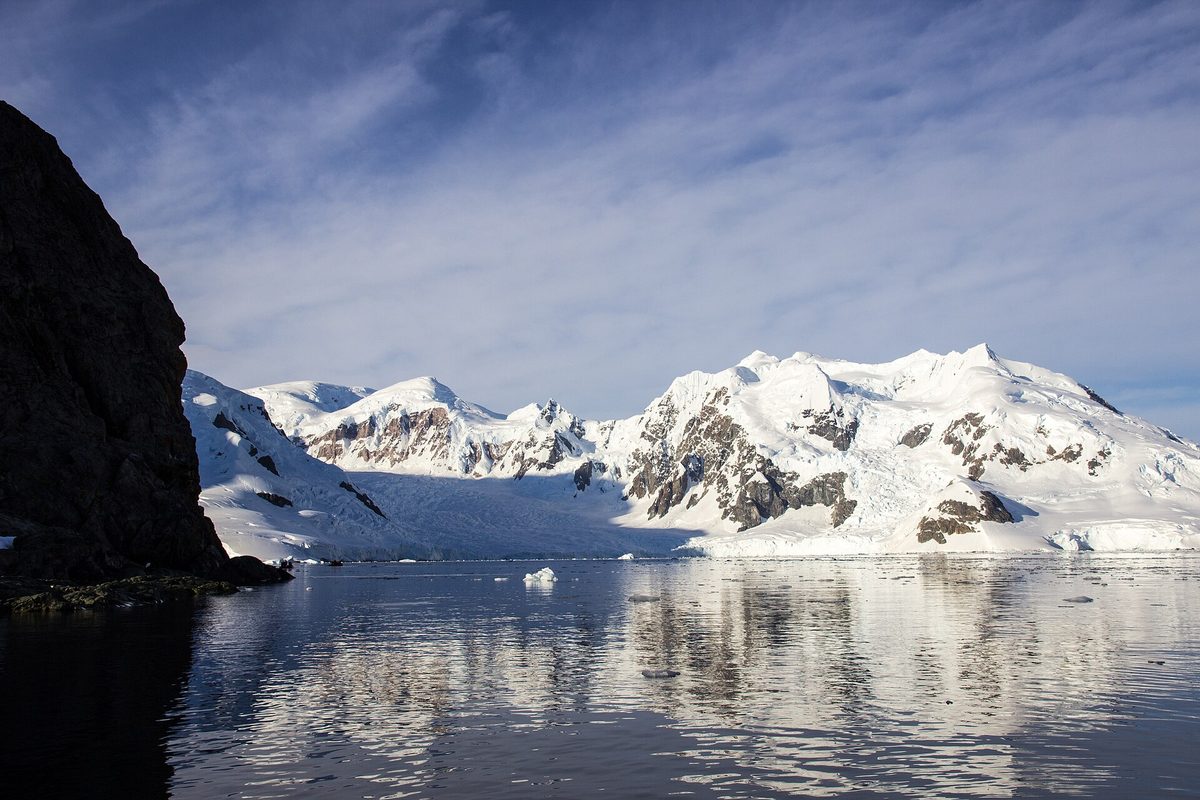
One decision shapes your Antarctic voyage more than any other, and it isn’t the operator or even the price — it’s ship size. Choosing a small ship Antarctica cruise versus a large one changes how much time you spend ashore, how close you get to wildlife, how steady the Drake Passage feels, and how much you pay per day. Get this single choice right and almost everything else falls into place; get it wrong and no amount of luxury or savings will quite make up for it.
I want to give you the honest, unspun version here — not the marketing line that “smaller is always better,” but the real trade-offs, because large ships genuinely suit some travelers. By the end you’ll know exactly which size fits the trip you have in mind. For the wider picture of how expedition cruising works, keep our main Antarctica cruises guide handy; this one drills into the size question alone.
The rule that changes everything: the 100-passenger limit
To understand why size matters so much, you need one fact: under IAATO rules, no more than 100 passengers may be ashore from a single vessel at any one time. That regulation, designed to protect the fragile environment, quietly governs your entire experience. On a ship carrying 100 or fewer guests, everyone can land together — a zero-compromise experience where you’re ashore for the full duration of every landing.
On a larger ship, the math turns against you. With more than 100 passengers aboard, guests must be split into groups that take turns going ashore, which eats into everyone’s time on land. And there’s a hard ceiling: ships carrying more than 500 passengers are not permitted to land passengers in Antarctica at all. Book a berth on a 501-passenger vessel and you will never set foot on the continent — you’ll see it only from the deck. This single rule is the lens through which every other size trade-off should be viewed.
What counts as a small ship vs a large ship?
The categories are looser than you’d think, so here’s a working definition. “Small” expedition ships carry roughly 50 to 200 passengers, with the true small-ship experience — everyone ashore at once — reserved for those at or under 100. “Large” expedition ships carry 200 to 500, still able to land guests but only in rotating groups. And the “cruise-by” megaships carry 500 to several thousand and cannot land anyone.
Most dedicated Antarctic expedition vessels sit in the 100–200 range — a sweet spot that balances landing efficiency with onboard comfort. When operators talk about the magic of small-ship expedition cruising, this is the band they mean. Our expedition ships and operators guide profiles vessels across the whole spectrum.
Why a small ship Antarctica cruise wins for most travelers
Small ships win on the things that draw people to Antarctica in the first place. Because fewer passengers need to rotate through the Zodiacs, you spend more total time ashore — the difference can add up to substantial extra hours across a voyage. Small vessels also reach places the big ones can’t: narrow channels, tucked-away bays, and landing sites with strict capacity limits that simply turn larger ships away.
There’s an intangible benefit too: intimacy. On a 100-passenger ship you quickly come to know your fellow travelers and the expedition team, and the daily rhythm of lectures, recaps, and shared meals builds a genuine sense of community. Wildlife encounters feel more personal, photography is easier without a crowd, and the whole experience leans closer to genuine exploration. For most people whose priority is wildlife and wilderness, small is simply better — and it’s why this category tops our best Antarctica cruises picks.
The case against small ships
Small ships aren’t perfect, and honesty demands the downsides. The biggest is motion: with less mass and (often) less sophisticated stabilisation than the largest vessels, smaller ships can roll more in a rough Drake Passage crossing. If you’re acutely prone to seasickness, that matters, though modern stabilisers and the option of a fly-cruise both help.
The second is cost. Because a small ship spreads its considerable operating expenses across fewer passengers, the per-person price tends to run higher than a comparable berth on a larger vessel. And the onboard amenities are more modest — you’ll find a lecture theatre, a bar, and a library rather than multiple restaurants, pools, and entertainment. For travelers who value those comforts, that’s a real trade-off, explored in our trip cost guide.
The case for large ships
Large expedition ships (200–500 passengers) have genuine advantages worth weighing. Their greater mass and advanced stabilisers tend to make the Drake crossing steadier and more comfortable — a real consideration for the seasickness-prone. They spread costs across more passengers, so the per-person price is often lower. And they offer more onboard variety: a choice of dining venues, more spacious public areas, gyms, spas, and sometimes the toys of the ultra-premium ships like submarines and helicopters.
For travelers whose priority is comfort, stability, and amenities — or who simply want to see Antarctica’s scenery in style without prioritising maximum time ashore — a larger ship can be the right call. Just go in clear-eyed about the landing trade-off.
The case against large ships
The drawback of a large ship is the one that matters most in Antarctica: less time on land. With more than 100 passengers, the ship must shuttle guests ashore in rotating groups, and the larger the crowd, the more time is spent waiting your turn and the less spent exploring. On the biggest landing-capable ships, you may be limited to one landing per day — or even one every other day — while a small ship’s guests are ashore at every opportunity.
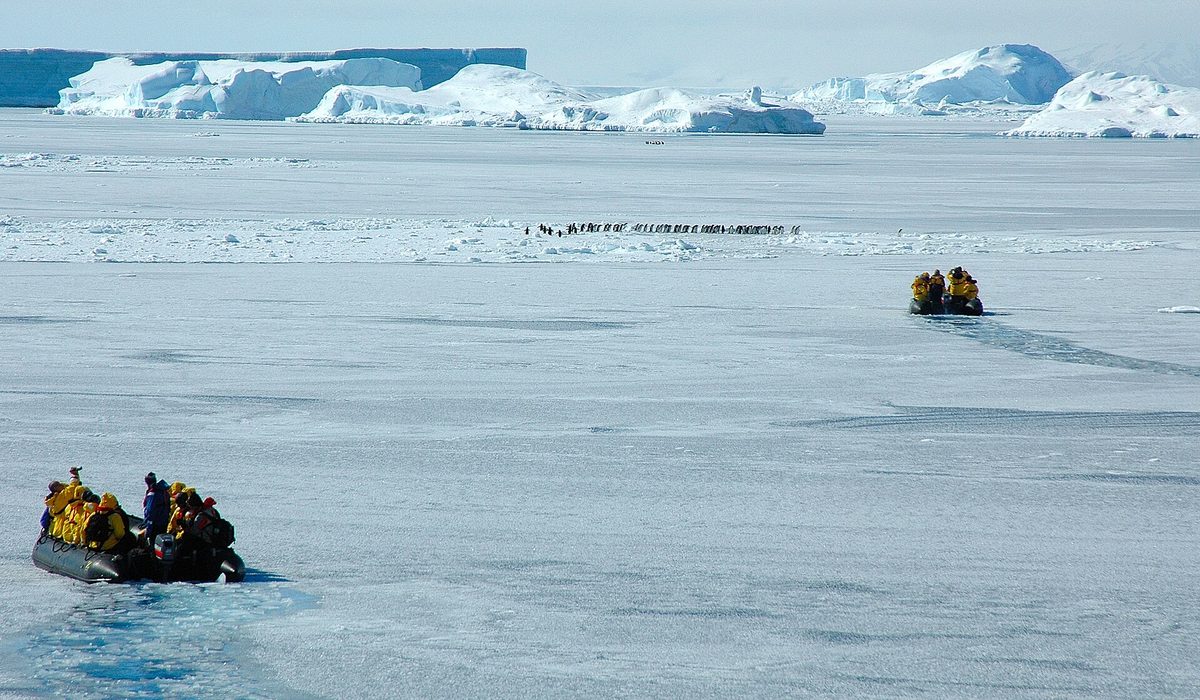
You also lose the intimacy and access: bigger ships can’t enter the narrowest channels or the capacity-limited sites, and the experience feels more like a cruise and less like an expedition. And of course, the megaships over 500 passengers can’t land you at all. If actually setting foot among the penguins is your dream — and for most people it is — the large-ship compromise cuts against the very heart of the trip.
Small ship vs large ship: side by side
| Factor | Small ship (≤100–200) | Large ship (200–500) |
|---|---|---|
| Time ashore | Maximum — everyone lands at once (≤100) | Less — rotating groups, possible waits |
| Remote sites | Reaches narrow channels & small sites | Limited to larger landing sites |
| Drake motion | More roll | Steadier, better stabilisers |
| Price per person | Higher | Often lower |
| Onboard amenities | Modest, expedition-focused | More dining, space, facilities |
| Atmosphere | Intimate, community feel | Busier, more anonymous |
| Over 500 passengers | n/a | No landings permitted at all |
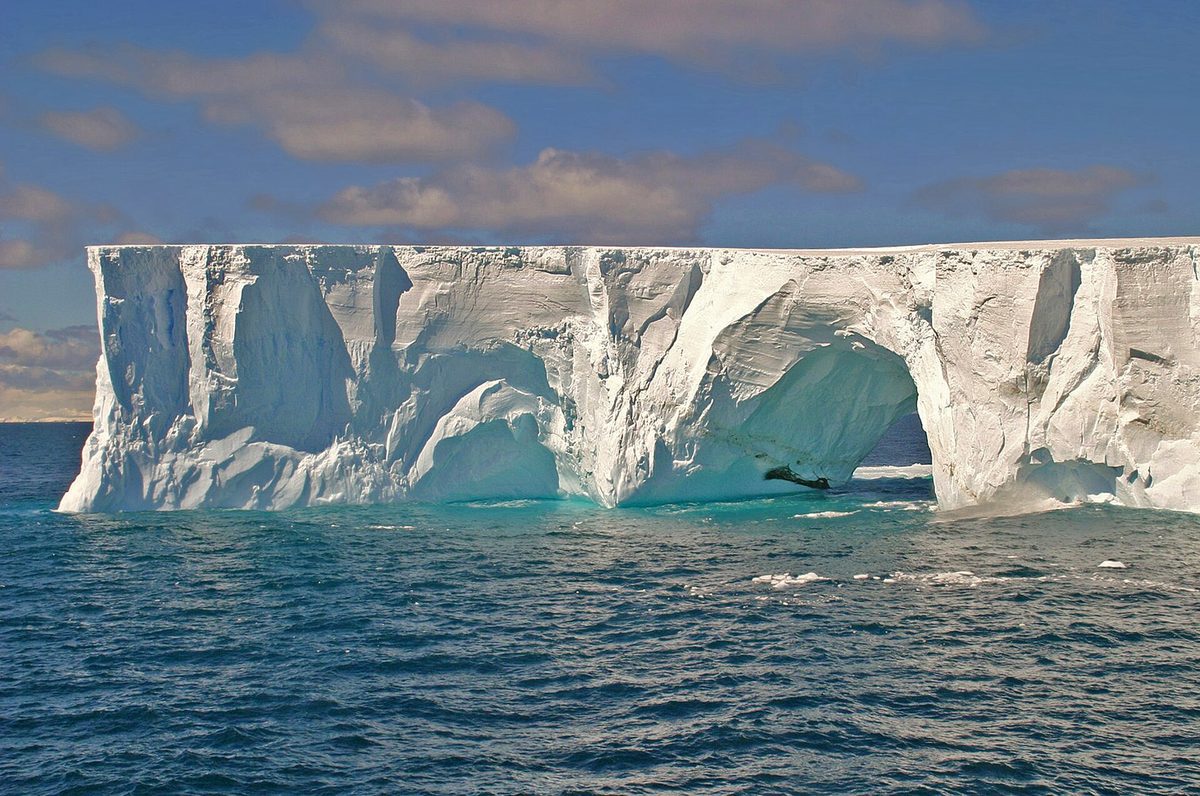
Time ashore: the difference that defines your trip
If you remember one thing, make it this. The whole reason to come to Antarctica is to be in it — ashore among the penguins, out on the Zodiac beneath the ice — and ship size is the single biggest determinant of how much of that you get. A small-ship guest might enjoy two full landings or cruises a day; a large-ship guest might manage one, after a wait, or alternate days entirely. Across a ten-day voyage, that gap compounds into a dramatically different trip.
This is why seasoned polar travelers almost universally prioritise ship size over onboard luxury. The marble lobby is forgotten by lunchtime; the morning you spent ashore with a curious gentoo is remembered forever. Our things to do in Antarctica guide shows exactly what that precious shore time can hold.
Cost: how size moves the price
Counterintuitively, the more intimate small-ship experience usually costs more, not less. Spreading fixed operating costs across fewer guests pushes up the per-person fare, so boutique sub-100 ships often sit in the mid-premium to luxury tiers, while larger vessels can offer lower entry prices. If budget is your binding constraint, a larger ship (or a shoulder-season departure on any ship) may be the pragmatic choice — just weigh the lost shore time. Our budget cruises guide and luxury cruises guide sit at the two ends of this spectrum.
Which size suits which traveler?
Here’s the quick matching. Choose a small ship if your priority is wildlife, landings, remote access, photography, or an intimate, expedition feel — this is most first-timers’ best bet despite the higher price. Choose a larger ship if you’re strongly prone to seasickness and value stability, if budget is tight, or if onboard comfort and amenities matter more to you than maximising hours ashore. And avoid the 500-plus megaships entirely unless you’re genuinely content to view Antarctica only from the deck. Our guide for every traveler takes this matching further by traveler type.
My honest verdict
If you’ve read this far hoping I’ll just tell you what to do: for the overwhelming majority of travelers, a small expedition ship of 100–200 passengers is the right answer. It delivers the time ashore, the access, and the intimacy that make Antarctica unforgettable, while still offering real comfort. I’d only steer you toward a larger ship if seasickness genuinely frightens you or budget forces the issue — and even then I’d nudge you toward the smaller end of “large.” The continent rewards proximity, and small ships get you closest.
How to choose your ship size
Turn the verdict into a decision with three questions. First, how much does time ashore matter to you versus onboard comfort? Second, how worried are you about Drake seasickness — enough to trade landings for stability, or solvable with medication and a fly-cruise? Third, what’s your budget ceiling? Answer those and your size band emerges. Then layer on the other choices — itinerary, timing, operator — from our how to choose an Antarctica cruise guide.
The best small ships sailing in 2026 and 2027
If you’ve decided small is right for you, a handful of vessels exemplify the category for the 2026 and 2027 seasons. Poseidon Expeditions’ 114-guest Sea Spirit is designed so all passengers land at once; Oceanwide Expeditions runs characterful sub-120 ships beloved by wildlife purists; and newer X-bow vessels from operators like Aurora and Albatros blend small-ship landing efficiency with modern comfort and lower emissions. Quark’s larger Ultramarine (199 guests) pushes the upper edge of “small” while adding helicopters.
What unites the best small ships is a high crew-to-guest ratio, a strong expedition team, ice-strengthened hulls, and itineraries built to maximise time ashore. Don’t fixate on the newest hull; an experienced team on a seasoned ship often beats a glossy newcomer. Our ships and operators guide compares the fleet in detail, and the best Antarctica cruises guide names standouts by category.
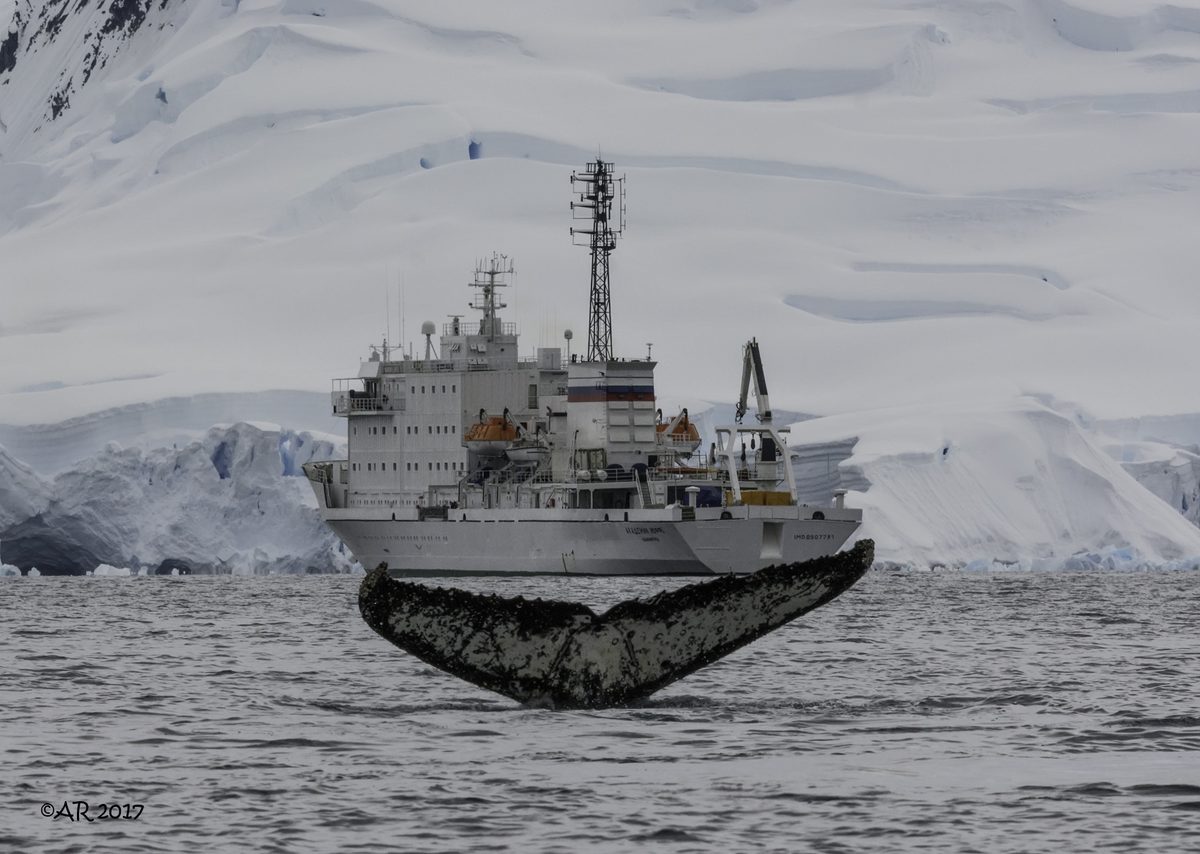
What life aboard a small ship is like
Day-to-day life on a small ship has a particular, much-loved texture. Meals are often communal, the bar becomes the social hub where the day’s sightings are swapped, and you’ll soon recognise every face — passengers and crew alike. The expedition leader knows your name; the photographer remembers you wanted help with your camera settings. It feels less like a cruise and more like an expedition of friends.
The flip side is fewer choices: usually one main dining room rather than eight, a single lounge, and no casino or theatre. For travelers who came for the continent rather than the ship, that simplicity is a feature, not a bug. The lecture programme and the daily recaps become the entertainment, and they’re genuinely riveting once you’re immersed.
Cabins: what changes with ship size
Cabin choice interacts with ship size in ways worth knowing. Small ships offer fewer cabin categories, so the best ones sell out first; larger ships provide more variety, including more suites and connecting rooms for families. On any ship, a lower, mid-vessel cabin rides most smoothly in the Drake, while higher decks and the bow feel more motion. Balconies are a treat in calm channels but underused in cold, rough stretches; many small-ship veterans happily take a porthole and spend the saving on an activity.
Small or large for families and groups?
Families and groups face a genuine toss-up. Larger ships offer connecting cabins, more space for restless teenagers, and steadier crossings — appealing for multi-generational trips. Small ships offer intimacy, more time ashore, and a tight-knit atmosphere in which children are quickly adopted by the whole ship. For a first family voyage prioritising comfort and flexibility, a mid-size ship often threads the needle. Our guide for every traveler digs into family and group considerations.
Common myths about ship size
A few myths deserve busting. “Bigger ships are safer” — not meaningfully; all IAATO vessels meet strict safety and ice standards. “Small ships are only for the rich” — they do cost more per person, but shoulder-season and triple-share options bring them within reach, as our budget cruises guide shows. “You see the same thing either way” — emphatically not, because the megaships can’t land you at all. Knowing the real trade-offs, rather than the myths, leads to a far better booking.
How ship size shapes your itinerary options
Size doesn’t just affect daily landings — it influences where a ship can take you at all. The most ambitious, ice-choked routes (the Weddell Sea, deep Antarctic Circle crossings, parts of the Ross Sea) favour smaller, higher-ice-class vessels that can nose into tight, ice-strewn waters. South Georgia’s exposed landing beaches also reward the nimble landing logistics of smaller ships. Larger vessels tend to stick to the well-trodden Peninsula and South Shetlands, where their size is less of a handicap. So if a particular far-flung region is your dream, it may quietly narrow your ship-size choice for you — something our itineraries guide and regions guide can help you map.
Frequently asked questions
Is a small ship really better for an Antarctica cruise?
For wildlife, landings, and intimacy, yes — ships of 100 or fewer passengers let everyone go ashore at once and reach remote sites, delivering more time on land. The trade-offs are higher per-person cost and more motion in rough seas. For comfort and budget, a larger ship can suit better.
What is the maximum ship size that can land in Antarctica?
Vessels carrying more than 500 passengers cannot land guests at all under IAATO rules — they can only cruise past. Ships of 100 or fewer can land everyone simultaneously; those between 100 and 500 land guests in rotating groups.
Do small ships get rougher in the Drake Passage?
Generally yes — less mass and sometimes simpler stabilisation mean more roll than the largest ships. Modern stabilisers reduce this, effective seasickness remedies help, and a fly-cruise avoids the crossing entirely. For many, the extra time ashore outweighs the rougher crossing.
Are large ships cheaper than small ships?
Often, yes — spreading costs across more passengers lowers the per-person fare, and larger ships add onboard amenities. The catch is less time ashore. Weigh the savings against the lost landings, the core of the Antarctic experience.
How many passengers is ideal for an Antarctica cruise?
Most experts favour 100–200 as the sweet spot: small enough for efficient landings and an intimate feel, large enough for real comfort and stability. Purists prefer sub-100 ships so everyone lands at once; comfort-seekers lean toward the upper end.
Can I still see Antarctica well from a large ship?
You’ll see the scenery — icebergs, mountains, and coastline from the deck — but you’ll spend less time ashore, and on megaships over 500 passengers you can’t land at all. If close wildlife encounters matter, choose a landing-capable ship of 500 or fewer, ideally much smaller.
Which small ships let everyone land at once?
Any vessel carrying 100 or fewer passengers, since that’s the IAATO ceiling for guests ashore at one time. Ships like Poseidon’s 114-guest Sea Spirit get very close and are designed to land all guests together. Above roughly 100, expect rotating groups.
Are small ship Antarctica cruises worth the higher price?
For most travelers chasing wildlife and time ashore, yes — the extra hours on land and access to remote sites justify the premium. If budget is the binding constraint, a larger ship or shoulder-season departure is a reasonable compromise. See our is it worth it? guide.
What’s the smallest Antarctica cruise ship?
Some expedition vessels and sailing yachts carry as few as a dozen or so guests, offering the most intimate possible experience at a premium. The mainstream “small” category runs roughly 50–200 passengers, with 100 or fewer giving the true everyone-lands-at-once experience.
Do larger ships have better stabilisers for the Drake?
Generally yes — greater mass and more advanced stabilisation make big ships steadier in rough seas, which is a genuine plus for the seasickness-prone. That said, modern small ships have good stabilisers too, effective remedies help, and a fly-cruise skips the crossing entirely.
Can I do activities like kayaking on any ship size?
Optional activities depend on the operator and equipment rather than size alone, but smaller expedition-focused ships tend to offer the deepest activity menus and the flexibility to run them. Always confirm and book add-ons like kayaking or camping early, as spots are limited. See our things to do guide.
Is a bigger ship more comfortable for a first-timer?
It can be, thanks to steadier crossings and more onboard space, which reassures nervous first-timers. But most first-timers ultimately value time ashore more than amenities once they arrive, so a mid-size expedition ship of 100–200 passengers tends to be the happiest first-trip choice — comfortable enough, yet small enough to land everyone efficiently and reach the wildlife. Our how to choose guide helps first-timers weigh it.
Final thoughts
The small-ship versus large-ship choice comes down to a simple truth: in Antarctica, time ashore is the treasure, and ship size is the price of admission to more of it. Smaller ships cost more and roll more, but they put you among the penguins for longer and reach the places the crowds can’t. Larger ships trade that intimacy for stability, savings, and comfort. Neither is wrong — but be honest about which one matches the trip you’re dreaming of, because this is the decision everything else hangs on. When you’ve settled it, our best Antarctica cruises and ships and operators guides help you pick the exact vessel that fits both your priorities and your budget.

1 note
Notes are closed on this entry.