How to Get to Ushuaia
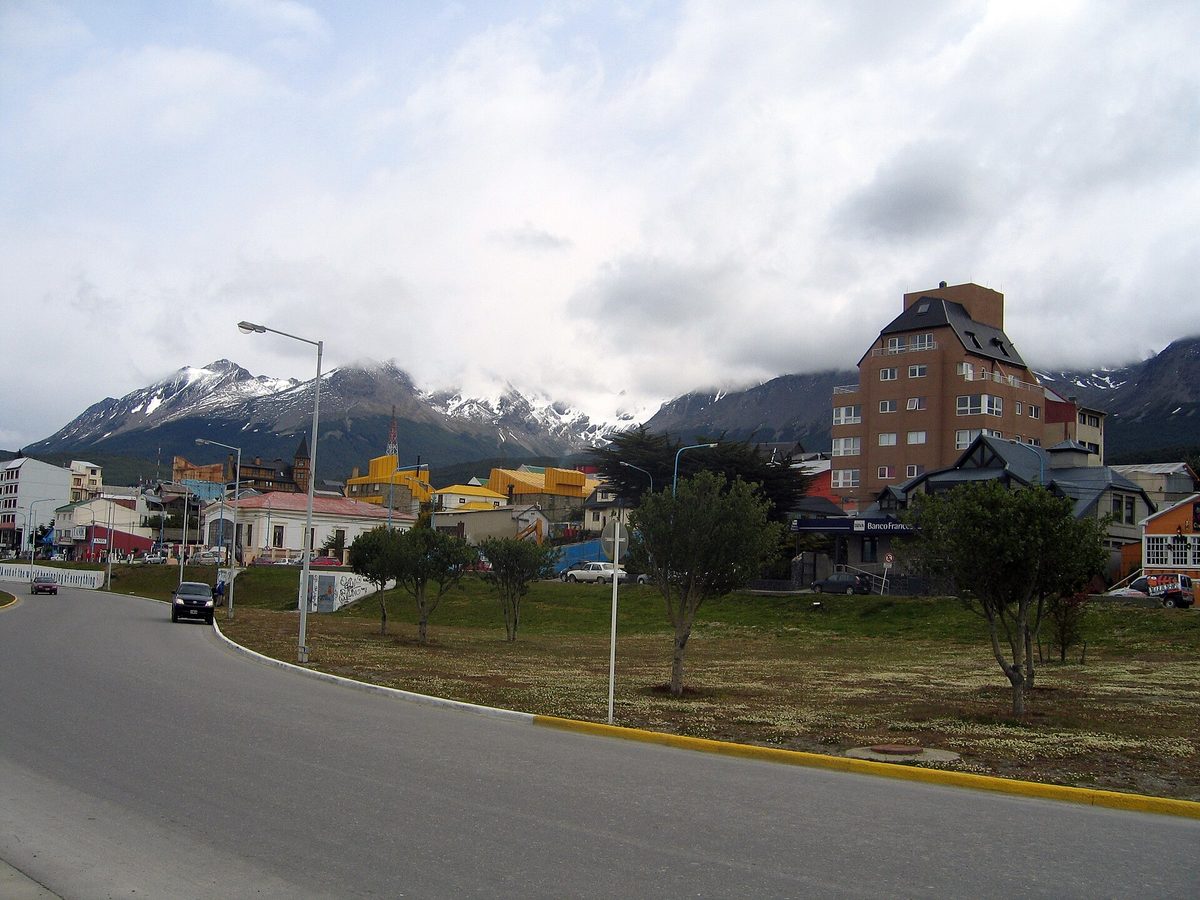
I still remember the first time my flight banked over the Beagle Channel on its descent into Ushuaia — snow-streaked peaks falling straight into dark water, a tangle of ships at the dock, and the strange, giddy realization that there was almost nothing south of me except the Drake Passage and a frozen continent. Figuring out how to get to Ushuaia is the first real logistics puzzle most Antarctica-bound travelers solve, and it trips people up more than it should. The town sits at the very bottom of Argentina, on the island of Tierra del Fuego, and it is genuinely far from everywhere — but the routes in are well established, and once you understand the handful of realistic options, the whole thing stops feeling intimidating.
This guide is the version I wish someone had handed me before my first trip: every practical way in, what each one actually costs in time and money, and the small mistakes (a too-tight connection, a missing buffer day) that have left people watching their expedition ship sail without them. Ushuaia is the world’s southernmost city and the launch point for roughly nine in ten Antarctic expedition cruises, so getting here right matters. If you’re still mapping the bigger picture, our overview of how to get to Antarctica sets the stage; this piece zooms all the way in on reaching the gateway itself.
How to Get to Ushuaia: Your Main Options at a Glance
Let me be blunt about the realistic choices, because the internet makes this more complicated than it is. The overwhelming majority of travelers reach Ushuaia by air, almost always connecting through Buenos Aires. That is the standard route, it is the one I book most seasons, and unless you have a specific reason to do otherwise, it’s what I’d recommend. The alternatives — direct seasonal flights from other Argentine cities, the long overland drive down Patagonia, or arriving by ship — are real, occasionally wonderful, and worth knowing about, but they’re niche. Most people fly.
The reason flying dominates is simple geography. Ushuaia is around 3,000 km south of Buenos Aires and separated from the South American mainland by the Strait of Magellan; there is no quick way to cover that distance overland. A flight does it in about three and a half hours. A car or bus does it in two to three days of hard driving through Patagonia, including international border crossings and a ferry. So while I’ll cover every route honestly, frame your decision around one question: are you here for the journey, or to reach your ship efficiently? If it’s the ship, fly. For more detail on the air-specific side of things — fares, airlines, schedules — our dedicated guide to flights to Ushuaia goes deeper than I can here.
Flying via Buenos Aires: The Standard Way In
Here’s the route the vast majority of Antarctica travelers take, and the one your cruise operator will quietly assume you’re using. You fly internationally into Buenos Aires, then connect onto a domestic flight south to Ushuaia. The catch that surprises first-timers is that Buenos Aires has two airports, and they are not the same place. International long-haul flights land at Ezeiza (airport code EZE), which sits about 35 km southwest of the city center. But the domestic flights down to Ushuaia almost always depart from a completely different airport — Aeroparque Jorge Newbery (AEP), right on the river in the city itself. You have to transfer between them, and that transfer is where careful planning earns its keep.
The drive between EZE and AEP runs roughly 45 minutes to an hour and a quarter depending on Buenos Aires traffic, which can be brutal. A handful of Ushuaia flights do operate out of Ezeiza directly, which neatly avoids the airport switch, so it’s always worth checking schedules before you assume you’ll need to cross the city. As of the 2026/27 season, Aerolíneas Argentinas flies the Buenos Aires–Ushuaia route most heavily from AEP, with budget carriers Flybondi and JetSmart also competing on the route. Across all carriers there are something like twenty-plus weekly flights, so frequency is good — but they sell out fast in peak Antarctic season, so book early.
The Buenos Aires Airport Transfer: Don’t Cut It Close
I want to camp on this point because it’s the single most common way people create problems for themselves. If you land at Ezeiza on a long international flight and have booked a same-day domestic connection out of Aeroparque, you are betting that your inbound flight is on time, that immigration and baggage are quick, and that cross-city traffic cooperates — three things that absolutely cannot be relied upon together. Argentine domestic flights generally close check-in well before departure, and if you miss the cutoff there isn’t always another seat that day during high season. I’ve watched it happen to fellow passengers, and it is a miserable way to start a trip of a lifetime.
My standing advice: build in an overnight in Buenos Aires. Land, clear customs, get to your hotel, sleep, and fly to Ushuaia rested the next day. Beyond removing the connection risk, it gives you a buffer if your luggage goes astray and a chance to actually see one of the great cities of the Americas. We make the full case for breaking the journey here in our guide to the Buenos Aires stopover, including what to do with even a single free evening. If you absolutely must connect same-day, give yourself a minimum of four to five hours between scheduled landing at EZE and departure from AEP — and frankly, more.
Seasonal and Direct Flights from El Calafate, Córdoba and Beyond
Buenos Aires is the obvious connection, but it is not the only one, and during the busy southern summer the route map opens up. The most useful alternative for many Antarctica travelers is El Calafate (FTE), the gateway town for the Perito Moreno Glacier and Los Glaciares National Park. There are seasonal direct flights between El Calafate and Ushuaia, typically operated by Aerolíneas Argentinas, which makes it easy to bolt a few days of classic Patagonian scenery onto the front of your trip without backtracking all the way to Buenos Aires. If a glacier-and-mountains warm-up appeals, our Patagonia add-on guide maps out how to weave it in.
Beyond El Calafate, you’ll sometimes find seasonal services linking Ushuaia with Córdoba (Argentina’s second city) and other domestic hubs, again concentrated in the November–March window when demand peaks. There are also connections that route through Santiago de Chile for travelers coming from the Pacific side — though crossing between the Argentine and Chilean networks usually means a connection rather than a single through-flight to USH. The practical takeaway: don’t assume Buenos Aires is your only option. Plug your actual origin into a flight search and check current schedules, because a seasonal direct flight can save you a day and a city-crossing.
Ushuaia International Airport (USH): What to Expect on Arrival
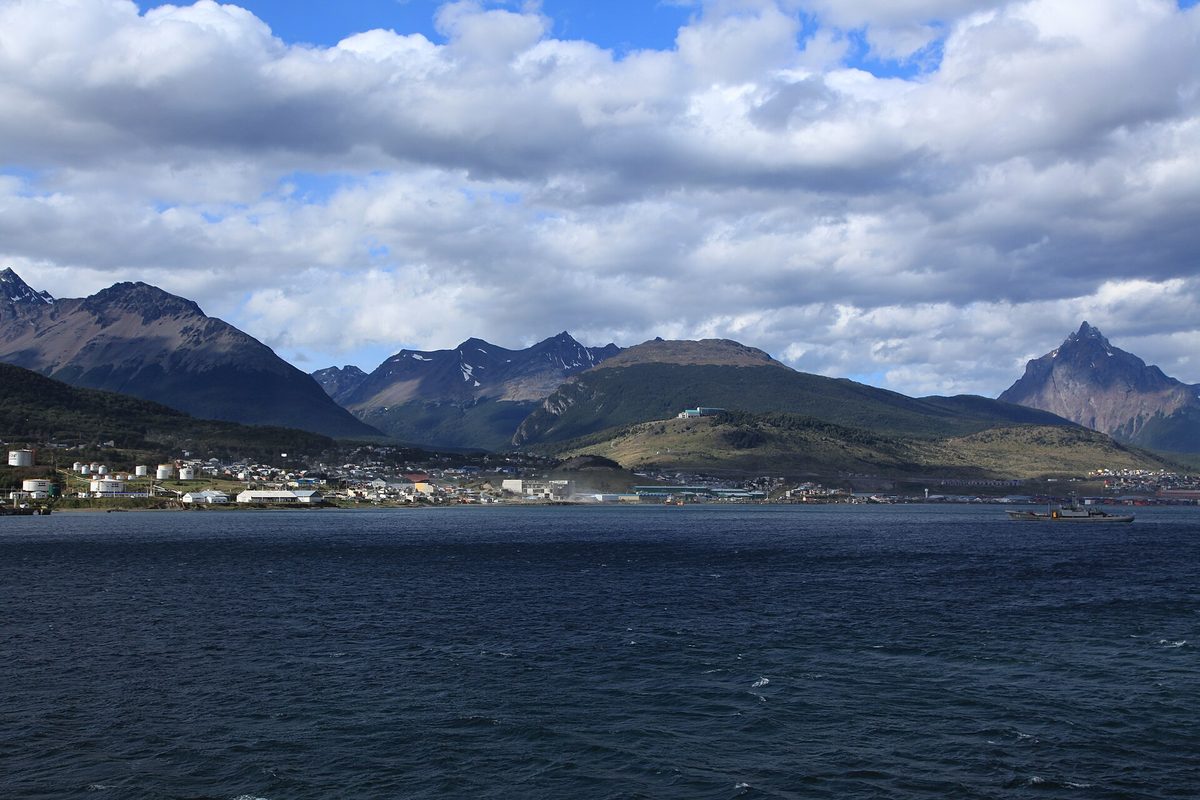
Ushuaia’s airport carries the rather grand name Aeropuerto Internacional Malvinas Argentinas, code USH, and despite the “international” label it is a compact, manageable place — you are not going to get lost in it. It sits on a small peninsula on the Beagle Channel, just a few kilometers from the city center, and the approach over the water with the Martial mountains as a backdrop is one of the more dramatic airport arrivals anywhere. The terminal handles the seasonal surge of Antarctica-bound passengers reasonably well, but it is small, so during peak embarkation days it can feel crowded with expedition groups and their substantial luggage.
Practically speaking, arrivals are straightforward: collect your bags, and you’re a short ride from town. There’s no sprawling transit system to navigate. What does catch people out is the weather — Ushuaia’s conditions are famously changeable, and flights can be delayed or occasionally diverted when the wind kicks up, which is yet another argument for arriving a day ahead of any ship departure rather than cutting it fine. Build the buffer. I’ll keep saying it because it’s the advice that saves trips.
From USH Airport into Town and to the Cruise Port
Getting from the airport into Ushuaia is mercifully simple, which is a relief after a long travel day. The airport sits only about 4 km from the city center, so a taxi or pre-arranged transfer takes well under fifteen minutes and is inexpensive by international standards. Taxis queue outside the terminal; many hotels arrange pickups; and if you’ve booked an Antarctic expedition, your operator very often includes a group transfer from the airport (or your hotel) directly to the ship on embarkation day. Check your cruise documents — this is frequently bundled in, and it removes one more thing to think about.
The cruise port itself is right in town, at the foot of the main commercial street, so even if you’re making your own way it’s a quick and cheap hop from anywhere central. That central location is a genuine gift: you can stay at a hotel a few blocks from the dock, walk down on embarkation morning if your bags are light, and not stress about logistics on the day it matters most. If you want a sense of how to fill the hours or days before you sail, our roundup of things to do in Ushuaia covers the Beagle Channel boat trips, Tierra del Fuego National Park, and the End of the World train.
The Overland Drive South: Ruta Nacional 3 Through Patagonia
Now for the adventurer’s route, the one that turns getting to Ushuaia into the trip itself. Argentina’s Ruta Nacional 3 is the great north–south artery down the Atlantic side of the country, running thousands of kilometers from Buenos Aires all the way to Ushuaia, where it finally dead-ends inside Tierra del Fuego National Park at what’s billed as the end of the Pan-American highway. Driving the whole thing is a serious undertaking — most people pick it up partway down, commonly starting from El Calafate or Río Gallegos and committing two to three days to the southern stretch. The landscape is vast, wind-scoured Patagonian steppe: enormous skies, guanacos by the roadside, sheep estancias, and long empty hours between fuel stops.
I’ll be honest about the trade-off. This is not a shortcut and it is not relaxing in the conventional sense — it’s a genuine expedition by road, with real distances, fierce crosswinds that buffet the car, and stretches where services are sparse. But for travelers who love a road trip and want to feel the scale of Patagonia in their bones rather than glimpse it from 35,000 feet, it’s unforgettable. The catch that surprises people is that you cannot drive from mainland Argentina to Ushuaia without dipping into Chile and crossing water, because Tierra del Fuego is an island. That means border formalities and a ferry, which I’ll cover next.
Crossing into Chile and the Strait of Magellan Ferry at Punta Delgada
Here’s the geographic wrinkle that defines the overland route: to reach Ushuaia by road from the Argentine mainland, you have to pass through Chilean territory and cross the Strait of Magellan, because there’s no all-Argentine land route onto the island of Tierra del Fuego. Heading south on RN3 from Río Gallegos, you cross into Chile at the Monte Aymond / Integración Austral border post, then continue toward the ferry crossing at Punta Delgada. This is the short, busy crossing — the ferry runs across the narrowest neck of the strait (the Primera Angostura) between Punta Delgada and Bahía Azul, and the boat ride itself takes only about 30 minutes.
The Punta Delgada ferries run frequently through the day — roughly every hour and a half from the morning, weather permitting — but the strait’s wind and currents can pause sailings, so it’s not something to leave to the last possible margin if you’re on a tight timeline. Once across, you’re on Tierra del Fuego, but still in Chile; you then drive across the island and cross back into Argentina (commonly at the San Sebastián post) before continuing down to Ushuaia. So a single overland trip can involve crossing the Argentina–Chile border twice. Carry your passport, vehicle papers, and rental cross-border authorization, and never bring fresh produce or meat across — agricultural controls at these posts are strict.
Buses and Shared Transport from Punta Arenas and Río Gallegos
If the romance of the overland route appeals but you don’t fancy driving it yourself — or crossing two international borders in a rental car — buses are a real, well-trodden option. From Punta Arenas in Chilean Patagonia (itself the #2 Antarctic gateway and the hub for fly-cruises), operators such as Bus-Sur run scheduled services down to Ushuaia. The journey takes roughly 11 to 12 hours and handles all the moving parts for you — the Strait of Magellan ferry crossing and both border posts are built into the route. Fares are modest, often in the rough US$40–70 band depending on operator and season. You’ll want patience and snacks; it’s a long day on the road, but a straightforward one.
From the Argentine side, Río Gallegos is the practical mainland staging point — it has an airport and is the last major town on RN3 before the Chilean crossings, so buses link it to Ushuaia as well, again via the ferry and borders. The bus option is popular with budget travelers and backpackers stitching together a wider Patagonia loop, and it pairs naturally with time in Chilean Patagonia. If you’re weighing the two main embarkation cities against each other, our comparisons of Punta Arenas as an Antarctic gateway and the broader landscape of Antarctica gateway cities lay out who should choose which.
Arriving by Cruise Ship
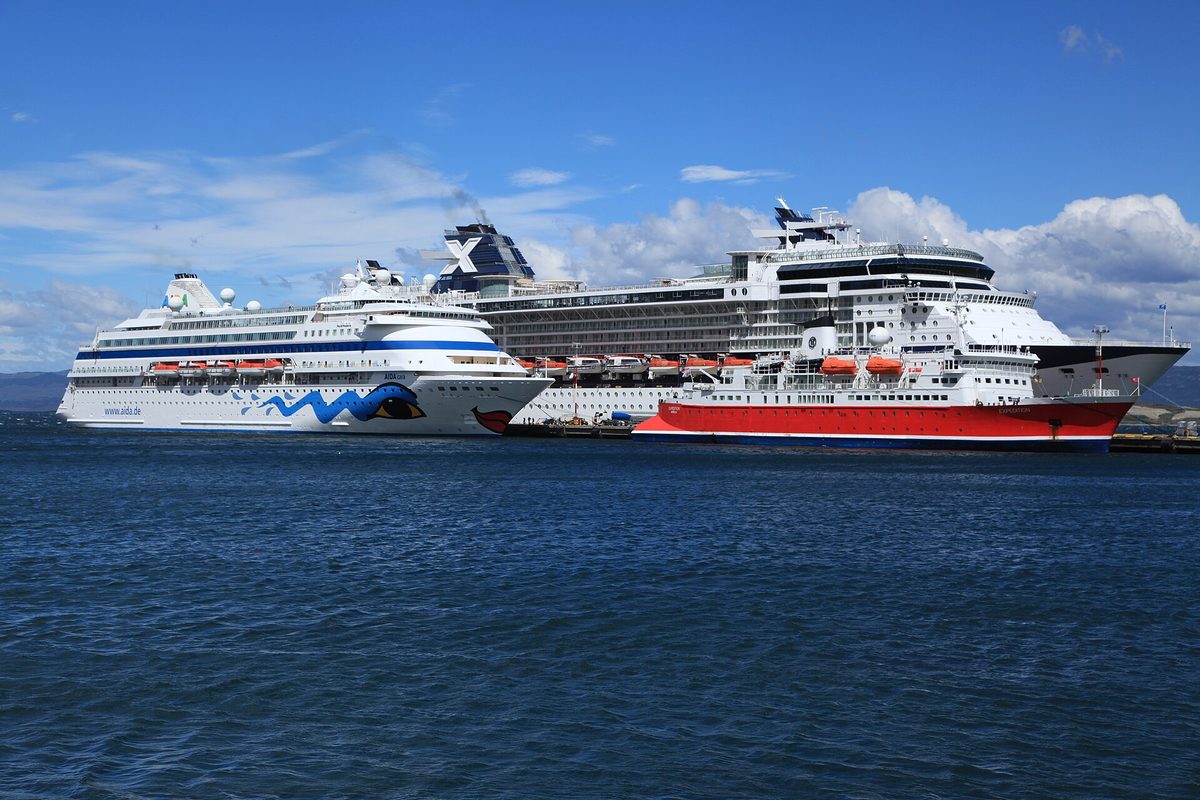
There’s one more way into Ushuaia that flips the usual script: arriving by sea. Ushuaia is a regular port of call on South American cruise itineraries — particularly the longer voyages that round Cape Horn, sail the Chilean fjords, or link Buenos Aires with Valparaíso or Santiago. If you’re on one of those, you may sail into Ushuaia rather than fly, stepping off onto the same dock that Antarctic expedition ships use. It’s a beautiful approach, threading the Beagle Channel with mountains on both sides, and for travelers already inclined toward a longer sea-based holiday it folds Ushuaia in without a separate flight.
That said, I’d offer a caution for Antarctica-specific travelers: don’t rely on a connecting cruise to deliver you to Ushuaia in time to board your expedition ship, because cruise schedules and Antarctic embarkation dates rarely line up cleanly, and ports can be skipped for weather. Arriving by ship is a lovely way to experience the region if the sea voyage is the point. If your goal is to catch a specific Antarctic departure, fly in and give yourself that buffer day. For the expedition side of the equation — the ships that actually go south — see our overview of Antarctica cruises.
Ways to Get to Ushuaia: A Time, Cost and Effort Comparison
Every route into Ushuaia trades time, money and effort differently, so here’s a side-by-side to help you choose. Treat the figures as season-dependent ballparks for the 2026/27 summer — fares swing with demand, and you should always check current schedules and prices before committing. The headline pattern is clear, though: flying buys you time at a reasonable price, while the overland options buy you scenery and adventure at the cost of days and stamina.
| Route to Ushuaia | Approx. time | Approx. cost (one way) | Effort / notes |
|---|---|---|---|
| Fly via Buenos Aires (AEP → USH) | ~3.5 hr flight (+ overnight in BA recommended) | ~US$70–250 domestic leg | Low effort; the standard route; mind the EZE→AEP airport transfer |
| Seasonal direct from El Calafate (FTE → USH) | ~1.25 hr flight | ~US$80–200 | Low effort; pairs with a Patagonia add-on; summer schedules only |
| Via Córdoba / Santiago connection | Half to full day with connection | Varies widely | Moderate; useful from specific origins; usually not a single through-flight |
| Overland self-drive down Ruta Nacional 3 | 2–3 days from El Calafate / Río Gallegos | Fuel + rental + ferry (~US$ varies) | High effort; two border crossings + Magellan ferry; epic scenery |
| Bus from Punta Arenas, Chile | ~11–12 hr | ~US$40–70 | Moderate; ferry and borders handled for you; long day |
| Bus from Río Gallegos, Argentina | ~10–12 hr | ~US$40–70 | Moderate; mainland staging point; via ferry + borders |
| Arrive by cruise ship | Part of a multi-day voyage | Bundled in cruise fare | Low personal effort; scenic; schedules rarely match Antarctic embarkation |
Read that table with your own priorities in mind. If you’re catching an Antarctic ship on a fixed date, the top two rows are almost certainly your answer. If Ushuaia is the climax of a longer South American adventure and the getting-there is half the fun, the overland and bus rows suddenly look a lot more attractive. There’s no single right choice — only the right choice for your trip.
Quick Checklist: Choosing Your Route
To distill all of the above into something you can scan, here’s how I’d think through the decision in order. Run down this list and your route usually picks itself.
- Boarding an Antarctic expedition on a set date? Fly, and arrive at least a day early — non-negotiable.
- Coming internationally? Connect through Buenos Aires; plan for the two-airport transfer or an overnight.
- Already exploring Patagonia? Look for the seasonal El Calafate–Ushuaia direct flight.
- On a budget and rich in time? Take the bus from Punta Arenas or Río Gallegos.
- Want the journey to be the adventure? Drive Ruta Nacional 3 — but budget for two border crossings and the ferry.
- On a wider South American cruise? You may arrive by ship, but don’t rely on it for a fixed Antarctic departure.
- Worried about weather delays? Build a buffer day into whatever route you choose.
How Early to Arrive Before an Antarctic Embarkation
If you take one thing from this entire guide, make it this: arrive in Ushuaia at least one full day before your Antarctic ship departs. I know it’s tempting to fly in on embarkation morning and save a hotel night — I understand the math — but it’s a false economy that puts the whole, expensive trip at risk. Flights to Ushuaia get delayed and occasionally cancelled by the region’s volatile weather; luggage gets misrouted; connections through Buenos Aires slip. None of those problems is fatal if you have a buffer day, and all of them can mean watching your ship sail without you if you don’t. Expedition cruises do not wait, and there’s no catching up to a vessel headed across the Drake Passage.
Most experienced polar travelers — and many operators in their fine print — recommend arriving a day or even two ahead. That buffer does double duty: it absorbs travel disruptions and it lets you acclimatize, sort out any last-minute gear, and explore a genuinely interesting town instead of sprinting from plane to gangway frazzled. It also gives you margin to handle the unexpected, like a delayed bag arriving the next morning. For the wider pre-trip groundwork — timing, gear, health, money — our Antarctica travel tips are worth a read before you go, alongside the practicalities in our what to pack for Antarctica guide.
Why Ushuaia Is the Gateway in the First Place
It’s worth understanding why this remote town at the bottom of the world became the launch pad for Antarctic tourism, because it explains a lot about the logistics. Ushuaia sits closer to the Antarctic Peninsula than any other substantial city — the crossing from here to the South Shetland Islands is the shortest practical route to the most-visited part of the continent, roughly two days across the Drake Passage each way. That proximity, combined with a deep, sheltered harbor on the Beagle Channel and decades of built-up expedition infrastructure, is why something like 90% of Antarctic cruises depart from Ushuaia rather than anywhere else.
The result is a town that punches far above its size for travelers. The waterfront is lined with expedition vessels in season, dive shops and gear stores cater to polar-bound passengers, and the whole place hums with that pre-departure energy. For the deeper relationship between this town and the continent — what sailing from here is actually like, and why it earned the role — see our companion piece on Ushuaia and Antarctica. Understanding the “why” makes the “how” feel less like a chore and more like the first chapter of the adventure.
Budgeting the Journey to Ushuaia
The cost of reaching Ushuaia is a meaningful slice of any Antarctic trip budget, and it varies a lot by route and timing. The domestic flight from Buenos Aires typically runs somewhere in the rough US$70–250 one-way band depending on how far ahead you book and whether you fly the budget carriers or Aerolíneas Argentinas — prices climb sharply in peak Antarctic season, so booking early genuinely pays. Add a Buenos Aires hotel night for the recommended overnight, and the international airfare to reach Argentina in the first place, and you can see why the gateway leg deserves its own line in your spreadsheet rather than being treated as an afterthought.
The overland and bus routes shift the equation: bus tickets are cheap, often US$40–70, but you’ll spend on accommodation and meals along the multi-day journey, and a self-drive adds rental, fuel and ferry costs across vast distances. None of it is trivial, and it all sits on top of the expedition fare itself. For the full financial picture of an Antarctic trip — where the gateway travel fits among cruise costs, gear, insurance and extras — our breakdown of Antarctica trip cost puts the numbers in context so nothing blindsides you.
Timing Your Trip and the Antarctic Season
When you go shapes how you get there, because the routes into Ushuaia flex with the seasons. The Antarctic travel window runs roughly November through March, the southern summer, and that’s when flight frequency to Ushuaia peaks, seasonal direct services from El Calafate and elsewhere come alive, and the town fills with expedition passengers. Book in that window and you’ll have the most options — but also the most competition for seats, so the early-booking discipline matters more than ever. Outside the season, schedules thin out considerably, and the overland routes face shorter daylight and harsher weather.
The shoulder months at either end of the season have their own character for the journey down — quieter flights, sometimes better fares, and a less frantic town — and they line up with distinct wildlife and ice conditions on the continent itself. Deciding exactly when to go is a trip-defining choice, and it interacts with everything from pricing to what you’ll see; our guide to the best time to visit Antarctica walks through the trade-offs month by month so you can align your gateway logistics with the experience you’re after.
Frequently Asked Questions
What is the easiest way to get to Ushuaia?
The easiest way is to fly, connecting through Buenos Aires. You arrive internationally at Ezeiza (EZE), then take a domestic flight — usually from Aeroparque (AEP) — south to Ushuaia (USH) in about three and a half hours. It’s faster, more reliable and less complicated than any overland option, which is why the overwhelming majority of Antarctica-bound travelers choose it.
Which airport do I fly into for Ushuaia?
You fly into Ushuaia’s Aeropuerto Internacional Malvinas Argentinas, airport code USH. It sits on the Beagle Channel only about 4 km from the city center, so getting into town takes well under fifteen minutes by taxi or transfer. Despite the “international” name, it’s a compact terminal, though it gets busy on peak Antarctic embarkation days.
Do I need to change airports in Buenos Aires?
Usually, yes. International flights land at Ezeiza (EZE), while most domestic flights to Ushuaia leave from Aeroparque (AEP) in the city — about a 45-to-75-minute drive apart. A few Ushuaia flights do operate from EZE directly, so check schedules. If you must connect same-day, allow at least four to five hours; better still, overnight in Buenos Aires.
How long does it take to fly from Buenos Aires to Ushuaia?
The flight itself takes around three and a half hours — roughly 3 hours 40 minutes on average for the direct service. That’s covering close to 3,000 km between the Argentine capital and Tierra del Fuego. Add the time for your airport transfer in Buenos Aires and any recommended overnight, and budget the better part of a day for the whole connection.
Can you drive to Ushuaia?
Yes, via Argentina’s Ruta Nacional 3, but it’s a major undertaking. Because Tierra del Fuego is an island, the route from the mainland passes through Chile and crosses the Strait of Magellan by ferry at Punta Delgada, with two international border crossings involved. Most people drive the southern stretch from El Calafate or Río Gallegos over two to three days. The scenery is spectacular; the effort is real.
How do I get from Ushuaia airport to the cruise port?
It’s quick and easy. The airport is only about 4 km from the city center, and the cruise port sits right in town at the foot of the main street. A taxi or transfer takes minutes and costs little. Many Antarctic operators include a group transfer from the airport or your hotel straight to the ship on embarkation day, so check your cruise documents.
How early should I arrive in Ushuaia before an Antarctica cruise?
At least one full day before your ship departs, and ideally two. Flights to Ushuaia can be delayed by the region’s changeable weather, and luggage or connections can go wrong. A buffer day absorbs those risks, lets you acclimatize and sort gear, and means a delay doesn’t cost you the whole expedition. Ships don’t wait, so don’t fly in on embarkation morning.
Can I get to Ushuaia by bus from Chile?
Yes. Buses run from Punta Arenas in Chilean Patagonia to Ushuaia, taking roughly 11 to 12 hours, with the Strait of Magellan ferry and both border crossings built into the route. Operators such as Bus-Sur run the service several times a week, with fares typically in the US$40–70 range. It’s a long but straightforward day, popular with budget and overland travelers.
Is there a direct flight from El Calafate to Ushuaia?
During the southern summer season, yes — there are seasonal direct flights between El Calafate (FTE) and Ushuaia, usually operated by Aerolíneas Argentinas, taking a little over an hour. It’s a great way to combine classic Patagonian sights like the Perito Moreno Glacier with your Antarctic embarkation without backtracking to Buenos Aires. Schedules are seasonal, so confirm current availability when you book.
How far in advance should I book flights to Ushuaia?
As early as you reasonably can, especially for travel in the November–March Antarctic season. Flights to Ushuaia sell out and prices rise as departure approaches during peak months, since the town fills with expedition passengers. Booking your domestic leg as soon as your cruise dates are confirmed — months ahead — gives you the best fares and the security of a confirmed seat with a buffer day.
Final Thoughts
Getting to Ushuaia looks daunting on a map and turns out to be very manageable in practice. For the vast majority of travelers, the answer is simple: fly via Buenos Aires, mind the two-airport transfer or break the journey with an overnight, and arrive a day before your ship sails. The alternatives — a seasonal hop from El Calafate, the epic Ruta Nacional 3 drive with its ferry and border crossings, a long bus from Punta Arenas, or even arriving by cruise — are all genuinely on the table, and the right one depends entirely on whether you’re optimizing for efficiency or for the adventure of the journey itself.
Whatever route you choose, give yourself margin. The single best decision you can make is to build in that buffer day at the bottom of the world, because the one thing you cannot recover is a missed Antarctic departure. Sort the gateway logistics calmly and well in advance, and you free yourself to focus on the extraordinary thing waiting beyond the Beagle Channel. When you’re ready to plan the leg that comes after this one, our guide to how to get to Antarctica picks up exactly where this one leaves off — at the dock in Ushuaia, with the Drake Passage ahead.