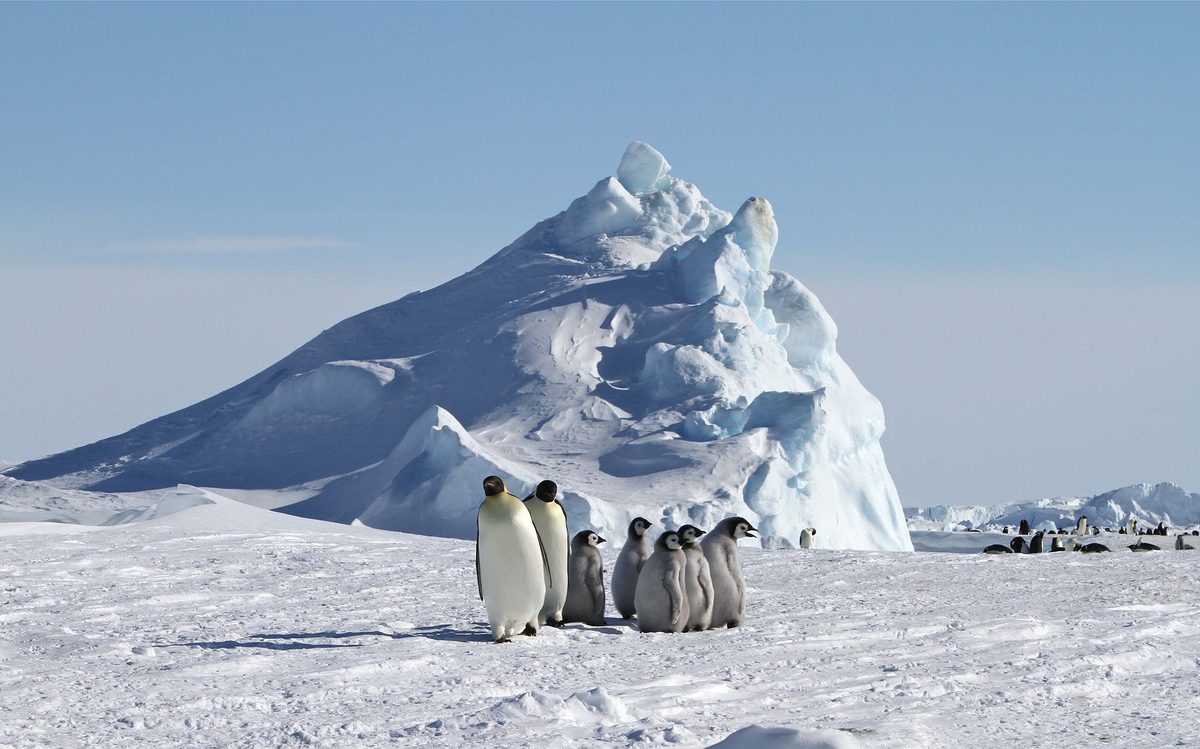
You go to Antarctica for the ice and you come home talking about the animals. That’s the pattern, every time. The scenery floors you on day one, but it’s the wildlife — a gentoo chick tugging your bootlace, a leopard seal eyeballing your Zodiac, a humpback exhaling close enough to mist your camera — that rewires something in you. The reason is simple and a little profound: down here, nothing on land has ever hunted these creatures, so they have no instinct to fear you.
Antarctica wildlife is the headline act of any expedition, and it delivers in sheer abundance: millions of penguins across several species, the greatest whales on Earth, six kinds of seal, and vast clouds of seabirds — an entire ecosystem built on one small, astonishing keystone, the Antarctic krill. This guide is the complete field companion to all of it: what you’ll see, where, when, and how to watch it responsibly.
I’ve organized it by animal group, then by where and when to find each, with the practical viewing rules at the end. Where a species or topic has its own deep dive, I’ll point you to it. Whether you’re choosing a voyage around the wildlife or just dreaming, this is everything that moves, swims, and squawks at the bottom of the world.
Last updated: June 2026 · Written and fact-checked by the AntarcticaTourism.org editorial team, cross-referencing IAATO and national-program wildlife data.
Antarctica wildlife at a glance
Four great groups account for nearly everything you’ll encounter. Here’s the overview before we go species by species.
| Group | Headline species | Where & when you’ll see them |
|---|---|---|
| Penguins | Gentoo, chinstrap, Adélie, king, macaroni, emperor | Colonies everywhere; fluffy chicks Dec–Jan |
| Whales | Humpback, minke, orca, fin, blue | Peninsula channels; numbers peak Feb–Mar |
| Seals | Crabeater, Weddell, leopard, fur, elephant | Hauled out on ice and beaches all season |
| Seabirds | Albatrosses, petrels, skuas, terns, cormorants | At sea (especially the Drake) and on islands |
And one famous absence to clear up immediately: there are no polar bears in Antarctica — they live only in the Arctic, at the opposite end of the planet. More on that myth below. For the experiences built around all this wildlife, see our guide to Antarctica cruises.
Why Antarctica’s wildlife is unlike anywhere else
Three things make watching animals here a fundamentally different experience from a safari or a snorkel anywhere else on Earth.
They aren’t afraid of you. There are no land predators in Antarctica — no foxes, no bears, no big cats — so the wildlife never evolved a fear of anything approaching on foot. The rules require you to keep your distance (at least five meters), but no one told the penguins, and a curious chick will often close that gap itself while you sit still in the snow. It is the most intimate wildlife encounter most travelers will ever have.
It’s built on krill. Almost every animal here depends, directly or indirectly, on Antarctic krill — tiny shrimp-like crustaceans that swarm in numbers almost beyond comprehension. Whales, seals, penguins, and seabirds are all, ultimately, eating krill or eating something that ate krill. Understand the krill and you understand the whole continent.
It’s about abundance, not luck. Unlike a safari where you scan the horizon hoping for a glimpse, Antarctic wildlife arrives in overwhelming numbers — colonies of hundreds of thousands, beaches groaning with seals. You don’t hunt for it; you stand in the middle of it.
Penguins of Antarctica
Penguins are why most people come, and the Antarctic region hosts several species in staggering numbers. You’ll likely meet three or four on a standard Peninsula trip, with more on the sub-Antarctic islands. Our dedicated Antarctica penguins guide covers each in depth; here’s the field rundown.
Gentoo penguin
The one you’ll see most. Gentoos are the third-largest penguin, easily spotted by their bright orange bill and the white bonnet-patch over the head. They’re the fastest underwater swimmers of any penguin — clocking around 36 km/h — and dive to 170 meters chasing krill and fish. Their Peninsula colonies are thriving and even expanding southward, and they build comical pebble nests that they’ll defend (and steal from each other) with great drama.

Adélie penguin
The classic “tuxedo” penguin, with a white eye-ring and a no-nonsense attitude. Adélies are one of only two true Antarctic penguins (alongside the emperor), breeding right on the continent in colonies that can number hundreds of thousands. They’re feisty, fast, and tied tightly to the sea ice — which makes them a closely watched barometer of a changing climate.
Chinstrap penguin
Named for the thin black line under the chin that makes them look like they’re wearing a helmet. Chinstraps are loud, bold, and enormously numerous — the colonies on Deception Island and Half Moon Island run into the hundreds of thousands, and the noise and smell hit you long before you land. They favor steep, rocky slopes and commute up improbable inclines to their nests.
King penguin
The showstopper of the sub-Antarctic, and the second-largest penguin after the emperor. You won’t see kings on the Peninsula — they live on South Georgia and the Falklands — but where they gather, they gather in the hundreds of thousands, a shimmering carpet of orange-flushed necks. Their unusually long, 14-month breeding cycle means colonies always hold both elegant adults and shaggy brown chicks, the famous “oakum boys.”

Macaroni penguin
Punk-rock penguins with flamboyant orange-yellow head crests, found mainly on South Georgia and the Scotia Arc islands. Despite being one of the most numerous penguins on Earth, they’re less commonly encountered on standard itineraries, which makes a sighting feel like a small prize.
Emperor penguin
The giant, the legend, and the hardest to reach. Emperors stand around 45 inches (115 cm) tall and are the only animal that breeds during the brutal Antarctic winter, the males incubating a single egg on their feet through months of darkness and −60°C wind chill. Because their colonies sit on sea ice far from the Peninsula, seeing them takes a specialist Weddell Sea or Ross Sea voyage, often with helicopters. It’s a pilgrimage, and we cover it fully in our emperor penguins guide.
Penguin behaviors you’ll actually witness
Half the joy of a penguin colony is the soap opera playing out in it. A few behaviors you’re almost guaranteed to see: pebble theft, as birds pilfer stones from a neighbor’s nest the instant its owner turns away; the ecstatic display, where a bird throws its head back and brays to the sky to claim territory and attract a mate; and creches, the penguin daycare where chicks huddle together for warmth and safety while parents are at sea. Down at the water’s edge you’ll watch them porpoise — leaping clear of the surface like tiny dolphins to breathe at speed — and toboggan, sliding along on their bellies across the snow. Later in the season comes the catastrophic molt, when a penguin sheds all its feathers at once and stands miserably grounded for weeks, unable to swim until its new coat grows in. And everywhere there are penguin highways, the well-worn trails between colony and sea that you must never block. Spend an hour sitting quietly and the colony stops being a spectacle and becomes a community.
Whales of Antarctica
If penguins own the land, whales own the water, and Antarctica’s krill-rich seas draw some of the greatest gatherings of them on Earth through the summer. Numbers build as the season warms, peaking in February and March — the best time to see whales, as we cover in our whale-watching and Antarctica whales guides.
Humpback whale
The crowd favorite, and the one most likely to give you a heart-stopping encounter. Humpbacks feed in the Peninsula channels all summer, often right beside the Zodiacs, and they’re endlessly theatrical — breaching, tail-slapping, and cooperatively “bubble-net” feeding, where they blow rings of bubbles to corral krill. Each has a uniquely patterned tail fluke, and many expeditions log sightings for real research databases.

Antarctic minke whale
The smallest of the baleen whales down here, and one of the most curious — minkes will sometimes nose right up to a stationary ship or kayak to investigate. They’re tied closely to the sea ice, slipping through leads and cracks that larger whales avoid.
Orca (killer whale)
The ocean’s apex predator, and a thrilling, less-guaranteed sighting. Antarctic waters host several distinct orca “ecotypes” that specialize in different prey — some hunt seals (famously by creating waves to wash them off ice floes), others fish, others penguins or even other whales. They travel in tight family pods, and watching one hunt is among the most dramatic things you can witness here. Our orcas in Antarctica guide goes deeper.

The giants: fin and blue whales
The fin whale — the second-largest animal that has ever lived — is increasingly seen in large feeding aggregations as the population recovers from whaling, a genuine conservation good-news story. Rarer still is the blue whale, the largest animal in the history of the planet at up to 30 meters and 150–200 tons. Spotting one is a once-in-a-lifetime stroke of luck, and their slow recovery in these waters is quietly miraculous.
Sperm and southern right whales
Sperm whales — the great toothed, deep-diving hunters of squid — range into the Southern Ocean, mostly mature males. Southern right whales, hunted to the brink in centuries past, also turn up occasionally around the sub-Antarctic islands. Neither is a reliable sighting, but both are possible.
Seals of Antarctica
Six seal species live in the Antarctic, and you’ll likely see several hauled out on ice floes and beaches, often close enough to hear them breathe. Our Antarctica seals guide profiles them all; the highlights:
Crabeater seal
The most abundant large wild mammal on Earth after humans — an estimated 15 million of them — and, in a lovely misnomer, they don’t eat crabs at all. Their intricately lobed, interlocking teeth are a built-in sieve for filtering krill from the water. You’ll spot them sprawled on pack ice, often scarred from narrow escapes from leopard seals and orcas.

Weddell seal
The southernmost-breeding mammal on the planet, and one of the most endearing — plump, doe-eyed, and supremely relaxed. Weddells live further south than any other seal, maintaining breathing holes in the sea ice by grinding it open with their teeth, and they’re famous for the eerie, electronic-sounding calls that carry up through the ice.
Leopard seal
The Peninsula’s apex predator and the one that quickens every guide’s pulse. A big female can reach 3.5 meters and 500 kilograms, with a sinuous, almost reptilian head and a genuinely formidable set of teeth. Leopard seals patrol the edges of penguin colonies, ambushing birds as they enter and leave the water, and they’ve been known to investigate Zodiacs with unnerving curiosity. Compelling and a little chilling — full profile in our leopard seal guide.

Antarctic fur seal
Unlike the others, fur seals are eared seals — they can rotate their hind flippers and gallop across a beach with surprising speed, so guides give territorial males a wide berth. South Georgia hosts millions of them, a population that has roared back from near-extermination during the sealing era. Pups arrive in December, turning whole beaches into squabbling nurseries.
Southern elephant seal
The largest seal on Earth by an enormous margin: a dominant “beachmaster” male can top four tons and rears up to bellow and battle rivals through an inflatable nose. South Georgia’s beaches are the great arena for this, with vast harems and earth-shaking fights that are among the most primal spectacles in nature.
Ross seal
The rarest and least-seen of the six, a stout, large-eyed seal of the dense pack ice that few travelers ever encounter. Spotting one is a genuine coup that will have your expedition team grinning.
Seabirds of Antarctica
Birders consider the Southern Ocean one of the planet’s great seabird theatres, and even non-birders fall for the albatrosses that trail the ship across the Drake Passage. Our Antarctic birds guide is the full checklist; the ones that’ll stop you in your tracks:
Albatrosses are the giants of the air. The wandering albatross has the longest wingspan of any living bird — up to 3.5 meters — and can glide for hours without a single flap, shadowing your ship across the open ocean. Watching one bank and soar in a gale is reason enough to brave the Drake.

Petrels range from the dainty to the brutish: delicate snow petrels, pure white against the ice; cape petrels in their checkerboard plumage; and the giant petrels, hulking scavengers nicknamed “stinkers” for their habits. Skuas are the colony bullies, powerful gull-like pirates that prey on eggs and chicks and harry other birds into dropping their catch. Antarctic terns hover and dive in the shallows, while imperial (blue-eyed) shags nest in tidy colonies on the rocks. And the snowy sheathbill — the only land bird in Antarctica without webbed feet — scuttles around penguin colonies cleaning up whatever it can scavenge, the continent’s unlikely janitor.
Krill: the tiny engine of the whole ecosystem
None of the spectacle above would exist without a two-inch crustacean. Antarctic krill swarm in densities so vast that some aggregations are visible from space, and their total biomass is among the largest of any animal species on the planet — on the order of hundreds of millions of tonnes. Whales, seals, penguins, fish, and seabirds all depend on them, directly or one step removed. They even glow, with bioluminescent organs that light the dark water.
That total dependence is also Antarctica’s great vulnerability: as the ocean warms and sea ice (where krill feed and breed) retreats, and as commercial krill fishing grows, a wobble at this one link could ripple through every animal in this guide. We dig into their outsized importance in our Antarctic krill guide.
Beneath the surface: fish and other ocean life
The animals above the waterline get the glory, but the cold sea below is just as strange. Antarctic icefish are biological marvels — they produce antifreeze glycoproteins that keep their blood liquid below freezing, and some species have clear, hemoglobin-free blood, the only vertebrates on Earth that do. The Antarctic and Patagonian toothfish (sold as “Chilean sea bass”) are the big predatory fish of these waters, and the target of a closely managed fishery. On the seafloor, the frigid, oxygen-rich water produces a phenomenon called polar gigantism: sea spiders, isopods, and other invertebrates grow to startling sizes, alongside slow-growing sponges that may be among the oldest animals alive. It’s a hidden world most travelers never glimpse, but it’s the foundation the whole visible spectacle stands on — right alongside the krill that feed nearly everything.
Are there polar bears in Antarctica?
No — and it’s the single most common misconception about the place, so let’s settle it for good. Polar bears live only in the Arctic, at the opposite end of the Earth. Penguins live almost entirely in the Southern Hemisphere. The two never meet in the wild, and any image of a polar bear stalking a penguin is pure fantasy. Antarctica has no native land mammals at all — no bears, foxes, or wolves — which is precisely why its penguins and seals are so fearless. We bust the myth fully (and explain why people get it confused) in are there polar bears in Antarctica?
The leopard seal: the ice edge’s apex predator
Of all the animals you might meet down south, none commands quite the wary respect of the leopard seal. Named for the dark rosettes scattered across its silvery coat, it is the second-largest seal in Antarctica and its undisputed top predator after the orca, growing up to 3.5 metres long and weighing as much as 500 kilograms. Unlike the placid, krill-sieving crabeater seal, the leopard seal is a hunter of warm-blooded prey — the only seal that routinely eats other seals, along with penguins, fish, and squid.

Watching one hunt is unforgettable and a little chilling. A leopard seal will patrol the water at the edge of an ice floe or a penguin colony, lying almost completely submerged, waiting for a penguin to enter the sea. When it strikes, it seizes the bird by the feet and thrashes it against the surface. Yet leopard seals are also intensely curious about humans; there are well-documented cases of them approaching divers and Zodiacs with apparent inquisitiveness rather than aggression. A leopard seal hauled out on an ice floe, yawning to reveal that long reptilian jaw, is one of the great photographic prizes of any voyage — observed, of course, from the respectful distance our travel guidelines insist on.
Where to see wildlife in Antarctica
Different regions deliver different casts of characters, so your itinerary shapes your wildlife list. Coordinate this with our guides to where to see wildlife and the regions of Antarctica.
The Antarctic Peninsula is the default and it’s superb: gentoo, chinstrap, and Adélie penguins; humpback and minke whales in the channels; and crabeater, Weddell, and leopard seals on the ice. For a first trip, the Peninsula alone delivers an overwhelming wildlife experience.
South Georgia is the undisputed wildlife capital of the region — if the Peninsula is wonderful, South Georgia is jaw-dropping. King penguin colonies in the hundreds of thousands, beaches buried under elephant and fur seals, and wandering albatrosses nesting on the slopes. It costs more days at sea to reach, but no one who goes regrets it.
The Falkland Islands add their own mix: rockhopper penguins, black-browed albatross colonies, and gentoos against a green, windswept landscape. The Weddell Sea is the realm of the emperor penguin and the densest ice. And the Ross Sea, on the far side, offers emperors, huge Adélie rookeries, and a wild remoteness for seasoned travelers.
Antarctic wildlife by region: a quick reference
To make the regional picture scannable, here’s the headline wildlife of each major area side by side — useful when you’re matching a voyage to the animals you most want to see.
| Region | Signature penguins | Marine mammals | Standout birds |
|---|---|---|---|
| Antarctic Peninsula | Gentoo, chinstrap, Adélie | Humpback & minke whales; leopard, crabeater, Weddell seals | Petrels, skuas, blue-eyed shags |
| South Georgia | King, macaroni, gentoo | Elephant & fur seals | Wandering albatross |
| Falkland Islands | Rockhopper, Magellanic, gentoo, king | Sea lions, dolphins | Black-browed albatross |
| Weddell Sea | Emperor, Adélie | Crabeater & Weddell seals, orcas | Snow petrels |
| Ross Sea | Emperor, Adélie (huge rookeries) | Weddell seals, orcas, minke whales | Skuas, petrels |
When to see Antarctic wildlife: a quick calendar
Timing changes what the animals are doing, even if the cast stays similar. The short version, with the full breakdown in our best time to visit Antarctica guide:
- November — penguins courting and building nests; first eggs; fur and elephant seals pupping on South Georgia.
- December–January — penguin eggs hatch and colonies fill with chicks; the best window for seeing penguin chicks; whales begin arriving.
- February–March — peak whale numbers and feeding frenzies; chicks fledge into gangly juveniles; the best balance of marine-mammal action.
In other words, the start of the season is about courtship, the middle about chicks, and the end about whales — there’s no bad time, just different highlights.
Wildlife encounters that will surprise you
Here’s the thing nobody quite prepares you for: in Antarctica, the wildlife often comes to you. Because these animals evolved with no land predators — no foxes, no bears, no humans for almost all of their history — they simply don’t regard people as a threat. A gentoo penguin may waddle right up to your boots and inspect your tripod; a curious Weddell seal pup may flop over for a better look; humpback whales routinely surface alongside Zodiacs and linger, sometimes spy-hopping to eye the strange visitors. You are required to keep your distance from them, but no one has told them to keep their distance from you.

The seabirds offer a different kind of spectacle. Out on the open water, the wandering albatross — possessor of the largest wingspan of any living bird, exceeding three metres — will shadow the ship for hours, banking and gliding on locked wings without a single flap, riding the wind in a masterclass of efficiency that has fascinated sailors for centuries. After a while you stop photographing and simply watch. These moments — the fearless penguin, the patrolling albatross, the whale that chooses to stay — are what people mean when they say Antarctica changed them. They’re also why so many travelers go on to care about the trip that suits them being a responsible one.
Wildlife viewing rules and etiquette
Getting close to fearless animals comes with real responsibility, and the rules exist to keep this place wild. Every IAATO operator briefs you thoroughly, but here are the essentials — the full version is in our Antarctica wildlife rules guide.
- Keep your distance — at least 5 meters from most wildlife, and more from fur seals and nesting birds. If an animal changes its behavior because of you, you’re too close.
- Let them approach you. If a curious penguin closes the gap while you stay still and low, that’s allowed and magical — just don’t reach out.
- Never touch, feed, or block their path to the water. Give penguin “highways” a wide berth.
- Biosecurity is sacred. You’ll scrub and disinfect boots before and after every landing and carry no food ashore, to avoid introducing seeds, microbes, or disease.
- Stay calm and quiet, move slowly, and keep groups small — remember only 100 visitors are allowed ashore at once.
- Drones are banned for tourist use over wildlife. Leave them at home.
Photographing Antarctic wildlife
You’ll take more photos here than anywhere you’ve ever been, so a little preparation pays off. Get low to shoot penguins at eye level; use a fast shutter speed to freeze breaching whales and porpoising penguins; and pack a telephoto for the action plus a wide lens for colonies in their vast landscapes. Two hard-won tips: the cold murders camera batteries, so carry spares warm in an inside pocket, and protect your gear from salt spray in the Zodiacs with a dry bag. Because the 5-meter rule keeps you back, a zoom lens is your friend. Our things to do guide covers dedicated photography programs, and the packing guide covers gear.
The complete Antarctic animal checklist
Pulling it together, here’s the realistic checklist of what lives in and around Antarctica — the fuller version, with rarities, is in our animals of Antarctica guide.
- Penguins (6): gentoo, chinstrap, Adélie, king, macaroni, emperor.
- Whales (6+): humpback, Antarctic minke, orca, fin, blue, sperm (plus occasional southern right).
- Seals (6): crabeater, Weddell, leopard, Antarctic fur, southern elephant, Ross.
- Seabirds (many): wandering and other albatrosses, snow/cape/giant petrels, skuas, Antarctic terns, blue-eyed shags, snowy sheathbills.
- The foundation: Antarctic krill, plus fish (notably icefish with antifreeze blood) and seafloor invertebrates.
- Land animals: essentially none — no native land mammals, reptiles, or amphibians, and famously no polar bears.
The slow recovery of the great whales
There is a darker chapter beneath the joy of whale-watching here, and it’s worth knowing because it makes today’s sightings so moving. A century ago, the Southern Ocean was the epicenter of industrial whaling; hundreds of thousands of humpback, fin, blue, and other whales were slaughtered from shore stations and factory ships, and several species were driven to the brink. The rusting try-pots and whale bones you can still see at places like South Georgia are sobering monuments to that era.

The hopeful news is that, decades after commercial whaling was largely halted, the whales are coming back. Humpback numbers in particular have rebounded strongly, which is exactly why modern visitors see them so reliably feeding on the summer krill swarms — lunging mouths agape, baleen straining tonnes of water, occasionally cooperating in the spectacular spiral of bubble-net feeding. Each raised fluke is, in a real sense, a comeback story. It’s a reminder that the protections enshrined in the Antarctic Treaty system and international agreements actually work, and that the wildlife you’ll watch is both spectacularly abundant and quietly fragile, as our facts and history guide explores.
Conservation: the wildlife’s fragile future
Antarctica’s animals carry scars from our past and face pressure in their future. Whaling and sealing nearly wiped out several species in past centuries; the slow recovery of fur seals, elephant seals, and even the great whales is one of conservation’s quiet triumphs. But new threats have replaced the old. The Antarctic Peninsula is among the fastest-warming places on the planet, and the sea ice that krill depend on is shrinking; commercial krill fishing adds pressure to the base of the whole food web; and avian flu has begun reaching southern colonies. The continent’s wildlife is protected by the Antarctic Treaty System and managed by CCAMLR, with a growing push for marine protected areas. Responsible tourism plays a genuine part too — well-run expeditions fund research, enforce strict biosecurity, and turn travelers into lifelong advocates. Seeing it for yourself, it turns out, is one of the better reasons to want to protect it.
Citizen science: how your sightings help
One of the loveliest developments in modern expedition travel is that your wildlife encounters can do double duty as real scientific data. Many IAATO operators now build citizen-science programs into their voyages, and the barrier to taking part is wonderfully low: you just pay attention and submit what you see. Photograph a humpback’s tail fluke — as individual as a fingerprint — and upload it to a global matching database, and you may help researchers track that exact animal’s migrations across entire oceans.
Other programs have guests collecting seawater samples to monitor phytoplankton, logging cloud cover for satellite calibration, or recording seabird and seal counts that feed long-term population studies. None of it requires expertise, and all of it adds meaning to the trip: you return home not just with photographs but with a tiny, genuine contribution to understanding a place that science still struggles to reach. If that appeals, ask whether a prospective operator runs these programs — the best ones treat every passenger as an extra pair of eyes for science, a theme we return to in our guide to operators.
Telling the penguin species apart at a glance
On your first landing, the penguins are simply ‘penguins’ — but within a day you’ll be confidently calling them by species, and it’s easier than it looks once you know the tells. On the Antarctic Peninsula you’ll mostly meet three. The gentoo is the easy one: look for the bright orange-red bill and the distinctive white patch above each eye, like a pair of headphones. They’re also the fastest swimmers and tend to be the most relaxed around visitors.
The chinstrap is named for the thin black line running under its chin like a helmet strap — once you see it, you can’t unsee it — and they’re often the noisiest, most pugnacious of the bunch. The Adélie is the classic ‘tuxedo’ penguin with a plain black head and a white ring around the eye, giving it a slightly startled expression. Further south or on specialist trips you may meet the towering emperor, unmistakable for its size and the golden-orange wash on its neck, and on sub-Antarctic islands the king penguin, similar but slightly smaller with more vivid orange ear patches. Learn these five and you’ll read any colony like a local, a skill our wildlife coverage helps you build.
The other seals: crabeaters, Weddells and elephants
The leopard seal gets the headlines, but it shares the ice with several other species worth knowing. The most numerous, surprisingly, is the crabeater seal — despite the name, it eats almost entirely krill, sieving it through elaborately cusped teeth, and it may be the most abundant large mammal on Earth after humans. You’ll spot them hauled out on ice floes in their millions across the season, often bearing the pale scars of leopard-seal encounters survived in youth.
The Weddell seal is the gentle giant of the fast ice, famous for its placid expression and its extraordinary diving ability — it can plunge to great depths and stay under for over an hour, gnawing breathing holes in the ice with its teeth to survive the winter further south than any other mammal. And then there’s the southern elephant seal, the planet’s largest seal by far: a dominant bull can weigh as much as a small truck and rears up to bellow through the inflatable proboscis that gives the species its name. Seeing these three alongside the leopard seal completes the Antarctic seal picture, and our trip-planning guide notes the best regions to find them.
Antarctica wildlife FAQ
What animals live in Antarctica?
Penguins (six species including emperor and gentoo), whales (humpback, minke, orca, fin, blue and more), six species of seal (crabeater, Weddell, leopard, fur, elephant and Ross), and many seabirds such as albatrosses, petrels and skuas — all supported by vast swarms of Antarctic krill. There are no native land mammals.
Are there polar bears in Antarctica?
No. Polar bears live only in the Arctic, at the opposite end of the world. Antarctica has no native land mammals at all. The idea of polar bears and penguins together is a myth — they live in different hemispheres and never meet in the wild.
What is the most common penguin you’ll see?
On a typical Antarctic Peninsula cruise, the gentoo penguin — recognizable by its orange bill and white head-patch — is the species you’ll encounter most, alongside chinstraps and Adélies. King and emperor penguins require trips to South Georgia or the far ice respectively.
Will I definitely see whales in Antarctica?
Whales are very likely but never guaranteed, and your odds rise through the season, peaking in February and March when humpbacks and minkes gather to feed. Penguins and seals, by contrast, are essentially certain on any Peninsula voyage.
How close can you get to Antarctic wildlife?
Rules require you to stay at least five meters away (more from fur seals and nesting birds), but the animals don’t know the rules — a curious penguin may waddle right up to you while you stay still and low. That fearless approach makes for astonishingly intimate encounters.
Are leopard seals dangerous to humans?
Leopard seals are powerful apex predators and demand respect, but attacks on humans are extremely rare. Expedition teams monitor them closely and adjust Zodiac and kayak activity around them. Treated with caution and distance, they’re a thrilling rather than a threatening sighting.
What is the largest animal in Antarctica?
The blue whale, which feeds in Antarctic waters in summer, is the largest animal that has ever lived — up to 30 meters long and 150–200 tons. On land, the southern elephant seal is the heavyweight, with bull males exceeding four tons.
Can you see emperor penguins on a normal cruise?
Usually not. Emperors breed on sea ice far from the standard Peninsula route, so seeing them requires a specialist (and pricier) Weddell Sea or Ross Sea voyage, often using helicopters. Most travelers see gentoo, chinstrap, and Adélie penguins instead.
Where is the best wildlife in Antarctica?
For sheer volume and variety, South Georgia is unmatched — hundreds of thousands of king penguins, beaches packed with seals, and nesting albatrosses. The Antarctic Peninsula is the more accessible all-rounder and still spectacular. See our where to see wildlife guide.
What do Antarctic animals eat?
Almost everything traces back to krill. Baleen whales, crabeater seals, and most penguins eat krill directly; leopard seals and orcas eat the penguins and seals; and seabirds take krill, fish, and scraps. It’s one of the simplest and most productive food webs on Earth.
What’s the best time of year to see Antarctic wildlife?
All season offers something: courtship and pristine snow in November, hatching penguin chicks in December and January, and peak whale activity in February and March. December–January suits first-timers best for chicks and reliable weather; February–March is the whale-lover’s window.
Is Antarctic wildlife endangered?
Some species are recovering well from past whaling and sealing, but climate change, krill fishing, and emerging diseases threaten the ecosystem’s future. The whole web hinges on krill and sea ice, both under pressure, which is why conservation and responsible tourism matter so much here.
Can I touch or feed the penguins?
Never. Touching or feeding any Antarctic wildlife is strictly prohibited under IAATO rules, both for the animals’ safety and to prevent disease transmission. You keep your distance and let them set the terms of any closer encounter.
How many penguins are in Antarctica?
Many millions. Individual chinstrap or Adélie colonies alone can hold hundreds of thousands of breeding pairs, and total Antarctic and sub-Antarctic penguin numbers run well into the tens of millions across all species. Abundance, not scarcity, defines the experience.
Do any animals live in Antarctica year-round?
Yes — emperor penguins famously breed through the winter, Weddell seals remain near the coast, and some hardy invertebrates and microbes persist. Most whales and many birds migrate north for the winter, returning each summer to feed in the rich, thawing seas.
Can penguins fly?
Not through the air — but they “fly” underwater. Penguin wings evolved into stiff, powerful flippers that propel them through the sea with astonishing speed and agility; gentoos hit around 36 km/h. On land they waddle, hop, and toboggan, but the water is where they become the graceful, fast predators their bodies were built to be.
Are there fish in Antarctica?
Yes, and they’re remarkable. Antarctic icefish survive sub-freezing water using natural antifreeze proteins, and one family even has clear, hemoglobin-free blood. Toothfish are the large predators, while the seafloor teems with oversized invertebrates. These cold-adapted fish are a crucial food source for seals, whales, and penguins alike.
What is the rarest animal you might see in Antarctica?
Among regularly possible sightings, the Ross seal is the least-encountered of the six seals, lurking in dense pack ice, while a blue whale is the rarest of the great whales — a genuine once-in-a-lifetime stroke of luck. Spotting either will have your whole expedition team celebrating.
Can you swim with Antarctic wildlife?
No — you can take the bracing “polar plunge” into Antarctic water, but swimming with penguins, seals, or whales is not permitted, both for your safety (leopard seals and orcas are serious predators) and to protect the animals. All wildlife interaction happens from shore, a Zodiac, or a kayak, at a respectful distance.
Do whales come close to the boats?
Often, yes — and it’s spellbinding. Humpbacks in particular are relaxed around quiet ships and Zodiacs, sometimes surfacing just meters away or lingering to investigate. Operators cut engines and let the whales dictate the encounter; you never chase or crowd them, but the whales themselves frequently close the distance.
What’s the difference between Arctic and Antarctic wildlife?
They’re almost mirror opposites. The Arctic has polar bears, walruses, and reindeer but no penguins; Antarctica has penguins, vast seal colonies, and no land predators at all. The two poles share some seabirds and whales, but the iconic land animals never overlap — which is why “penguins and polar bears together” is always a giveaway that an image is fake.
How many penguin species will I see on one trip?
On a standard Antarctic Peninsula voyage, expect three — gentoo, chinstrap, and Adélie. Add South Georgia or the Falklands and you can reach five or six by picking up king and macaroni penguins. Emperors are the holdout, needing a specialist far-ice voyage, so seeing all of them in a single trip is rare.
Is it ethical to visit Antarctic wildlife?
With a reputable IAATO operator, yes. Visitor numbers are capped, biosecurity is strict, distances are enforced, and well-run expeditions fund research and create lifelong advocates for the continent’s protection. The honest counterpoint is the carbon cost of getting there; many travelers offset their flights and treat the trip as a once-in-a-lifetime commitment rather than a casual holiday.
Final thoughts
Antarctica is often called a wilderness of ice, but spend a week there and you realize it’s really a wilderness of life — ice merely sets the stage. The privilege of it is the closeness: animals that have never learned to fear us, going about their lives an arm’s length away, indifferent and magnificent. You don’t observe Antarctic wildlife so much as get briefly, quietly absorbed into it.
Choose your voyage with the wildlife in mind — the region for the species, the month for the behavior — and the encounters will exceed anything a photograph prepared you for. Start by pairing this guide with our best time to visit and Antarctica cruises guides, and go meet them.
About the author
Photo credits
All images via Wikimedia Commons, used under their respective licenses: emperor penguin & chick — Jenny Varley (CC BY-SA 2.0); king penguins — Bernard Spragg (CC0); Adélie penguins — Peter West / NSF (public domain); humpback breach — Giles Laurent (CC BY-SA 4.0); orcas — Murray Foubister (CC BY-SA 2.0); leopard seal — Godot13 (CC BY-SA 4.0); crabeater seal — Parikshit Sharma (CC BY-SA 4.0); wandering albatross — Antoine Lamielle (CC BY-SA 4.0).
1 note
Notes are closed on this entry.