How Long Does It Take to Get to Antarctica?
The first time someone asks me this over a beer, I always give the same honest reply: longer than you think, but not as long as you fear. Here is the short version. How long does it take to get to Antarctica? From a major Northern-Hemisphere city, plan on roughly four to six days of travel before you set boots on your first beach — and that is if everything runs on time. The bulk of that is just getting yourself to the bottom of South America. The dramatic part, the bit you came for, is the last leg: a roughly two-day sail across the Drake Passage, or a two-hour flight if you skip it.
I have made this journey several times, and the honest truth is that “getting there” is its own small adventure. You fly across hemispheres, overnight in a Latin American capital, hop a short domestic flight to a frontier port at the edge of the map, then walk up a gangway and point a ship south. In this guide I will break the trip into legs you can actually plan around, give you real distances and crossing times, lay out how long the whole expedition takes depending on the itinerary, and tell you why weather can quietly add a day. If you are still at the dreaming stage, my overview of how to get to Antarctica covers the routes and operators in more depth — this article is laser-focused on the clock.

The Honest Door-to-Door Answer
Let me anchor the whole piece with a number you can hold onto. For most travelers leaving from North America, the UK, or Europe, the realistic door-to-door time from your front door to your first Antarctic landing is four to six days. That spread is not me hedging — it reflects two real variables. The first is how far you live from a long-haul gateway and how you choose to break up the southbound flights. The second, and this is the big one, is whether you cross the Drake Passage by ship (adding about two days each way) or fly over it (about two hours). Pick a fly-cruise and your “getting there” shrinks dramatically; pick a classic crossing and you trade time for the full seafaring experience.
Here is how that math typically works. Day one, you fly out of your home city toward Buenos Aires or Santiago — a flight that itself can run ten to fourteen hours depending on where you start. Day two, you arrive, clear customs, and usually overnight in the city because the timing of domestic connections rarely lines up the same day. Day three, you take a roughly three-and-a-half-hour domestic flight down to Ushuaia or Punta Arenas, board your ship, and sail out in the late afternoon or evening. Days four and five are the Drake Passage. By the morning of day five or six you are nosing into the South Shetland Islands and making your first landing. That, in plain terms, is the answer most people are looking for.
How Long Does It Take to Get to Antarctica? The Full Breakdown
To plan properly, stop thinking of this as one trip and start thinking of it as four distinct legs, each with its own duration and its own failure points. Leg one is the long-haul international flight to your South American hub. Leg two is the overnight plus the short domestic hop to your embarkation port. Leg three is embarkation day itself, which eats more hours than people expect. Leg four is the actual journey across the Southern Ocean — by ship across the Drake, or by air over it. When I help friends budget their time, I add each leg up separately and then pad the total, because the one thing Antarctica teaches you fast is that the schedule is a suggestion, not a promise.
The reason this leg-by-leg approach matters is that the bottleneck is almost never the part you are worried about. People fixate on the Drake crossing, but the crossing is reliable to within a few hours. What actually swallows time is the front half — the long flights, the mandatory overnight, the buffer days your operator (sensibly) asks you to build in before departure. Miss a connection in Buenos Aires and you do not just lose a few hours; you can miss the ship entirely, because it sails on a fixed tide and will not wait. So below I will walk each leg in turn, with the honest timings, and then pull it all together in a table you can plan against. If you want the geography of where these journeys begin, my rundown of the Antarctica gateway cities is the companion piece to this one.
Leg One: The International Flight to Buenos Aires or Santiago
Almost every Antarctic journey funnels through one of two South American capitals. If you are heading for Ushuaia — and roughly nine in ten expedition cruises depart from there — you route through Buenos Aires. If you are joining a Chilean fly-cruise or sailing from Punta Arenas, you route through Santiago. From the US East Coast, an overnight flight to Buenos Aires runs around ten to eleven hours; from the West Coast or from the UK and continental Europe, you are looking at thirteen to fifteen-plus hours, often with a connection. There is no avoiding it: this leg is a serious haul, and it is the single biggest chunk of pure transit time in the whole trip.
One detail trips up first-timers in Buenos Aires, so let me flag it early. The city has two airports. International flights land at Ezeiza (EZE), well outside town, while domestic flights to Ushuaia almost always leave from Aeroparque (AEP), right by the river in the city. That means you typically land at one airport and depart from another, with a cross-city transfer and usually an overnight in between. It is one more reason the same-day connection rarely works and why I always tell people to give Buenos Aires a night — ideally two. If you have the time, a Buenos Aires stopover is one of the great consolation prizes of this itinerary, and it doubles as insurance against flight delays.
Leg Two: The Overnight and the Domestic Flight South
This is the leg that quietly adds a day, and almost everyone underestimates it. Even if your long-haul lands in the morning, the realities of customs, baggage, the cross-city transfer, and the schedule of domestic flights mean you will almost certainly spend a night in Buenos Aires or Santiago before continuing. Then comes the southbound hop. From Buenos Aires down to Ushuaia is about a three-and-a-half-hour flight, operated mainly by Aerolíneas Argentinas with low-cost competition from Flybondi and JetSmart. From Santiago down to Punta Arenas is a similar three-to-three-and-a-half hours. These are not short connections you can shrug off; they are real domestic flights covering a vast distance, because South America is bigger than people picture.
My strong advice — and most reputable operators now require it — is to fly down to your gateway port at least one full day before the ship sails, not on embarkation morning. Patagonian weather is fickle, domestic flights get delayed or cancelled, and the ship will not wait for you. Arriving a day early turns a white-knuckle connection into a relaxed evening exploring the port. For the practical details of that final flight and the town itself, see my guides to Ushuaia and Antarctica and to Punta Arenas and Antarctica — between them they cover both main embarkation points and what to do with that buffer day.
Leg Three: Embarkation Day at the Gateway Port
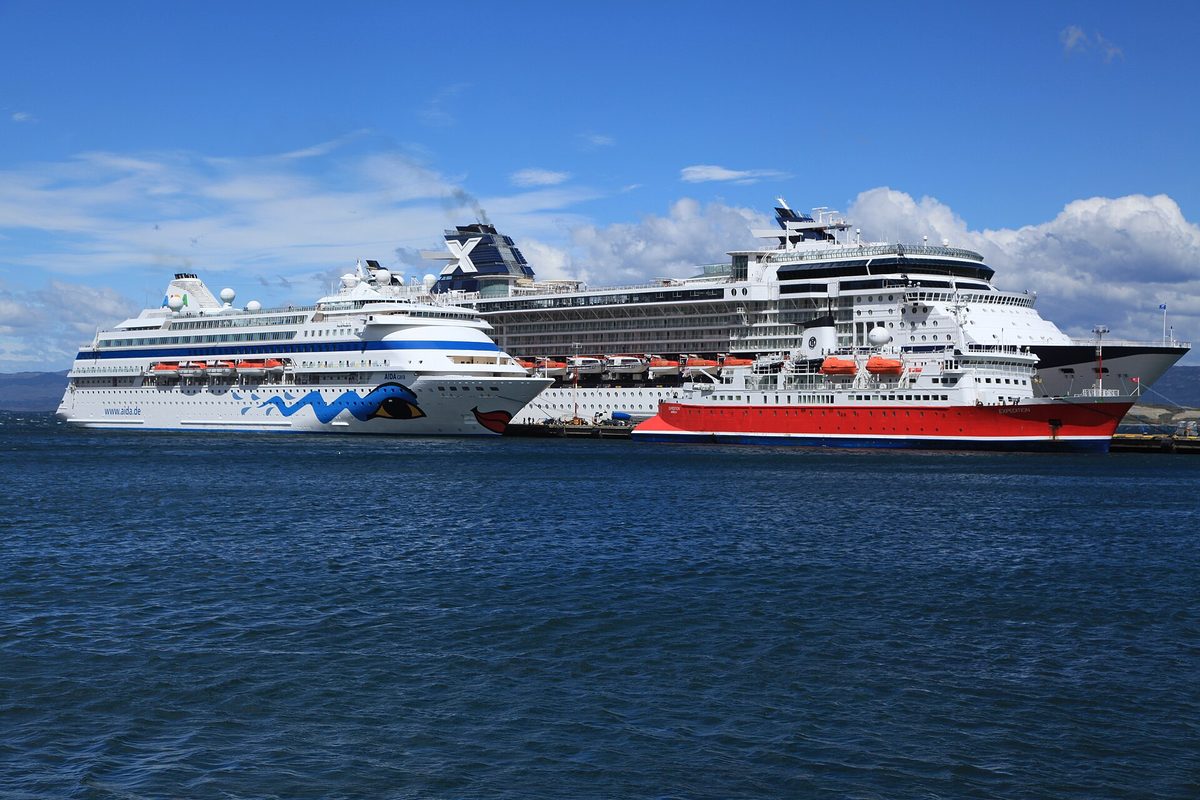
Embarkation day sounds simple — walk onto the ship — but it eats more clock than newcomers expect, and it is worth understanding so you do not waste it. Cabins typically are not ready until early-to-mid afternoon, so most operators run a morning or midday check-in window, sometimes with a hotel-based gathering or a city tour beforehand. You hand over your passport, get your cabin key and expedition gear, attend the mandatory safety drill, and the ship usually casts off in the late afternoon to catch the right tide out through the Beagle Channel or the Strait of Magellan. By the time you have unpacked and found the bar, the lights of the gateway town are slipping behind you.
I count embarkation as the better part of a full day, because in practice it is. You rarely sail before late afternoon, and the evening is taken up with briefings, the captain’s welcome, and your first dinner aboard. If you have a spare morning before check-in — and you should, given that buffer day — it is the perfect window to walk the waterfront, post your last postcards, and stock up on anything you forgot. Ushuaia in particular rewards a wander; my list of things to do in Ushuaia is built for exactly this kind of pre-departure half-day.
Leg Four: Crossing the Drake Passage by Ship
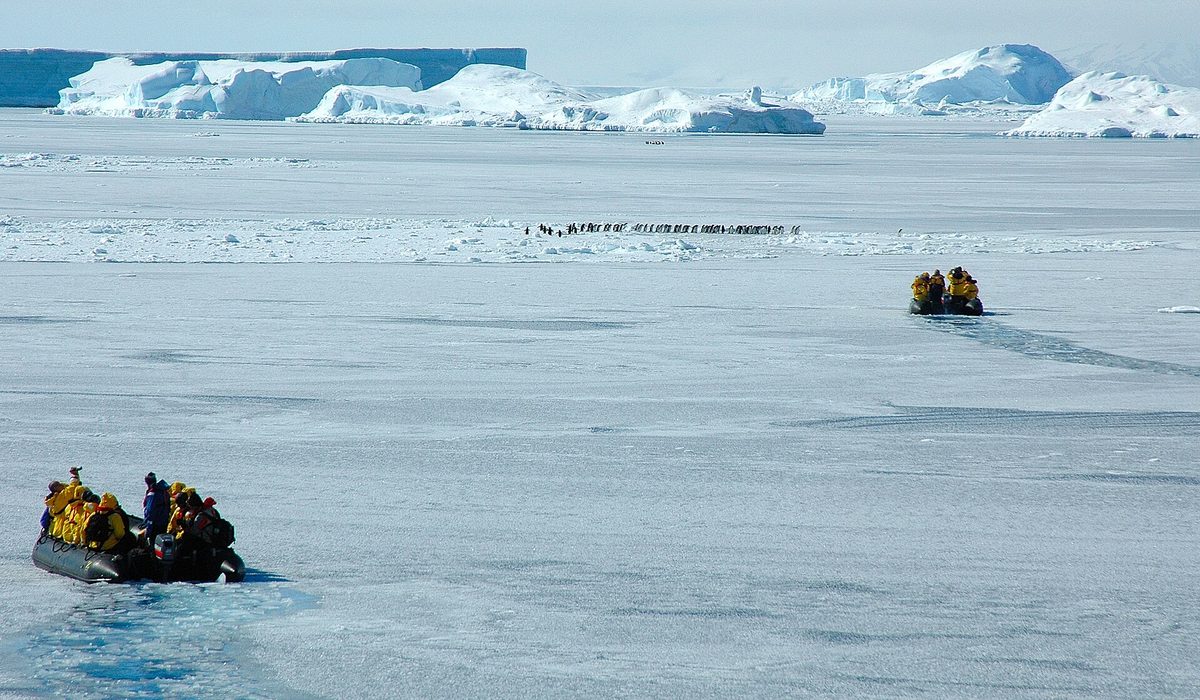
Now the famous part. The Drake Passage is the stretch of Southern Ocean between Cape Horn and the South Shetland Islands, and crossing it by ship is the classic way south. The honest timing: plan on roughly two days — about 48 hours — for the crossing in average conditions, and as little as 36 hours if the weather is kind and the seas cooperate. The distance is about 1,000 kilometres, or 600 miles, each way, and your ship covers it at expedition-cruising speed rather than sprinting. So a return crossing is, realistically, four days of your trip spent at sea — two down, two back — bookending your time on the ice.
People dread the Drake, and I will not pretend it is always calm — it can serve up a memorable “Drake Shake.” But it can also gift you a glassy “Drake Lake,” and either way those two days are not wasted. The onboard lecture program spins up, you start spotting your first albatrosses and petrels wheeling off the stern, and the whole ship settles into expedition rhythm. I have grown genuinely fond of the crossing as a decompression chamber between the modern world and the ice. If you want the full character of this body of water — the swell, the wildlife, the history — I have written a dedicated guide to the Drake Passage that goes well beyond the timings here.
The Distances, Plainly Stated
Numbers help this whole journey make sense, so here are the ones worth memorizing. Ushuaia to the Antarctic Peninsula is roughly 1,000 kilometres (about 600 miles) of open ocean — the Drake crossing itself. Buenos Aires to Ushuaia is around 3,000 kilometres by air, which is why that “domestic” hop takes three and a half hours. And from a typical Northern-Hemisphere city to Buenos Aires you are covering 8,000 to 11,000 kilometres or more before you have even turned south. Stack those legs and you start to appreciate why this is one of the longer journeys an ordinary traveler can undertake — you are crossing most of the planet, then crossing one of its wildest seas.
The fly-cruise rewrites the last and most weather-exposed number. Instead of 1,000 kilometres of Drake by ship over two days, you fly from Punta Arenas to King George Island in the South Shetlands in about two hours, then board your vessel already inside Antarctic waters. The flight covers a comparable distance, but it compresses two days of sailing into a single morning. That single substitution is the biggest lever you have over your total travel time, and it is why I always raise it early when someone tells me they are short on holiday or prone to seasickness.
The Fly-Cruise: Skipping the Drake to Save Time
If the four sea-days of a round-trip Drake crossing are the thing standing between you and an Antarctic holiday, the fly-cruise is the answer. Pioneered out of Punta Arenas by operators such as Antarctica21 and now offered by several others, the model is simple: you fly roughly two hours from Punta Arenas over the Drake to Frei Station on King George Island, step off the plane onto Antarctic ground, and board your expedition ship waiting in the bay. You do the reverse at the end. In a single morning you accomplish what otherwise takes two days at sea, and you arrive without having lost a meal to the swell.
The trade-offs are real and worth naming. Fly-cruises cost more per day, the flights are weather-dependent and can be delayed (occasionally by a day or more, since King George Island’s runway needs a clear window), and you miss the slow, oceanic build-up that many of us secretly love about the ship crossing. But for time-pressed travelers, nervous sailors, or anyone who simply wants maximum ice for minimum transit, it is the smart play. A typical fly-cruise runs about eight days door-to-door versus ten or eleven for the classic version. I have compared both approaches in detail within my broader look at Antarctica cruises, which is the place to weigh ships, cabins, and styles side by side.
A Timings Table You Can Plan Against
Here is everything above, distilled into the numbers I actually use when I sketch a trip on the back of an envelope. Treat the totals as realistic planning figures, not guarantees — weather, flight schedules, and your home city will all nudge them.
| Leg / Journey | Typical Duration | Notes |
|---|---|---|
| Home city to Buenos Aires (international flight) | ~10–15+ hrs | Shorter from US East Coast; longer from Europe, Australia, US West Coast |
| Overnight in Buenos Aires / Santiago | ~1 night | Different airports (EZE in, AEP out); connection rarely same-day |
| Buenos Aires to Ushuaia (domestic flight) | ~3.5 hrs | ~3,000 km; Aerolíneas Argentinas, Flybondi, JetSmart |
| Santiago to Punta Arenas (domestic flight) | ~3–3.5 hrs | For Chilean fly-cruises and Punta Arenas departures |
| Embarkation day at the port | ~half to full day | Check-in midday; ship sails late afternoon |
| Drake Passage by ship (one way) | ~2 days (36–48 hrs) | ~1,000 km / 600 mi; faster in calm seas |
| Fly over the Drake (Punta Arenas to King George Island) | ~2 hrs | Weather-dependent; skips the crossing entirely |
| Door-to-door to first landing (classic) | ~4–6 days | Including travel, overnight, and one Drake crossing |
| Door-to-door to first landing (fly-cruise) | ~2–4 days | Flying over the Drake compresses the final leg |
How Long the Whole Trip Takes, by Itinerary
So far I have talked about getting there. But the question people really mean is often “how much holiday do I need to book?” — and the answer depends entirely on which Antarctica you are chasing. The classic Antarctic Peninsula voyage from Ushuaia, with a round-trip Drake crossing, runs about ten to eleven days door-to-door for the cruise portion, plus your travel days at either end. A fly-cruise from Punta Arenas typically lands around eight days. Both deliver the Peninsula’s headline experiences — penguins, zodiac landings, towering glaciers — but the fly-cruise buys you back the time the Drake would have taken.
Go further afield and the clock stretches considerably. A voyage that adds the Falkland Islands and South Georgia — the wildlife mega-trip, with king penguin colonies hundreds of thousands strong — typically runs eighteen to twenty-three days, because you are covering enormous additional distances at sea. And the most committing journey of all, a Ross Sea expedition into the far side of the continent from New Zealand, can run twenty-five to thirty-two days, much of it sailing remote Southern Ocean with few landings between highlights. These are expeditions in the truest sense. To match a route to your calendar, my breakdown of Antarctica cruise itineraries lays the options out by length and region.
| Itinerary | Typical Trip Length | What You Get |
|---|---|---|
| Fly-cruise (Peninsula, via Punta Arenas) | ~8 days | Skips the Drake; maximum ice for minimum time |
| Classic Antarctic Peninsula (from Ushuaia) | ~10–11 days | Round-trip Drake crossing; the standard first trip |
| Peninsula + Falklands + South Georgia | ~18–23 days | The wildlife epic; vast king penguin colonies |
| Ross Sea / far side (from New Zealand) | ~25–32 days | Remote, ambitious, deep Southern Ocean expedition |
Travel Time From Different Home Regions
Where you start changes the front half of the trip more than anything else. From the United States, East Coast travelers have it easiest: a single overnight flight of about ten to eleven hours gets you to Buenos Aires, so the total to first landing sits at the shorter end of the four-to-six-day range. West Coast travelers add a domestic connection and several hours, nudging toward the longer end. From the UK and continental Europe, expect a thirteen-to-fifteen-hour journey to Buenos Aires, usually with one connection through a hub like Madrid, São Paulo, or a US gateway — realistically a full day of flying before the South American overnight even begins.
Australians and New Zealanders face an interesting choice. To reach Ushuaia they fly across the Pacific to Santiago (around twelve to fourteen hours from the east coast) and then onward, a genuinely long routing. But for the Ross Sea sector, the geography flips in their favour: those expeditions often depart from Bluff or Lyttelton in New Zealand, or Hobart in Australia, putting the gateway practically on their doorstep — though the trade-off is a far longer voyage once at sea. Wherever you are starting, mapping your specific routing is worth the effort; my pillar guide to how to get to Antarctica walks through the regional options in detail, and the question of whether you can even visit Antarctica as an ordinary traveler is answered there too, for anyone still wondering whether this is really open to them.
Why Weather and Drake Conditions Change the Timings
Every figure in this article comes with an asterisk, and that asterisk is the weather. The Southern Ocean is the most exposed stretch of sea on the planet, with no landmass to slow the swell as it circles Antarctica, and that has knock-on effects at every stage. A rough Drake can slow a ship and push your first landing later in the day. Strong winds or low cloud at King George Island can delay a fly-cruise flight, occasionally by a day, until a safe window opens. Even back at the gateway, Patagonian gales can ground domestic flights into Ushuaia. None of this is cause for alarm — operators plan for it — but it is exactly why I keep telling you to build in buffer days.
The season matters too. The Antarctic travel window runs roughly November to March, and conditions shift across it: earlier in the season brings pristine snow and pack ice that can occasionally block a channel, while later brings more daylight, more accessible landings, and peak whale activity. Sea state is never guaranteed in any month. Captains routinely adjust the plan — swapping a landing site, altering the order of stops, riding out a system — so the smart mindset is to hold your itinerary loosely. If timing your trip well matters to you, my guide to the best time to visit Antarctica breaks the season down month by month.
Building Buffer Into Your Plan
Because so much of this journey is exposed to forces outside your control, the single best thing you can do is pad your itinerary deliberately. I never book a trip this big on a tight turnaround, and after a few seasons of watching delays ripple through people’s plans, I would urge you to do the same. A little slack at the front protects your embarkation; a little slack at the back protects your flight home. Here is the buffer I build into every Antarctic trip I plan:
- One night minimum in Buenos Aires or Santiago on the way down — two if you want the city, or insurance against a delayed long-haul.
- Arrive at your gateway port a full day before the ship sails. Most operators now require this, and it is non-negotiable in my book.
- A spare day at the end before your international flight home, in case the ship returns to port late or a domestic flight slips.
- Travel insurance with trip-interruption cover, because the one thing you cannot buy back is a missed sailing.
- Flexible or refundable domestic fares where possible, so a weather delay does not cost you twice.
For more hard-won logistics like this — packing, paperwork, money, and the small things that smooth a polar trip — my collection of Antarctica travel tips is where I keep the practical checklist updated each season.
Frequently Asked Questions
How long does it take to get to Antarctica from the United States?
From the US East Coast, plan on about four to five days door-to-door to your first landing: roughly an eleven-hour overnight flight to Buenos Aires, a night in the city, a three-and-a-half-hour hop to Ushuaia, embarkation, and the two-day Drake crossing. West Coast travelers add a connection and a few hours, pushing toward the longer end of that range.
How long is the Drake Passage crossing by ship?
The Drake Passage crossing takes about two days — roughly 48 hours — in average conditions, and as little as 36 hours when the weather and seas cooperate. The distance is about 1,000 kilometres (600 miles) each way, so a round trip means roughly four days at sea, bookending your time on the ice. Calm “Drake Lake” crossings are quicker than rough “Drake Shake” ones.
Can I get to Antarctica without crossing the Drake Passage?
Yes. Fly-cruises from Punta Arenas, Chile, fly you about two hours over the Drake to King George Island in the South Shetlands, where you board your expedition ship. You skip the two-day sea crossing entirely. The trade-offs are a higher cost and weather-dependent flights, but for time-pressed or seasickness-prone travelers it is an excellent option.
How many days do I need for an Antarctica trip?
For a classic Antarctic Peninsula cruise from Ushuaia, budget about ten to eleven days for the voyage plus your travel days at each end — so roughly two weeks of holiday all in. A Punta Arenas fly-cruise trims the voyage to around eight days. Longer expeditions to South Georgia or the Ross Sea need far more, from eighteen up to thirty-plus days.
How long is the flight from Buenos Aires to Ushuaia?
The domestic flight from Buenos Aires to Ushuaia takes about three and a half hours, covering roughly 3,000 kilometres. It is operated mainly by Aerolíneas Argentinas, with low-cost options from Flybondi and JetSmart. Note that these flights usually leave from Aeroparque (AEP) in the city, while international flights arrive at Ezeiza (EZE) — so allow for a cross-city transfer.
Why do operators want me to arrive a day before the ship sails?
Because the ship sails on a fixed schedule and will not wait. Patagonian weather frequently delays or cancels domestic flights into Ushuaia and Punta Arenas, and missing your embarkation could mean missing the entire voyage. Arriving a full day early turns a risky same-day connection into a relaxed buffer, which is why most reputable operators now require it.
Does the Drake Passage always add exactly two days?
Not exactly — it varies with conditions. Plan on about two days each way as a realistic figure, but a calm crossing can take closer to 36 hours while a rough one runs nearer the full 48 or slightly more. The ship travels at expedition-cruising speed, and the captain may adjust course or pace for safety and comfort, so treat the crossing time as a window rather than a fixed number.
How long does it take to reach South Georgia or the Ross Sea?
These are big expeditions. A Peninsula voyage that adds the Falklands and South Georgia typically runs eighteen to twenty-three days, because of the vast extra distances at sea. A Ross Sea expedition, usually departing New Zealand or Australia, can run twenty-five to thirty-two days, with long open-ocean stretches between landings. Both are serious commitments of time and budget compared with a standard Peninsula trip.
What is the fastest way to get to Antarctica?
The fastest realistic route is a fly-cruise: fly to Santiago, connect to Punta Arenas, then take the roughly two-hour flight over the Drake to King George Island and board your ship. This can get a well-positioned traveler to Antarctic soil in as little as two to four days door-to-door, versus four to six for a classic Drake crossing. Weather can still delay the King George Island flight.
Is getting to Antarctica worth all that travel time?
Honestly, yes — and I say that as someone who has made the long haul more than once. The journey itself, from the southernmost city to a wild ocean to a continent almost no one sets foot on, is part of the reward. The scale of the ice, the wildlife, and the silence are unlike anywhere else on Earth. Few trips repay their travel time as completely as this one does.
Final Thoughts
So, how long does it take? Four to six days door-to-door from the Northern Hemisphere to your first landing if you cross the Drake by ship, and noticeably less if you fly over it — wrapped inside a total trip of roughly eight to eleven days for a Peninsula voyage, or far longer for the great wildlife and Ross Sea expeditions. The long-haul flights and the mandatory overnight do most of the time-eating; the Drake, for all its fearsome reputation, is the reliable part. Build in buffer days, fly to your gateway early, and hold your itinerary loosely against the weather, and the logistics fall into place.
My honest take after several trips south: do not let the travel time put you off. Yes, it is a long way, probably the longest journey you will ever make for a holiday. But every leg pulls you further from the ordinary and closer to a place that still feels genuinely beyond the edge of the world. Plan it properly, give yourself room to breathe, and the days spent getting there become part of the story rather than an obstacle to it. Few destinations on the planet reward the effort the way Antarctica does.