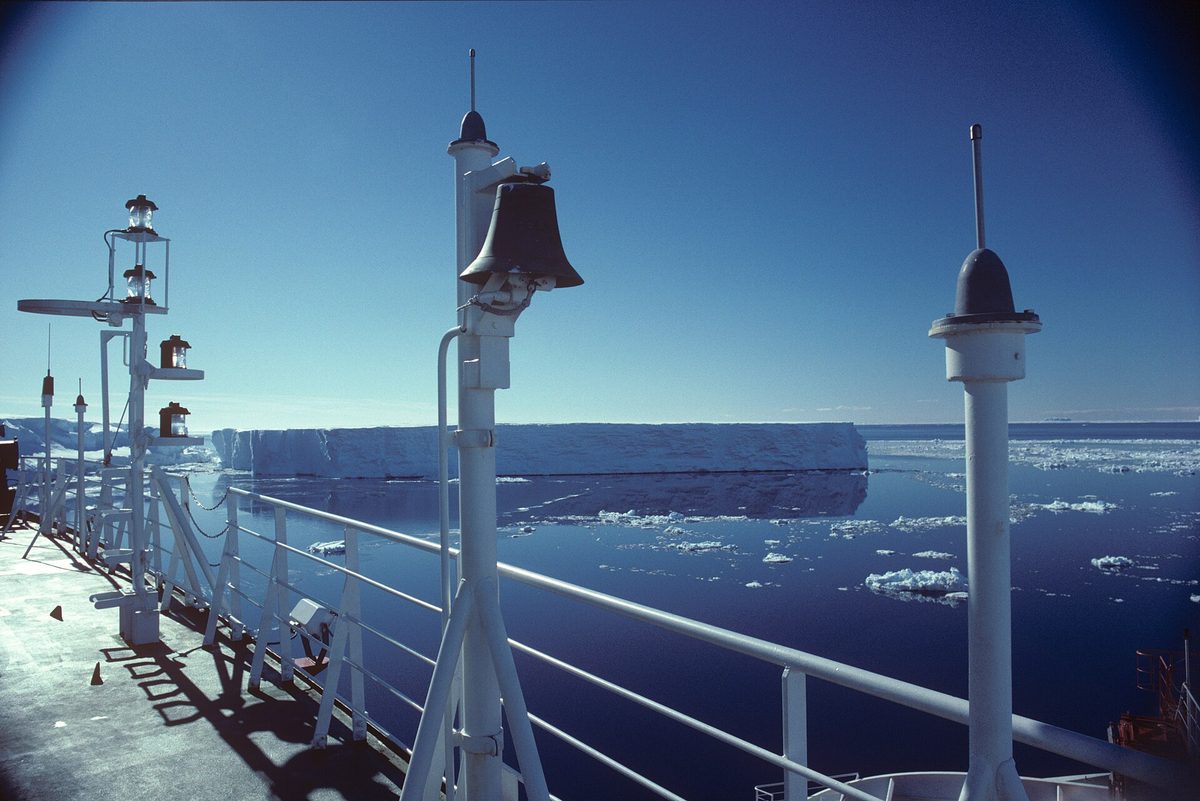
The first iceberg ruins you a little. You spend two days crossing the Drake Passage, the most infamous stretch of sea on Earth, and then one grey morning the ship slips into glassy water, the engines drop to a hum, and a slab of ice the size of a cathedral drifts past your cabin window glowing an electric, impossible blue. Nobody on deck says much. That silence is the thing people remember most about Antarctica — not the cold, not the penguins, but how quiet the bottom of the world actually is.
Antarctica cruises are the only realistic way for ordinary travelers to set foot on the white continent, and they range from 5-day fly-cruises that skip the rough seas to 23-day expeditions taking in South Georgia’s half-million-strong penguin colonies. Most sail between November and March, cost roughly US$6,000 to $20,000+ per person, and depart from Ushuaia, Argentina. This guide is the honest, comprehensive version of how to choose the right one.
I’ve written it for the traveler who has decided — or is close to deciding — that Antarctica is happening, and now needs to turn a daydream into a booked cabin without overpaying or picking the wrong ship. We’ll cover what an expedition cruise actually is, when to go, how to get there, the routes, the ships, the wildlife, what it all costs, and a clear framework for matching a voyage to you. Where a topic deserves its own deep dive, I’ll point you to it.
Last updated: June 2026 · Written and fact-checked by the AntarcticaTourism.org editorial team.
Antarctica cruises at a glance
Five broad types of voyage cover almost everything on the market. If you remember nothing else from this guide, remember this table — it’s the shape of the entire decision. (Prices are the lowest typical starting fares per person as of the 2025–26 season; always confirm current rates.)
| Voyage type | Length | From (per person) | Best for | Departs |
|---|---|---|---|---|
| Fly-cruise / Express | 5–8 days | ~$6,000 | Skipping the Drake; limited vacation time | Punta Arenas, Chile |
| Classic Antarctic Peninsula | 10–12 days | ~$9,000 | First-timers; the best all-rounder | Ushuaia, Argentina |
| Peninsula + Antarctic Circle | 12–14 days | ~$11,000 | Going deeper south, fewer ships | Ushuaia, Argentina |
| South Georgia & Falklands | 18–23 days | ~$15,000 | Wildlife maximalists; repeat polar travelers | Ushuaia, Argentina |
| Ross Sea / far side | 25–32 days | ~$30,000 | Serious veterans chasing remote history | New Zealand / Australia |
The vast majority of first-time visitors book one of the first two rows, and most of this guide is weighted accordingly. If you already know you want the longer, wilder routes, our deep dives on Antarctica cruise itineraries and routes and the regions and landing sites go further than we can here.
What exactly is an Antarctica cruise?
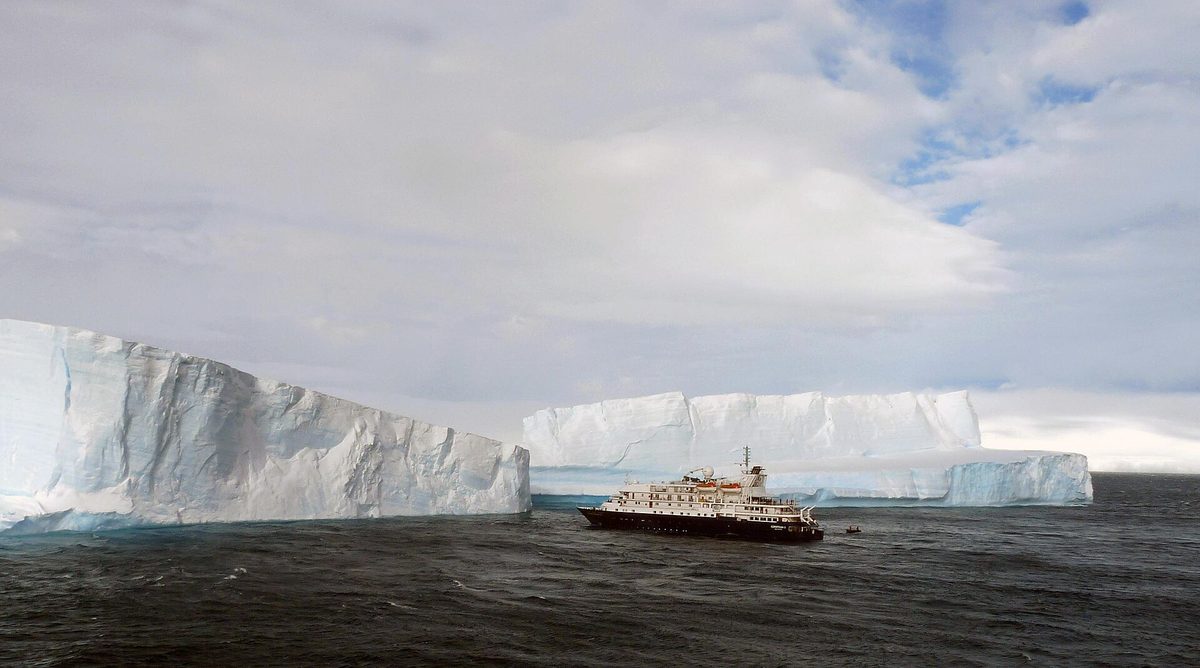
Here’s the first thing to unlearn: an Antarctica cruise is not a cruise in the Caribbean sense. There are no formal nights, no art auctions, no 4,000-passenger megaships gliding past from a sun lounger. What you’re booking is an expedition cruise — a small, ice-strengthened ship that carries you to the edge of the continent and then puts you in it, twice a day, in inflatable boats.
The daily rhythm looks like this. You wake to a soft announcement from the expedition leader, who has been up since dawn reading the ice and the wind. After breakfast you pull on waterproof boots and a parka, file down to a platform at the waterline, and climb into a Zodiac — a sturdy rubber landing craft that seats about ten. You either cruise among the icebergs and whales or land on a beach crowded with penguins. You come back to the ship to thaw out, eat, and listen to a marine biologist or historian talk about what you just saw. Then you do it all again in the afternoon. That’s the trip.
Because the experience happens off the ship, the ship’s main job is to be a warm, stable, well-fed basecamp that can reach remote places and launch boats quickly. That is why size matters more than almost anything else, a point we’ll keep coming back to.
Who’s allowed to take tourists there, anyway?
Antarctica has no government and no permanent residents, so tourism is self-regulated under the Antarctic Treaty by the International Association of Antarctica Tour Operators (IAATO). The rules are stricter than most people expect, and they exist to protect a genuinely fragile place. Only 100 passengers may be ashore at any single landing site at once. Ships carrying more than 500 passengers aren’t allowed to land anyone at all. There must be roughly one guide for every 20 guests on shore, and everyone scrubs and vacuums their gear before landing so no foreign seeds or microbes hitch a ride.
The practical upshot for you is simple but important: a smaller ship means more time on land, full stop. We’ll turn that into a buying rule in a moment.
Is an Antarctica cruise worth it?
Let me be honest about the money up front, because it’s the question behind every other question: yes, this is one of the most expensive trips you can take, and yes, for most people who go, it’s the trip they measure other trips against afterward. I don’t say that lightly. Antarctica is the rare destination that is genuinely impossible to fake or substitute. There is nowhere else with this combination of scale, silence, and indifference to human beings.
What actually delivers the value is the wildlife’s total lack of fear. Penguins have no land predators, so a gentoo chick will waddle up and untie your bootlace while you sit still in the snow, because IAATO rules say you can’t approach them but nobody told the penguins. Humpbacks surface beside the Zodiac close enough that you smell the krill on their breath. You will take a thousand photographs and none of them will capture it, and that’s sort of the point.
If you want the longer argument — including the case for spending the money elsewhere — we wrote a whole piece on whether an Antarctica cruise is worth it. The short version: if it’s a genuine lifelong pull rather than a box to tick, it’s worth it.
When to go: the Antarctic season, month by month
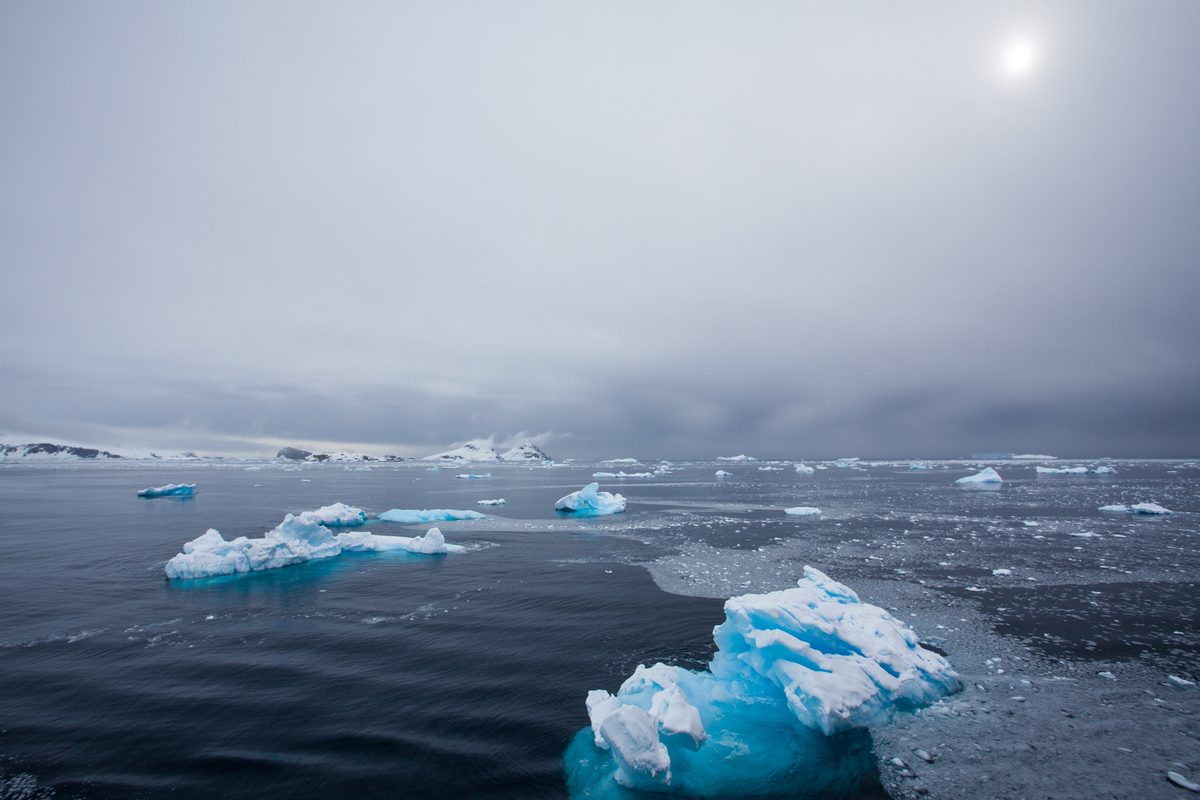
You don’t get to choose the year-round option, because there isn’t one. Tourism runs only during the austral summer, from late October to late March. Outside that window the sea ice seals the continent off and no ships sail. Within it, each stretch has a distinct personality, and the “best” month depends entirely on what you most want to see. This is worth getting right; for the full breakdown see our guide to the best time to visit Antarctica.
| Month | Conditions | Wildlife highlight | Crowds & price |
|---|---|---|---|
| Nov (early) | Pristine snow, sculpted sea ice, crisp and cold | Penguins courting and building nests; first eggs | Quieter, lower fares |
| December | Long days, warming, ice breaking open | Eggs hatching; peak courtship drama | Busy, higher fares |
| January | Up to 20 hours of daylight; steadiest weather | Fluffy penguin chicks; whales arriving | Busiest and priciest |
| February | Warmest seas, golden evening light | Peak whale numbers; chicks fledging | Crowds easing, strong value |
| March (late) | Cooler, sea ice starting to reform | Dense whale feeding; juveniles everywhere | Quietest, late-season deals |
If you’re going once and want the safest all-rounder, aim for December or January, when wildlife and weather peak together. If you’ve been before or you’re a photographer, late February is my quiet favorite: the light turns the icebergs amber in the evenings, the whale numbers are extraordinary, and there are fewer ships jostling for the same landing slots. November rewards anyone who values untouched snow and lower prices over baby penguins, and March is the bargain-hunter’s month.
One myth to put down: there is no “warm” option. Peninsula summer temperatures hover around freezing to the mid-30s Fahrenheit (roughly −2°C to 3°C). That’s far milder than people imagine — it’s a cold winter’s day, not the deep-freeze of the interior — but the wind off the ice is the part that bites, which is why layering matters more than sheer warmth. More on that in our Antarctica packing guide.
How you get there: cross the Drake, or fly over it
There are two ways onto the continent, and the choice shapes your whole trip. You either sail across the Southern Ocean or you fly over it. Neither is wrong; they simply suit different people.
Crossing the Drake Passage by ship
The Drake Passage is about 500 miles (800 km) of open water between Cape Horn and the South Shetland Islands, and it’s the most storied crossing in expedition travel. It takes roughly two days each way. Sailors talk about the “Drake Lake” (eerily calm) and the “Drake Shake” (genuinely rough), and you don’t find out which you’ve drawn until you’re in it. Modern expedition ships have stabilizers and ice-strengthened hulls, so even a lively crossing is uncomfortable rather than dangerous — but if you’re prone to seasickness, talk to your doctor about a scopolamine patch before you sail.
Here’s the case for sailing it anyway: the Drake is where the trip’s sense of journey lives. Albatrosses with three-meter wingspans trail the ship for hours, the Southern Ocean rolls past in every shade of grey, and you arrive feeling like you’ve genuinely travelled somewhere, not teleported. Plenty of veterans wouldn’t skip it.
Flying the Drake (the fly-cruise)
The alternative is a charter flight from Punta Arenas, Chile to King George Island, where your ship waits. You skip the open-ocean crossing entirely, step almost straight onto the continent, and bank one to two extra days actually in Antarctica. It costs roughly $4,000–$7,000 more per person and the flights are weather-dependent (delays happen). For travelers with limited time or a real fear of rough seas, it’s the right call — there are no medals for suffering. We compare both approaches in depth in our guide to flights and fly-cruises to Antarctica.
Getting to the gateway city
Almost every voyage begins in one of two towns at the bottom of South America. Ushuaia, Argentina — the southernmost city in the world — is the launch point for the great majority of sailings; you reach it via Buenos Aires. Punta Arenas, Chile is the hub for fly-cruises, reached via Santiago. Whichever you use, fly in at least a day early: Antarctic departures don’t wait for delayed luggage, and a missed connection can cost you the whole trip. Our guide to getting to Antarctica and its gateway cities covers flights, stopovers, and what to do with a spare day in Ushuaia.
The routes, and how long you really need
Once you know how you’re getting there, the next question is where the ship actually goes and for how long. Time is the real variable here — everything else follows from how many days you can give it.
The Antarctic Peninsula (the default, and a brilliant one)
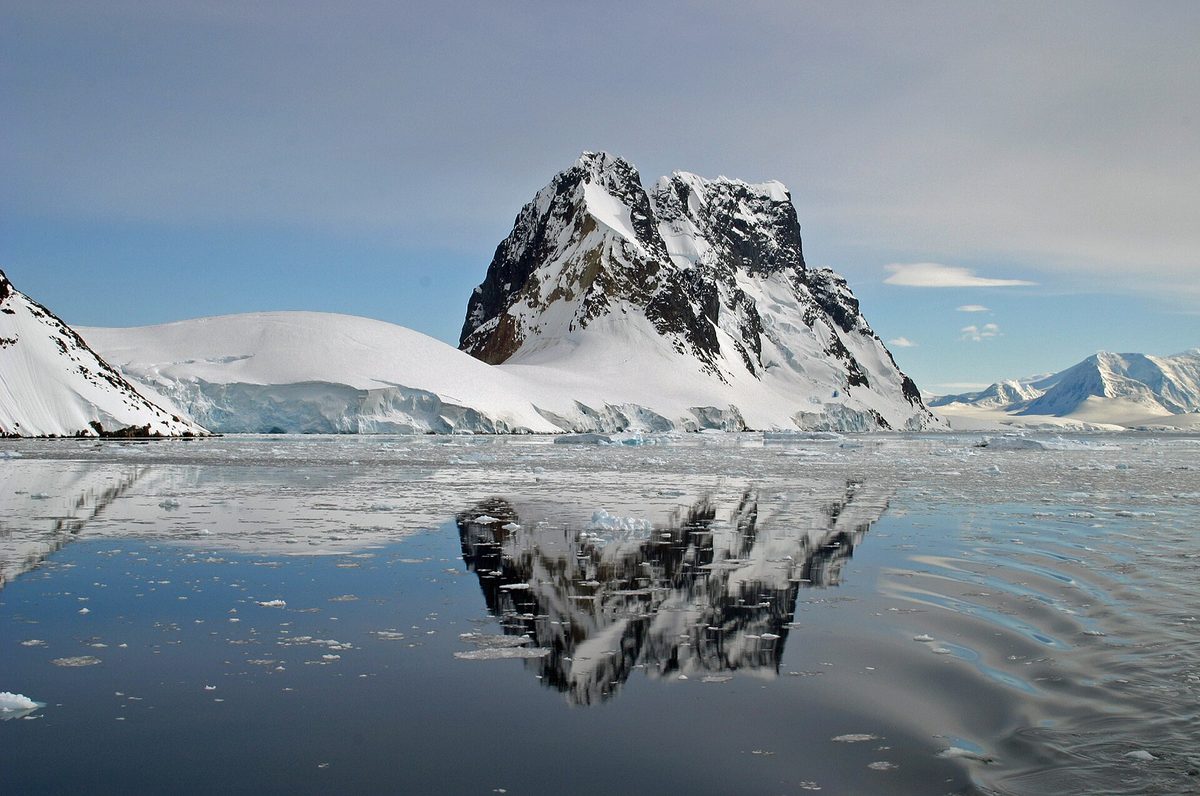
The Peninsula is the long finger of land reaching up toward South America, and it absorbs more than 95% of all landings for good reason: it has the densest wildlife, the most dramatic ice channels, and it’s the only region you can properly experience in a two-week trip. Classic Peninsula voyages run 10–12 days, of which 5–7 are spent in Antarctic waters. Landings at Neko Harbour, Cuverville Island, Paradise Bay, and the cinematic Lemaire Channel are where most travelers have their defining moment. If you book one Antarctica cruise in your life, make it this one.
Adding the Antarctic Circle
For a few days more (12–14 total), some Peninsula voyages push south across the Antarctic Circle at 66°33′S — the latitude below which the sun never sets at midsummer. You won’t see dramatically different wildlife, but you’ll see fewer ships, push deeper into the ice, and earn a line you’ll mention for the rest of your life. We map these options in the semi-circumnavigation and Polar Circle rundown.
South Georgia and the Falklands (the wildlife maximalist’s route)
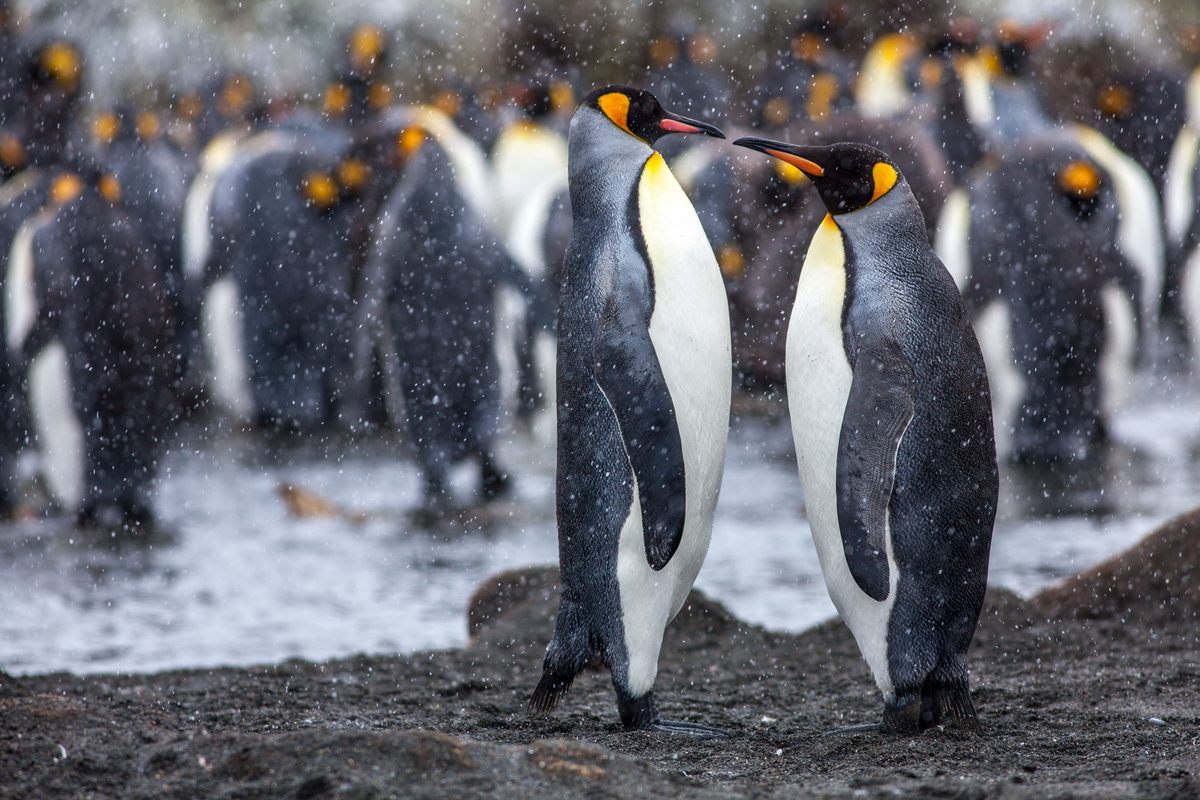
This is the one that makes seasoned travelers go quiet. Add South Georgia and the Falkland Islands and your trip stretches to 18–23 days, because the distances are vast. The payoff is staggering: king penguin colonies running into the hundreds of thousands on a single beach, elephant seal harems, and the grave of Ernest Shackleton at Grytviken. If wildlife volume is your priority and you have the time and budget, nothing else compares.
The Ross Sea and the far side
The longest, most expensive, and most remote voyages (25–32 days, departing New Zealand or Australia) reach the Ross Sea on Antarctica’s far side — the historic huts of Scott and Shackleton, the towering Ross Ice Shelf, and emperor penguins. These are for polar veterans who’ve already done the Peninsula and want the road very much less travelled. The full menu of routes lives in our itineraries and routes guide.
Choosing your ship: why size is the decision that matters most
If routes and months are about what you’ll see, the ship is about how much of it you’ll actually experience. This is where I see first-timers make the costliest mistake, so here is the single most useful rule in this entire guide:
Book a ship that carries 200 passengers or fewer — and if you can, under 100. Remember the IAATO rule: only 100 people ashore at once. A ship with 199 guests can land everyone in one rotation, so you might get four or five hours on the ice in a day. A ship with 500 guests has to run shifts, and your “landing” shrinks to a 90-minute window while everyone else waits their turn. A ship over 500 can’t land you at all — it becomes a scenic-cruising-only trip. The big cruise lines that advertise Antarctica are usually selling exactly that, and many buyers don’t realize it until they’re aboard.
We go ship-by-ship in our dedicated guide to Antarctica expedition ships and operators, but here’s the landscape in one table.
| Ship style | Typical guests | Vibe | Best for |
|---|---|---|---|
| Classic small expedition | 50–130 | Practical, science-led, parka-and-fleece | Most landings; serious wildlife & value |
| Modern expedition (new builds) | 130–200 | Upscale cabins, balconies, lecture theatres | Comfort without losing landing time |
| Luxury / boutique | 100–270 | All-inclusive, suites, butlers, fine dining | Travelers who want polish with their penguins |
| Icebreakers | ~200 | Brute ice capability, helicopters on some | Reaching the Weddell Sea & emperor penguins |
| Big ocean liners | 500–3,000+ | Standard cruise ship; no landings | Only if you want to view from deck, cheaply |
A few patterns worth knowing. The classic small ships — vessels around 100 berths — are where the best value and the most landing time live; this is what I steer most first-timers toward. The new-build expedition ships add genuine comfort (balconies, glass-walled lounges, even small submarines on a couple) while keeping numbers low enough to land everyone. At the top end, luxury Antarctica cruises fold drinks, gratuities, and excursions into one fare with suite-and-butler service. And the icebreakers are a category of their own — if pushing into the remote Weddell Sea in search of emperor penguins is your dream, that’s the tool for the job.
Ice class, stabilizers, and the boring details that matter
Two technical things genuinely affect your trip. The first is the guide-to-guest ratio: the best operators run something close to one expedition staffer per ten guests, which means more boats in the water and shorter waits. The second is the ship’s ice rating — a higher ice class lets the captain nose into channels and chase wildlife that a thinner-hulled ship has to admire from a distance. You don’t need an icebreaker for the Peninsula, but you do want a purpose-built expedition vessel rather than a repurposed ferry.
What’s included — and what quietly isn’t
Antarctic fares look eye-watering until you realize how much they cover. On almost every expedition voyage, your fare includes all meals aboard, every Zodiac excursion and landing, the full lecture program, and usually a expedition parka you keep plus loaner waterproof boots. That’s a genuinely all-in core experience — you are not nickel-and-dimed once you’re aboard.
What typically costs extra: the flights to your gateway city; travel insurance (mandatory — more below); gratuities for the crew; alcohol and premium drinks on non-luxury ships; and the optional adventure activities like kayaking and camping. We break the line items down in our guide to what’s included on an Antarctica cruise so there are no surprises on the final invoice.
Activities: how to get closer than the deck
Every expedition includes Zodiac cruising and shore landings, and honestly those alone justify the trip. But most ships sell optional add-ons that change the texture of the experience, and the good ones sell out a year ahead, so decide early. Our full things to do in Antarctica guide covers each in detail; here’s the shortlist worth your money.
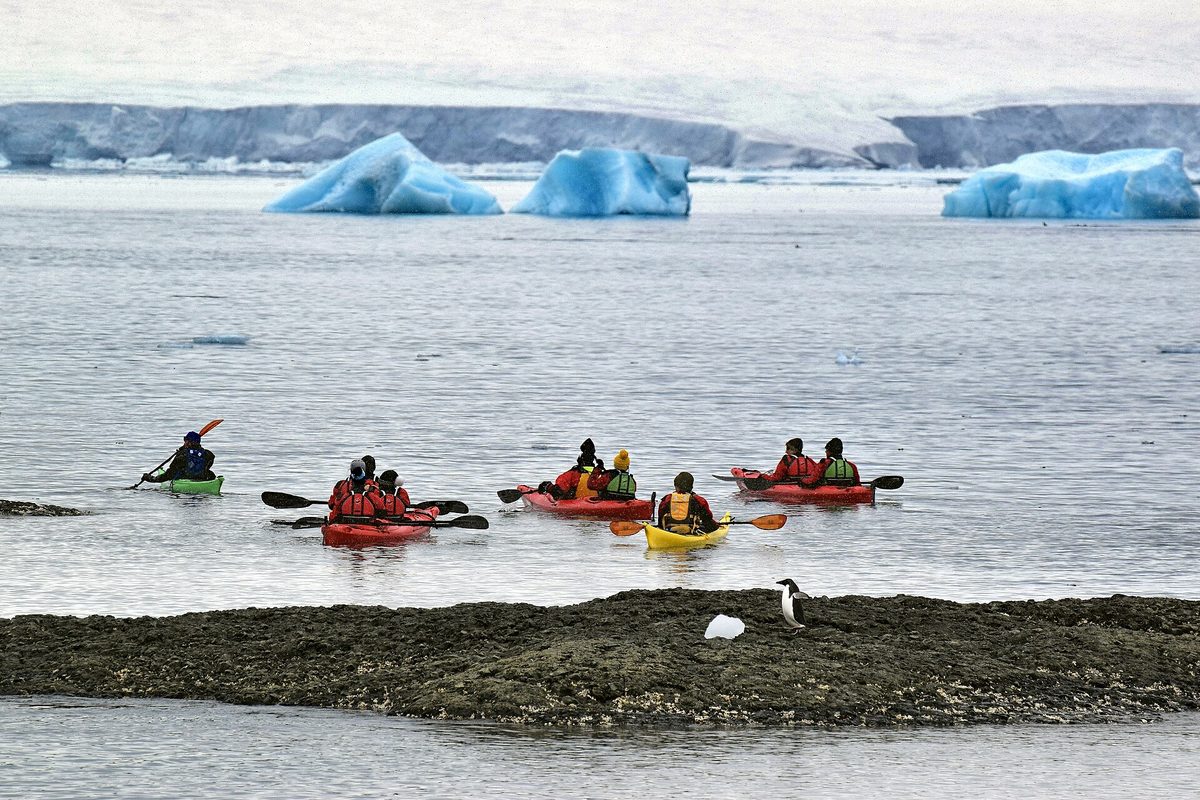
- Sea kayaking — the one I’d book first. Slipping a kayak between brash ice with a leopard seal eyeing you from a floe, away from any engine noise, is as close to the silence of Antarctica as you can get. Usually adds around $800–$1,000.
- Camping on the ice — a single night ashore in a bivvy bag under the polar sky. It’s less about comfort (there is none) and more about the story. Often the cheapest add-on.
- The polar plunge — a free, mandatory-by-tradition leap into roughly 28°F (−2°C) water on a harness. Three seconds you’ll talk about forever.
- Paddleboarding, snowshoeing, mountaineering, and even scuba — available on select ships for the more adventurous, sometimes at a steep premium.
- Photography programs & citizen science — many ships carry a dedicated photo guide and run real research projects (whale-ID, cloud and phytoplankton sampling) you can join from the deck.
What you’ll actually see: the wildlife
The wildlife is the reason most people come, and the Peninsula delivers it at point-blank range and in volume. You don’t need luck here the way you do on an African safari — the animals are simply there, in their hundreds of thousands, and unbothered by you. Our Antarctica wildlife guide is the species-by-species reference; this is the highlight reel.
Penguins
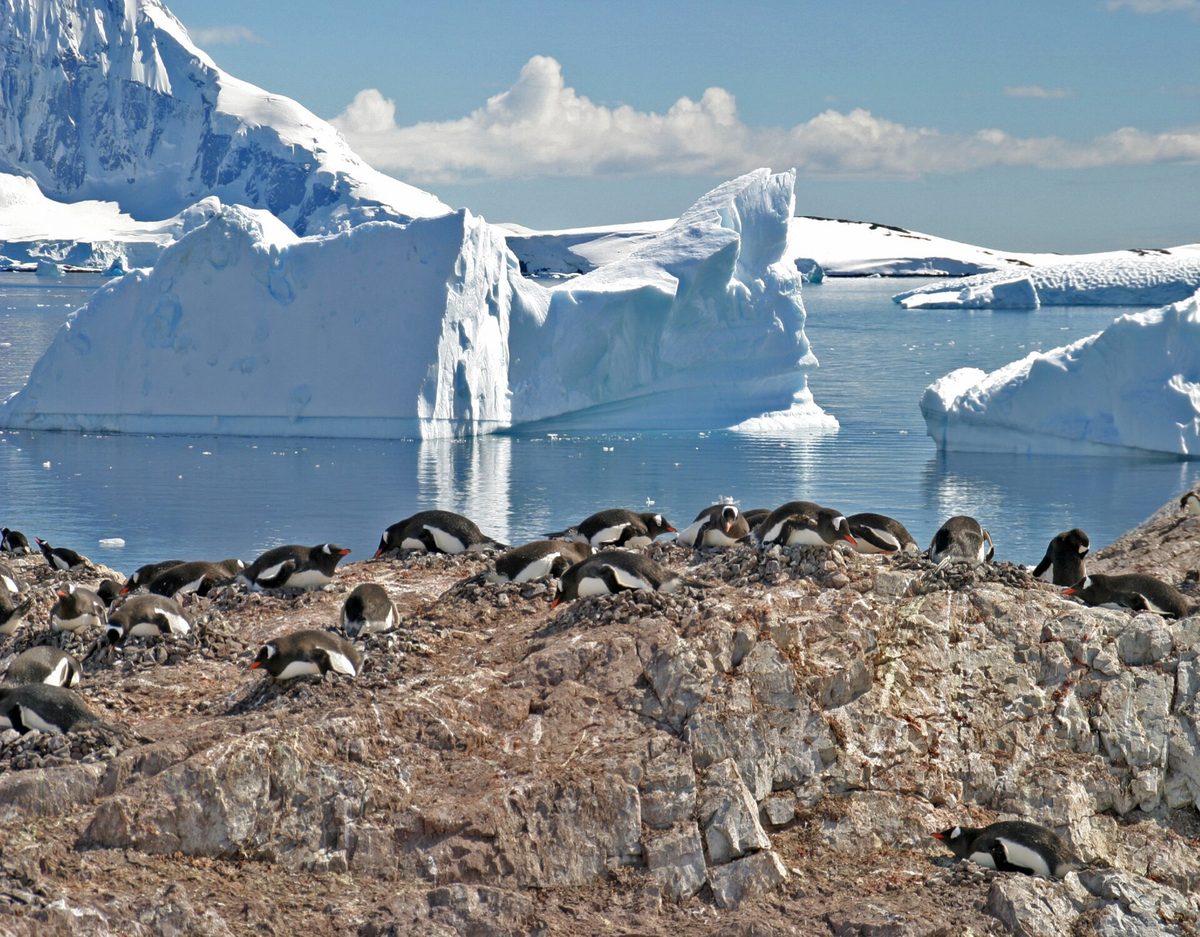
Gentoo, chinstrap, and Adélie penguins breed across the Peninsula in colonies that can hold tens of thousands of birds. The smell hits you before the sound, and the sound hits you before you’ve switched off the Zodiac engine. Time your trip for December and you’ll catch eggs; January and February bring the absurdly photogenic fluffy chicks. King and macaroni penguins live further north on South Georgia, and the emperors — the giants — require a specialist Weddell Sea or Ross Sea voyage to reach.
Whales and seals
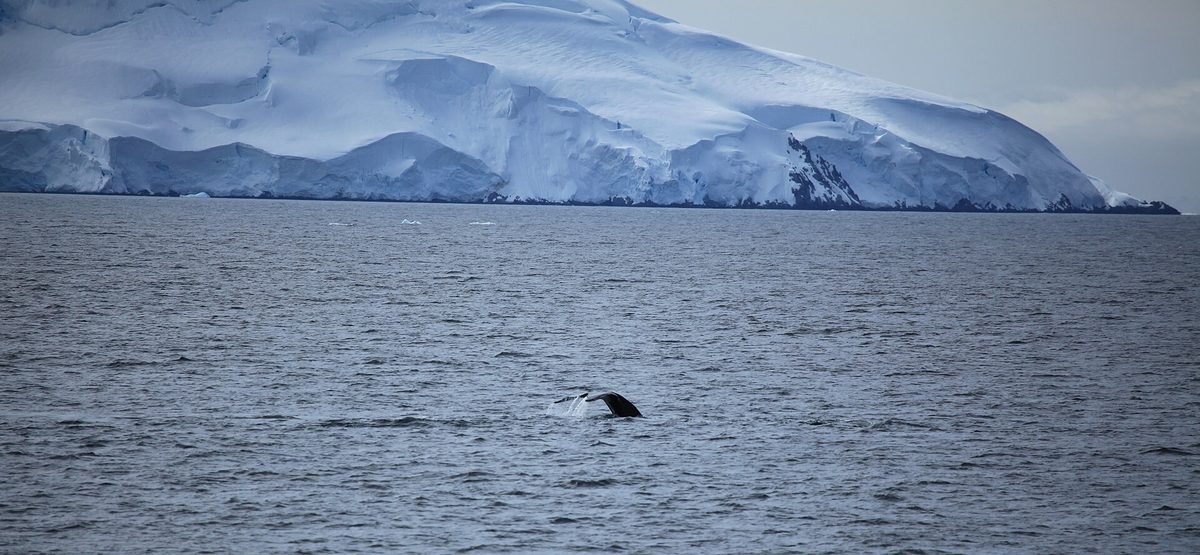
Humpback and minke whales gather in the Peninsula channels through the summer to feast on krill, and February into March is the peak for sheer numbers — lunge-feeding sessions right beside the ship are common. Among seals, you’ll most often spot Weddell seals dozing on ice floes and crabeater seals (which, despite the name, eat krill); the leopard seal, the Peninsula’s sleek apex predator, patrols the edges of penguin colonies; and South Georgia’s beaches groan under the weight of three-ton elephant seals.
Birds and the ice itself
Wandering albatrosses, petrels, and skuas wheel around the ship, especially across the Drake. And don’t underestimate the ice as a sight in its own right: tabular bergs the size of city blocks, and that deep, compressed, almost radioactive blue you’ll spend the trip trying and failing to photograph properly.
What an Antarctica cruise costs — and how to pay less
Antarctica is expensive, and it helps to know where the price bands fall before you start comparing quotes. Our full Antarctica trip cost breakdown runs the numbers in detail, but here are the brackets as of the 2025–26 season.
| Tier | Per person | What you get |
|---|---|---|
| Entry / shoulder-season | ~$6,000–$9,000 | Short fly-cruise, or a triple cabin on an older small ship in Nov/Mar |
| Mid-market (most people) | ~$10,000–$16,000 | 10–12-day Peninsula voyage, comfortable cabin, peak season |
| Premium / new ships | ~$16,000–$22,000 | Balcony suite on a modern expedition vessel |
| Luxury & long voyages | $22,000–$60,000+ | All-inclusive suites, icebreakers, South Georgia, Ross Sea |
What drives the number, roughly in order: the season (January costs the most), cabin category (an inside triple versus a balcony suite can triple the fare on the same ship), voyage length, and how new the ship is. The single biggest lever you control is cabin choice — the ship visits the same places regardless of whether you sleep in a porthole twin or a suite, so a humble cabin buys the identical Antarctica for thousands less.
Three honest ways to spend less:
- Sail the shoulders. November and March fares run noticeably below the December–January peak for a near-identical experience. See our budget Antarctica cruise tactics.
- Book early for the discount, not late for the gamble. The deepest reliable savings come from early-booking offers 12–18 months out; we track current Antarctica cruise deals and how to read them.
- Or gamble on a last-minute berth. If you can fly to Ushuaia on short notice and stay flexible, last-minute Antarctica cruises occasionally dump unsold cabins at a steep discount — with the obvious risk of finding nothing at all.
A day in the life aboard an expedition cruise
People often ask me what you actually do all day on an Antarctica cruise, and the honest answer is that the days are fuller and more rhythmic than you’d expect. There’s no fixed timetable carved in stone — the ice and weather see to that — but a typical day on the Peninsula has a satisfying shape. You’re woken gently over the PA by the expedition leader, often with a sighting to tempt you out of bed: a pod of orcas off the bow, or a tabular iceberg the size of a cathedral sliding past the breakfast windows.

Mornings and afternoons each bring an excursion — a Zodiac cruise nosing among brash ice and seals, or a landing where you walk among a penguin colony with your boots crunching on pink, krill-stained snow. Between outings you eat remarkably well, and the ship repositions to the next site while you watch the scenery unspool from the deck. The evenings settle into a lovely routine: the daily ‘recap and briefing’ where the team explains what you saw and what tomorrow holds, then dinner, then — if you have any sense — one last turn on deck under a sky that never fully darkens. It is busy without being rushed, structured without being regimented, and by day three you’ll have forgotten what your phone is for. For the full menu of what fills those excursion slots, see our guide to things to do in Antarctica.
When and how to book
Antarctic cabins are among the first things to sell out in all of cruising. The best cabins on peak December and January departures — and almost anything touching South Georgia — routinely go 12 to 18 months ahead, and repeat guests get pre-sale access earlier still. Booking early generally locks in the lowest tier of pricing too, before fares step up as the ship fills.
The practical sequence I’d follow: settle your month and your must-haves (kayaking? a balcony? the Circle?), shortlist two or three ships that fit, then book through a polar specialist who sails these routes rather than a generic travel portal — the price is the same and the advice is worth real money. Our guide to when to book an Antarctica cruise and our roundup of the best Antarctica cruises this season go deeper.
Health, safety, insurance, and fitness
The nearest hospital to the Peninsula is days away by sea in Ushuaia or Punta Arenas, which changes the math on preparation. A few non-negotiables, all expanded in our Antarctica travel tips guide:
- Travel insurance with emergency medical evacuation cover is mandatory — most operators require at least US$200,000 (some now ask for $250,000+) and won’t let you board without proof. This is the one expense you absolutely cannot skip.
- Fitness should be moderate, not athletic. If you can get in and out of an inflatable boat with a steadying hand and walk on uneven snow, you can do this trip. Ships carry a doctor, and there’s no shame in skipping a landing to rest.
- Seasickness is manageable. A scopolamine patch, eating light, and watching the horizon get most people through the Drake; the fly-cruise removes the question entirely.
As for what to bring, the operators hand you the big-ticket items (parka, boots), so your job is layers, waterproofs, sun protection for the fierce reflected glare, and a good camera. The full list lives in our what to pack for Antarctica guide — and yes, leave the drone at home, they’re banned.
Antarctica cruises by type of traveler
The “best” Antarctica cruise is entirely a function of who’s going. A few quick steers, with the full version in our guide to Antarctica for every traveler.
First-timers
Don’t overthink it. A classic 10–12 day Peninsula voyage on a sub-200-guest ship in December or January is the highest-confidence trip there is. Resist the urge to add South Georgia on your first go — the Peninsula alone will overwhelm you in the best way.
Couples and honeymooners
The new-build expedition ships and luxury vessels do romance well: balcony cabins, hot tubs facing the ice, quiet fine dining. February’s golden light is unfairly photogenic for a honeymoon.
Families
Antarctica is a phenomenal family trip for kids old enough to handle Zodiacs (most ships set a minimum age around 8–12). Look for ships with dedicated family departures and citizen-science programs that turn a teenager into a budding marine biologist.
Budget travelers
Fly to Ushuaia, sail an older small ship in November or March, take a triple cabin, and skip the paid add-ons. You’ll stand on exactly the same ice as the suite passengers for a fraction of the fare.
Solo travelers
Expedition ships are sociable by design — communal dining and shared Zodiacs mean you’re on first-name terms with the whole ship by day three. Many operators waive or reduce the single supplement on select departures, or will pair you with a same-gender cabin-mate.
How to vet an operator (and spot a weak one)
The single most important decision you’ll make isn’t the ship or the itinerary — it’s the operator behind them, and a little due diligence here protects both your money and the continent. The first box to tick is non-negotiable: membership of IAATO, the International Association of Antarctica Tour Operators, whose members agree to strict rules on landing-site limits, wildlife distances, and biosecurity. If a company isn’t an IAATO member, walk away.

Beyond that, I look at the guide-to-guest ratio (the best expeditions field one expedition staffer for every eight to twelve passengers), the experience of the expedition leader, and how transparent the operator is about what’s included. Read recent reviews with a skeptical eye, and be wary of any deal that seems far too cheap — in this part of the world, a suspiciously low price usually means an older ship, a worse itinerary, or corners cut where you don’t want them cut. A reputable operator answers hard questions happily; a weak one deflects them. When you’re ready to compare the fleet in detail, our guide to expedition ships and operators lays them out side by side.
How to choose your Antarctica cruise: a simple framework
Pull it all together and the decision comes down to four questions, in this order. Answer them and the right voyage more or less selects itself — and if you want a guided version, we built it out in how to choose an Antarctica cruise.
- How many days do you have? Under 8 days points to a fly-cruise; 10–14 days is the Peninsula sweet spot; 18+ unlocks South Georgia. Time is the master variable.
- Sail the Drake or fly it? If rough seas genuinely worry you or your schedule is tight, fly and spend the savings on a better cabin. If the journey is part of the romance for you, sail.
- What’s your non-negotiable — price, comfort, or wildlife? Pick one. Chasing all three is how people overspend or end up disappointed. A budget traveler optimizes the first; a honeymooner the second; a photographer the third.
- Which month fits your wildlife wish? Pristine ice and lower prices (Nov), baby penguins (Dec–Jan), or whales and golden light (Feb–Mar).
Settle those four and you’ll have narrowed 100-plus voyages down to a shortlist of two or three. That’s the moment to book.
Sustainability and the future of Antarctic cruising
It’s fair to ask whether sailing to one of Earth’s last great wildernesses can ever be responsible, and it’s a question the better operators take seriously. Tourism here is tightly self-regulated: IAATO caps landings at 100 passengers ashore at any one time, which is precisely why ship size matters so much — vessels carrying more than around 500 guests can’t land passengers at all and only cruise past. Strict biosecurity (boot-washing, vacuuming jackets, no food ashore) keeps non-native seeds and microbes off the continent, and fixed wildlife-distance rules protect the animals from us.

The industry is changing fast on emissions, too. A new generation of hybrid-electric expedition ships, with battery banks and cleaner engines, is replacing the old diesel workhorses, and many operators now build research and citizen-science into every voyage — guests log whale sightings and collect data that feeds real science. None of this makes the trip carbon-free, and the honest move is to offset your flights and travel with an operator that treats the continent as something to protect rather than merely sell. Done thoughtfully, visiting also creates a generation of advocates for a place most people will never see — and that matters, as our wildlife guide makes clear.
Frequently asked questions about Antarctica cruises
How much does an Antarctica cruise cost?
Expect roughly US$6,000 per person at the entry end (a short fly-cruise or a shoulder-season triple cabin) and $10,000–$16,000 for the 10–12-day Peninsula voyage most people book. Luxury suites, icebreakers, and long South Georgia or Ross Sea expeditions run $22,000 to $60,000+. Flights to your gateway city and mandatory insurance are extra.
When is the best time to take an Antarctica cruise?
The season runs late October to late March. December and January bring peak wildlife, the longest days, and the steadiest weather — ideal for first-timers, and the priciest. February and March deliver the best whale numbers and golden light with thinning crowds, while November offers pristine ice and lower fares.
How long is an Antarctica cruise?
Most classic voyages that sail the Drake Passage run 10 to 14 days, including about two days at sea each way. Fly-cruises that skip the crossing can be as short as 5 to 8 days while still giving you full days on the continent. Adding South Georgia and the Falklands stretches a trip to 18–23 days.
Is the Drake Passage really that rough?
Sometimes. A calm crossing (the “Drake Lake”) and a rough one (the “Drake Shake”) are both possible, and you won’t know which you’ll get until you’re sailing. Each direction takes about two days. Modern expedition ships are built for it, so a rough passage is uncomfortable, not dangerous — and flying the Drake skips it entirely.
Do you need to be fit to visit Antarctica?
You need moderate mobility, not athletic fitness. The main demands are stepping in and out of Zodiacs with a steadying hand and walking on uneven snow. Most reasonably mobile travelers, including plenty in their seventies and eighties, manage comfortably. Every ship carries a doctor, and you can always skip a landing to rest.
How far in advance should I book?
Book 12 to 18 months ahead for peak December and January departures, the best cabins, and anything visiting South Georgia. Early booking also tends to secure the lowest pricing tier. Popular add-ons like kayaking and camping sell out even earlier, sometimes more than a year before the season starts.
Can you visit Antarctica without taking a cruise?
For all but a handful of travelers, no. A small number of fly-in trips reach interior land camps and the South Pole, but they cost tens of thousands more. For everyone else, a ship-based expedition — whether you sail or fly the Drake — is the practical, IAATO-regulated way to actually set foot on the continent.
Do I need a visa for Antarctica?
Antarctica itself has no government and issues no visas. What you do need are the entry requirements for your gateway country — Argentina for Ushuaia or Chile for Punta Arenas — plus the permits your IAATO operator already holds on your behalf. Check your passport has plenty of validity remaining before you travel.
Will I see penguins, whales, and seals?
Penguins, essentially guaranteed — Peninsula colonies hold tens of thousands and they have no fear of people. Seals are near-certain on the ice. Whales are very likely, peaking in February and March. There are no polar bears in Antarctica (those live in the Arctic), and emperor penguins require a specialist Weddell or Ross Sea voyage.
Is an Antarctica cruise safe?
Yes, when you travel with an IAATO-member operator. Ships are purpose-built and ice-strengthened, expedition teams are highly experienced, and itineraries flex around weather and ice in real time. The main rule that protects you is the mandatory emergency-evacuation insurance — carry it, because the nearest hospital is days away.
Final thoughts
I started with that first iceberg for a reason. People save for years and cross the roughest sea on the planet to get to Antarctica, and then the thing that undoes them turns out to be the quiet — a stillness so complete you can hear a penguin’s footsteps on snow a hundred meters away. You can’t buy that feeling anywhere else, and no amount of planning prepares you for it.
What planning can do is make sure you experience it on the right ship, in the right month, without overpaying or discovering too late that your “cruise” never actually lands. Get the four big decisions right — days, Drake, priority, month — and the rest is detail. Then go, before the version of you that keeps saying “someday” talks you out of it again.
About the author
Photo credits
All images via Wikimedia Commons, used under their respective licenses: expedition ship — Hannes Grobe (CC BY-SA 4.0); gentoo penguins & Lemaire Channel — W. Bulach (CC BY-SA 4.0); Zodiac cruising — Michael Clarke (CC BY-SA 2.0); humpback whale — Liam Quinn (CC BY-SA 2.0); blue iceberg & king penguins — Anne Dirkse, annedirkse.com (CC BY-SA 4.0); sea kayaking — Lowcarb23 (CC BY-SA 4.0).
6 notes
Notes are closed on this entry.