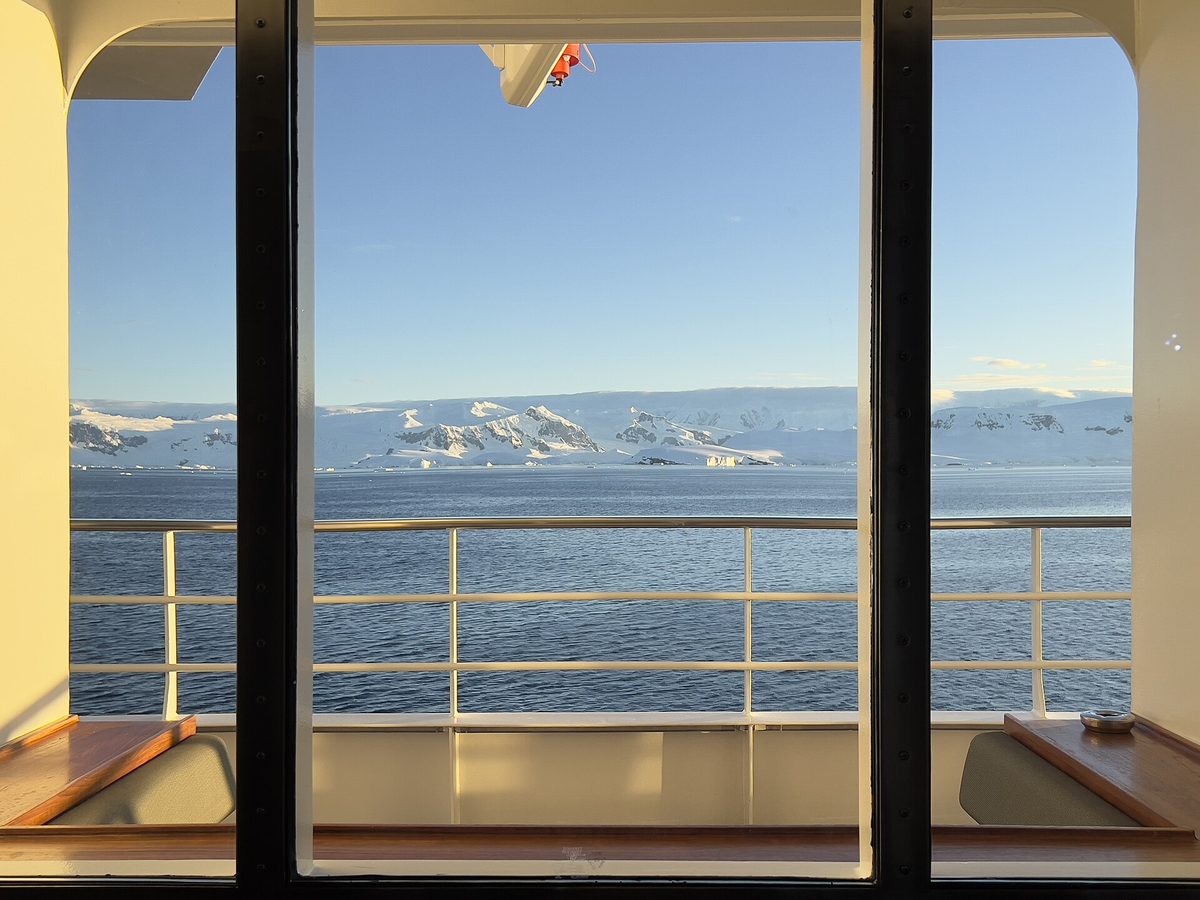
The first time I helped organize antarctica group travel for a camera club, I was terrified I had bitten off more than I could chew. Sixteen people, a shared deposit, a rooming list that changed weekly, and a continent at the bottom of the world that does not care about your spreadsheet. By the time we were all standing on the deck of a small ship watching the Antarctic Peninsula slide past, I understood something I have leaned on ever since: travelling to Antarctica with a group is, for most people, the easiest and most affordable way to actually get there.
This guide is the one I wish someone had handed me back then. I will walk you through the three ways groups go south, the very real perks (group discounts, complimentary berths, a dedicated coordinator), how to organize a trip without losing your mind, what it costs and when to pay, how to pick a ship, and exactly which kinds of groups Antarctica suits best. Whether you are an alumni association, a photography collective, a family clan, a corporate incentive group, or just twelve friends who made a pact, there is a version of this that works for you.
What “group travel” actually means in Antarctica
Antarctica has no hotels, no resorts, and no roads. Almost everyone arrives by ship on an expedition voyage, typically sailing from Ushuaia, Argentina, across the Drake Passage. So when we talk about a “group” here, we are really talking about how a group of people relates to a ship and its berths. There are three distinct models, and choosing the right one is the single most important decision you will make.
The first is the easiest: you simply book a block of cabins on a scheduled departure that the operator is already running. The second is an affinity or special-interest group, where you still sail alongside other guests but bring a meaningful number of your own people, often with a tailored program. The third is the full-ship or private charter, where your group takes over the entire vessel. Each suits a different size, budget, and ambition.
Before we go deeper, it helps to understand the one rule that shapes everything: under the guidelines of IAATO (the International Association of Antarctica Tour Operators), no more than 100 passengers may be ashore at any one landing site at the same time. That is why small ships matter so much, and why I steer almost every group toward vessels carrying fewer than 200 guests. We will come back to this when we talk about choosing a ship.
The three ways to do antarctica group travel
Let me lay these out plainly, because the language operators use can be slippery. Here is how I describe the options to every group leader who calls me.
1. Joining a scheduled small-group departure
This is the gateway. The operator publishes a season of voyages, prices them, and sells cabins to anyone. Your group reserves a block of those cabins, sometimes ten, sometimes twenty, and you sail with the general public as well as your own people. You get most of the social benefits of travelling together, you can often unlock group pricing, and you carry none of the financial risk of filling an entire ship. For first-timers especially, this is what I recommend; if your travellers are new to polar travel, our guide to your first time in Antarctica is worth circulating before you commit.
2. Affinity and special-interest groups
An affinity group is one with a shared identity or interest: a university alumni chapter, a natural-history society, a birding club, a church group, a photography collective. You are still on a shared sailing, but you bring enough people, often 12 to 30, that the operator will layer your own programming on top of the standard expedition. Think a dedicated lecturer, private briefings, reserved dining tables, or a themed itinerary. Photography groups are a classic example, and they pair beautifully with the early-light, slow-cruising priorities laid out in our Antarctica photography trip guide.
3. Full-ship and private charters
This is the big one. Your group, and only your group, occupies the entire vessel. You set the itinerary within what the captain and conditions allow, you choose the tone of the voyage, and you control who is aboard. Charters range from intimate vessels carrying a few dozen guests up to ships in the 150-passenger class. Some operators even offer charters that fly guests across the Drake Passage to King George Island and back, turning a 10-to-12-day voyage into something far shorter, an option we unpack in our piece on flights to Antarctica. Charters demand the deepest pockets and the longest lead time, but the payoff is total control.
One operator I keep an eye on, Secret Atlas, runs what they call “Expedition Micro Cruises” capped at roughly 42 guests, bookable by individuals, private groups, or as a full charter, with seasons opening well in advance and departures from October onward. Luxury lines such as Silversea, meanwhile, have offered private charters that fly to King George Island and skip the Drake crossing entirely. I mention these not as endorsements or fixed prices, but to show the spread, from micro-ship charters to fly-cruise luxury, that the word “charter” can cover. Always confirm current offerings and rates directly.
Why travel to Antarctica as a group at all?
I am an unabashed believer in group travel for this particular continent, and not for sentimental reasons. The benefits are concrete.
- Money. This is the headline. Operators routinely reward groups with discounted per-berth rates and, more importantly, free-berth incentives, often one complimentary berth for every set number of paid berths (frequently somewhere in the range of one free for every eight to sixteen sold, though it varies widely). That free berth typically offsets the group leader’s cost or is shared across the group.
- A dedicated coordinator. Most lines assign a single point of contact to a group booking. One person handles your rooming list, your deposits, your special requests, your pre- and post-trip logistics. After wrangling a sixteen-person camera club myself, I cannot overstate how much sanity this buys you.
- Group amenities. Reserved dining, a private welcome reception, a dedicated lecture or briefing, sometimes a group photo package or branded gear. These are negotiable, especially at scale.
- Shared experience. Antarctica is overwhelming in the best way. Watching a friend see their first iceberg, or splitting a flask of something warm on deck while whales surface alongside, is the kind of thing that bonds a group for life.
- Lower per-person stress. One person does the heavy lifting; everyone else just shows up. For families and friend groups, this is gold.
If you are weighing the broader question of which trip style fits which traveller, our hub on Antarctica for every traveller compares honeymooners, solo adventurers, families, and groups side by side, and it is the best place to start before you pick a lane.
Group discounts and free-berth incentives, explained
Let me demystify the money, because this is where groups win and where the confusion runs deepest. There is no single industry-wide formula, so treat everything below as the typical shape of a deal rather than a guarantee, and get your specific terms in writing.
The most common incentive is the tour-conductor berth, sometimes called a free or complimentary berth. The operator gives you one free passenger spot once your group hits a threshold of paid passengers. Where that threshold sits depends on the line, the season, and how full the ship already is, but a band of roughly one free berth per eight to sixteen paying guests is a fair mental model. On top of that you may see a flat per-person group discount, reduced deposits, or waived single supplements for a set number of solo travellers, the latter being a real consideration if your group includes people travelling alone (our guide to the Antarctica single supplement explains how that surcharge normally works).
A few honest truths I have learned. Peak departures in December and January are the hardest to negotiate on, because they sell out regardless. Shoulder departures in late October, November, and March give you far more leverage; see our breakdown of the best time to visit Antarctica for the trade-offs in wildlife and ice. And the free berth is most valuable when you have decided in advance how it will be used, whether it pays the leader, funds a shared expense, or is raffled among the group.
A quick comparison of the three group models
| Model | Typical group size | Control over itinerary | Relative cost & risk | Best for |
|---|---|---|---|---|
| Block on a scheduled departure | 8–25 cabins | Low (set itinerary) | Lowest risk; pay only for your berths | First-timers, friends, small clubs |
| Affinity / special-interest group | 12–40 guests | Medium (added programming) | Moderate; some commitments | Alumni, photo & birding groups, societies |
| Full-ship / private charter | 40–150+ guests | High (you shape the voyage) | Highest cost & risk; you fill the ship | Large organizations, corporate incentives, luxury groups |
How to organize an Antarctica group trip, step by step
Here is the workflow I use, refined over more voyages than I care to admit. Follow it roughly in order and you will avoid the classic mistakes.
Step 1: Appoint a group leader (and a deputy)
Every successful group has one decisive person who owns the booking, plus a backup. The leader is the operator’s single point of contact, collects deposits, maintains the rooming list, and makes the call when the group cannot agree. Pick someone organized and calm. This role is sometimes formally recognized as the “tour conductor,” and it is often the person whose berth the free-berth incentive covers.
Step 2: Define your group and your non-negotiables
Before you talk to anyone, agree on the essentials: target headcount, a budget band per person, must-have dates or a flexible window, and the experience you are after. A photography group wants long landings and golden light; a family group wants safety, flexibility, and downtime; a corporate incentive wants comfort and a touch of polish. Knowing this shapes everything that follows.
Step 3: Choose your model and your operator
Match your size and budget to one of the three models above, then shortlist operators who run the right ship. This is the moment to compare voyages closely; our guide to Antarctica cruises and our deep dive on Antarctica expedition ships will help you separate genuine expedition vessels from repurposed cruise liners. Pay attention to itinerary too, the classic Peninsula run versus a longer voyage that adds South Georgia and the Falklands, which our Antarctica cruise itineraries guide compares in detail.
Step 4: Secure a cabin hold and lock the deposit terms
Once you commit, the operator places a temporary hold on a block of cabins, giving you a window (often a few weeks to a couple of months) to fill them before they release. Nail down the deposit schedule now: the per-person deposit, when the balance is due, the cancellation and refund terms, and crucially the name-change policy, because in a group, people will drop out and others will join.
Step 5: Build and manage the rooming list
This is the unglamorous heart of group organizing. A rooming list pairs every passenger with a cabin and a cabin-mate, flags solo travellers, and tracks who has paid. Keep it in one shared document, update it ruthlessly, and confirm passport-exact names early, because that is what goes on tickets and the ship’s manifest.
Step 6: Sort flights, insurance, and extensions
Most voyages begin in Ushuaia, usually reached via Buenos Aires, so group flights and a pre-trip buffer night matter; our guide on how to get to Antarctica covers the routing. I always build in at least one night in Ushuaia before embarkation, weather delays are real. Comprehensive travel insurance with emergency evacuation cover is non-negotiable for polar travel, and most operators require it. Then consider group extensions: a few days in Buenos Aires, the wildlife of the Falklands, or Iguazu Falls.
Costs and deposits: what to budget
I will not quote you a fixed price, because Antarctica fares swing enormously with cabin category, ship, season, and itinerary, and they change every season. What I can give you is the structure, so your group can plan. For a full treatment, send your travellers to our Antarctica trip cost guide.
- The voyage fare is the big number, and it varies by a wide margin from an entry-level triple cabin on a classic Peninsula sailing to a suite on a longer South Georgia voyage. Group rates typically shave a percentage off this, on top of any free-berth value.
- The deposit is usually a per-person sum or a percentage of the fare, due at booking to hold cabins. Group deposits are sometimes negotiable, occasionally reduced as an incentive.
- The balance is generally due several months before departure, frequently around 90 to 120 days out. Build your group’s payment deadlines a little earlier than the operator’s, to give yourself a buffer.
- Extras: international and domestic flights, the night or two in Ushuaia, mandatory insurance, optional activities such as kayaking or camping, gratuities, and any pre/post extensions. Budget these separately so no one is surprised.
A word on solo travellers within a group: if some of your people are coming alone, factor the single supplement or seek out the cabins and incentives that waive it. Plenty of group members happily share with a stranger to dodge the surcharge, and our guides to Antarctica solo travel and the single supplement walk through both routes.
Choosing the right ship for your group
Ship choice can make or break group travel, and the logic is different from a regular cruise. Here is what I weigh.
Size: smaller is almost always better
Because IAATO caps shore landings at 100 people at once, the smaller your ship, the more time everyone gets ashore. On a vessel carrying 500-plus, passengers are rotated in shifts and your group can be split across them. On a small ship, ideally under 200 guests, everyone can usually land together. Newer purpose-built expedition vessels often carry roughly 76 to 154 guests, which I consider the sweet spot for groups: intimate enough for full landings, large enough for comfortable cabins and good stabilizers across the Drake Passage. The smallest expedition ships and yachts, carrying a few dozen, are ideal for a tight affinity group or charter.
Cabins, configuration, and togetherness
Look at the cabin mix. Does the ship have enough triples or twins for your rooming list? Are there adjoining cabins for families? Is there a lounge or lecture room big enough to gather your whole group privately? For multi-generational family groups, configuration matters more than thread count.
Activities and expedition style
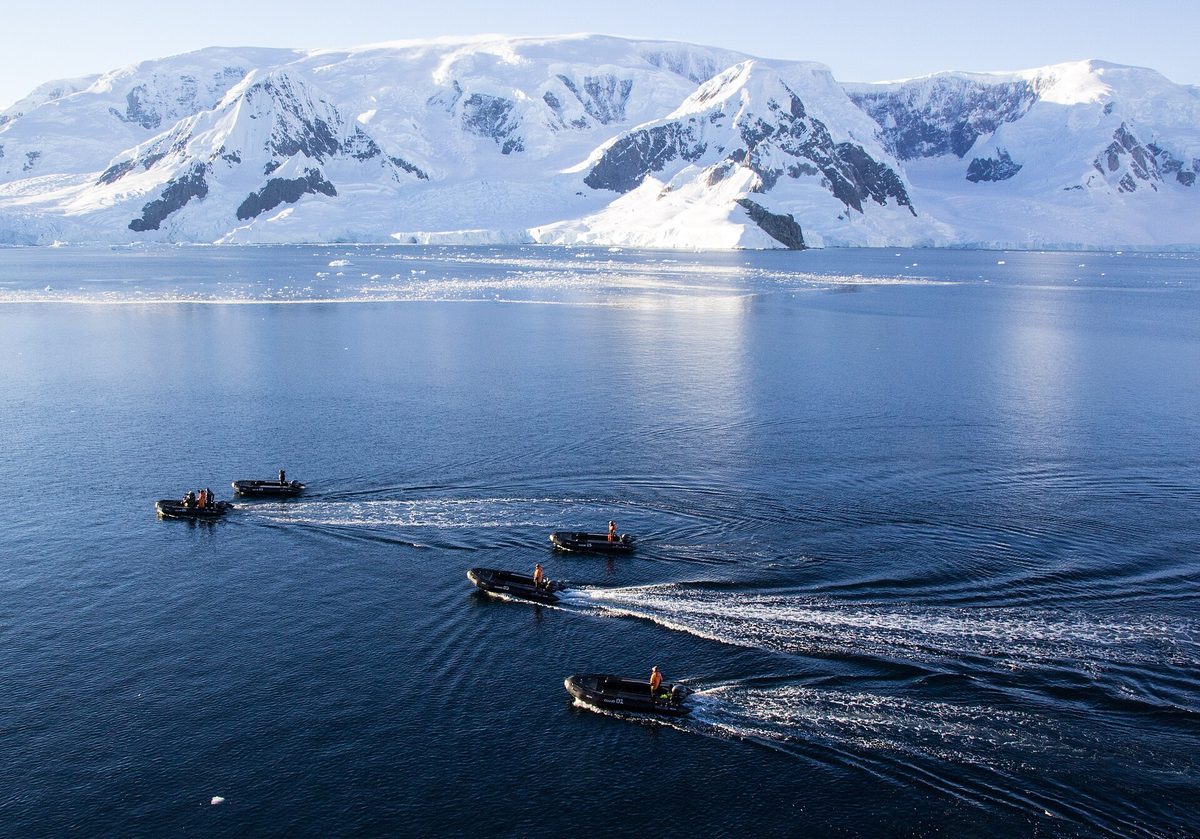
Match the ship’s offering to your group’s appetite. If you have kayakers, confirm the program and its capacity, our kayaking in Antarctica guide explains how limited those slots can be. Photography groups should prioritize ships with open deck space, Zodiac-cruising emphasis, and flexible landing times. Adventurous groups might want camping or the polar plunge; comfort-seekers want a sauna and a good lounge. And every group, no matter how seasoned, should read up on the Drake Passage before booking, because a ship’s stabilizers and crossing strategy genuinely affect who in your group has a good time.
Who Antarctica group travel suits best
Over the years I have sailed with just about every flavour of group. Here is my honest read on who thrives.
Clubs and societies
Natural-history societies, ski clubs, dive clubs, garden clubs, you name it. A shared passion plus a shared destination is a brilliant combination, and these groups are usually the easiest to fill because the enthusiasm is already there.
Alumni and affinity groups
University alumni associations run some of the best-organized Antarctica trips out there, often with a faculty lecturer aboard. The institution lends credibility and a mailing list; the operator handles the logistics. If you are an alumni officer, this is a proven, repeatable model.
Photography groups
Few destinations reward a camera like Antarctica, and few traveller types benefit more from a tailored group program: a pro guide, slower Zodiac cruises, priority on early-morning landings. If this is you, build the trip around the principles in our Antarctica photography trip guide and choose your ship for deck space and flexibility.
Families and groups of friends
A clan of cousins, three generations travelling together, or a pact made over dinner years ago, these make wonderful Antarctica groups. The shared cost-savings help, and the shared memories are extraordinary. Look for ships with family-friendly cabins and a relaxed expedition style.
Corporate and incentive groups
Antarctica is the ultimate “wow” reward, and corporate or incentive groups increasingly charter small ships for exactly that reason. Here the priorities shift toward comfort, seamless logistics, branding opportunities, and sometimes the time-saving fly-cruise option that skips the Drake Passage. A charter gives a company total control over the guest list and the program.
How far ahead to book a group
If you take one piece of advice from this entire guide, make it this: book early. Antarctica has a short season, a finite number of small ships, and surging demand. For an individual cabin you might get lucky a few months out, but for a group, especially anything beyond a handful of cabins, I tell people to start 12 to 18 months ahead, and longer still for peak December and January departures or for a full charter. The best cabins, the best ships, and the best free-berth deals go to the groups who commit first. Operators are already selling 2026-27 and even 2027-28 seasons, so the planning horizon is genuinely long.
Booking early also gives your group the runway it needs: time to collect deposits, time for members to arrange flights and time off work, and time to absorb the inevitable churn as some drop out and others join. A rushed group booking is a stressful one. A group booked well ahead almost runs itself.
Common mistakes I see groups make
Let me save you some pain with the errors I see again and again.
- Booking too late. By far the most common, and the most expensive in lost choice and lost incentives.
- No clear leader. Decision-by-committee on a fast-moving cabin hold is a recipe for losing the cabins.
- Fuzzy money rules. Not agreeing in advance how the free berth is used, or what happens to a deposit when someone drops out, breeds resentment. Write it down.
- Choosing a ship that is too big. Lured by a lower headline fare, groups sometimes pick a large vessel and then discover their people are split across landing shifts.
- Skipping the Ushuaia buffer. Booking flights that arrive the same day as embarkation. One delay and someone misses the ship. Always build in a night.
- Underestimating the Drake Passage. Not everyone in a group has sea legs. Choosing a ship with good stabilizers, or a fly-cruise that skips the Drake Passage, can keep your whole group happy.
Frequently Asked Questions
What is the minimum number of people for a group booking in Antarctica?
It varies by operator, but many lines consider a booking a “group” once you reserve a set number of cabins or passengers, often somewhere around eight to ten paying guests, which is also roughly when free-berth and discount incentives start to appear. Some operators set the bar lower or higher, so ask each line directly. Below that threshold you simply book individual cabins, still potentially seated and excursioned together.
How do group discounts and free berths work?
The most common incentive is a complimentary, or “tour-conductor,” berth: the operator gives your group one free passenger spot once you hit a threshold of paid guests. A typical band is roughly one free berth per eight to sixteen paying passengers, though it varies widely. You may also receive a per-person discount or reduced deposits. Decide in advance how the free berth is applied, whether it offsets the leader’s cost or is shared.
Can we charter an entire ship for our group?
Yes. Full-ship private charters are available across a range of vessels, from intimate ships carrying a few dozen guests up to the 150-passenger class. A charter gives your group complete control over the guest list and, within the limits of weather and the captain’s judgement, the itinerary. Some operators even offer charters that fly across the Drake Passage to King George Island. Charters require the deepest budget and the longest lead time, often well over a year.
How far in advance should we book antarctica group travel?
As early as you possibly can. For groups I recommend starting 12 to 18 months ahead, and even earlier for peak December and January departures or for a full charter. Antarctica has a short season and a limited number of small ships, so the best vessels, cabins, and incentives go to groups that commit first. Operators routinely sell voyages two or more seasons in advance.
What size ship is best for a group?
Smaller is almost always better. Because IAATO limits landings to 100 people ashore at once, ships under 200 guests let your whole group land together rather than rotating in shifts. Newer expedition vessels carrying roughly 76 to 154 guests are the sweet spot, intimate enough for full landings yet comfortable for the Drake Passage crossing. The smallest yachts and micro-ships suit tight affinity groups and charters.
Can a group skip the Drake Passage?
Yes, to a degree. Several operators offer fly-cruise voyages that fly your group from Punta Arenas, Chile, across the Drake Passage to an airstrip on King George Island, where you board the ship. This trims days off the trip and spares anyone prone to seasickness the crossing. It costs more and depends heavily on weather windows for the flights, so build in flexibility. Our flights to Antarctica guide covers how these work.
Are there activities the whole group can do together?
Absolutely. Beyond daily Zodiac cruises and shore landings, many ships offer optional sea kayaking, overnight camping on the ice, snowshoeing, and the famous polar plunge. Some are capacity-limited, so book group activity slots early. Affinity groups can also arrange private lectures, briefings, and reserved dining. Match the ship’s activity menu to your group’s appetite when you choose the vessel.
What happens if someone in our group cancels?
This is why deposit and name-change terms matter so much. Most operators allow name changes up to a deadline, so a dropped traveller can often be replaced by someone new, preserving the cabin and the group rate. Refunds depend on how close to departure the cancellation falls. Strongly encourage every member to carry comprehensive travel insurance with cancellation cover, and set your group’s internal payment deadlines earlier than the operator’s.
Final thoughts
For most people, antarctica group travel is not the compromise it might sound like, it is the smart play. It is usually cheaper thanks to group rates and free-berth incentives, it is dramatically less stressful with a dedicated coordinator doing the heavy lifting, and it turns the most extraordinary journey on Earth into a shared story you will retell for the rest of your lives. Whether you join a scheduled small-ship departure, gather an affinity group around a shared passion, or charter an entire vessel, the formula is the same: pick the right model, appoint a decisive leader, choose a small ship, sort the money rules early, and above all, book far ahead. Do that, and I promise the moment your group steps onto the ice together will be worth every spreadsheet. If you are still deciding what kind of trip fits your travellers, start at our Antarctica for every traveller hub and read up on the Drake Passage before you commit.